Space Stories: Dragonfly Issues, NASA Under a Government Shutdown, and Threats from Venus

Image (Credit): Artist’s rendering of the Dragonfly on Titan. (NASA/Johns Hopkins APL)

Here are some recent space-related stories of interest.

Physics World: NASA Criticized Over its Management of $3.3bn Dragonfly Mission to Titan

An internal audit has slammed NASA over its handling of the Dragonfly mission to Saturn’s largest moon, Titan. The drone-like rotorcraft, which is designed to land on and gather samples from Titan, has been hit by a two-year delay, with costs surging by $1bn to $3.3bn. NASA now envisions a launch date of July 2028 with Dragonfly arriving at Titan in 2034.

USAToday: Do Rockets Still Launch During a Government Shutdown? How NASA Could Feel the Effects

NASA is far from immune to the effects of a looming government shutdown if congressional leaders fail to reach an agreement before midnight Oct. 1 to prevent one. At stake for the U.S. space agency if the federal government grinds to a halt? The progress of many of its science missions and access to its public outreach arm. NASA’s contingency plan for a shutdown, outlined in a guide from 2018, emphasizes that only “activities which are necessary to prevent harm to life or property” would be exempt from ceasing operations during a shutdown.

Earth Sky: “‘Invisible’ Asteroids Near Venus: A New Danger to Earth?

Astronomers across the globe are dedicated to identifying the near-Earth asteroids that could one day impact our planet. But there might be a group of potentially dangerous nearby asteroids that have remained invisible to astronomers so far. On September 24, 2025, an international team of researchers at the São Paulo State University (UNESP) in Brazil said that a group of asteroids sharing Venus’ orbit could have remained undetected so far due to their location in the sky. And they could pose a threat to Earth within a few thousand years.
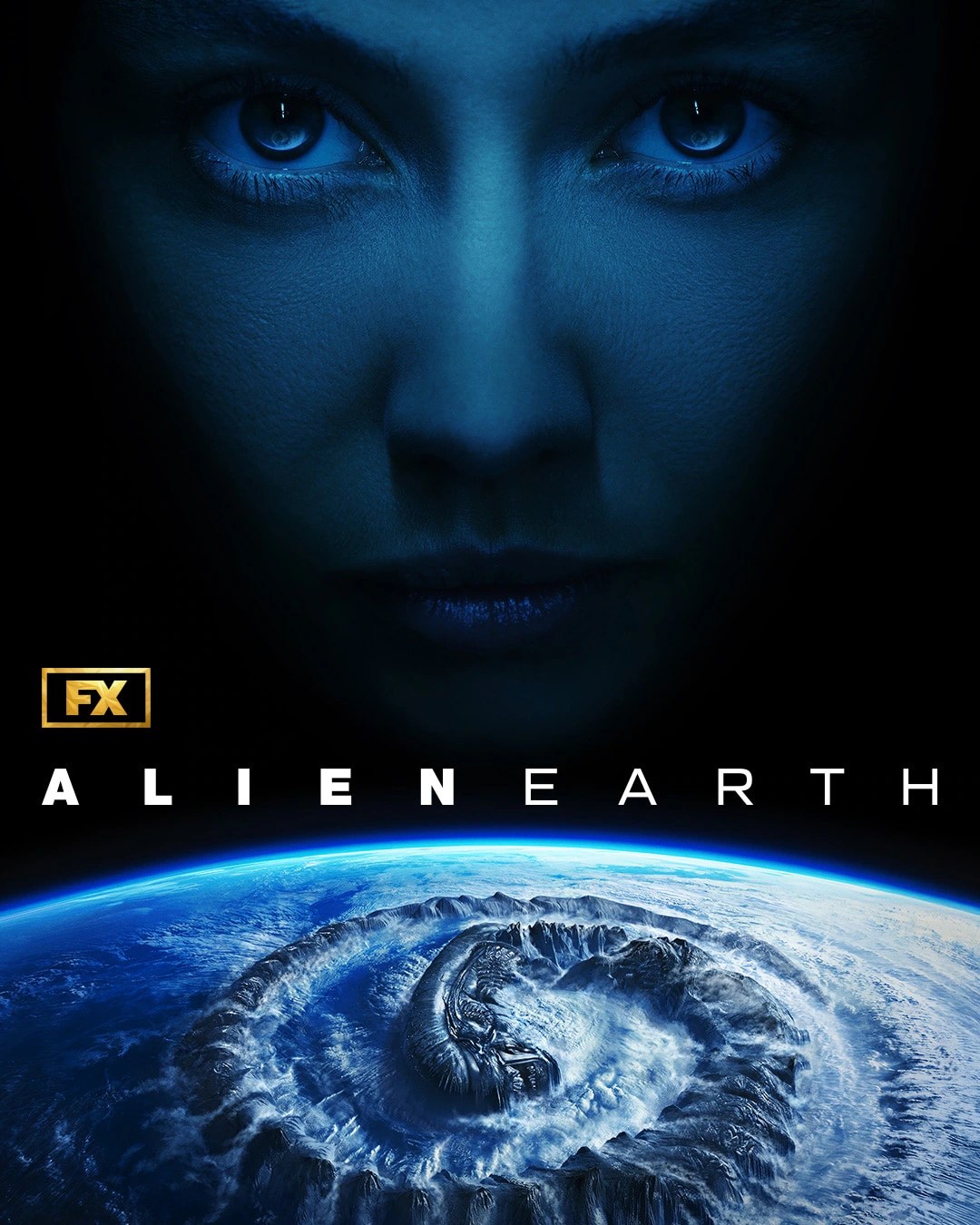
Television: Season One of Alien: Earth Exceeded Expectations

Credit: FX

I already miss the weekly episodes of Alien: Earth. The acting, story line, and overall energy far surpassed anything I expected going into this series. And while it was gory in the typical Alien way, it had more to say than some of the earlier movies. Fortunately, with a cliff-hanger like the last episode, we still have plenty more story to come in a second season.

[Spoiler Alert: Do not read any further if you have yet to complete the first season.]

Will there be a second season? I certainly hope so, though showrunner Noah Hawley did not specifically confirm it in a recent interview:

So for me, I never hedged my bets. This is not a closed-ended season. This chapter is closed, but Yutani troops are landing. The balance of power has shifted. These children have no idea what’s coming. The last line of, ‘Now we rule’ is triumphant and uplifting. But cut to 10 minutes later, what is going to be happening? So I like that it has that real-time urgency to it.”

The series could not have been more timely as the daily news discusses the role of artificial intelligence (AI) in our future. Fortunately, we have yet to face a battle between (1) Synths (fully artificial beings with AI), (2) Cyborgs (biological humans enhanced with technology), and (3) Hybrids (synthetic bodies containing uploaded human consciousness).

Even so, we have plenty of corporate weirdos (some role-playing with Roman fashions) who can still do plenty of damage. Our growing dependence on social media, crypto-currency, and other forms of electronic assets and infrastructure (slowly soaking up more and more of our energy supply) has primed us for some real and permanent damage in the wrong hands.

While the theme running through the series was Peter Pan, I think the larger theme was Frankenstein’s monster learning the truth about his creation and his future (or “her” in this case). It did not end well for the monster, and the new kid-monsters in Alien: Earth are unlikely to find a more receptive world.

We can only hope that AI holds off on its reform of the world as we know it until after the last season of Alien: Earth drops.

NASA Moves Away from an ISS Cargo Contractor

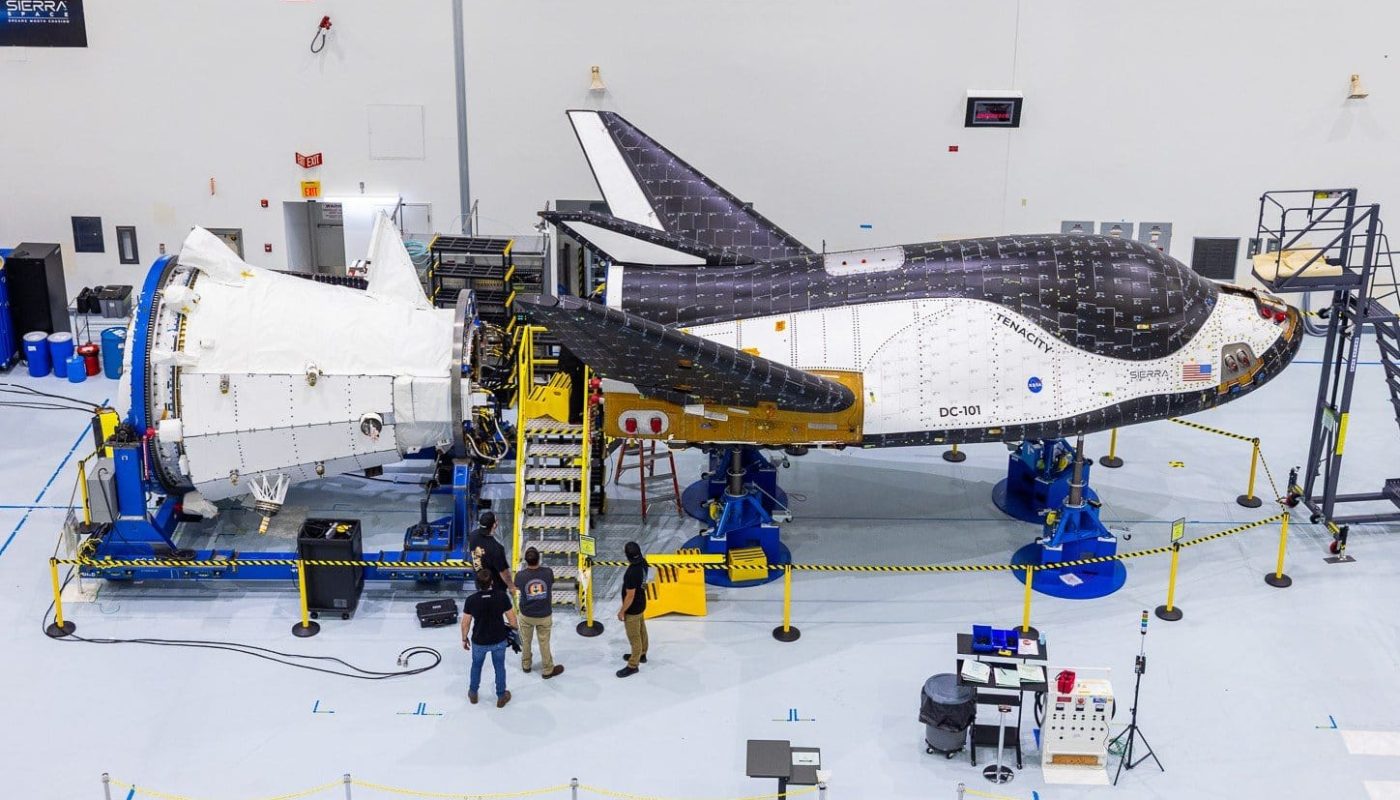
Image (Credit): The Dream Chaser and Shooting Star Cargo Module. (Sierra Space)

Back in 2016 NASA was looking for more commercial cargo haulers for its International Space Station (ISS), and Sierra Space’s reusable Dream Chaser spaceplane was one of those options. NASA contracted for multiple resupply missions to the ISS. However, all of that is now over.

NASA has announced that the contract has been modified so that Sierra Space is only to provide a “free flight demonstration” in 2026. What that means is that NASA will give the company a chance to prove its technology, but it will stop financing these efforts. And NASA will not commit to any future resupply missions, but may choose to do so at a later point.

It sounds like quite a gut-punch to another commercial option for the ISS at the same time that Boeing’s Starliner is still limping along. That leaves SpaceX and Northrop Grumman as the only players on the field as the station heads towards it decommissioning in 2030.

Sierra Space can certainly pursue other commercial space opportunities, which is expected to include commercial space stations at some point in the future. Even so, it appears NASA has lost confidence in the company’s ability to deliver on earlier promises related to the ISS.

In a recent press release, the company has put the most positive spin it can on this new arrangement:

Sierra Space is prioritizing first-flight readiness with Dream Chaser, targeting a launch in late 2026 to align with expected launch vehicle availability. Sierra Space and NASA worked together to reach this mutually beneficial agreement that provides greater mission flexibility for Dream Chaser’s first flight. This flight aims to demonstrate critical capabilities for NASA’s ISS resupply and future Commercial LEO Destinations (CLD) missions and position Dream Chaser as a national asset available for future national security and defense demonstrations.

Sierra Space has many other ongoing projects under a variety of government and private sector contracts, including NASA. For instance, it signed a contract with NASA earlier this year to study the use of the company’s expandable space station technology on the Moon.

So the company will be staying busy even after this latest setback. That said, getting the Dream Chaser into orbit on schedule has to remain a key priority for a company that want’s to be a big player in the space race ahead.

Movie: The Mandalorian and Grogu

Image (Credit): Scene from the movie The Mandalorian and Grogu. (Lucasfilm, Ltd.)

While have waited long enough for a new season of The Mandalorian, it appears we will need to settle for a movie instead. The Mandalorian and Grogu will premiere in theaters on May 22, 2026.

The movie trailer dropped earlier this week. It is everything you might expect, but it almost has an Andor feel to it. Add to that the scene of a destroyed All Terrain Armored Transport, and you have everything you need to tie this into the best of Star Wars.

Here is the plot from Disney+:

The evil Empire has fallen, and Imperial warlords remain scattered throughout the galaxy. As the fledgling New Republic works to protect everything the Rebellion fought for, they have enlisted the help of legendary Mandalorian bounty hunter Din Djarin (Pedro Pascal) and his young apprentice Grogu.

That’s not too deep, which is perfect. We do not need trade wars and such – that is too close to the newspaper stories today. We need something fun in a galaxy far, far away.

And maybe, just maybe, this new film can re-energize the Star Wars films again. Cute and simple is probably the recipe for films over the next few years, if only to give everyone a safe harbor from reality.

Credit: Lucasfilm, Ltd.

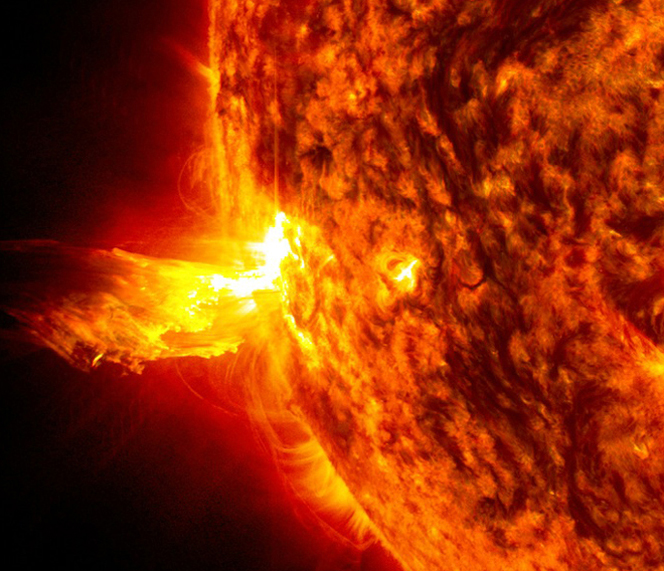
Space Quote: Three Missions Launched to Monitor the Sun

Image (Credit): A solar flare and eruption of solar material captured on June 20, 2013. (NASA/Goddard/SDO)

“These three unique missions will help us get to know our Sun and its effects on Earth better than ever before…This knowledge is critical because the Sun’s activity directly impacts our daily lives, from power grids to GPS. These missions will help us ensure the safety and resilience of our interconnected world.”

Statement by Joe Westlake, Heliophysics Division director at NASA Headquarters, regarding Wednesday’s launch of three missions to investigate the Sun’s influence across the solar system – NASA’s Interstellar Mapping and Acceleration Probe (IMAP), Carruthers Geocorona Observatory, and the National Oceanic and Atmospheric Administration’s Space Weather Follow On-Lagrange 1 (SWFO-L1) missions.