
The hearing earlier this week held by the Senate Committee on Commerce, Science, and Transportation contained some clear warnings about the future of the US space program. In addition to comments by the Chairman and Ranking Member, we heard plenty from the witnesses about the importance of Artemis program in terms of political and economic outcomes, concerns about how the program is currently structured, and frustration with the continuing uncertainty about long term funding.
For instance, James Bridenstine, a Former Administrator for NASA, stated these concerns about NASA’s ability to land on the Moon under the Artemis program:
While the United States should celebrate orbiting the Moon in 2026, the United States does not have a lander. Unless something changes, it is highly unlikely the United States will beat China’s projected timeline to the Moon’s surface. Our complicated architecture requires a dozen or more launches in a short time frame, relies on very challenging technologies that have yet to be developed like cryogenic in-space refueling, and still needs to be human rated. While the capability could be transformational over time if payload capacity increases (so far it has decreased), the complexity of the architecture precludes alacrity.
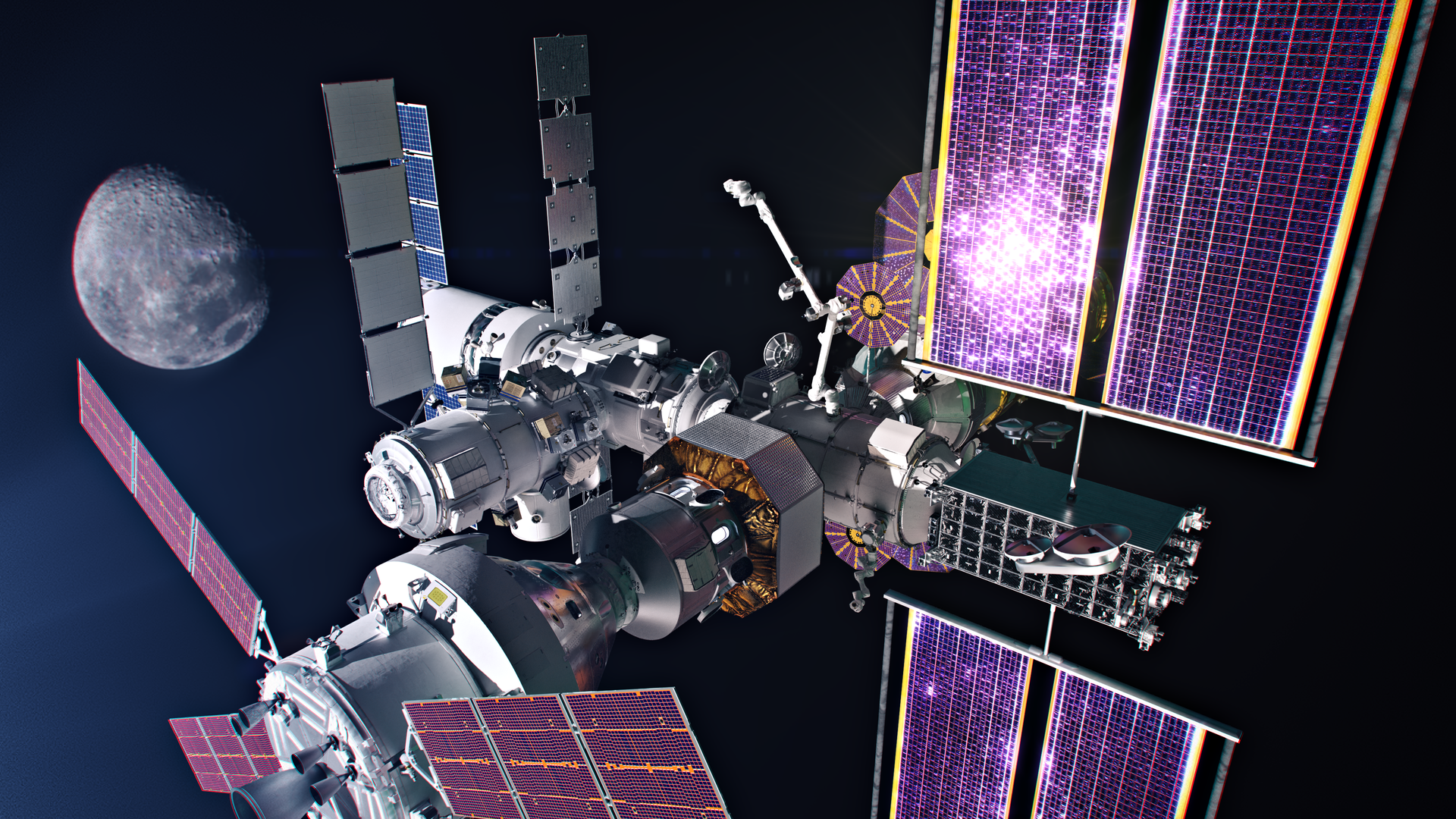
Michael Gold, President of Civil and International Space for Redwire, emphasized the need for NASA to continue to resist White House cuts, such as the planned elimination of the Gateway piece in the initial budget proposal, in order to keep the program on track. He stated:
NASA’s waffling on Gateway has left our international partners confused, frustrated, and exploring alternatives to American partnerships. If we fail to continue with Gateway, we will force our partners to consider shifting support from Artemis and America, to China and its International Lunar Research Station (ILRS) program. Unlike the U.S., China has maintained strong and consistent continuity for its lunar beyond [low Earth orbit] spaceflight program, making a collaboration with China potentially far less risky than gambling on what, prior to Artemis, has been a mercurial American beyond LEO space strategy. If our international partners make such a shift to China, it will not only impact the space field but will have substantial diplomatic, geopolitical, and economic consequences on Earth.
And not to be outdone, Lieutenant General John Shaw, Former Deputy Commander of the U.S. Space Command, wanted to ensure the Artemis program was part of a “grand strategy” that could match the Chinese grand strategy integrating the exploration, economic opportunities, and security needs. In his testimony, he stated:
During my military career, I watched and studied – as any good soldier would of a potential adversary – as China slowly but surely developed and deployed its own civilian and military space capabilities and set its own agenda for space achievements. It is clear to me that the Chinese Communist Party is already employing its own integrated grand strategy for the earthmoon system, with only superficial distinction between civil, commercial, and national security activities, and all focused on a common purpose. I believe if we do not unify and synchronize our efforts, we will find ourselves, rather than the space leaders we are today, instead in a position of increasing disadvantage in space as we progress further into this century.
It was clear from what was said throughout the hearing that everyone in the room saw the benefits of a thriving Artemis mission that continued far beyond Artemis II. In fact, Artemis IX was mentioned as well. The real question was whether the US was willing to commit to a Moon and Mars mission for the long term and fund it appropriately so that our country, our commercial partners, and our country partners can realize the benefits for years to come.
That is the question that no one can answer here. However, the Chinese have already answered it for themselves. We can either watch them succeed, or fully commit to the Artemis program and win this latest space race.
 Our Awesome Universe