Pic of the Week: The Indescribable NGC 2775

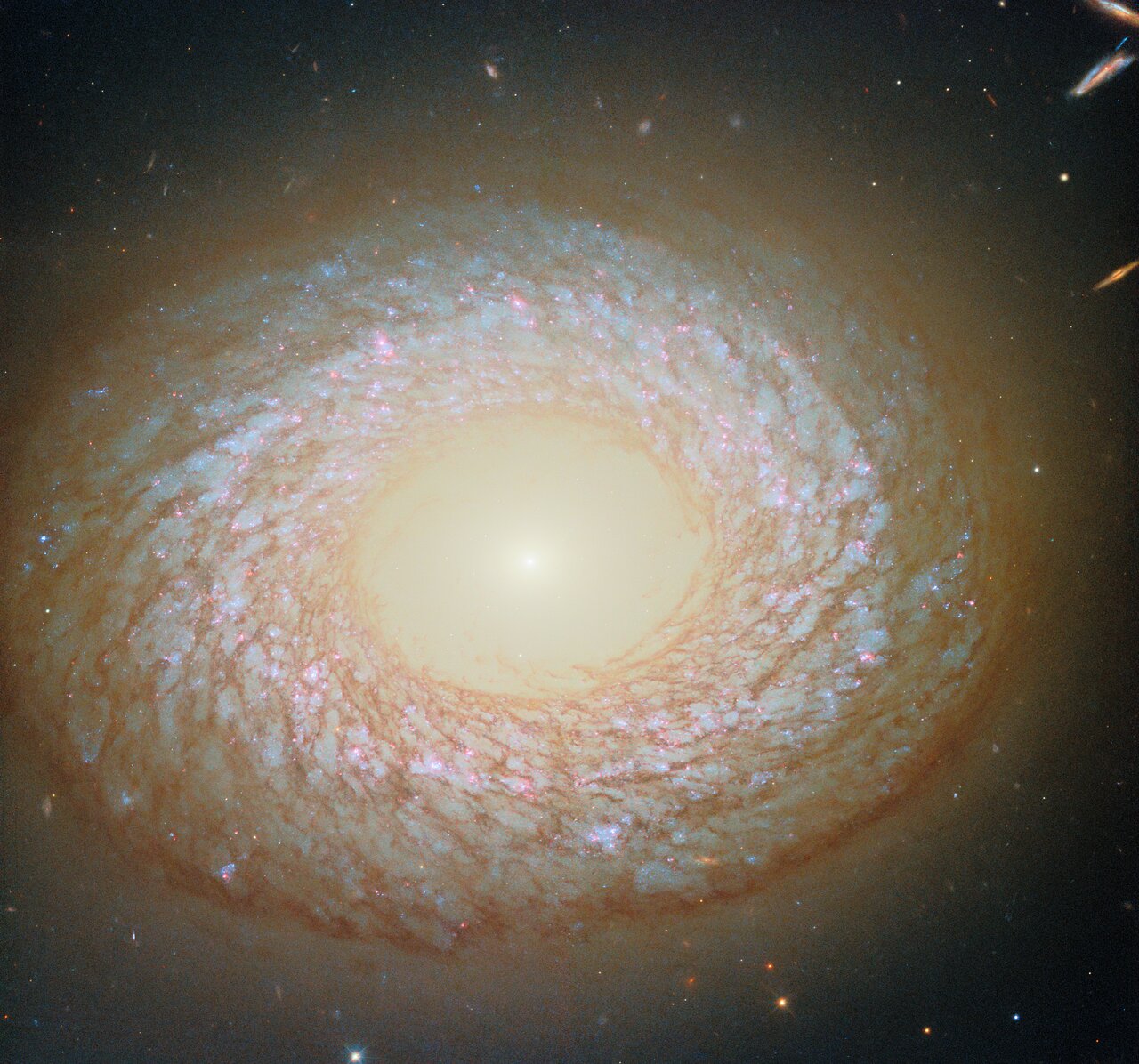
Image (Credit): NGC 2775, which is 67 million light-years away, as captured by the NASA/ESA Hubble Space Telescope. (ESA/Hubble & NASA, F. Belfiore, J. Lee and the PHANGS-HST Team)

This week’s image is from the NASA/European Space Agency (ESA) Hubble Space Telescope. It shows the odd galaxy NGC 2275 that is hard to describe. Is it an elliptical galaxy, a spiral galaxy, or something else?

The ESA weighs in on the issue below:

NGC 2775 sports a smooth, featureless centre that is devoid of gas, resembling an elliptical galaxy. It also has a dusty ring with patchy star clusters, like a spiral galaxy. Which is it, then: spiral or elliptical — or neither?

Because we can only view NGC 2775 from one angle, it’s difficult to say for sure. Some researchers have classified NGC 2775 as a spiral galaxy because of its feathery ring of stars and dust, while others have classified it as a lenticular galaxy. Lenticular galaxies have features common to both spiral and elliptical galaxies.

It’s not yet known exactly how lenticular galaxies come to be, and they might form in a variety of ways. Lenticular galaxies might be spiral galaxies that have merged with other galaxies, or that have mostly run out of star-forming gas and lost their prominent spiral arms. They also might have started out more similar to elliptical galaxies, then collected gas into a disk around them.

Some evidence suggests that NGC 2775 has merged with other galaxies in the past. Invisible in this Hubble image, NGC 2775 has a tail of hydrogen gas that stretches almost 100 000 light-years around the galaxy. This faint tail could be the remnant of one or more galaxies that wandered too close to NGC 2775 before being stretched apart and absorbed. If NGC 2775 merged with other galaxies in the past, it could explain the galaxy’s strange appearance today.

A Day in Astronomy: Luna 16 Lunar Sample Return

Image (Credit): USSR postage stamp commemorating the Luna 16 mission. (USSR Post)

On this day in 1970, the USSR’s Luna 16 spacecraft returned to Earth with a lunar sample. The Luna 16 spacecraft landed on the Moon on September 20 to collect a 3.5 ounce sample before returning to Earth.

While the Apollo 11 and 12 missions had already returned with more than 120 pounds of lunar material, it was still an important milestone for the USSR’s space program. Two more Luna missions would bring back additional lunar samples in the 1970s.

The Russian’s last attempt to send a spacecraft to study the Moon’s surface was in 2023 with Luna 25, which ended in failure.

Space Stories: Artemis II to Launch February 2026, 10 New Astronauts Selected, and Plans to Destroy an Incoming Asteroid

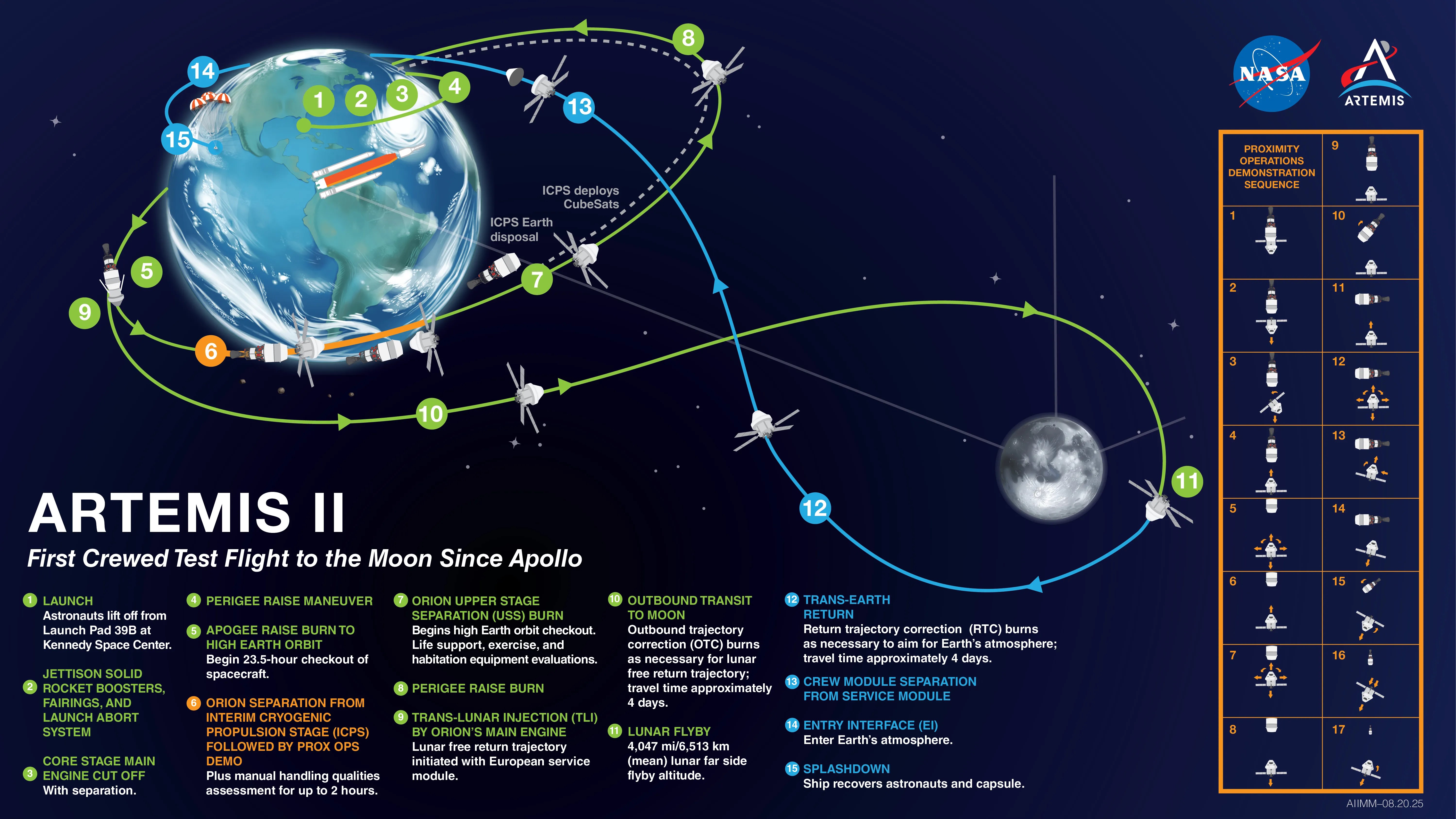
Image (Credit): Artemis II mission map. (NASA)

Here are some recent space-related stories of interest.

BBC News: Nasa Plans First Crewed Moon Mission in 50 years for February 2026

Nasa has said it hopes to send astronauts on a ten-day trip around the Moon as soon as February. The US space agency had previously committed to launching no later than the end of April but said it aims to bring the mission forward…Artemis Launch Director, Charlie Blackwell-Thompson explained that the powerful rocket system built to take the astronauts to the Moon, the Space Launch System (SLS) was “pretty much stacked and ready to go”. All that remained was to complete the crew capsule, called Orion, connected to SLS and to complete ground tests.

CNN: NASA Selects 10 New Astronauts as it Chases Bold Plans for the Moon and Mars

NASA on Monday introduced the 10 people — selected from a pool of 8,000 applicants — who will join the agency’s astronaut corps as it races to return to the moon before attempting an unprecedented crewed mission to Mars. The group includes six women and four men, whom acting NASA Administrator Sean Duffy called “America’s best and brightest.”…This astronaut class marks the first in which there are more women than men, according to NASA.

IFLScience: “Forget Saving Earth, NASA Wants Us To Save The Moon From Asteroid 2024 YR4

A large asteroid strike on the Moon could have negative consequences for the artificial satellites we now depend on. That being the case, a NASA-led team has looked into the options for preventing Asteroid 2024 YR4 from making such an impact in 2032. Contrary to the usual conclusions that asteroids should be diverted, not destroyed, they think this is a time for a Hollywood-approved demolition event.

Happy Autumn Equinox!

Credit: Image by Leopictures from Pixabay.

Day in Autumn
Rainer Maria Rilke (1875 –1926)

After the summer’s yield, Lord, it is time
to let your shadow lengthen on the sundials
and in the pastures let the rough winds fly.

As for the final fruits, coax them to roundness.
Direct on them two days of warmer light
to hale them golden toward their term, and harry
the last few drops of sweetness through the wine.

Whoever’s homeless now, will build no shelter;
who lives alone will live indefinitely so,
waking up to read a little, draft long letters,
and, along the city’s avenues,
fitfully wander, when the wild leaves loosen.


Translated by Mary Kinzie in Poetry magazine.

Posted in Sun

Russia Has One Less Space Asset

Image (Credit): Earlier photo of the RT-70 radio telescope. (PickPic)

The Urania newspaper Euromaiden Press recently noted the success of its navy in taking out Russian assets, including:

  • the Utios-T radar system;
  • the RT-70 radio telescope;
  • the GLONASS satellite navigation system in its dome;
  • the coastal radar station MR-10M1 “Mys” M1; and
  • the 96L6-AP radar of the S-400 missile system.

One of those items is not like the others, that being the Yevpatoria RT-70 radio telescope.

This Soviet-era radio telescope was one of the largest in the world, assisted with the study of Mars and Venus, and was used for messaging extraterrestrial intelligence, also known as METI.

Now it is rubble due to the ongoing war between Ukraine and Russia (the destroyed radio telescope is located in Russian-occupied Ukrainian territory).

We saw World War II introduce the power of rocket technology that sent us around the solar system, and now we are watching another war show how all that we have built can quickly crumble.