Space Stories: Black Hole Stars, Globe-Trotting Student Astronomers, and Verifying Hawking’s Theorem

Credit: Image by Johnson Martin from Pixabay.

Here are some recent space-related stories of interest.

HotHardware: Astronomers Baffled, Universe Weirder Than Ever Imagined On Strange Red Dot Discovery

A team of Pennsylvania State University researchers has a unique take on mysterious red dots first observed by the James Webb Space Telescope. Initially thought to be tiny, crimson galaxies, the red dots are now proposed to be a new and exotic class of celestial object: a hybrid of a black hole and a star, which researchers have dubbed “black hole stars.”

University of Virginia: Astronomy Students Travel the World to Peer Deep into Space

The University of Virginia Occultation Group, astronomy undergraduates who observe and track asteroids and small planets, make most of their observations locally. But they also travel around the country and the world to catch glimpses of heavenly objects, from high-priority asteroid/minor planets and the dwarf planet Pluto to the distant Kuiper Belt object Arrokoth. They observe stellar occultations, which occur when asteroids and minor planets pass in front of distant stars, via telescope. The Group studies some asteroids that later will be studied by close spacecraft fly-bys, and seek out asteroids that may pose a threat to the planet.

Cornell University:On 10th Anniversary, LIGO Verifies Hawking’s Theorem

Since September 14, 2015, when the Laser Interferometer Gravitational-Wave Observatory (LIGO) made the first-ever direct detection of gravitational waves, the observatory has been making history. Cornell astrophysicists Saul Teukolsky and Larry Kidder earned a share in the 2016 Special Breakthrough Prize in Fundamental Physics – a $3 million award – for their contributions to the project. Now, on the 10th anniversary of LIGO’s first discovery, the LIGO-VIRGO-KAGRA team has announced a black hole merger similar to its first detection. However, thanks to a decade’s worth of technological advances improving the detector sensitivity, the signal is dramatically clearer, allowing unprecedented tests of General Relativity to be performed.

NASA’s 2026 Student Launch Challenge is Underway

Credit: NASA

If you are a student looking for an opportunity to be part of the space program, you have until September 22nd to provide NASA with plans to design, build, and launch high-powered rockets containing a scientific or engineering payload. This is part of the 2026 Student Launch challenge. The challenge is open to students from middle school, high school, and college. The final launches of these rockets are scheduled for April 25, to be held at Bragg Farms in Toney, Alabama.

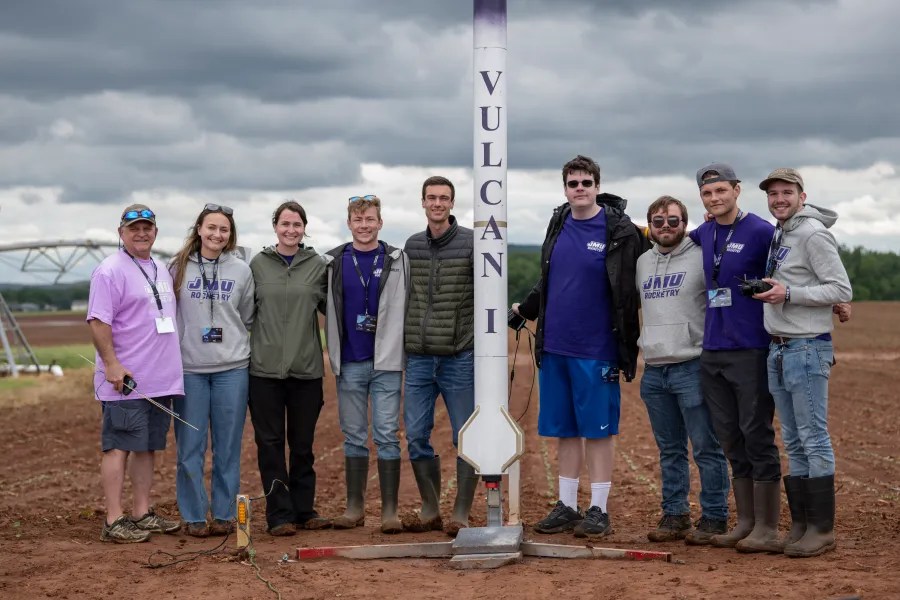
First started in 2000, the competition in 2025 brought together almost 1,000 students. The winning team came from James Madison University (pictured below), closely followed by North Carolina State University and The University of Alabama in Huntsville.

This is a great opportunity for those with a love of space rockets. All of the details for entry can be found on NASA’s competition website.

Image (Credit): 2025 winning team participants from James Madison University with their high-powered rocket prior to launch. (NASA/Krisdon Manecke)

Sci-Fi Quote: Shaking the Foundation

Credit: Apple TV+.

“Audiences are sophisticated these days, and you have to tell a good story — you don’t do this merely to surprise the audience — but one of the reasons why “Breaking Bad” or “Game of Thrones” is so exciting is they broke some of the conventions of storytelling by killing off lead characters. So I said, “What would be the most exciting thing?” And the most exciting thing would be if we end the season at a place where you think, “How can the show even survive after this? How can the Foundation prevail?”

-Statement by David S. Goyer, the executive producer of Apple TV+’s Foundation in an interview with The Wrap. Mr. Goyer discusses the third season final episode (with plenty of spoilers) while also noting that he will be leaving the show. The episode is mind-blowing as it destroys worlds (with a black hole Death Star) and key characters. It is a must see episode that turns the series upside down. I doubt even Hari Seldon could predict all of this mayhem.

Russian Progress 93 Mission Underway to Resupply the ISS

Image (Credit): Russia’sProgress 93 cargo spacecraft launches from the Baikonur Cosmodrome in Kazakhstan. (NASA+)

Even with the recent Russian drones invading Polish airspace, things are on schedule at the International Space Station (ISS). A Russian Soyuz rocket successfully launched the Progress 93 cargo spaceship into orbit yesterday to resupply the ISS on Saturday.

A similar NASA resupply mission will take place on Sunday to resupply the Expedition 73 crew. Northrop Grumman’s Cygnus XL cargo spacecraft will be launched from Florida aboard a SpaceX rocket.

Things may still be a bit crazy here on Earth, but the ISS mission continues.

Update: The Grumman Cygnus XL cargo spacecraft safely launched on Sunday, September 14. The spacecraft is scheduled to dock with the ISS on Wednesday, September 17.

Pic of the Week: The Martian Turtle

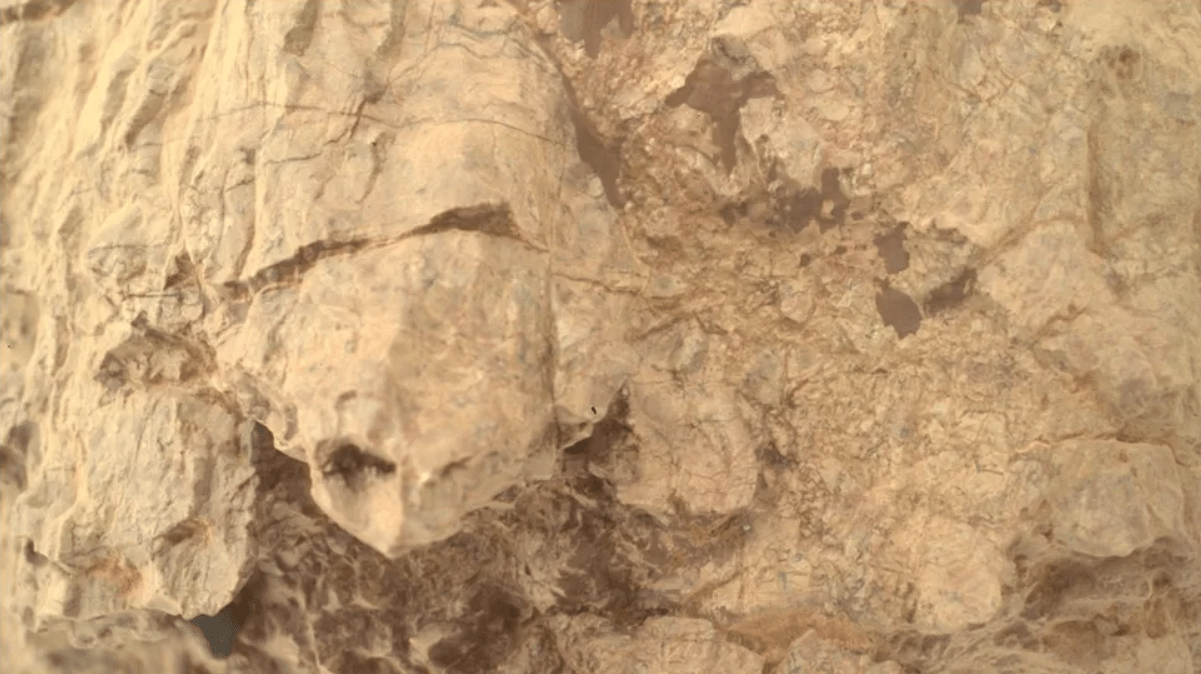
Image (Credit): Turtle-like Martian rock formation in Jezero Crater photographed by the Preservation rover. (NASA/JPL-Caltech)

While the Preservation rover on Mars has been busy looking for signs of life in Jezero Crater, it still had time to take a few fun photos as well, including the turtle image above (see the outline of the turtle below if you cannot find it). The rover captured the picture on August 31.

Image (Credit): Outline of turtle-like Martian rock formation in Jezero Crater photographed by the Preservation rover. (NASA/JPL-Caltech)