RIP: June Lockhart, Actress

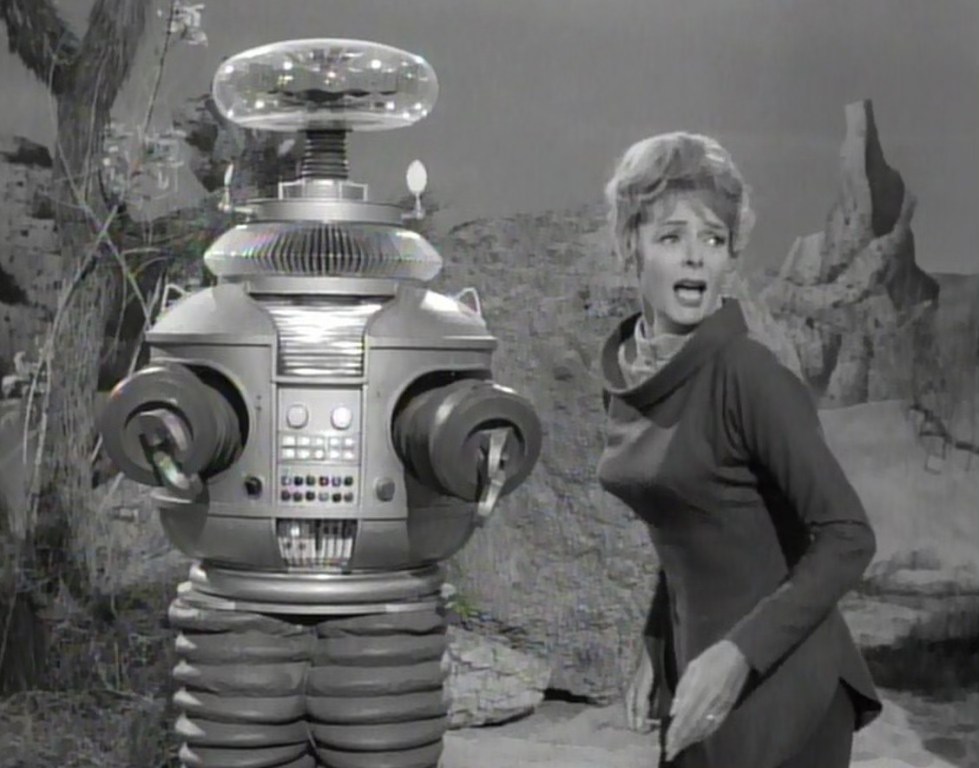
Image (Credit): June Lockhart in the television series Lost in Space. (20th Century Fox Television)

Actress June Lockhart passed away last Thursday at the age of 100. She had a storied career in both movies and television, including the 1960s television shows Lassie and Lost in Space.

Lost in Space was a somewhat silly story about the Robinson family migrating from an overpopulated Earth to a exoplanet orbiting Alpha Centauri. Of course, just like the story in Gilligan’s Island, the five-and-a-half year tour turned into a new adventure among the stars.

The show was best known for the robot always spouting “Danger, Will Robinson!” in reference to the son whose mother was played by June Lockhart. Of course, Star Trek premiered during that same period with some of the same silliness. It seems we did not achieve our darker sentiments about humans in space until somewhat later.

With regard to her time with Lost in Space, Ms. Lockhart stated to Fox News:

I was over the moon – pun intended. … I have been told that my contribution inspired many astronauts to pursue a career in space science and exploration … it is lovely to know that I touched so many people by doing things that interested me!

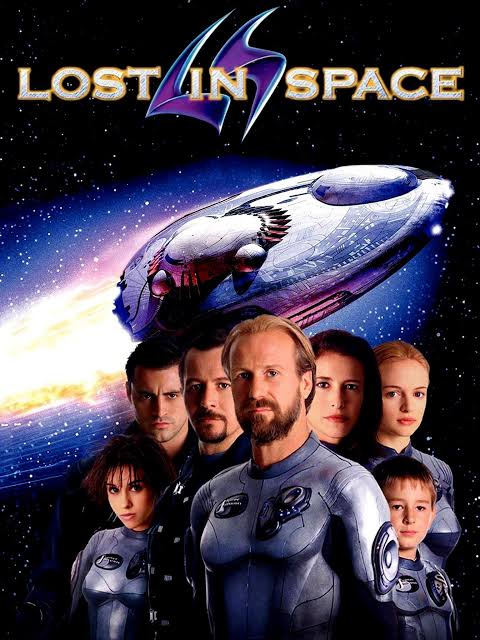
The 1998 movie Lost in Space did little to revive interest in the series (or space from what I can tell), but the Neflix television series of the same name did a nice job bringing the Robinson family back to life. If you are looking for a great updated adventure story about a boy and his robot traveling through space, you might want to start with the Netflix version.

You can read more on Ms. Lockhart’s life and career at these sites:

BBC
CBS News
The New York Times

Rest in peace.

Image (Credit): Poster for the 1998 movie Lost in Space. (New Line Cinema)
Image (Credit): Poster for the 2018 television series Lost in Space. (Netflix)

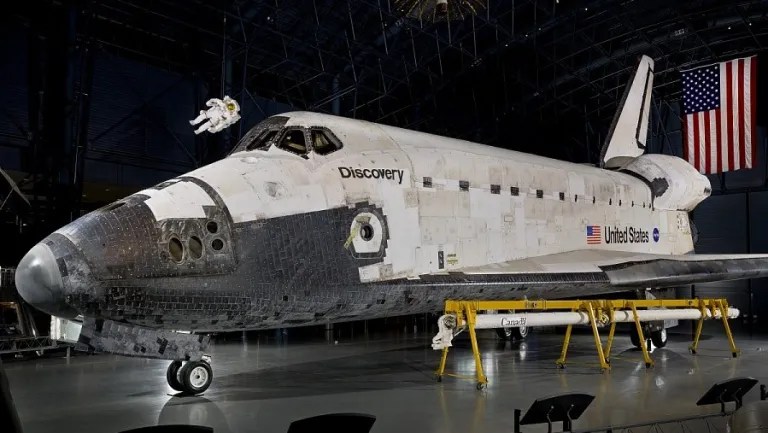
Space Quote: Don’t Damage Discovery

Image (Credit): Space shuttle Discovery in the Smithsonian Institution’s Stephen F. Udvar-Hazy Center of the National Air and Space Museum in Chantilly, Virginia. (National Air and Space Museum)

”The Smithsonian estimates that transporting Discovery from Virginia to Houston could cost more than $50 million, with another $325 million needed for planning, exhibit reconstruction, and new facilities. These costs far exceed the $85 million appropriated in the One Big Beautiful Bill Act, P.L. 119-21. Dedicating hundreds of millions of taxpayer dollars to move an artifact that is already housed, displayed, and preserved in a world-class facility is both inefficient and unjustifiable.”

-Statement in an October 23, 2025 bipartisan letter from the US Senate Committee on Appropriations. In addition to the cost, the letter also highlights potential damage to the shuttle, stating:

Moving the shuttle would inevitably and irreparably compromise the artifact and render it unusable as a museum-quality collection item, permanently diminishing its historical and cultural value for future generations.

Study Findings: A Less Terrifying Universe? Mundanity as an Explanation for the Fermi Paradox

Credit: Image by Angela from Pixabay.

Abstract of the pre-publication study findings:

Applying a principle of “radical mundanity”, this paper examines explanations for the lack of strong evidence for the presence of technology-using extraterrestrial civilizations (ETCs) in the Galaxy – the Fermi paradox. With this principle, the prospect that the Galaxy contains a modest number of civilizations is preferred, where none have achieved technology levels sufficient to accomplish large-scale astro-engineering or lack the desire to do so. This consideration also leads to the expectation that no ETC will colonize a large fraction of the Galaxy, even using robotic probes, and that there are no long-duration high-power beacons. However, there is a reasonable chance that we may make contact on a short, by historical standards, timescale. This event would be momentous, but could still leave us slightly disappointed. Such a Universe would be less terrifying than either of the two possibilities in the quote generally attributed to Arthur C. Clarke on whether we are alone or not. Also, if there is a modest number of ETCs in the Galaxy, that would suggest that there is a large number of planets with some form of life.

Citation: Robin H.D. Corbet. A less terrifying universe? Mundanity as an explanation for the Fermi Paradox. arXiv.org (2025).

https://doi.org/10.48550/arXiv.2509.22878

Study-related stories:

Times of India – “Aliens Got Bored: NASA Scientist Gives Bizarre Reason Why Aliens Have Stopped Contacting Us”

The Guardian – “‘Bored Aliens’: Has Intelligent Life Stopped Bothering Trying to Contact Earth?”

Futurism – “NASA Scientist Proposes Theory of Alien Civilizations Throughout Milky Way”

Pic of the Week: Cat’s Paw Nebula

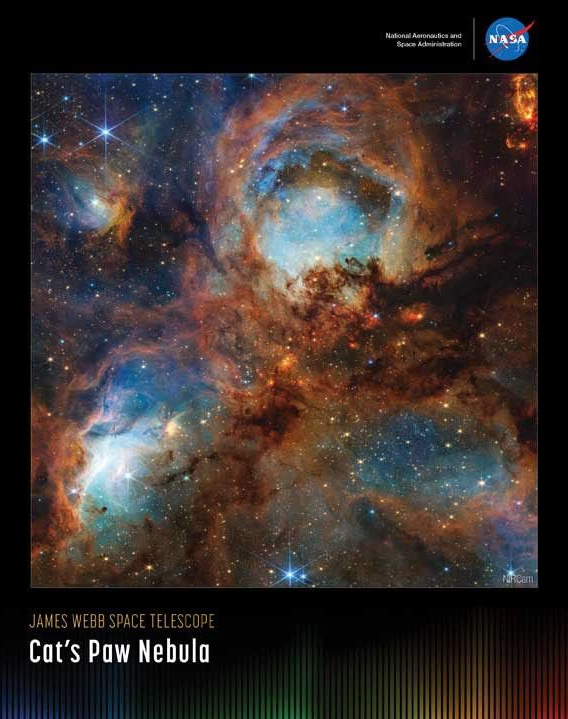
Image (Credit): NASA’s JWST poster showing the Cat’s Paw Nebula. (NASA, ESA, CSA, STScI; Designer: Elizabeth Wheatley (STScI))

This week’s image highlights a NASA poster that you can download (in a variety of versions). It shows the Cat’s Paw Nebula (NGC 6334) as captured by the James Webb Space Telescope (JWST).

Here is a short summary of what you are seeing from NASA:

Located approximately 4,000 light-years away in the constellation Scorpius, the Cat’s Paw Nebula offers scientists the opportunity to study the turbulent cloud-to-star process in great detail. Webb’s observation of the nebula in near-infrared light builds upon previous studies by NASA’s Hubble and retired Spitzer Space Telescope in visible- and infrared-light, respectively.

With its sharp resolution, Webb shows never-before-seen structural details and features: Massive young stars are carving away at nearby gas and dust, while their bright starlight is producing a bright nebulous glow represented in blue. It’s a temporary scene where the disruptive young stars, with their relatively short lives and luminosity, have a brief but important role in the region’s larger story. As a consequence of these massive stars’ lively behavior, the local star formation process will eventually come to a stop.

For more details and videos, visits the NASA page on the Cat’s Paw Nebula, which helps to commemorate the third anniversary of the JWST.

A Day in Astronomy: Letter to General Secretary Brezhnev

Image: USSR 1991 Yuri A. Gagarin Stamps.

The U.S. has plenty of issues regarding the pace of its space programs in the face of Chinese achievements, as noted multiple times in posts on this site. We should not see this as anything new. U.S. politicians and citizens had plenty of similar complaints during the space race with the USSR, and we also have evidence of similar complaints within the USSR.

For instance, on this day in 1965, Yuri Gagarin, the first man in space, wrote a letter with other cosmonauts to the USSR’s General Secretary Brezhnev with a list of concerns. The letter stated, in part:

The USA have not only caught up with us, but even surpassed us in certain areas. The flights of space vehicles Ranger-7, Ranger-8, Mariner-4, Gemini-5, and others are serious achievements of American scientists. This lagging behind of our homeland in space exploration is especially objectionable to us, cosmonauts, but it also damages the prestige of the Soviet Union and has a negative effect on the defense efforts of the countries from the socialist camp…Why is the Soviet Union losing its leading position in space research? A common answer to this question answer is as follows: the USA have developed a very wide front of research in space; they allocate enormous funds for space research. In the past 5 years they spent more than 20 billion dollars, and in 1965 alone 7 billion dollars. This answer is basically correct. It is well known that the USA spend on space exploration much more than does the USSR.

The letter covers other issues, including battles between the various organizations involved in space affairs as well as a stated preference by some for robotic flights rather than manned-flights.

It is an interesting reminder that the same issues constantly crop up to potentially cripple space initiatives, and today’s leader in space can quickly fall behind.