“Jonathan McDowell, an astronomer at the Harvard–Smithsonian Center for Astrophysics in the US, recorded an average of between one to two Starlink satellites deorbiting each day in 2025. That figure is expected to rise to around five per day as SpaceX continues to grow its space internet constellation.”
-Statement in the UK’s Independent newspaper regarding SpaceX’s Starlink satellites burning up in the Earth’s atmosphere. Given that the satellites are only expected to last 5 years and there are already 8,500 in orbit, this should come as no surprise. Fortunately, the satellites are designed to burn up after their useful life space. Of course, that does not necessarily mean that burning debris and the related pollutants are welcome. It will only get worse once Amazon and China start pumping even more satellites into orbit.
Image (Credit): Jared Isaacman. (PolarisProgram.com)
It has been a few months since the blowup between President Trump and Elon Musk, which also led to the removal of billionaire Jared Isaacman as the nominee to be NASA administrator. In the meantime, Sean Duffy has been in the role of acting administrator while also trying to run the Department of Transportation.
Well, that may be ending soon as it appears Mr. Isaacman may have another chance at the NASA job, as reported by CNBC. President Trump is said to have met with Mr. Isaacman last month to discuss his return as a nominee.
It is not clear if this means Mr. Isaacman is forgiven for donating to democratic causes or the White House is very short on capable people to run NASA, or both. Whatever the case, it is quite a turn of events, possibly helped along by Musk’s hat-in-hand approach after the scuffle.
Mr. Isaacman is being offered a much diminished agency from the one offered earlier this year, with the White House planning severe cuts in the Fiscal Year 2026 budget. Talks of more layoffs and firings during the current shutdown also threatens to make the situation worse.
These are fickle times with the White House flipping its positions on issues almost daily, so the news could change. For now, it’s a matter of wait and see.
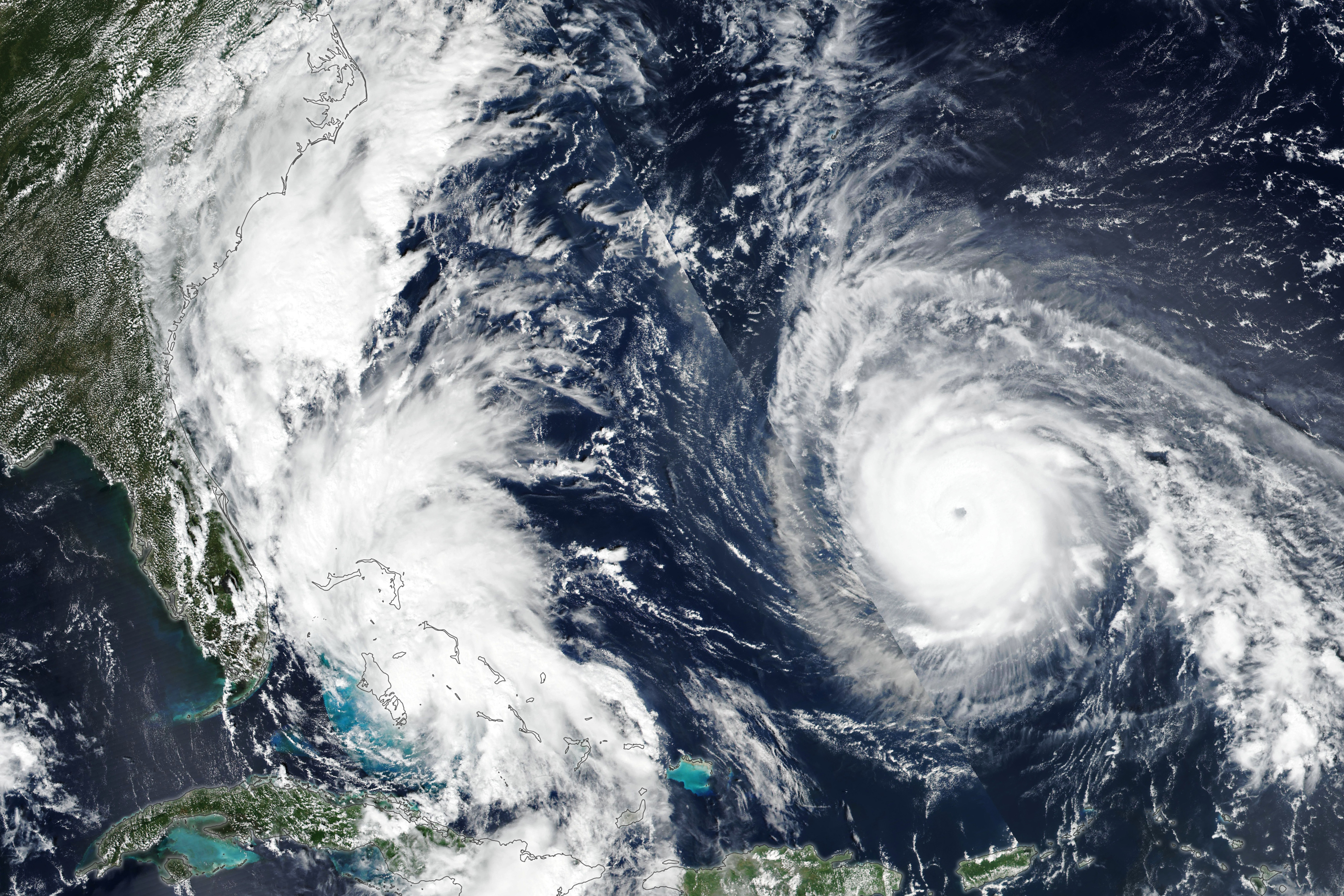
Image (Credit): Tropical Storm Imelda (left) and Hurricane Humberto off the eastern coast of the United States on September 28, 2025. The image also shows the outlines of the areas covered by clouds in North America and Caribbean. (NASA Earth Observatory image by Lauren Dauphin, using VIIRS data from NASA EOSDIS LANCE, GIBS/Worldview, and the Suomi National Polar-orbiting Partnership)
This week’s image comes from NASA’s Earth Observatory. It caught two tropical cyclones stirring up the Atlantic Ocean in late September. Both Tropical Storm Imelda and Hurricane Humberto caused plenty of problems off of the east coast of the United States without ever making landfall.
Imelda had already brought tropical storm conditions to portions of the central and northwestern Bahamas. Prior to becoming a named storm, the system also lashed Puerto Rico and eastern Cuba with heavy rain. In the coming days, Imelda could intensify and cause flash and urban flooding along the coast of the Carolinas, according to the National Hurricane Center.
Although Humberto lurked farther from land, its effects still reached coastlines due to its massive size. Dangerous surf conditions affected beaches in the northern Caribbean, the Bahamas, and Bermuda, as well as much of the U.S. East Coast. Mid-Atlantic and even some Northeast states could see large swells and rip currents stemming from the storm, forecasters warned.
If you are eager to understand what comes after the International Space Station (ISS), you might enjoy Vast’s video showing plans for the Haven-1 and Haven-2 missions as well as other future projects.
Vast’s Haven-1 is a single-module station expected to be launched in May 2026. Once Haven-1 is in orbit, four crew members will be launched to the Haven-1 station via a SpaceX Dragon for a two-week mission. This will be the first real test of the new commercial space station module, which is expected to stay in orbit for three years so three additional crews can visit and conduct research and even manufacture in space.
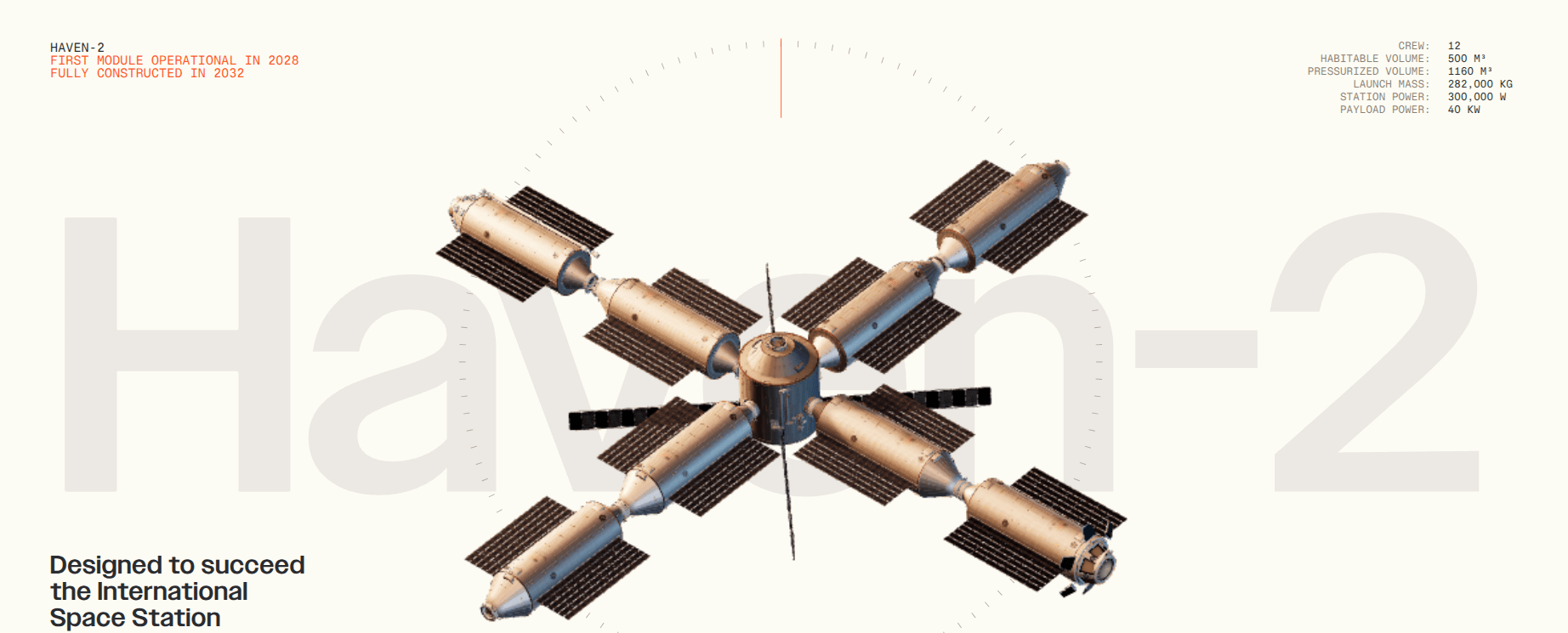
Haven-2 will follow with a larger module. The plan is to link a series of modules to create an expanded station (see image below). The construction of Haven-2 is expected to be underway while the ISS goes out of service in 2030.
Vast is one of numerous companies hoping to fill the gap left by the departing ISS. Whether it is selling seats to NASA scientists, commercial entities, or space tourists, this American company based in California sees a future in space stations.
Within the next 18 months, the space shuttle Discovery may be disassembled in Washington D.C., transported more than 1,000 miles to Houston and reassembled. But not if grassroots group Keep The Shuttle has anything to say about it. The plan to move a shuttle, notably an unnamed shuttle, was part of President Donald Trump’s “Big Beautiful Bill” passed this summer. The Smithsonian and others have dug in against the move, saying the research institute actually owns the Discovery in a trust for the American people, nothing that it’s unclear if Congress even has the authority to order the Smithsonian transfer an artifact.
Thanks to the huge spate of exoplanet discoveries, multiple rocky planets have been found orbiting within the habitable zones (HZs) of red dwarf stars. For decades, there has been an ongoing debate as to whether these systems could be our best bet for finding evidence of life beyond Earth. In a recent study, Professor David Kipping addresses two key facts that could mean humanity is an outlier. Based on the age of the Universe and the relatively rare nature of our Sun, he concludes that astrobiologists examining red dwarf planets may be looking in the wrong place.
A rare interstellar comet — only the third ever confirmed to enter our solar system — was photographed last week, closely approaching Mars, the European Space Agency said Tuesday. The images taken on Friday by two Mars orbiters show a bright, fuzzy white dot of the comet, also known as 3I/ATLAS, appearing to move against a backdrop of distant stars as it was about 18,641,135 miles away from Mars. The comet poses no threat to Earth, NASA has previously said.





 Our Awesome Universe