Bookshelf: The Giant Leap by Caleb Scharf

Credit: Basic Books

If you are looking for a new book to read, you might want to check out The Giant Leap by Caleb Scharf, who is director of astrobiology at Columbia University and the senior scientist for astrobiology at NASA’s Ames Research Center.

Here is a quick blurb from the publisher:

The story of life has always been one of great transitions, of crossing new frontiers. The dawn of life itself is one; so, too, is the first time two cells stuck together rather than drifting apart. And perhaps most dramatic were the moves from the sea to land, land to air. Each transition has witnessed wild storms of innovation, opportunity, and hazard. It might seem that there are no more realms for life to venture. But there is one: space.

In The Giant Leap, astrobiologist Caleb Scharf argues that our journey into space isn’t simply a giant leap for humankind—it’s life’s next great transition, an evolution of evolution itself. Humans and our technology are catalysts for an interplanetary transformation, marking a disruption in the story of life as fundamental as life’s movement from sea to land, and land to sky.

Inspired by Darwin’s account of his journey on the Beagle, and packed with stories from the past, present, and future of space travel, The Giant Leap thrills at both life’s creativity and the marvels of technology that have propelled us into the cosmos. And it offers an awesome glimpse of the grander vistas that wait in the great beyond.

Scientific American magazine interviewed the author to learn more about his views. One of the questions related to settling on Mars, which the author did not view as a best option for expanding outward into our Solar System:

We definitely need to study Mars and the moon, and maybe some of us should even try to live there. I mean, there’s all sorts of genuine reasons for doing that. But in the long term, it’s far better to engineer what you really need—to create environments that place fewer stressors on life that evolved on Earth over four billion years. Even if you build fabulous habitats on the moon or Mars, you’ll never have Earth-normal gravity in those places, for example.

Whether you make use of a natural object such as an asteroid or just construct an entirely artificial habitat out there, both would give you far more options than a planetary surface. You can spin your habitat to get Earth-like artificial gravity; you can engineer a lovely atmosphere that precisely fits our biological needs. You can set up seasons, choose where to orbit and have robust protection from cosmic radiation.

The interview covers a range of questions that delve into parts of the book. You may want to start with the interview before deciding to go further. It is a great launching point.

Space Quote: The New Galileo, or Just a Dreamer?

Credit: Mariner Books.

“This is an example from the modern world of what the Vatican did at the time of Galileo…People have their own prejudices. I don’t have any problem with that…The whole idea of doing science is to maintain an agnostic point of view, be curious, wonder over the possibilities…It’s what makes science exciting.”

-Statement by Israel-born Harvard astronomer Avi Loeb to The Times of Israel. He was referring to his submission of an academic paper about the 3I/ATLAS comet where the last sentence in the paper noted that the comet could be targeting our solar system. He was asked to remove this sentence if he wanted his paper to be published. Astronomer Loeb has made a number of controversial comments about this new comet as well as an earlier comet named ‘Oumuamua, which was the subject of his book Extraterrestrial:
The First Sign of Intelligent Life Beyond Earth
.

The New Glenn Launch to Mars Scheduled for Tomorrow

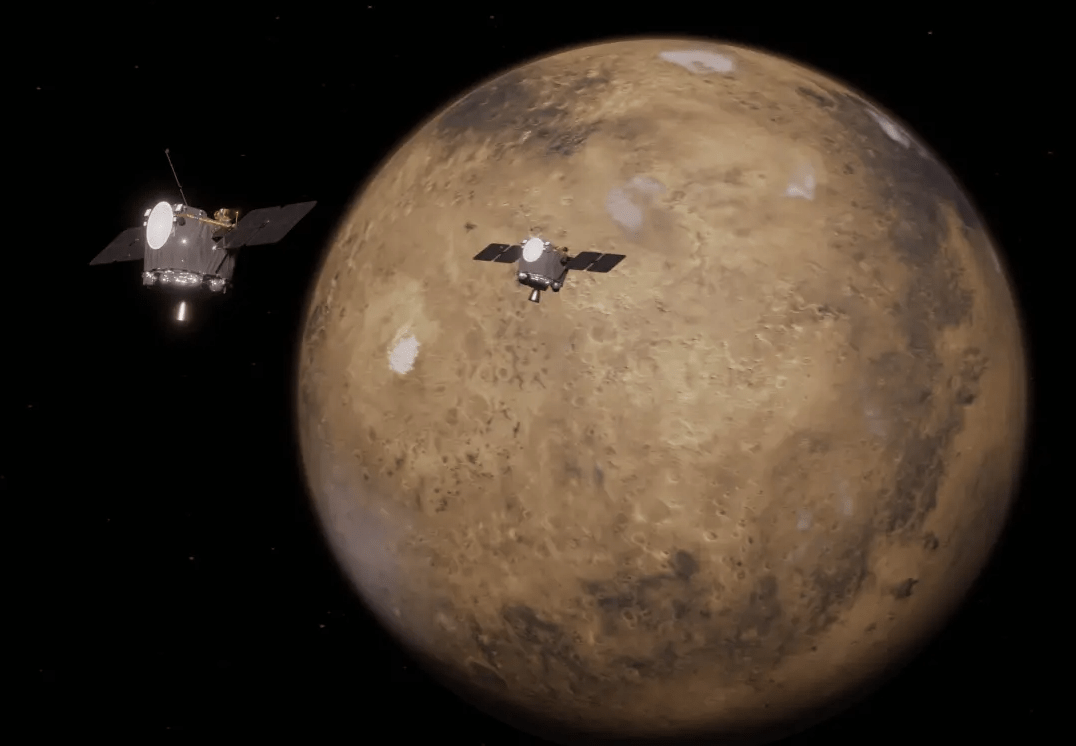
Image (Credit): Artist’s rending of the two EscaPADE probems approaching Mars. (NASA)

Blue Origin’s New Glenn rocket is scheduled to be launched tomorrow afternoon with two Martian probes on board. A lot is riding on tomorrow’s launch. The mission is important for Blue Origin, as it tests its new rocket with its first real mission. It is also important to NASA, which is using the probes to better understand the Martian atmosphere.

Blue Origin’s reusable New Glenn rocket will put it in direct competition with SpaceX for future NASA missions. This redundancy is needed, particularly with SpaceX seeming to struggle with its projects related to the Atemis lunar mission.

The $100 million Martian mission, called Escape and Plasma Acceleration and Dynamics Explorers (EscaPADE), involves a pair of identical spacecraft with a the goal of analyzing:

  1. how Mars’ magnetic field guides particle flows around the planet,
  2. how energy and momentum are transported from the solar wind through the magnetosphere, and
  3. what processes control the flow of energy and matter into and out of the Martian atmosphere.

The two probes will be launched towards Lagrange Point 2, where they will sit for more than a year before making an approach towards Mars. The probes are expected to go into orbit around Mars in September 2027.

Godspeed to Blue Origin and NASA.

Update: The launch has been delayed due to bad weather. The next attempt will be on November 12th.

Congresswoman Seeks More Data on Interstellar Comet

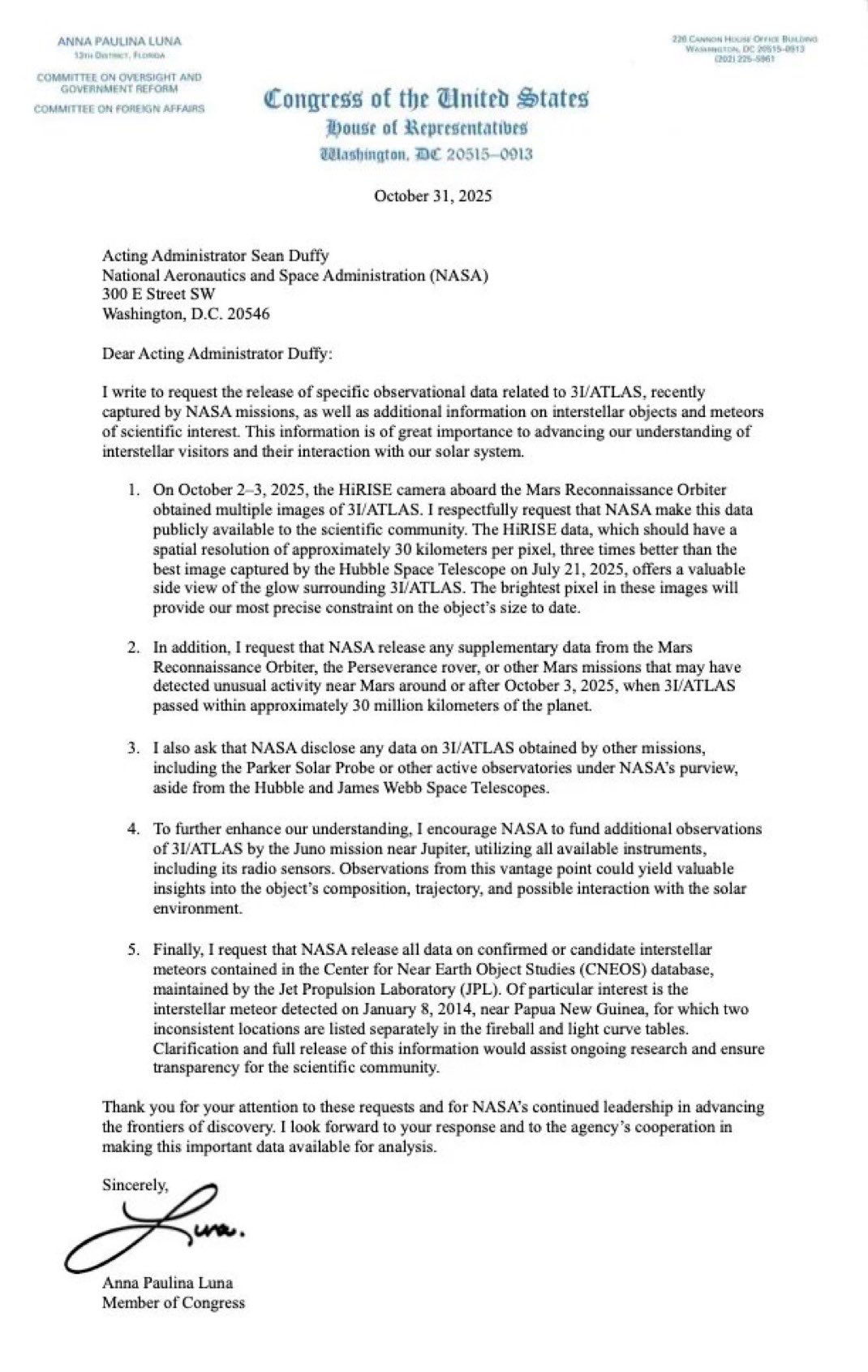
Congresswoman Anna Paulina Luna (R-FL) is very interested in obtaining some additional observational data from NASA regarding the interstellar comet known as 3I/ATLAS. In her letter to NASA (shown below), she said the information is “…of great importance to advancing our understanding of interstellar visitors and their interaction with our solar system.”

It appears this interest follows comments from Harvard scientist Avi Loeb about the object possibly being an alien spaceship.

All of this is starting to sound the plot in Arthur C. Clark’s book Rendezvous with Rama.

Pic of the Week: Pismis 24

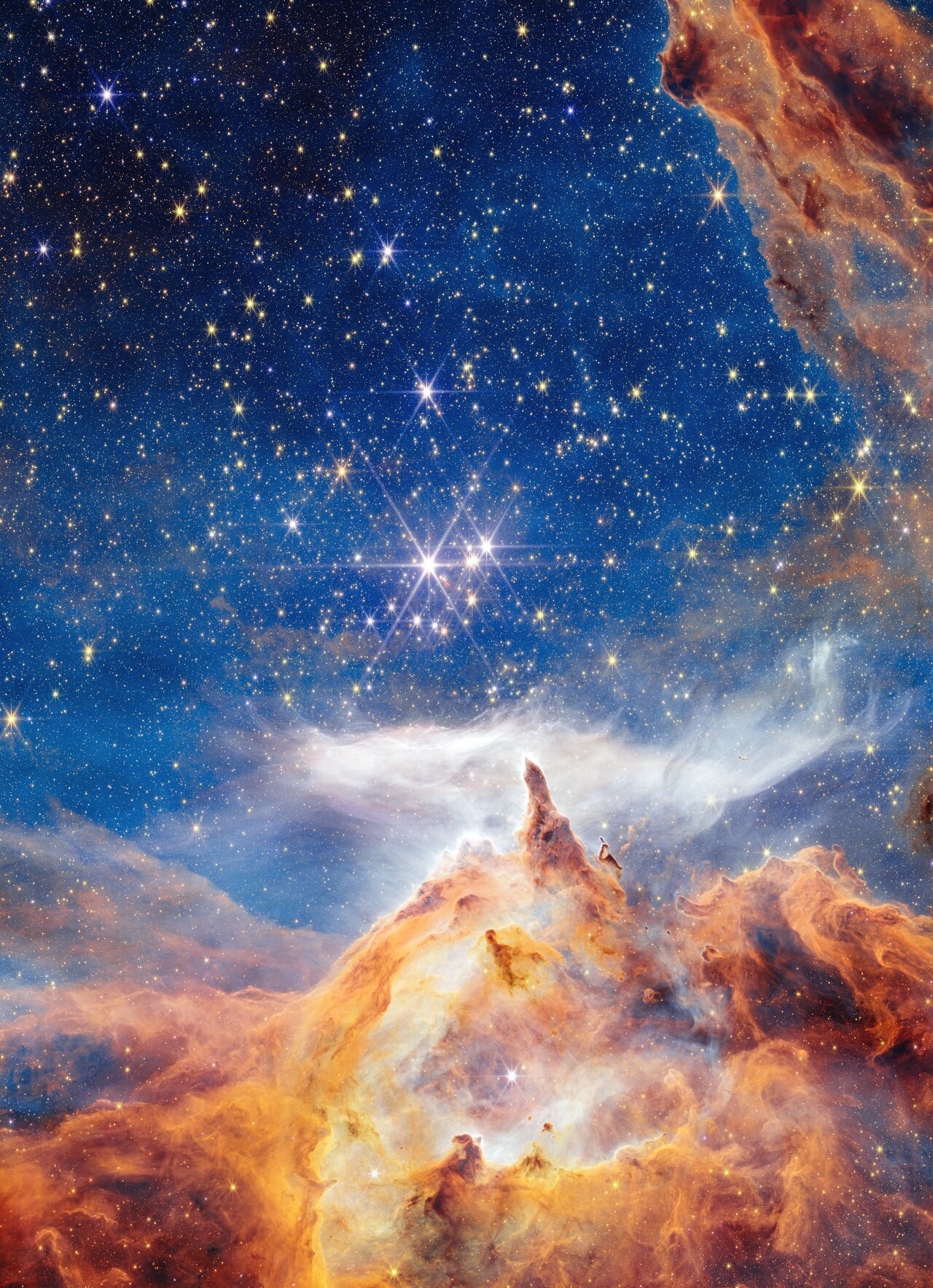
Image (Credit): The Pismis 24 star cluster as captured by the JWST. (NASA, ESA, CSA, and STScI, A. Pagan (STScI))

This week’s amazingly vibrant image was captured by the James Webb Space Telescope (JWST). It shows a young star cluster, called Pismis 24, which is approximately 5,500 light-years away.

Here is the rest of the story from the European Space Agency (ESA):

What appears to be a craggy, starlit mountaintop kissed by wispy clouds is actually a cosmic dust-scape being eaten away by the blistering winds and radiation of nearby, massive, infant stars. Home to a vibrant stellar nursery and one of the closest sites of massive star birth, Pismis 24 provides rare insight into large and massive stars. This region is one of the best places to explore the properties of hot young stars and how they evolve.