Movie: The Age of Disclosure

Credit: Farah Films

If you have questions about UFOs, now fashionable called Unidentified Anomalous Phenomena (UAP) to presumably add some seriousness and move it away from the kooky crowd, you might want to check out the upcoming film The Age of Disclosure. It will be available on November 21 on Amazon Prime as well as at select theaters.

Here is the trailer, which might entice you. It has the draw of many entertainment thrillers, and reminds me of the endless videos on YouTube and even Netflix describing secrets only a few know. It comes across as an updated version of the search for Bigfoot and the Arch of the Covenant rolled into one.

The film description states:

The Age of Disclosure is an unprecedented and revelatory film –featuring 34 senior members of the U.S. Government, military, and intelligence community– revealing a cover-up of the existence of non-human intelligent life and a secret war to reverse engineer technology of non-human origin.

The film exposes the profound impact the situation has on the future of humanity, while providing a look behind-the-scenes with those at the forefront of the bi-partisan disclosure effort.

Amazon Prime’s pitch is just as dramatic:

An explosive documentary that reveals an 80-year global cover-up of non-human intelligent life and a secret war among major nations to reverse-engineer advanced technology of non-human origin. Featuring testimony from 34 U.S. Government, military, and intelligence community insiders, the film exposes the profound stakes for the future of humanity.

One of the officials in the trailer is Senator Marco Rubio, now Secretary of State Rubio. If there is any bit of truth to all of this, we should be asking for these UAP files instead of the Epstein files.

The films creator, Dan Farah, was on Real Time with Bill Maher last week discussing the film. You can find the podcast here. Mr. Farah discusses how these non-human actors live in the sea and seem to have appeared right around the time the nuclear age started. Of course, this is also after World War II when new forms of flight and related spying was underway, but why mess up the story.

Mr. Farah also seems surprised they are seen around our military facilities, as if this would not be a prime target for any outside party, human or otherwise. He then states:

…there’s been a few events where UAP activity over nuclear weapon sites has activated the missiles in some case and then turned them off in some cases. And it’s obviously a display of power of some sort. You know, your guess is as good as mine of what the intention is, but it’s concerning.

All of this sounds pretty amazing, yet I think it is more an amazing paste job of various quotes that are then repurposed to create a more dramatic story. For that reason, it may be better for the uninitiated, or just the regular newspaper readers who do not get their news from social media, to first go through the material from the very group set up to study all of this, the All-domain Anomaly Resolution Office, as well as various congressional hearings on this matter. Then you can make up your own mind.

Here are a few congressional hearings to get you started on your search:

We already have too many conspiracies upsetting the public and breeding mistrust of all government entities. Its time to breath and read up on this material yourself.

We need to remain open minded without advancing straight to empty headed. As Carl Sagan stated in his book The Demon-Haunted World: Science as a Candle in the Dark:

Science arouses a soaring sense of wonder. But so does pseudoscience. Sparse and poor popularizations of science abandon ecological niches that pseudoscience promptly fills. If it were widely understood that claims to knowledge require adequate evidence before they can be accepted, there would be no room for pseudoscience. But a kind of Gresham’s Law prevails in popular culture by which bad science drives out good.
If at First You Don’t Succeed: Jared Isaacman is Really Back

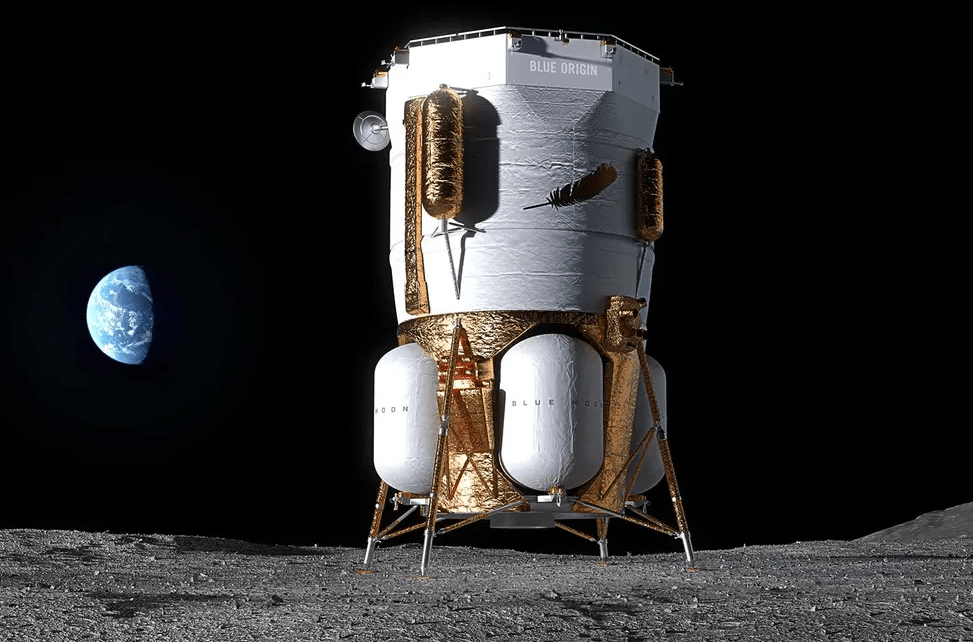
Image (Credit): Artist’s rendering of Blue Origin’s Blue Moon Mark 1, which is a single-launch, lunar cargo lander. (Blue Origin)

President Trump has had a change of heart on Jared Isaacman, his initial nominee for NASA administrator until he withdrew that nomination earlier this year.

Earlier today, the President posted the following:

Jared’s passion for Space, astronaut experience, and dedication to pushing the boundaries of exploration, unlocking the mysteries of the universe, and advancing the new space economy, make him ideally suited to lead NASA into a bold new era.

So what has changed in the last few months to make Mr. Isaacman “ideally suited” to lead NASA as compared to when he was determine unsuitable? I cannot think of anything other than the end of the President’s feud with Elon Musk. Of course, that was recently replaced with Elon Musk’s feud with acting NASA Administrator Sean Duffy, who proposed reopening competition for the first manned Moon landing this century due to delays with SpaceX’s Starship.

Will Mr. Isaacman save Musk’s Moon mission? He may calm some of the acrimony for the time being, but any new NASA administrator had better have a solid plan to get Americans back on the Moon before China does. Mr. Isaacman may be friends with Mr. Musk, but should he be confirmed he will head a weakened space agency that is struggling with a complex Moon mission that may be much less complex without the Starship refueling plans. In fact, Blue Origin just submitted a new Moon mission plan that drops this refueling altogether.

It is not impossible the winds will shift again, leaving Mr. Isaacman adrift once more. That is how it is in Washington these days. Fickle leadership leads to fickle decision-making and fickle planning.

The Chinese are not having these issues at the moment as they aim to be on the Moon by 2030.

Space Stories: New Exoplanets in a Binary Star System, the Secret “Athena” Plan for NASA, and an Interstellar “Tunnel”

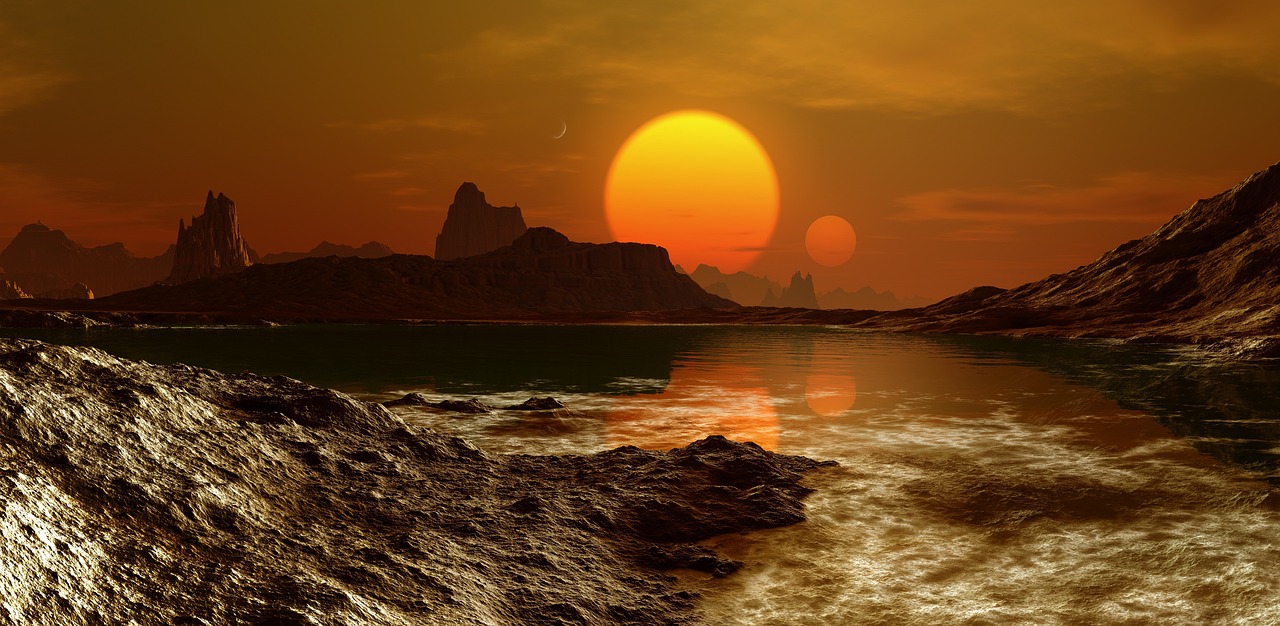
Credit: Pixabay.com.

Here are some recent space-related stories of interest.

University of Liege: Three Earth-sized Planets Discovered in a Compact Binary System

An international team of researchers has just revealed the existence of three Earth-sized planets in the binary stellar system TOI-2267 located about 190 light-years away. This discovery, published in Astronomy & Astrophysics, is remarkable as it sheds new light on the formation and stability of planets in double-star environments, which have long been considered hostile to the development of complex planetary systems.

ARSTECHNICA: Capitol Hill is Abuzz with Talk of the “Athena” Plan for NASA

In recent weeks, copies of an intriguing policy document have started to spread among space lobbyists on Capitol Hill in Washington, DC. The document bears the title “Athena,” and it purports to summarize the actions that private astronaut Jared Isaacman would have taken, were his nomination to become NASA administrator confirmed. The 62-page plan is notable both for the ideas to remake NASA that it espouses as well as the manner in which it has been leaked to the space community.

Earth.com: Interstellar “Tunnel” Found that Connects Our Solar System to Other Stars, According to Astronomers

Space can surprise even those who spend their lives studying it. People often think of our solar system as just a few planets and a bunch of empty space. Yet new observations suggest we have been living inside a hot, less dense region, and that there may even be a strange “cosmic interstellar channel,” or tunnel, connecting us to distant stars. After years of careful mapping, a new analysis reveals what appears to be a channel of hot, low-density plasma stretching out from our solar system toward distant constellations.

A Day in Astronomy: The Arrival of the Expedition 1 Crew at the ISS

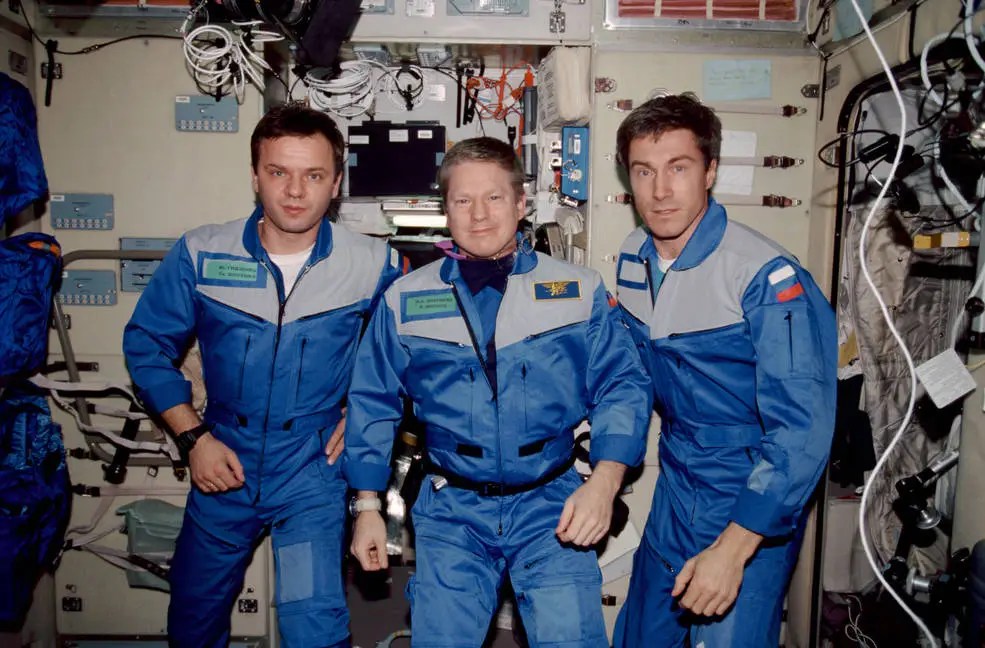
Image (Credit): The Expedition 1 crew of Yuri P. Gidzenko (left), William M. Shepherd, and Sergei K. Krikalev in the ISS’s Zvezda Service Module. (NASA)

It was 25 years ago on this day that the Expedition 1 crew arrived at the International Space Station (ISS), which marked the beginning of very successful space collaboration between five space agencies from the United States, Russia, the European Union, Japan, and Canada.

The Expedition 1 crew, arriving at the ISS aboard a Russian Soyuz capsule, consisted of NASA astronaut William M. Shepherd and Russian cosmonauts Yuri P. Gidzenko and Sergei K. Krikalev. This first mission of four months focused on the continued assembly of the station, with the Expedition 2 crew arriving in March 2001 aboard Space Shuttle Discovery.

Some of the key facts related to the ISS include:

  • In 24 hours, the space station makes 16 orbits of Earth, traveling through 16 sunrises and sunsets.
  • The living and working space in the station is larger than a six-bedroom house (and has six sleeping quarters, two bathrooms, a gym, and a 360-degree view bay window).
  • A spacecraft can arrive at the space station as soon as four hours after launching from Earth.
  • The space station travels an equivalent distance to the Moon and back in about a day.
Image (Credit): Drawing of the International Space Station with all of the elements labeled. (NASA)

Television: Will We Ever See a Return of The Orville?

Credit: 20th Television and Fuzzy Door Productions.

While I am very happy with the sci-fi shows from this past summer, I would be happy to see the return Seth MacFarlane’s The Orville, if only rumors were true. Yes, the series seemed to start as a spoof of Star Trek, but it found its own unique footing and grew on me over time. Hence, I was not happy to see it end in 2022 after 3 seasons and 36 episodes.

You may remember back in January 2024 when MacFarlane told The Wrap somewhat cryptically:

All I can tell you is that there is no official death certificate for The Orville. It is still with us. I can’t go any further than that at the moment. There are too many factors.

And then this time last year, some sites, such as The Cinemaholic, were reporting that filming for season four was to start in January 2025.

While the filming rumor was false, as recently as August of this year Seth MacFarlane kept rumors alive when he told Ted Danson that he still plans to do a season four, or that’s how the media reported it. Actually, if you listen to the interview, what he said was, “We still have yet to do a season four.” This is a correct statement, but not really a statement of intent.

Can we hang our hats on the word “yet” and start to assume a fourth season? That would not be a safe bet. Many artists feel their work deserves more running time and will not let go, if only for the sake of the fans.

So I am deciding to focus on the new sci-fi shows from the last 12 months that really are returning or seem to have a strong shot at another season, which includes:

That said, I am not giving up on the return of The Orville.