Television: 2025 Was a Good Year for Sci-fi Space Shows

Image (Credit): Some of the characters from Alien: Earth. (FXNetworks)

Before the year is over, I want to highlight five sci-fi space television series that kept me entertained. I cannot do the same with sci-fi space movies because 2025 lacked exciting, well-made films.

Here are my top five sci-fi space television shows in order of preference.

  1. Andor on Disney+
  2. Alien: Earth on FX/HULU
  3. Star Trek: Strange New Worlds on Paramount+
  4. Foundation on Apple TV
  5. Murderbot on Apple TV

While Andor saw its second and last season this year, the remaining four will be returning for another season. When combined with the other new shows to premiere in 2026, such as Star Trek: Starfleet Academy, then we are looking at another good year for sci-fi space television series (assuming we do not need to wait years for the returning seasons).

I wanted to rank Murderbot a little higher, but it still lacks the energy of the books and each episode is too short to leave you satisfied. That said, it has a lot of potential and it is still a solid series.

Overall, great television made up for so-so movies in 2025.

Let’s hope some great sci-fi space movies in 2026.

Happy New Year!

Note: Apple TV’s Pluribus was not considered for this list. While it involves a “virus” from a distant exoplanet, we never learn anything about the distant civilization. Moreover, it is basically an Earth-based drama not involving any travel away from our planet.

Space Quote: Houston, Discovery May Not Be Landing

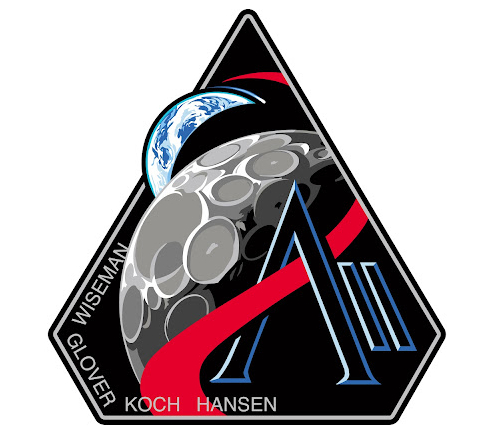
Image (Credit): The official Artemis II mission crew patch. (NASA)

“We’ve got spacecraft that are going around the moon with Artemis II, III, IV and V. One way or another, we’re going to make sure that Johnson Space Center gets their historic spacecraft.”

Statement by NASA Administrator Jared Isaacman to CNBC when asked about the planned move of the Discovery space shuttle from the Smithsonian Museum in Chantilly, VA to the Space Center Houston museum. He said this after highlighting the costs and risks related to this proposed move. Some in Congress have opposed the move for these very reasons, in addition to it being a political gimmick by the White House that makes little sense.

Space Stories: A Lopsided Universe, Cosmic Rings, and Clipper Captures Comet

Credit: Image by mastershaff0 from Pixabay

Here are some recent space-related stories of interest.

Phys.org: The Universe May Be Lopsided, New Research Suggests

The shape of the universe is not something we often think about. My colleagues and I have published a new study that suggests it could be asymmetric or lopsided, meaning not the same in every direction. Should we care about this? Well, today’s “standard cosmological model”—which describes the dynamics and structure of the entire cosmos—rests squarely on the assumption that it is isotropic (looks the same in all directions), and homogeneous when averaged on large scales.

Daily Galaxy: Astronomers Stunned By 400 Cosmic Rings Etched Around Baby Star

A groundbreaking discovery published in Nature Astronomy has revealed a cosmic phenomenon that may finally settle a 30-year-old mystery surrounding the early life cycles of stars. Astronomers observing the binary system SVS 13 within the NGC 1333 reflection nebula, located 1,000 light-years away in the constellation Perseus, have identified more than 400 bow-shaped rings created by violent ejections from a newborn star.

Southwest Research Institute: Europa Clipper Instrument Uniquely Observed Interstellar Comet 3I/ATLAS

The Southwest Research Institute-led Ultraviolet Spectrograph (UVS) aboard NASA’s Europa Clipper spacecraft has made valuable observations of the interstellar comet 3I/ATLAS, which in July became the third officially recognized interstellar object to cross into our solar system. UVS had a unique view of the object during a period when Mars- and Earth-based observations were impractical or impossible. “We’re excited that this opportunity to view another target on the way to Jupiter was completely unexpected,” said SwRI’s Dr. Kurt Retherford, the principal investigator for Europa-UVS. “Our observations have allowed for a unique and nuanced view of the comet.”

A Day in Astronomy: Death of Hermann Oberth

Image (Credit): Hermann Julius Oberth. (European Space Agency)

On this day in 1989, rocket pioneer Hermann Julius Oberth died. He was born in Austria-Hungary in 1894 and at a young age was inspired by the rockets in the fictional stories by Jules Verne, such as From the Earth to the Moon.

Oberth’s interest in the stories of Verne led him to build his first rocket at the age of 14. His doctoral dissertation was on rocketry, he wrote books on rocketry, and he later joined an amateur rocketry group called the “Spaceflight Society” where he mentored other rocket enthusiasts, including Wernher von Braun.

Oberth was unable to get a security clearance to work on the Nazis V-2 rocket, thereby limiting his value to Americans following World War II, unlike Wernher von Braun and others who came to the United States under Project Paperclip and later assisted with NASA’s Apollo program.

Wernher von Braun was still able to get Oberth a position with the U.S. Army after the war and paid tribute to his mentor by stating:

I have a boundless admiration for the solitary genius which enabled him to bring into focus all of the essential elements of a gigantic concept, together with the human greatness which allowed him, in shy reserve, to bear with equanimity the “crucify him” as well as the “hosannas” of public opinion. I myself owe him a debt of gratitude not only for being the guiding light of my life but also for my first contact with the theoretical and practical aspects of rocket technology and space travel.

Oberth continues to be known today as the “Father of Space Travel.”

Podcast: A Discussion with the Creator of Andor

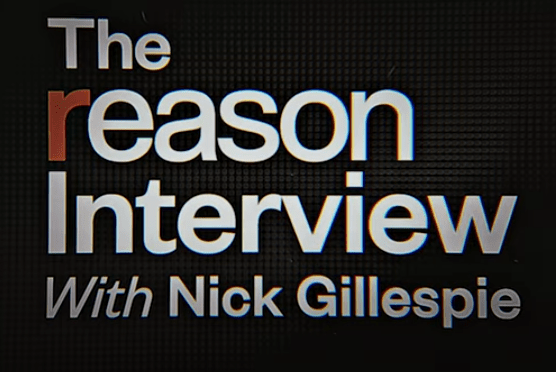
You are in for a treat if you are interested in a deeper dive into the world of Andor. Reason magazine’s podcast The Reason Interview with Nick Gillespie has a eye-opening interview with Tony Gilroy, the creator, writer, and director of Andor. The series is without doubt the best of the Star Wars television series. The podcast discussion covers bureaucracy and the surveillance state as portrayed throughout the Andor series.

One of the questions discussed the lack of light sabers and the Force in the series, to which Mr. Gilroy noted:

One of my original questions to them, to the experts there, was, “In the galaxy—in this huge galaxy—how many people would have ever encountered a Jedi? How many people would ever know about the Force? How many people know about this family you keep rotating these movies on?” And the answer is: nobody, or almost nobody. If you’re living in the galaxy, if you’re a being in the galaxy, you’ve probably never had any encounter ever with Jedi or even know what it is, or the Force.

This type of thinking was made the series worth watching. The series did not need to be saved by Darth Vader or a Yoda plush toy anymore than a good Star Trek series should need to be saved by the Borg.

Andor also touches on something real happening just outside our windows rather than a galaxy far, far away. Mr. Gilroy notes it in this way:

The parallels to what’s happening in our world right now are even beyond moralistic…There is a giddy rush—you’ll see people cravenly move toward power because it’s gonna benefit them, or it’s warmer there, or they have no spine or moral commitment to really back up…People getting on board something—getting on board a train that’s on fire that they know is heading toward a cliff. It’s just amazing to watch the sort of giddy rush of people stripping off their clothes and jumping onto the fire here. It’s quite amazing.

Andor is the antithesis of getting along. It is about pushing back at the cost of everything so that others may someday have something worth holding. It is something we seem to have forgotten in our current situation even though we know the broken norms will not somehow reassert themselves via some outside Force. If we cannot see that we are the Force, then we are all truly lost.

Andor is possibly the one series that makes Star Wars relevant to a new generation. Gen Z does not need Jawas and Ewoks. It needs a new hope.

Mr. Gilroy understands this and shares all of his insights via the podcast. You will not be disappointed.