
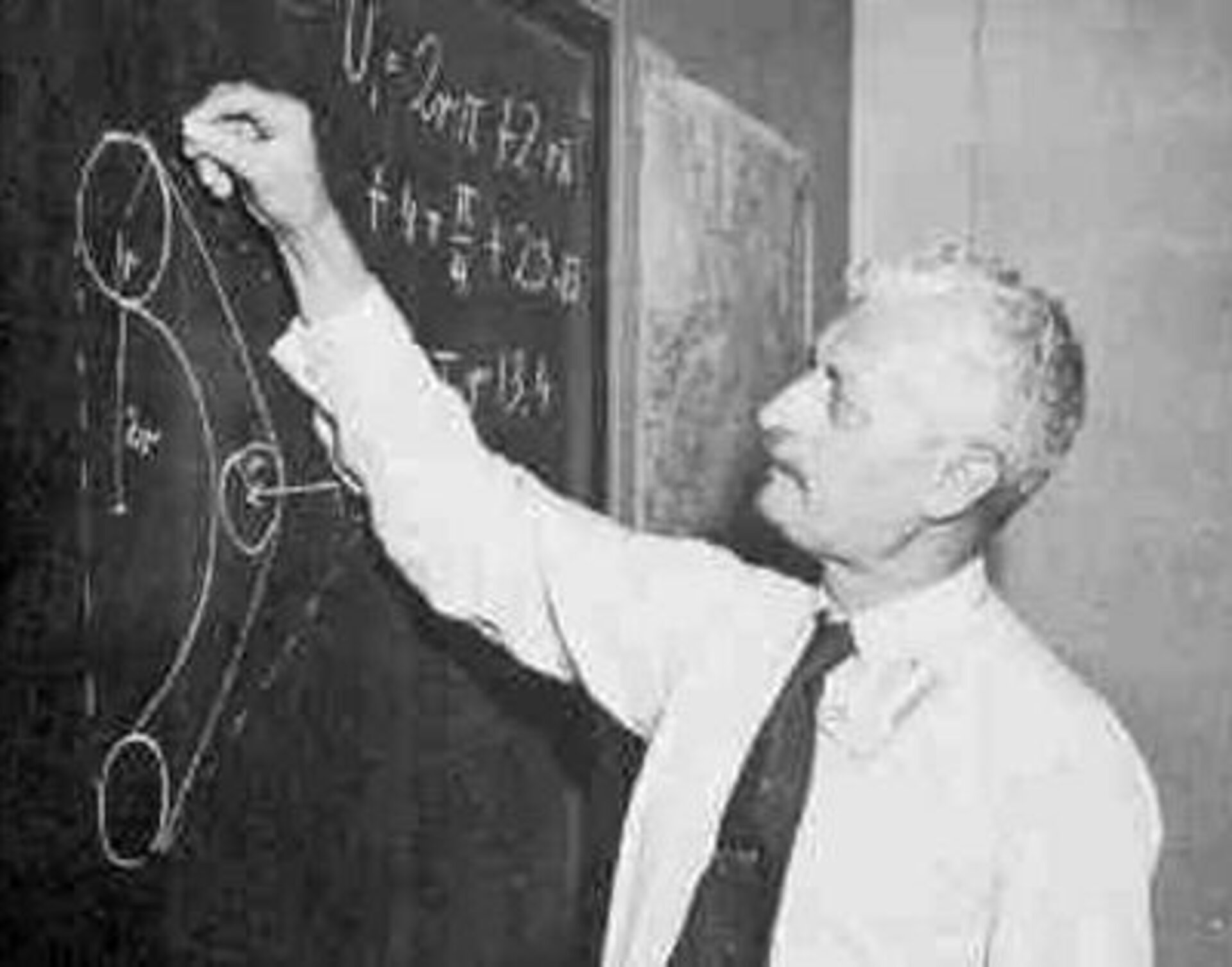
On this day in 1989, rocket pioneer Hermann Julius Oberth died. He was born in Austria-Hungary in 1894 and at a young age was inspired by the rockets in the fictional stories by Jules Verne, such as From the Earth to the Moon.
Oberth’s interest in the stories of Verne led him to build his first rocket at the age of 14. His doctoral dissertation was on rocketry, he wrote books on rocketry, and he later joined an amateur rocketry group called the “Spaceflight Society” where he mentored other rocket enthusiasts, including Wernher von Braun.
Oberth was unable to get a security clearance to work on the Nazis V-2 rocket, thereby limiting his value to Americans following World War II, unlike Wernher von Braun and others who came to the United States under Project Paperclip and later assisted with NASA’s Apollo program.
Wernher von Braun was still able to get Oberth a position with the U.S. Army after the war and paid tribute to his mentor by stating:
I have a boundless admiration for the solitary genius which enabled him to bring into focus all of the essential elements of a gigantic concept, together with the human greatness which allowed him, in shy reserve, to bear with equanimity the “crucify him” as well as the “hosannas” of public opinion. I myself owe him a debt of gratitude not only for being the guiding light of my life but also for my first contact with the theoretical and practical aspects of rocket technology and space travel.
Oberth continues to be known today as the “Father of Space Travel.”
 Our Awesome Universe