Okay, you are running out of time to buy the perfect gift. Yet you do not need to fret. You still have some good options for that friend or family member.
First, why not consider getting this person a membership in a space-advocacy organization. In this way, they can stay abreast of space news while also supporting an organization pushing (1) Congress for more space funding and (2) NASA in the direction of more exploration.
Here are three such organizations you can support:
All three space advocacy organizations also have great magazines for members.
And speaking of magazines, another option is to get this person an annual subscription to a space magazine. Here are some magazines covering astronomy that are worth considering.
I am not getting a red cent by endorsing any of these organizations and magazines, but it does make a lot of sense to consider these gift options. It is a quick and easy way to give a great gift while supporting those organizations that educate the public on space.
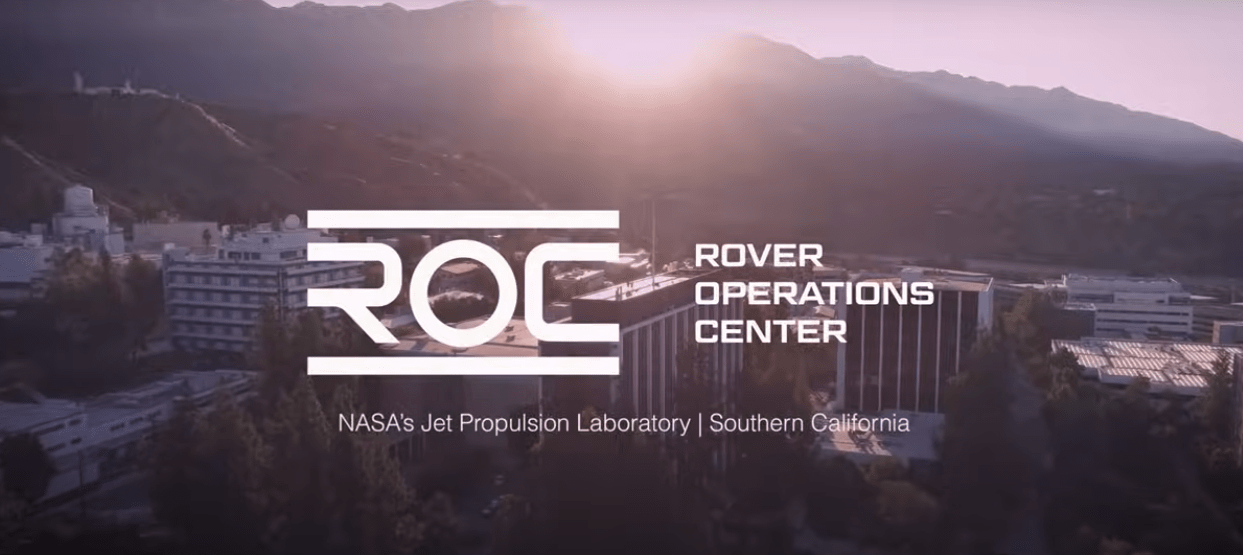
NASA’s Jet Propulsion Laboratory in Southern California on Wednesday inaugurated its Rover Operations Center (ROC), a center of excellence for current and future surface missions to the Moon and Mars. During the launch event, leaders from the commercial space and AI industries toured the facilities, participated in working sessions with JPL mission teams, and learned more about the first-ever use of generative AI by NASA’s Perseverance Mars rover team to create future routes for the robotic explorer.
About a month after a tiny piece of space debris stranded three astronauts for nine days aboard China’s Tiangong space station, the taikonauts aboard the orbital outpost have begun making some modifications. According to state media network CGTN, the country’s space travelers Zhang Lu and Wu Fei endured an eight-hour spacewalk earlier this week in order to install a debris protection panels on the space station’s outer hull. While there, they also performed an inspection of Tiangong’s exterior, along with other minor repairs.
What do fizzing champagne glasses and our universe have in common? They’re both full of bubbles! The cosmic bubbles are vast structures hundreds of millions of light-years across. Their walls are outlined by collections of galaxies. The details of these bubbles – their size, shape, and distribution – can tell us more about the mysterious force known as dark energy that is causing the universe’s expansion to accelerate. The upcoming Nancy Grace Roman Space Telescope will detect and measure tens of thousands of cosmic voids, some as small as just 20 million light-years across.
While all the talk right now is ranking the TV shows of 2025 (which I have yet to do), I am already looking forward to 2026.
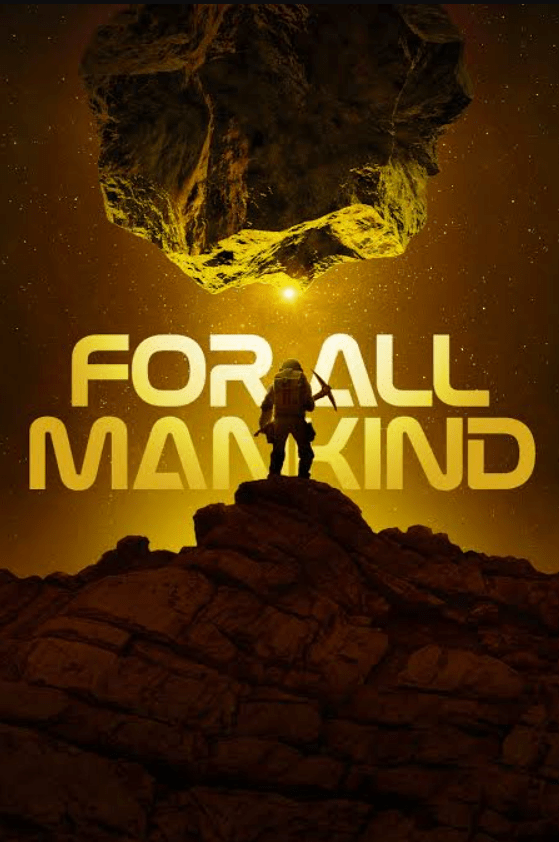
If you are not happy about the two-year delay in the return of season five of Apple TV’s For All Mankind, you can rest easy knowing that 2026 will not only have season five of this favorite, but also the premiere of a spin-off called Star City. Yes, the premiere of Star Citywas announced by Apple TV two-and-a-half years ago with the season five news, but it seems 2026 will see both shows break loose
So what is Star City about? That earlier announcement shared this from executive producers Matt Wolpert and Ben Nedivi:
Our fascination with the Soviet space program has grown with every season of ‘For All Mankind…The more we learned about this secret city in the forests outside Moscow where the Soviet cosmonauts and engineers worked and lived, the more we wanted to tell this story of the other side of the space race. We could not be more excited to continue building out the alternate history universe of ‘For All Mankind’ with our partners at Apple and Sony.
Wolpwert also had this to say about where season five of For All Mankind was heading:
We can say that, obviously, season four ended with an asteroid being stolen, and so there are a lot of people on Earth who are pretty pissed off about that. I think that more than anything, I would say the thrust of the season five story is how a rift is forming between the people who live on Mars, and more and more people are now living on Mars, and the people who have stayed back on Earth. And so, this show that started with a US versus USSR Cold War is now developing into a Mars versus Earth political schism, and how that impacts all of the characters we’ve come to know and love is really fun.
Okay, after that preamble, what are the premiere dates of these shows? That is unclear, though Apple TV already has a placeholder forStar City on its website, or at least this is the case in New Zealand. I know, very odd.
I am not sure why Apple TV is so quiet about all of this. The secrecy is worst than a classified Russian space program. The delays only frustrate the fan base, though it was smart that the creators showed up at San Diego Comic-Con 2025 to share more about these shows.
Maybe Pluribus is sucking up all of the oxygen in the room at the moment, but I think it is time for Apple TV to start talking about these other shows given that a very eager fan base is getting antsy.
“A comet could stay in one place if it was basically on a ‘collision course’ with Earth,…That’s exactly what you would expect of an object that’s going to pass very, very close to the Earth.”
-Statement by Mark Matney, a planetary scientist at NASA, as quoted in Scientific American. He has proposed in his paper that the Star of Bethlehem cited in the Bible may have been a “broom star,” or comet, spotted by Chinese astronomers in 5 B.C.E. In his paper, he concludes “…it is no longer justifiable to claim that ‘no astronomical event’ could possibly have behaved in the manner described by Matthew.”
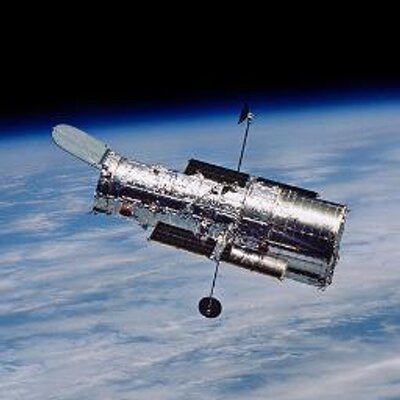
Rapidly growing satellite constellations have raised strong concerns among the scientific community. Reflections from satellites can be visible to the unaided eye and extremely bright for professional telescopes. These trails already affect astronomical images across the complete electromagnetic spectrum, with a noticeable cost for operations and mitigation efforts. Contrary to popular perception, satellite trails affect not only ground-based observatories but also space observatories such as the Hubble Space Telescope. However, the current number of satellites is only a fraction (less than 3%) of those to be launched in the next decade. Here we show a forecast of the satellite trail contamination levels for a series of international low-Earth-orbit telescopes on the basis of the proposed telecommunication industry constellations. Our results show that if these constellations are completed, one-third of the images of the Hubble Space Telescope will be contaminated, while the SPHEREx (Spectro-Photometer for the History of the Universe, Epoch of Reionization and Ices Explorer), ARRAKIHS (Analysis of Resolved Remnants of Accreted galaxies as a Key Instrument for Halo Surveys) and Xuntian space telescopes will have more than 96% of their exposures affected, with 5.6, 69 and 92 trails per exposure, respectively, with an average surface brightness of μ = 19 ± 2 mag arcsec−2. Our results demonstrate that light contamination is a growing threat for space telescope operations. We propose a series of actions to minimize the impact of satellite constellations, allowing researchers to predict, model and correct unwanted satellite light pollution from science observations.


 Our Awesome Universe