
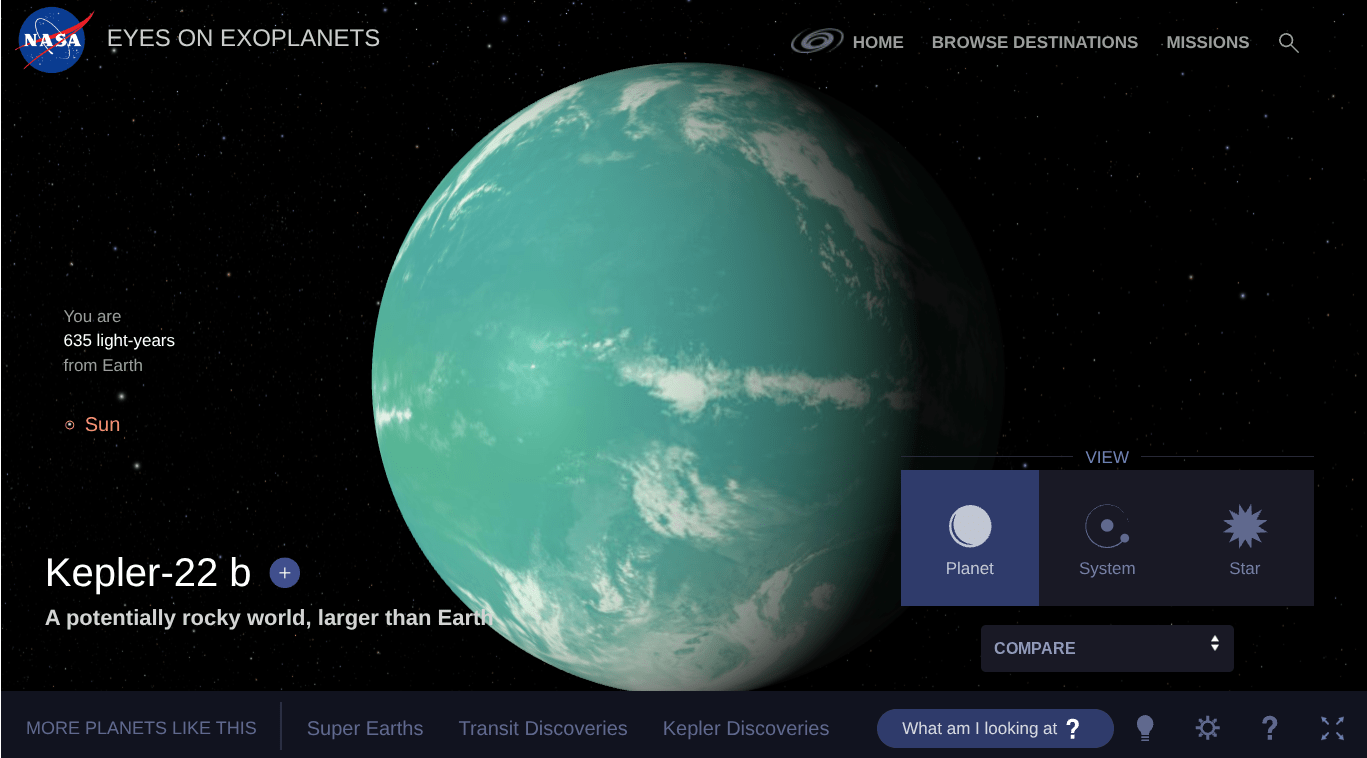
We will have to wait for season two of Apple TV’s Pluribus series before learning more about the inhabitants of the fictional Kepler-22 b, which is the source of the “virus” that turned humans in to docile livestock. In the meantime, we can look into facts about the actual exoplanet.
According to NASA, we know that Kepler-22 b is:
- potentially a rocky world, that is larger than Earth,
- orbits within the habitable zone of a G-type host star (similar to our sun),
- the only exoplanet discovered around this host star to date, and
- about 635 light-years away.
You might also remember this exoplanet from HBO Max’s series Raised by Wolves. It is the exoplanet that the main characters escape to after a brutal war on Earth. Kepler-22 b is a strange world in the series, contained odd vegetation, bottomless pits, and an acidic sea. It is not what space dreams are made of, but at least it is not sending out signals to destroy other exoplanets hundreds of light-years away.
While we may not learn anything more about Kepler-22 b from Pluribus, I suppose it may encourage a few individuals to seek out information on the Kepler mission. Who knows, it may even stimulate more interest in our SETI efforts. Then again, if this is the future of space communications, we may want to reconsider the whole enterprise.

Note: Under the Kepler numbering scheme, the “22” in Kepler-22 b means that it was the 22nd host star discovered, while the “b” indicates it was the first exoplanet found orbitting that host star.
 Our Awesome Universe