
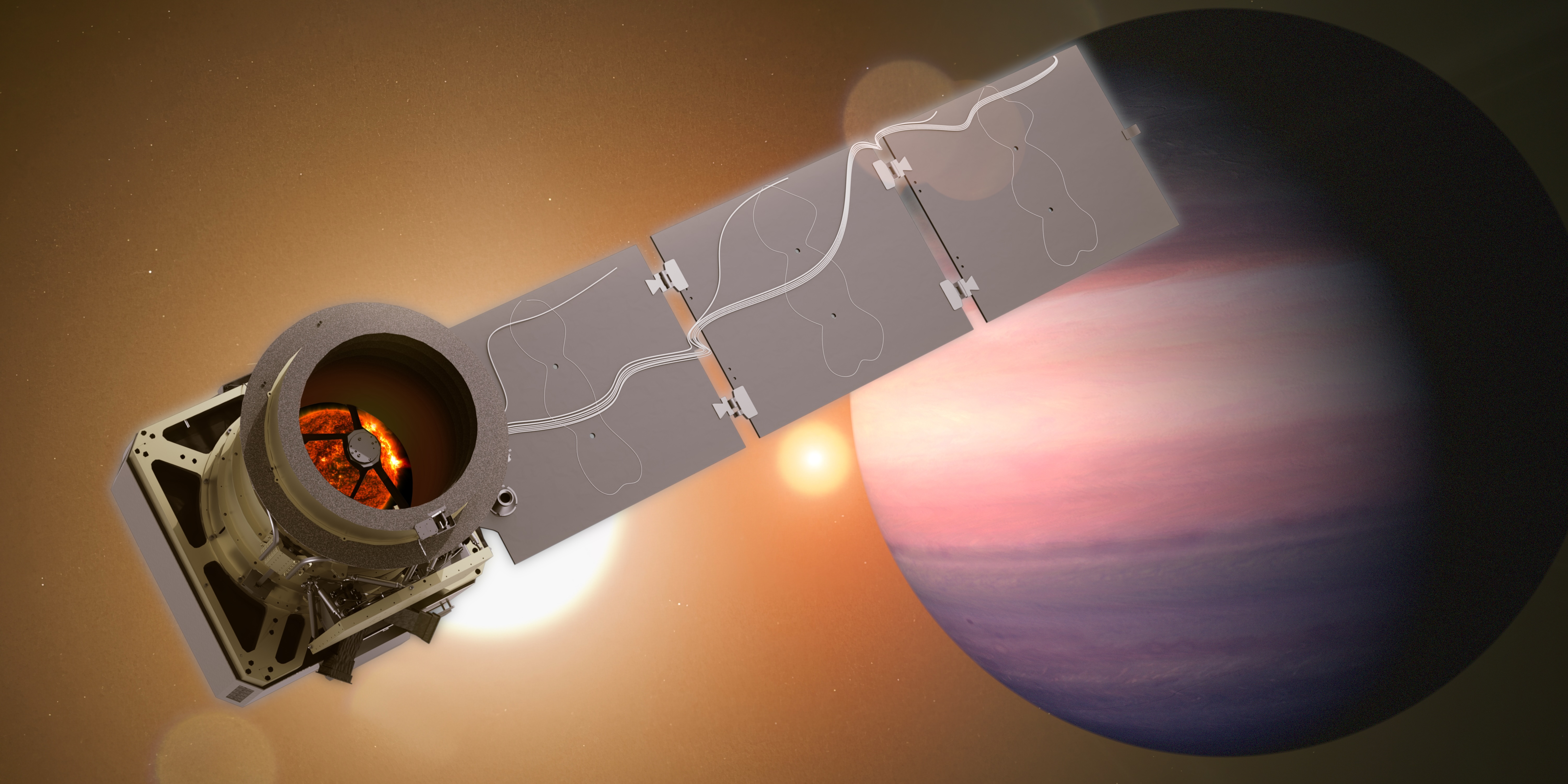
Earlier today, NASA’s Pandora mission got its start aboard a SpaceX rocket launched from California’s Vandenberg Space Force Base.
The Pandora satellite, once fully operational, will view exoplanet atmospheres and their host stars to learn more about these exotic worlds. In its first year, the satellite will focus on approximately 20 known exoplanets. This NASA video describes the process.
The 716-pound Pandora satellite is much smaller than the 14,300-pound James Webb Space Telescope (JWST). Of course, the JWST has a much larger mission that expands over a much longer time period.
If you are looking for something small, you might be interested in the two CubeSats launched with Pandora. One is called the Star-Planet Activity Research CubeSat (SPARCS), which will study coronal mass ejections on small stars, while the second is named the Black Hole Coded Aperture Telescope (BlackCAT) with the mission of observing X-ray flares from active galaxies with supermassive black holes as well as gamma-ray bursts.
It was a successful Sunday for NASA and space enthusiasts everywhere.
 Our Awesome Universe