
Here are some recent space-related stories of interest.
—Discover Magazine: “The Earliest-Known Astronomical Observatory in the Americas May Offer New Insights“
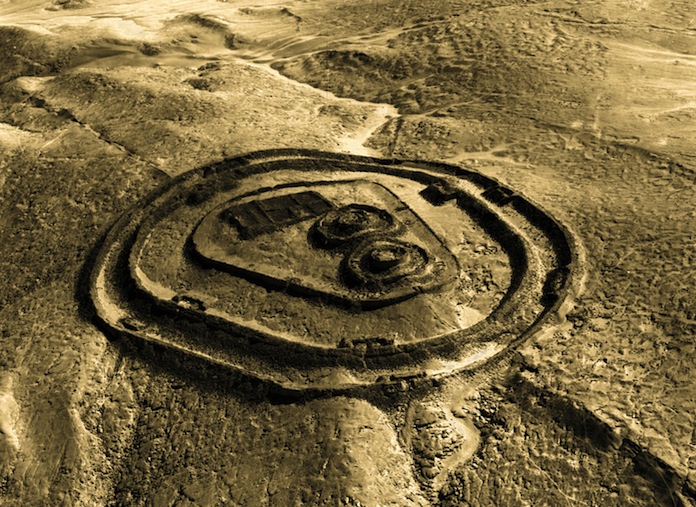
There was a time when Stonehenge was believed to be a kind of “Neolithic computer.” Archaeology has since corrected that misconception. Today, the evidence points strongly in another direction: to an arid hill in the Casma Valley on Peru’s northern coast, about 200 miles north of Lima. There stands Chankillo, a complex built around 250 B.C.E., considered the earliest known solar observatory in the Americas and the clearest known example of a monument designed to track the sun’s position throughout the entire year, according to a study in Science. Modest in appearance and largely absent from tourist posters and classic postcards, Chankillo has renewed attention as archaeologists report preliminary findings from ongoing excavations.
—CBS News: “NASA Juggling Piloted Moon Mission and Space Station Crew Replacement Flight“
With a space station medical evacuation safely completed, NASA is focused on two challenging missions proceeding in parallel: launching four astronauts on a flight around the moon, at the same time as the agency is planning to send four replacement astronauts to the International Space Station...The Artemis 2 mission and Crew 12’s planned space station flight present a unique challenge for NASA. The agency has not managed two piloted spacecraft at the same time since a pair of two-man Gemini capsules tested rendezvous procedures in low-Earth orbit in 1965. The agency has never flown a deep space mission amid another launch to Earth orbit.
—Royal Astronomical Society: “‘Reborn’ Black Hole Spotted ‘Erupting like Cosmic Volcano’“
One of the most vivid portraits of “reborn” black hole activity – likened to the eruption of a “cosmic volcano” spreading almost one million light-years across space – has been captured in a gigantic radio galaxy. The dramatic scene was uncovered when astronomers spotted the supermassive black hole at the heart of J1007+3540 restarting its jet emission after nearly 100 million years of silence.
Note: Please ignore the previous posting for today about the Apollo 17 mission. It’s a good story, but I will need to retell it at another time (that is, on December 19th).
 Our Awesome Universe