
Here are some recent space-related stories of interest.
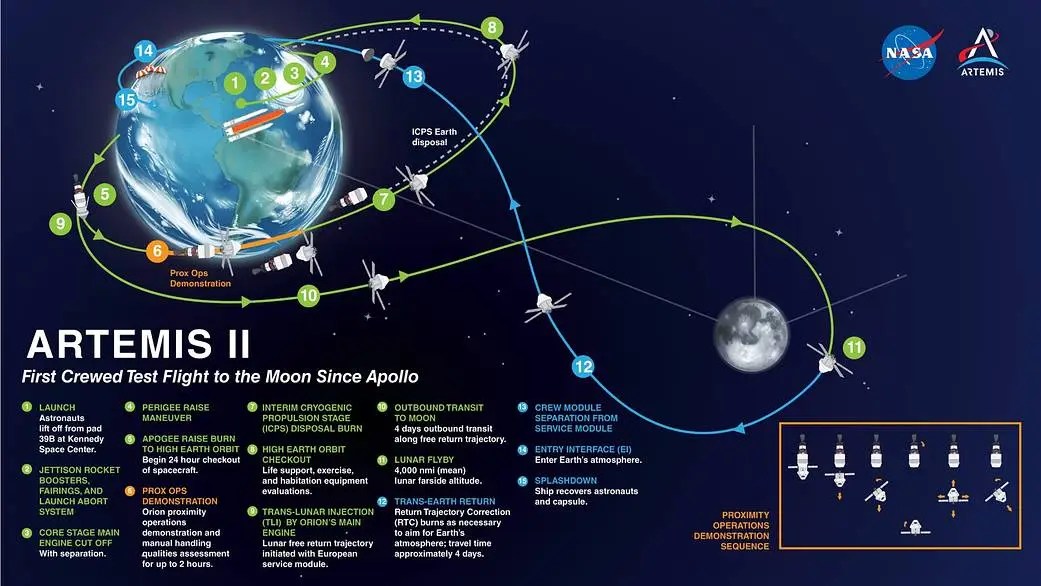
—NPR: “NASA’s Artemis II Lunar Mission May Not Launch in March After All“
Just one day after NASA said it was eyeing a potential March 6 launch date for the Artemis II lunar mission, the space agency said Saturday that complications with the rocket could delay all launch attempts in March from the Kennedy Space Center in Florida...In a blog post, NASA said it is “taking steps to potentially roll back the Artemis II rocket and Orion spacecraft to the Vehicle Assembly Building,” after technicians observed an “interrupted flow of helium” to the rocket system. NASA says its teams are “actively reviewing data” and taking steps to “address the issue as soon as possible while engineers determine the best path forward.”
—Astronomy Magazine:“NASA Report Declares Starliner Incident a Type A Mishap“
On Thursday, NASA released sobering results from an independent investigation into the 2024 crewed Boeing Starliner test flight that left two astronauts stranded in space for months, placing blame not only on hardware failures, but the agency’s own leadership and culture. In a press conference, NASA Administrator Jared Isaacman said the agency had now categorized the incident as a type A mishap — the same classification applied to the Columbia and Challenger shuttle disasters — something he believes should have happened from the start.
—European Space Agency: “Webb Maps Uranus’s Mysterious Upper Atmosphere“
For the first time, an international team of astronomers have mapped the vertical structure of Uranus’s upper atmosphere, uncovering how temperature and charged particles vary with height across the planet. Using NASA/ESA/CSA James Webb Space Telescope’s NIRSpec instrument, the team observed Uranus for nearly a full rotation, detecting the faint glow from molecules high above the clouds. The results offer a new window into how ice-giant planets distribute energy in their upper layers.
 Our Awesome Universe