For the second time in two months, a SpaceX Falcon 9 rocket launch has had problems, leading to a temporary grounding of the rocket by the Federal Aviation Administration. In the latest case, a rocket booster crashed into the Atlantic Ocean after a successful launch of Starlink satellites.
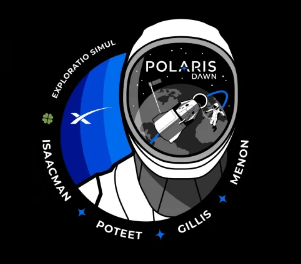
As a result of the malfunction, the privately-funded Polaris Dawn mission scheduled for this Friday will most likely need to be delayed. One of the goals for the Polaris Dawn mission is a spacewalk, which will be the first private space walk to date.
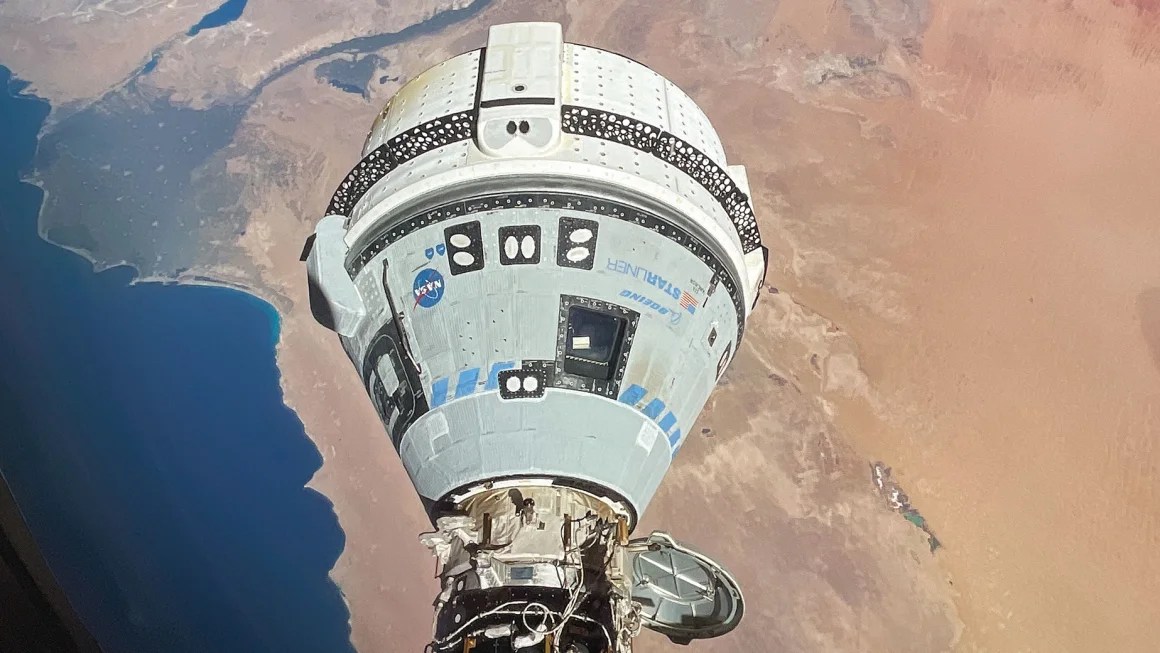
Of greater concern is the role of the Falcon 9 in upcoming International Space Station launches, be it crewed or uncrewed. With the Boeing capsule stuck at the station, SpaceX is currently the one game in town for NASA’s station needs.
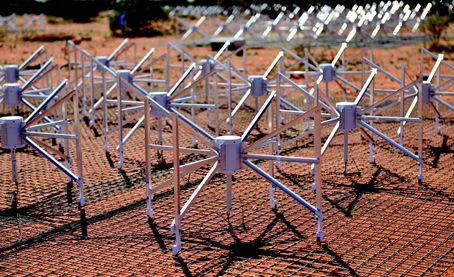
The SETI Institute, the Berkeley SETI Research Center and the International Centre for Radio Astronomy Research announced a groundbreaking study using the Murchison Widefield Array (MWA) in Western Australia. Led by Dr. Chenoa Tremblay of the SETI Institute and Prof. Steven Tingay of Curtin University, this research is the first to search for signs of alien technology in galaxies beyond our own, focusing on low radio frequencies (100 MHz).
This innovative study used the MWA’s large field of view (FOV), allowing the team to cover about 2,800 galaxies in one observation, of which 1300 we know the distance to. Usually, the search for extraterrestrial intelligence (SETI) has focused on signals within our galaxy. This new approach goes further, looking at distant galaxies. This new approach looks at distant galaxies, making it one of the most detailed searches for super civilizations—those more advanced than ours. To send a signal from another galaxy, a civilization would need technology powerful enough to use the energy of their sun or several stars in their galaxy.
NASA needs some help with frozen liquid. As part of the space agency’s planned trip to the moon as part of the Artemis mission, NASA is looking for a way to store “super-chilled” propellants for months on end. They’re asking college students for help. Announced earlier this month, NASA’s 2025 Human Lander Challenge (HuLC) is open for submissions. The competition, now in its second year, is asking for students to develop innovative methods for “in-space cryogenic liquid storage.”
A citizen science project, which invites members of the public to take part in identifying cosmic explosions, has already identified 20 new astronomical discoveries. Over 2,000 volunteers across 105 different countries have worked on 600,000 classifications over a six-month period. The project ‘Kilonova Seekers’ aims to find kilonovae – the cosmic explosions of neutron stars and black holes colliding in distant galaxies. Volunteers are asked to play ‘spot the difference’ using data from the two Gravitational-wave Optical Transient Observer (GOTO) telescopes, which are located on opposite sides of the planet – on La Palma, in Spain’s Canary Islands, and Australia’s Siding Spring Observatory.
Take a look at the image above. Can you determine where this image originated? Take a guess and then check your answer by going to the “Where is This? The Answer Sheet” page.
Next summer’s program is titled “Exploring the Universe with JWST.” Here is a little more detail on the program:
Since the first release of data from the James Webb Space Telescope (JWST) in July 2022, we have witnessed a transformation in astronomy. VOSS 2025 will present a comprehensive overview of the major JWST results in its first three years (2022-2025), covering the four major scientific themes of JWST: (1) First Light and Reionization, (2) Assembly and Evolution of Galaxies, (3) Birth of Stars and Protoplanetary systems, and (4) Planetary Systems and the Origin of Life. In parallel, we will also provide a series of hands-on tutorials for JWST data processing and analysis. VOSS 2025 will convey the excitement of astronomical research in the era of JWST and the skills to pursue research projects spanning a broad range of themes in astrophysics.
The Catholic Church has come a long way since its treatment of Galileo. This observatory is just one example of the Church’s openness to the world around us.
You can read more about the 2023 summer program from the students themselves in this article.
Image (Credit): Boeing Starliner attached to the ISS. (NASA)
“Spaceflight is risky, even at its safest and most routine. A test flight, by nature, is neither safe, nor routine. The decision to keep Butch and Suni aboard the International Space Station and bring Boeing’s Starliner home uncrewed is the result of our commitment to safety: our core value and our North Star…I’m grateful to both the NASA and Boeing teams for all their incredible and detailed work.“
–Statement by NASA Administrator Bill Nelson regarding NASA’s decision to return Boeing’s Starliner to Earth without astronauts Butch Wilmore and Suni Williams aboard the spacecraft. Instead the two astronauts will remain on the International Space Station (ISS) until February 2025 when they will return to Earth aboard a SpaceX Dragon capsule.



 Our Awesome Universe