Image (Credit): Six U.S. astronauts currently aboard the ISS. From left to right they are Jeanette Epps, Tracy Dyson, Butch Wilmore, Mick Barratt, Suni Williams, and Matt Dominick. The are holding copies of the Declaration of Independence, U.S. Constitution, and Bill of Rights. (NASA)
This week’s image comes from the International Space Station (ISS) where the U.S. astronauts have a message for all of us regarding the Fourth of July. You can watch the entire video here and hear a message from each of the astronauts – Mike Barratt, Matt Dominick, Tracy Caldwell Dyson, Jeanette Epps, Suni Williams and Butch Wilmore.
“Selecting a U.S. Deorbit Vehicle for the International Space Station will help NASA and its international partners ensure a safe and responsible transition in low Earth orbit at the end of station operations. This decision also supports NASA’s plans for future commercial destinations and allows for the continued use of space near Earth…The orbital laboratory remains a blueprint for science, exploration, and partnerships in space for the benefit of all.”
–Statement by Ken Bowersox, associate administrator for Space Operations Mission Directorate at NASA Headquarters in Washington, regarding NASA announcement that SpaceX has been selected to develop and deliver the U.S. Deorbit Vehicle under a contract worth $843 million. This expensive Deorbit Vehicle should help to avoid problems on the ground as well as orbiting debris impacting space missions, as was the case on the International Space Station (ISS) a few days ago. The ISS is expected to continue operation until 2030.
While Matt Damon relied on potatoes cultivated in crew biowaste to survive in the hit film The Martian, researchers say it is a humble desert moss that might prove pivotal to establishing life on Mars. Scientists in China say they have found Syntrichia caninervis – a moss found in regions including Antarctica and the Mojave desert – is able to withstand Mars-like conditions, including drought, high levels of radiation and extreme cold.
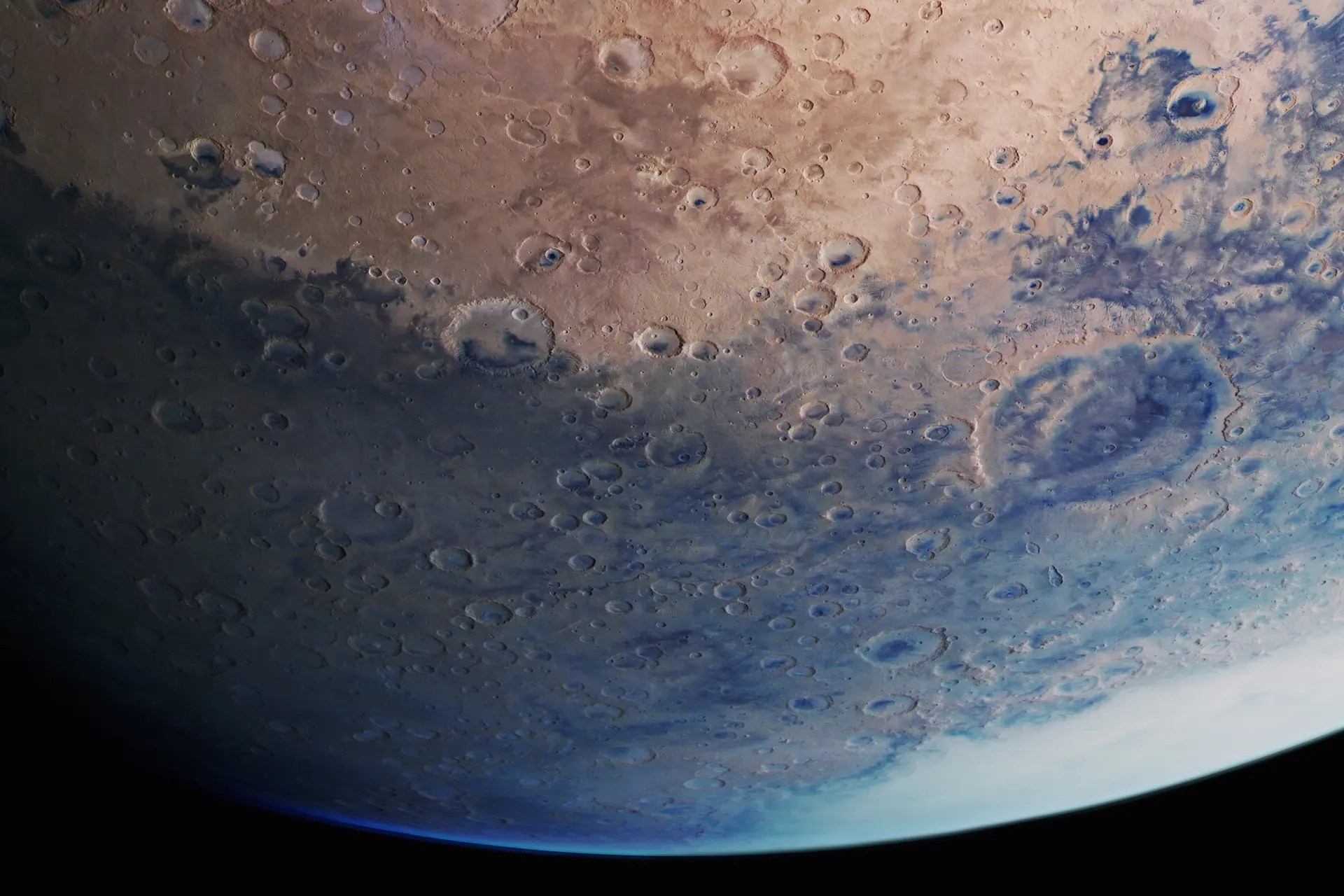
Hundreds of basketball-size space rocks slam into Mars each year, leaving behind impact craters and causing rumblings across the red planet, according to new research. Mission planners could use the revelations, recorded in data collected by a now-retired NASA mission, as they determine where to land future robotic missions as well as astronaut crews on the red planet. NASA’s InSight mission ended when the stationary lander lost a battle to an accumulation of Martian dust on its solar panels in December 2022, but the wealth of data the spacecraft collected is still fueling new research.
The first volunteer crew, to live for more than a year inside NASA’s Mars habitat at the Johnson Space Center in Houston, will exit the simulated Red Planet ground mission on Saturday…The crew entered CHAPEA on June 25, 2023, and enacted Mars mission operations, including virtual reality “Mars-walks” while growing and harvesting vegetables to supplement their shelf food. They also spent their time maintaining equipment while being tested with stressors, including isolation and communication delays with Earth.
If you are interested in the future of humanity on Mars, you may want to tune into Red Planet Radio from The Mars Society. A recent podcast, as well as an upcoming podcast, highlight some things to consider before you pack your bags.
Back on June 15, in the podcast titled “Dr. Antonio Paris, Astrophysicist, Author “Mars: Your Personal 3-D Journey!,” we heard from Dr. Antonio Paris, who is the Chief Scientist at the Center for Planetary Science as well as an Assistant Professor of Astronomy and Astrophysics at St. Petersburg College, Florida. In this podcast, Dr. Paris discussed the difficulties of traveling in space as well as the types of structures one might need to build to live safely on Mars. He also discussed his recent book, Mar: Your Personal 3D Journey to the Red Planet.
Tomorrow (July 2) another podcast episode will include a three-person NASA panel discussing topics such as general Mars exploration, strategies for sample returns from the Red Planet, and the architecture supporting Moon to Mars missions.
The three panelists are:
Nujoud Merancy: Deputy Associate Administrator, Strategy and Architecture Office, in the Exploration Systems Development Mission Directorate for NASA Headquarters.
Eric Ianson: Deputy Director, Planetary Science Division, and Director, Mars Exploration Program and Radioisotope Power Systems Program at NASA Headquarters.
Dr. Lindsay Hays: Program Scientist in the Planetary Science Division at NASA Headquarters and Deputy Program Scientist for the Mars Sample Return Mission.
I enjoyed the first episode and look forward to tomorrow’s discussion.
And don’t forget that from August 8-11 The Mars Society will hold its 27th Annual International Mars Society Convention at the University of Washington in Seattle, Washington. You can see videos from prior conventions here.
Image (Credit): A current map showing the location of the Tunguska Event in Russia. (Wikipedia)
It was on this day in 1908 that about 800 square miles of forest in Siberia were decimated in what was later attributed to an meteor exploding 3 to 6 miles above the Tunguska River area. As a result of the aerial explosion, no impact crater was created from what was called the Tunguska Event.
The meteor that hit Russia has been estimated top be 160–200 feet wide. The asteroid that passed by the Earth yesterday, 2024 MK, has been estimated to be 400 and 850 feet wide. We are lucky that we did not need to go through this again more than 100 years later.
The Tunguska Event is the largest impact event in recorded history. It was this event that later inspired what we celebrate today – Asteroid Day.




 Our Awesome Universe