Space Stories: Launch of GOES-U Satellite, Jupiter’s Surprising Atmosphere, and the Role of Black Holes in Dark Matter

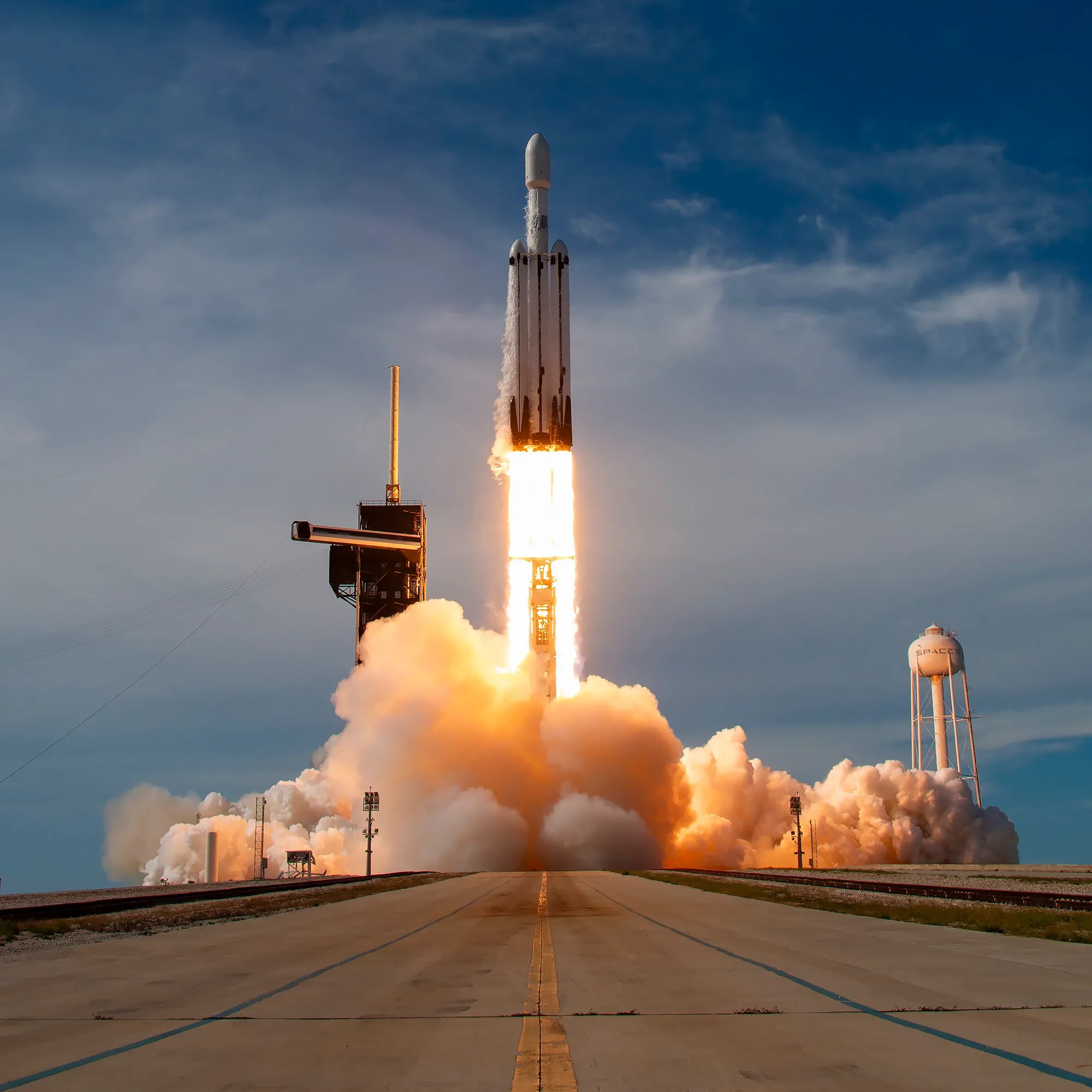
Image (Credit): June 25, 2024 launch of NASA’s GOES-U satellite. (SpaceX)

Here are some recent stories of interest.

America Space: Falcon Heavy Launches, GOES-U Heads for Geostationary Orbit

SpaceX successfully launched its first Falcon Heavy of the year on Wednesday evening, the triple-barreled booster lifting the 11,000-pound (5,000-kilogram) Geostationary Operational Environmental Satellite (GOES-U) almost to Geostationary Earth Orbit (GEO) on behalf of the National Oceanic and Atmospheric Administration (NOAA). The Heavy—flying for the first time since November 2022 with a brand-new center core and pair of side-mounted strap-on boosters—went airborne from historic Pad 39A at Florida’s Kennedy Space Center (KSC) at 5:26 p.m. EDT, ten minutes after the opening of a two-hour “launch window”.

European Space Agency: Jupiter’s Upper Atmosphere Surprises Astronomers

The Great Red Spot of Jupiter was observed by Webb’s Near-InfraRed Spectrograph (NIRSpec) in July 2022, using the instrument’s Integral Field Unit capabilities. The team’s Early Release Science observations sought to investigate if this region was in fact dull, and the region above the iconic Great Red Spot was targeted for Webb’s observations. The team was surprised to discover that the upper atmosphere hosts a variety of intricate structures, including dark arcs and bright spots, across the entire field of view. “We thought this region, perhaps naively, would be really boring,” shared team leader Henrik Melin of the University of Leicester in the United Kingdom. “It is in fact just as interesting as the northern lights, if not more so. Jupiter never ceases to surprise.”

University of Warsaw: Is Dark Matter Made of Black Holes?

Gravitational wave detectors, LIGO and Virgo, have detected a population of massive black holes whose origin is one of the biggest mysteries in modern astronomy. According to one hypothesis, these objects may have formed in the very early Universe and may compose dark matter, a mysterious substance filling the Universe. A team of scientists from the OGLE (Optical Gravitational Lensing Experiment) survey from the Astronomical Observatory of the University of Warsaw have announced the results of nearly 20-year-long observations indicating that such massive black holes may comprise at most a few percent of dark matter. Another explanation, therefore, is needed for gravitational wave sources. The results of the study were published in two articles, in Nature and the Astrophysical Journal Supplement Series.

China Successfully Retrieves Moon Rocks

Image (Credit): The capsule retrieval site in north China’s Inner Mongolia Autonomous Region. (Xinhua/Jin Liwang)

It was a good day for China as it became the first nation to successfully retrieve a lunar sample from the far side of the Moon. The Chang’e-6 return capsule safely landed in China earlier today following the mission’s start back on May 3. The sample itself departed the Moon’s surface on June 4.

Wang Qiong, deputy chief designer of the Chang’e-6 mission, stated:

A portion of the samples will be stored permanently, while another portion will be stored at a different location as backup in case of disasters. Then we will prepare the remaining portion, and distribute them to scientists in China and foreign countries in accordance with the lunar sample management regulations.

Congratulations to the Chinese people. Hopefully, the entire scientific community can benefit from what the lunar sample tells us.

Television: PBS Documentary on Space Travel

Credit: Greenwich Entertainment)

If you are looking for a television show on the hazards of space travel, PBS has created a worthwhile documentary titled Space: The Longest Goodbye. It is playing on your local PBS station as well as online.

Here is a little more about the series:

NASA’s goal to send astronauts to Mars would require a three-year absence from Earth, during which communication in real time would be impossible due to the immense distance. Meet the psychologists whose job is to keep astronauts mentally stable in outer space, as they are caught between their dream of reaching new frontiers and the basic human need to stay connected to home.

The series covers various attempts to understand the human mind when constrained to a small place, be it a rocket, a space station, or a planetary/moon base.

The PBS website also has more information on the series as well as comments from the participants. For example, the story “How Science Fiction Confronts the Real Isolation of Space” touches on our favorite movies and television shows to see what they say on the issue, from Black Mirror and For All Mankind to 2001: A Space Odyssey and Alien.

We still have a lot to learn about the human mind before we go any real distance into space or simply sit in place on the Moon or Mars. We may find that equipment challenges are the easiest challenges to resolve in future Artemis missions.

Movie: Alien: Romulus Colonizes Our Summer

Credit: 20th Century Studios

So far it has been a pretty boring summer in terms of space-related movies, but that will change in August with the release of next Alien film. That’s right, the Alien franchise is still alive and kicking.

Alien: Romulus will be released on August 16th. It will be the seventh film in this series, and set between the events of Alien (1979) and Aliens (1986). Yes, more backstory, but we know what to expect going forwards or backwards with this series. Plenty of stomach-popping surprises for all.

20th Century Studios provides this storyline:

The sci-fi/horror-thriller takes the phenomenally successful “Alien” franchise back to its roots: While scavenging the deep ends of a derelict space station, a group of young space colonizers come face to face with the most terrifying life form in the universe.

Check out the trailer, which hits on all the fun bits we expect with any Alien movie.

While we are now 45 years into this series, it is still nice to have something interesting playing this summer. It is always a spectacular view of space travel until everything goes to hell.

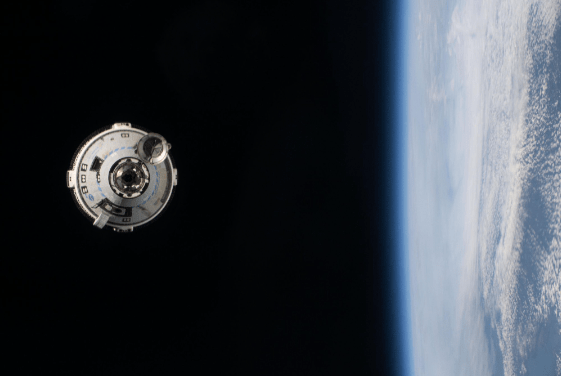
Space Quote: The Starliner Delayed Return Continues

Image (Credit): The Boeing Starliner approaching the International Space Station. (NASA)

“We are strategically using the extra time to clear a path for some critical station activities while completing readiness for Butch and Suni’s return on Starliner, and gaining valuable insight into the system upgrades we will want to make for post-certification missions.”

Statement by Steve Stich, manager of NASA’s Commercial Crew Program, regarding delays in the return of Boeing’s Starliner capsule. The language is becoming as flowery as SpaceX’s language when something goes wrong. NASA has already nixed the June 26 return date and has yet to provide a new date.