RIP: Bill Anders, Apollo 8 Astronaut

Image (Credit): The Earth and Moon as captured by Apollo 8 in 1968. (NASA)

This week Apollo astronaut Bill Anders, age 90, passed away. He died during a plane crash in Washington state.

He was part of an Apollo team that was the first humans to leave low Earth orbit in 1968. He was best known for his Christmas Eve photo of the Earth rising over the surface of the Moon (shown above).

Born in Hong Kong on October 17, 1933, he would graduate from the Naval Academy in 1955, obtain a masters in nuclear engineering, and then serve as a fighter pilot in the US Air Force. In 1964, he was selected by NASA to be an astronaut, serving as a backup pilot for both the Gemini XI and Apollo 11 flights, and most famously serving as lunar module pilot for Apollo 8.

Regarding his “Earthrise” image, Mr. Anders said:

The only color that we could see and contrasted by this really unfriendly, stark lunar horizon, made me think, ‘You know, we really live on a beautiful little planet.’

You can watch a NASA video on Mr. Stafford’s accomplishments here as well as more information on his life here.

You can also read more on Mr. Anders’ life and career at these sites:

Rest in peace.
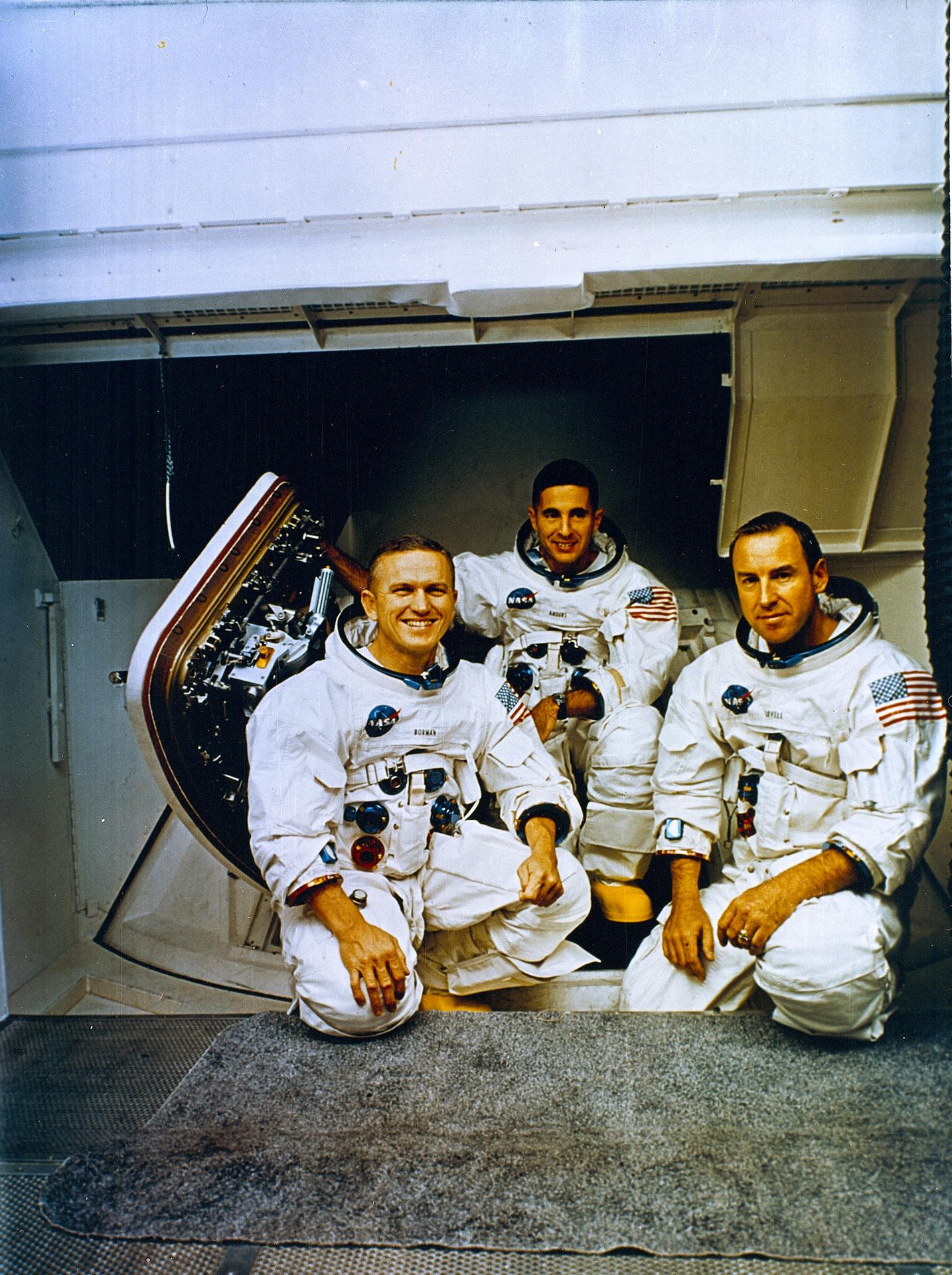
Image (Credit): The Apollo 8 Crew (left to right) Frank Borman, commander; William Anders, Lunar Module Pilot; and James Lovell, Command Module pilot pose in front of the Apollo mission simulator during training. (NASA)

Not Everyone Needs to be Part of the Space Age

With the recent success of Boeing’s Spaceplan and SpaceX’s Starship, we need to remember that not every country needs to be part of the space age.

Fortunately, less that two weeks ago we learned that lesson when North Korea flubbed it launch of a spy satellite that was sure to cause problems. The rocket did not even make it past it’s first stage.

Unfortunately, North Korea already has a single spy satellite in orbit.

North Korea appears to be having much better luck launching rubbish-filled balloons and sending them into South Korean airspace. The South Korean government called the gesture ““unimaginably petty and low-grade behaviour.”

Pic of the Week: Forth Starship Test is a Success

Image (Credit): The Starship rocket lifting off its launch pad in Texas earlier today. (SpaceX)

This week’s image shows the launch of the forth test of SpaceX’s Starship, which went further than any of the tests to date. In it’s summary of the flight, SpaceX noted:

Flight 4 ended with Starship igniting its three center Raptor engines and executing the first flip maneuver and landing burn since our suborbital campaign, followed by a soft splashdown of the ship in the Indian Ocean one hour and six minutes after launch.

You can see the full flight in this video.

As with yesterday’s successful launch of Boeing’s Starliner, today’s successful flight gave NASA greater assurance that the commercial sector is picking up the pace to assist the U.S. with both the International Space Station and Artemis program to the Moon (and eventually Mars).

Note: I like The Economist’s headline on the mission: “Elon Musk’s Starship Makes a Test Flight Without Exploding.”

Successful Launch of the CST-100 Starliner

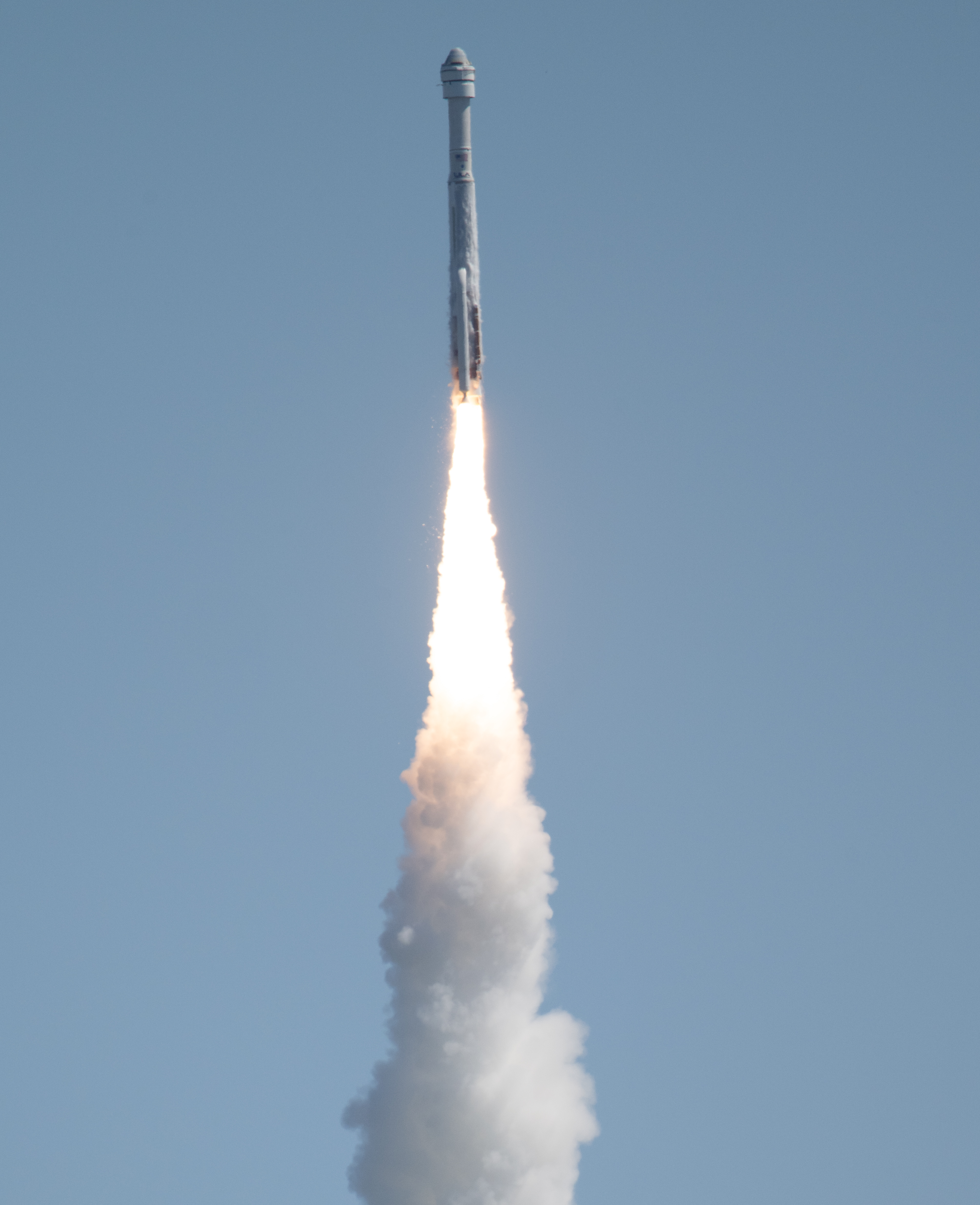
Image (Credit): The launch of Boeing’s Starliner earlier today from Cape Canaveral Space Force Station. (NASA/Joel Kowsky)

Boeing’s CST-100 Starliner launched earlier today (June 5) on a United Launch Alliance Atlas V rocket from Space Launch Complex-41 at Cape Canaveral Space Force Station in Florida.

Astronauts Butch Wilmore and Suni Williams are now safe in orbit on their way to the International Space Station (ISS). They will dock at the ISS tomorrow afternoon.

Boeing’s Starliner is the second graduate from NASA’s Commercial Crew Program, which also includes SpaceX.

You can read more about the Starliner mission and upcoming events at this NASA site.

Update: The two astronauts arrived safely at the ISS safely on Thursday (June 6), though there were some issues with the Starliner’s thrusters.

Image (Credit): Logo for NASA’s Commercial Crew Program. (NASA)

Space News: Extending Hubble’s Life, Another Step for the Habitable Worlds Observatory, and Asteroid Breakups

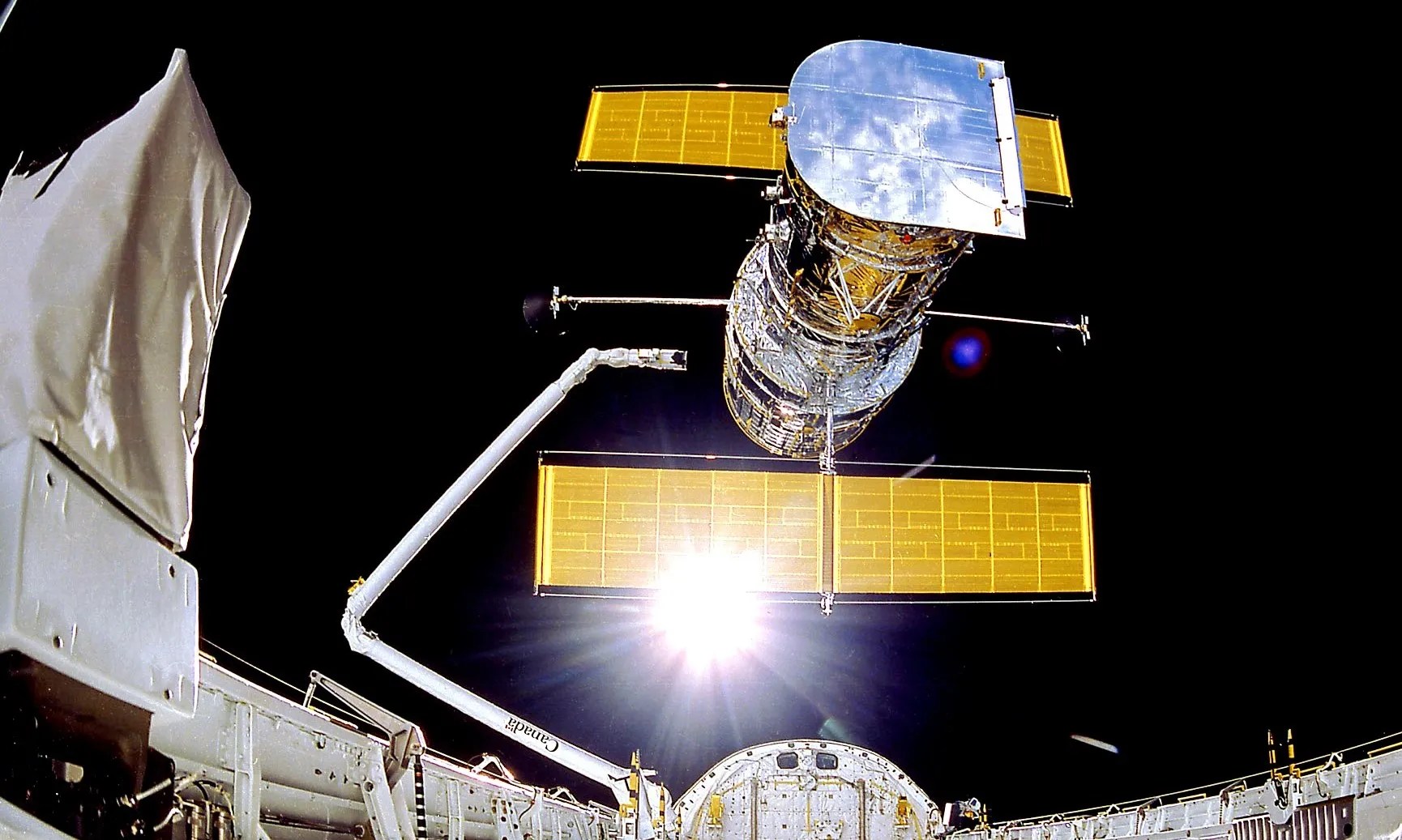
Image (Credit): The deployment of the Hubble Space Telescope on April 25, 1990 from the space shuttle Discovery. (NASA/Smithsonian Institution/Lockheed Corporation)

Here are some recent stories of interest.

NPR: Hubble will Change How it Points, But NASA Says ‘Great Science’ will Continue

The Hubble Space Telescope is suffering the kinds of aches and pains that can come with being old, and NASA officials say they’re shifting into a new way of pointing the telescope in order to work around a piece of hardware that’s become intolerably glitchy. Officials also announced that, for now, they’ve decided not to pursue a plan put forward by a wealthy private astronaut who wanted to go to Hubble in a SpaceX capsule, in a mission aimed at extending the telescope’s lifespan by boosting it up into a higher orbit and perhaps even adding new technology to enhance its operations.

NASA: NASA Awards Advance Technologies for Future Habitable Worlds Mission

NASA announced Friday it selected three industry proposals to help develop technologies for future large space telescopes and plan for the agency’s Habitable Worlds Observatory mission concept, which could be the first space telescope designed to search for life outside our solar system. The mission would directly image Earth-like planets around stars like our Sun and study their atmospheres for the chemical signatures of life, as well as enable other investigations about our solar system and universe. NASA is currently in the early planning stages for this mission concept, with community-wide working groups exploring its fundamental science goals and how best to pursue them. The agency is also in the process of establishing a Habitable Worlds Observatory Technology Maturation project office at NASA’s Goddard Space Flight Center in Greenbelt, Maryland.

Southwest Research Institute: Flyby of Asteroid Dinkinesh Reveals a Surprisingly Complex History

When NASA’s Lucy spacecraft flew past the tiny main belt asteroid Dinkinesh last November, the Southwest Research Institute-led mission discovered a trough and ridge structure on the main asteroid as well as the first-ever-encountered contact binary satellite. The flyby data of this half-mile-wide object revealed a dramatic history of sudden breakups and transformation. Scientists think a big chunk of Dinkinesh suddenly shifted, excavating the trough and flinging debris into its vicinity. Some materials fell back to the asteroid body, forming the ridge, while others coalesced to form a contact binary satellite known as Selam. The complex shapes show that Dinkinesh and Selam have significant internal strength and a complex, dynamic history.