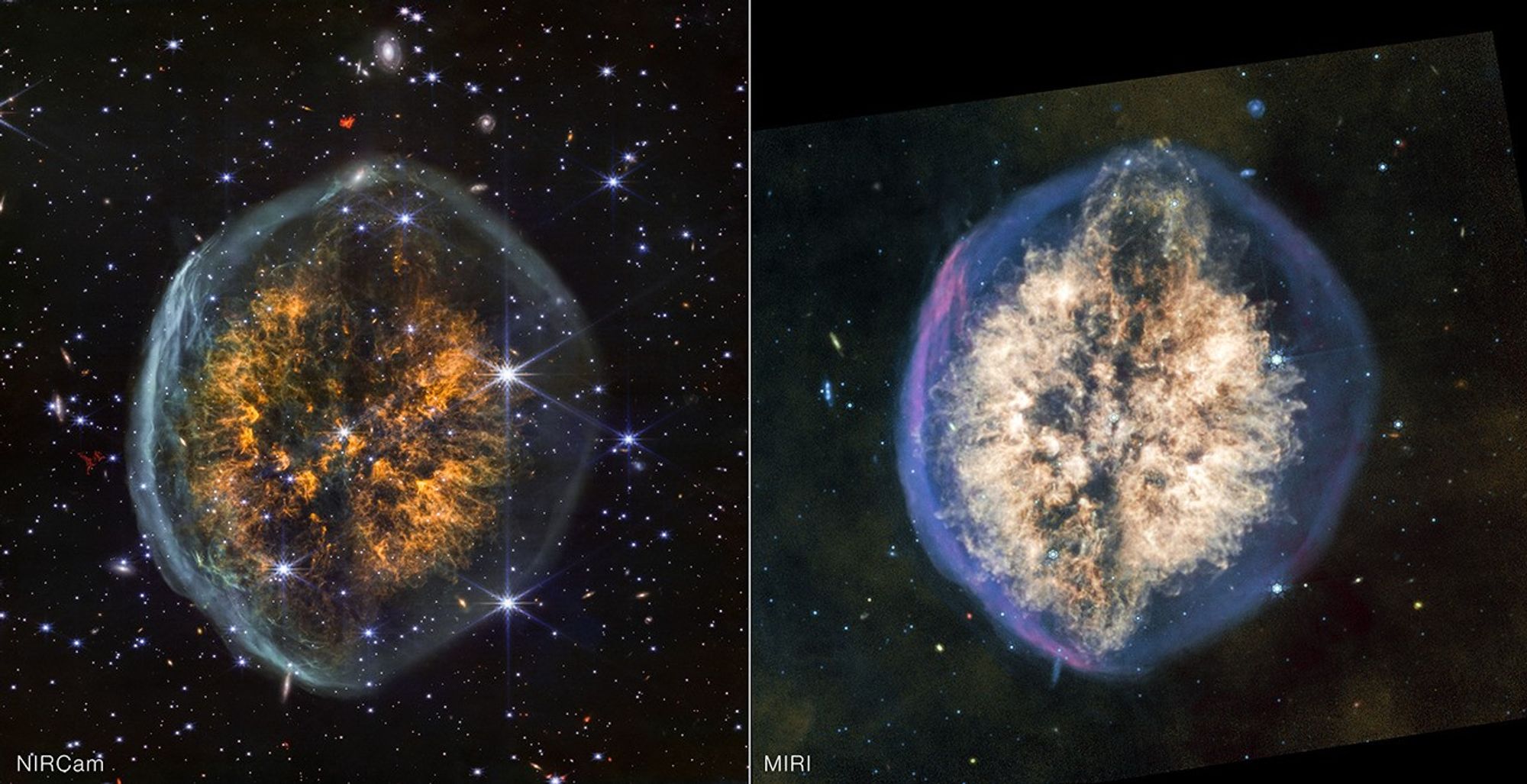
Image (Credit): Side-by-side view of the Cranium nebula using two instruments on the JWST. You can see more stars and galaxies shining through with the NIRCam’s view, but you get a nice cosmic dust glows with the MIRI’s mid-infrared. (NASA, ESA, CSA, STScI; Image Processing: Joseph DePasquale (STScI))
This week’s images come from the James Webb Space Telescope (JWST). Each image shows a different view of the Cranium nebula depending on the JWST instrument being used. It is also called the “Exposed Cranium” Nebula because it looks like a brain in a see-through skull.
The nebula appears to have distinct regions that capture different phases of its evolution — an outer shell of gas that was blown off first and consists mostly of hydrogen, and an inner cloud with more structure that contains a mix of different gases. Both Webb’s NIRCam (Near-Infrared Camera) and MIRI (Mid-Infrared Instrument) show a distinctive dark lane running vertically through the middle of the nebula that defines its brain-like look of left and right hemispheres. Webb’s resolution shows that this lane could be related to an outburst or outflow from the central star, which typically occurs as twin jets burst out in opposite directions. Evidence for this is particularly notable at the top of the nebula in Webb’s MIRI image, where it looks like the inner gas is being ejected outward.
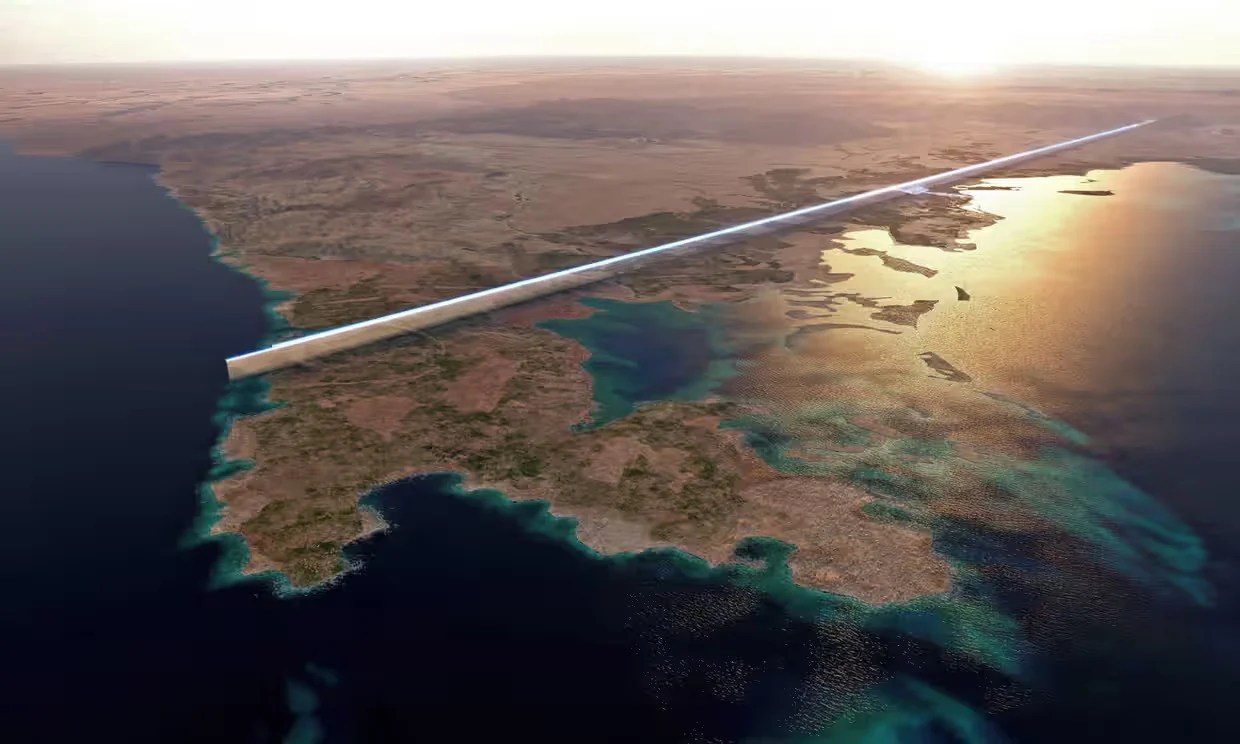
Image (Credit): An artist’s rendering of The Line extending for more than 100 miles into Saudi Arabia from the Red Sea..(PetaPixel)
While the Middle East is going through a tough time at the moment, to put it mildly, it may be worth remembering the hubris of the region over the years. For example, Saudi Arabia was planning to build a new city in the desert called Neom that would have included a $500 billion 100-mile horizontal urban “skyscraper” named The Line (shown above). Yes, endless oil riches can lead to such silliness.
Consider it the equivalent of Egypt’s pyramids, another over-the-top public works project. And like the pyramids of old, The Line is now a monument to the dead, or in this case the death of the country’s Vision 2030 plans. After reports of climbing building costs, as well as the deaths of thousands of workers (similar to the pyramids), the whole gargantuan project may be down-scaled to boring data centers. So much for the modern-day pharaohs who are now watching the region go up in smoke.
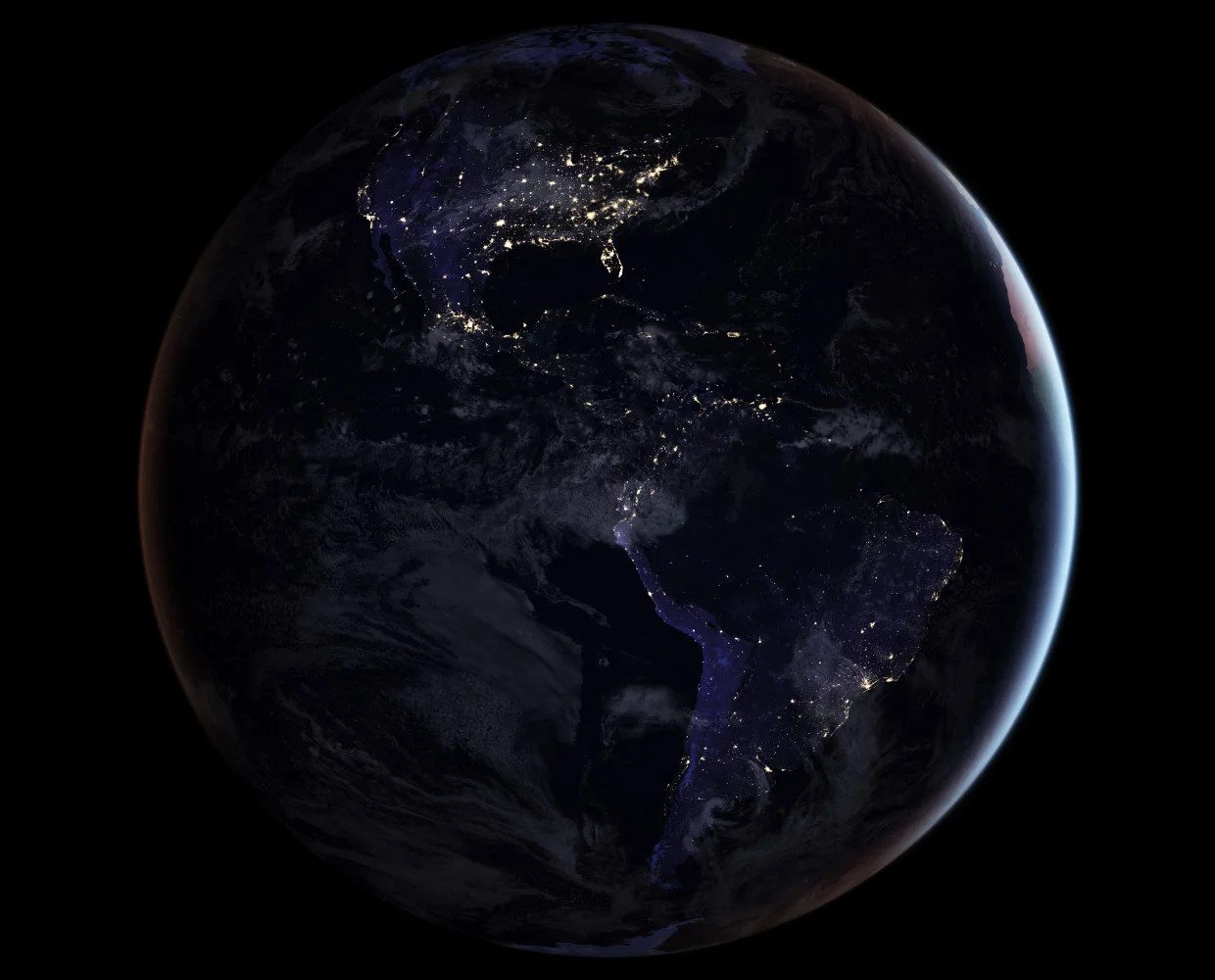
The Line could have been one more man-made structure to be seen from space, but our alien friends still have plenty to view should they send a probe through the solar system (as some believe they have). While the pyramids can still be seen from space, the best way to be certain our planet is filled with life is to view it from its dark side. The evening light from our towns and cities cover the globe with recognizable patterns.
Image (Credit): North and South America as seen from space. (NASA Goddard Space Flight Center)
A loud “boom” was reported across Northeast Ohio just before 9 a.m. on Tuesday. People around Northeast Ohio flooded the FOX 8 newsroom with reports of what heard like a “large explosion” lasting several seconds and causing homes and businesses to “shake.”NASA has confirmed a 6-foot, 17,000-pound meteor traveled 44,000 miles per hour over northeast Ohio. It was 50 miles above Lake Erie when the first flash was detected.
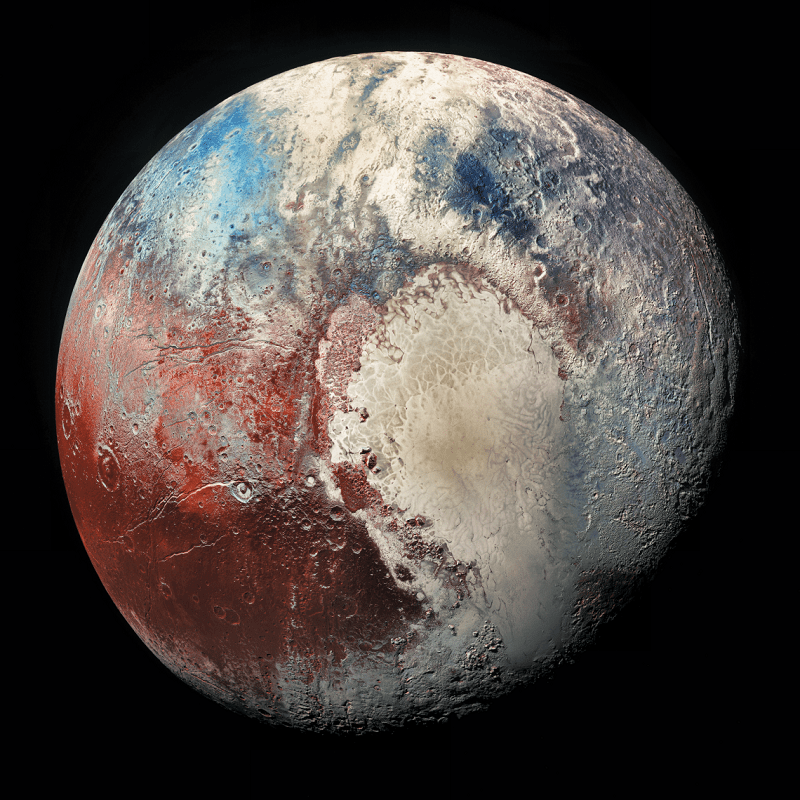
President Donald Trump campaigned on “America first,” but some of his supporters and appointees apparently want Pluto to once again be … ninth. The ninth planet in our solar system, that is. Ever since Pluto was infamously stripped of its planetary status two decades ago, debate has raged for years over the distant icy world – half the size of the United States – and just what sort of cosmic body it should be classified as. Now, Jared Isaacman, NASA’s new chief, has appeared to signal his support for Trump to designate Pluto as a planet once again through executive order.
The Royal Astronomical Society (RAS) has issued a stark warning over proposals by Elon Musk’s SpaceX and the California-based startup Reflect Orbital, saying the plans could cause lasting damage to ground‑based astronomy and dramatically alter the night sky for skywatchers. In comments submitted to U.S. regulators, the RAS said the scale and brightness of the proposed satellite constellations risk overwhelming astronomical observations from Earth. The society, alongside the European Southern Observatory (ESO), has formally opposed both projects in filings to the Federal Communications Commission (FCC), where the companies have sought approval.
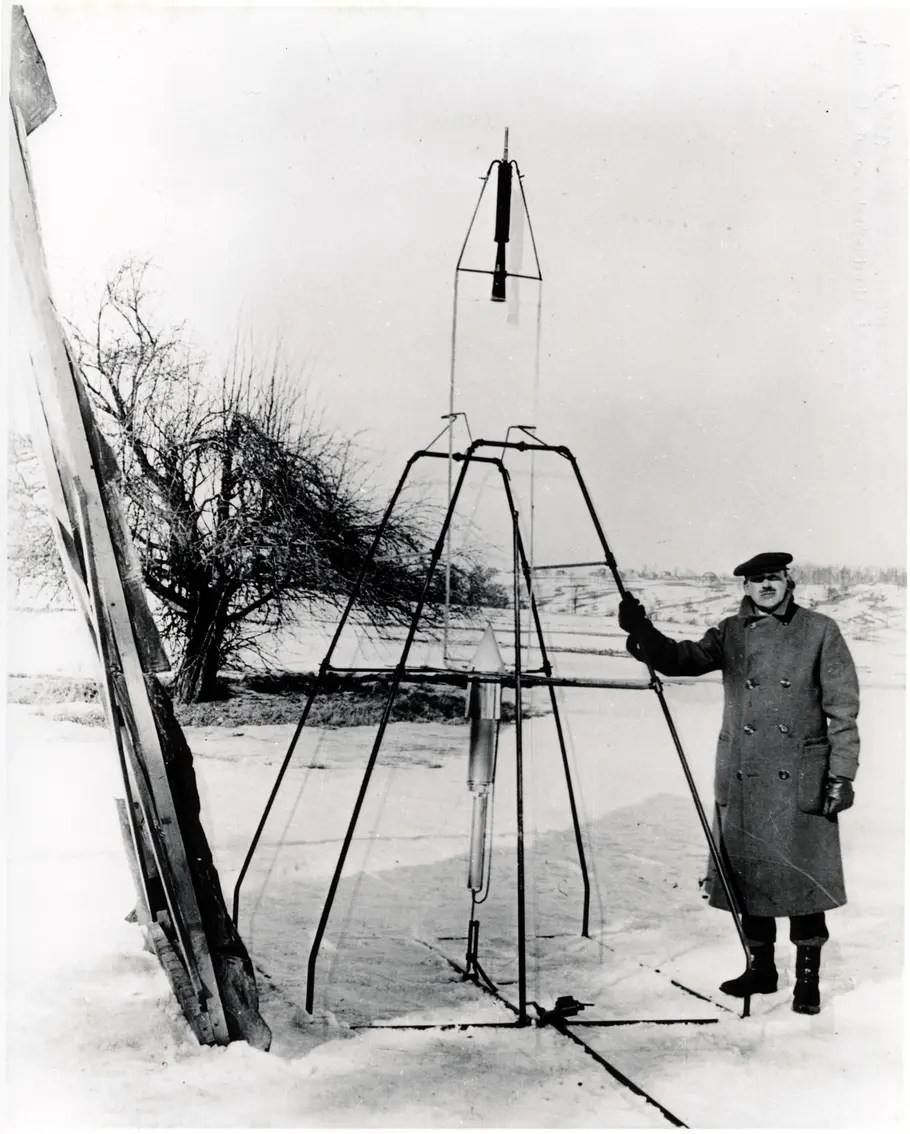
Image (Credit): Robert Goddard with his rocket on March 8, 1926 before a failed launch. He was able to successfully launch it on March 16th. (Smithsonian Air & Space Museum)
On this day in 1926, Robert Goddard launched the world’s first liquid-propellant rocket in Worcester, Massachusetts. The rocket climbed to about 41 feet and traveled a distance of only 184 feet, but it was a success. After that, he kept the results under his hat for almost a decade.
Although in fragile health as a young man, Goddard pursued ideas in science, watched the heavens with his telescope, and became a fan of the writings of H.G. Wells, particularly The War of the Worlds. He also survived a bad case of tuberculosis at age 31, but he fought his way back to his scientific work.
Robert Goddard had a productive, yet at times frustrating, academic career involving rocketry, at times dabbling with potential military projects as well. For example, during the World War I period he came up with the idea of a hand-held tube-based rocket launcher that would later become the bazooka. However, the U.S. military was slow to show interest in larger rockets until the Germans leaped ahead in the 1940s, which the Germans did by building on Goddard’s work. It did not help that Goddard was very protective of his ideas and did not always work well with others, in part due to some early criticism.
In a 1932 letter to writer H.G. Wells, Robert Goddard stated:
How many more years I shall be able to work on the problem I do not know; I hope, as long as I live. There can be no thought of finishing, for ‘aiming at the stars’ both literally and figuratively, is a problem to occupy generations, so that no matter how much progress one makes, there is always the thrill of just beginning.
He was right. One hundred years later we are continuing his work as we aim for the Moon, Mars, and eventually the stars.
You can read more about this early rocket flight at this Smithsonian site.


 Our Awesome Universe