Space Stories: New Canadian Radio Telescope, Our Empty Corner of the Universe, and Fortunate Collisions with Earth

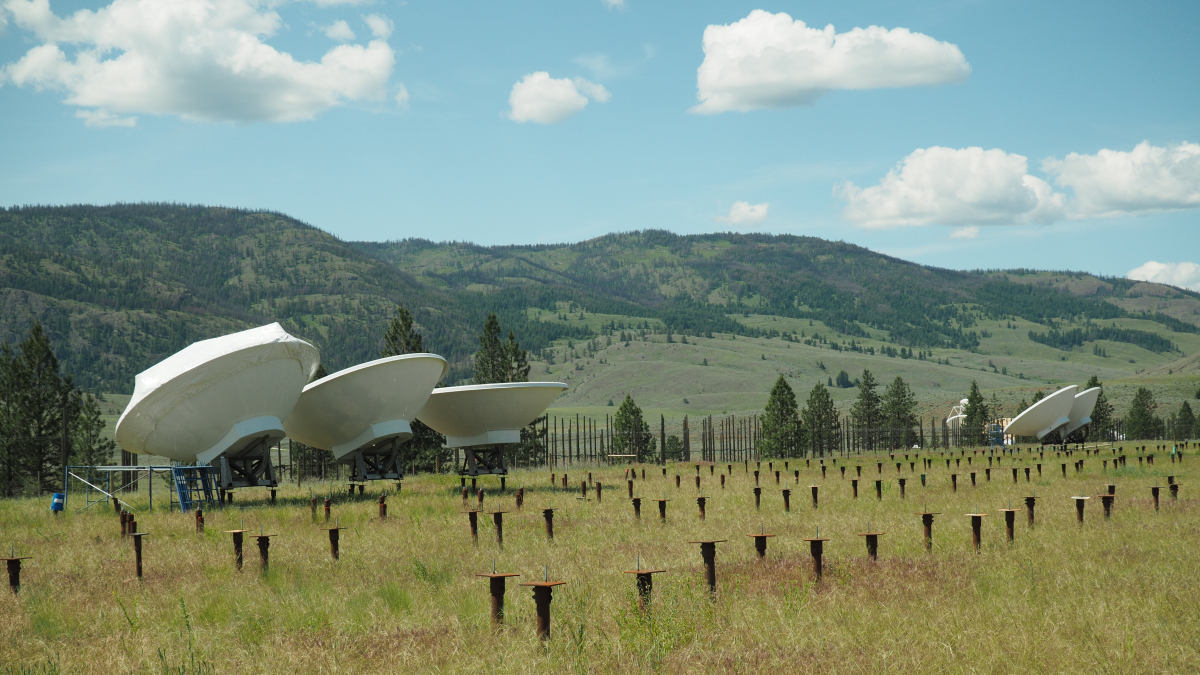
Image (Credit): The Canadian Hydrogen Observatory and Radio-transient Detector. (National Research Council of Canada)

Here are some recent space-related stories of interest.

McGill University: CHORD Will Be a Huge Leap Forward for Canadian Radio Astronomy

Construction is underway of CHORD, the most ambitious radio telescope project ever built on Canadian soil. Short for the Canadian Hydrogen Observatory and Radio-transient Detector, CHORD will give astronomers an unprecedented opportunity to explore some of the most exciting and mysterious questions in astrophysics and cosmology, from Fast Radio Bursts (FRBs) and dark energy to the measurements of fundamental particles, and beyond.

BBC Sky at Night Magazine: Earth Could Be Sitting in the Centre of a Giant Cosmic Void, According to Astronomers

It’s human to feel alarmed by the sheer emptiness of space. Now, astronomers from the University of Portsmouth in the UK suggest this unsettling vastness may be worse than we thought. They reckon Earth, our entire Solar System and even our entire Milky Way sits inside a mysterious giant hole. This void, they believe, may cause the cosmos to expand more quickly in our local environment than in other parts of the Universe.

University of Bern: “No Collision, No Life: Earth Probably Needed Supplies from Space

After the formation of the Solar System, it took a maximum of three million years for the chemical composition of the Earth’s precursor to be completed. This is shown by a new study by the Institute of Geological Sciences at the University of Bern. At this time, however, there were hardly any elements necessary for life such as water or carbon compounds on the young planet. Only a later planetary collision probably brought water to Earth, paving the way for life.

Did China Just Install HAL in its Space Station?

image (Credit): The eye of HAL 9000 from 2001: A Space Odyssey. (Stanley Kubrick Productions)

Is it possible the space station engineers in China failed to watch Stanley Kubrick’ film 2001: A Space Odyssey?

I ask this because earlier this summer the Chinese government installed an artificial intelligence chatbot named Wukong on the Tiangong space station. It is designed to assist the taikonauts with navigation and tactical information planning.

A Wired magazine story noted:

Wukong AI assisted the crew on a six-and-a-half-hour mission, which involved taikonauts installing space debris protection devices during a spacewalk and performing a routine inspection of the station.

Doesn’t that sound a little like the situation in the movie involving the supercomputer HAL 9000, when HAL had a different idea about its role in the mission? I’m not sure I would be comfortable leaving the space station.

The same story also highlights how the International Space Station has its own computer helpers, including small flying Astrobees that can assist the astronauts with routine tasks.

Forbes magazine reported that NASA is already conducting “war games” with these Astrobee robots to see if they can be used for offensive purposes to protect the astronauts. What could go wrong?

These are interesting times with AI and robots on Earth and in space. I just hope the engineers have time to watch a few science fiction movies as well to prepare for that future.

Pew Study Reports on NASA’s Support Among the Public

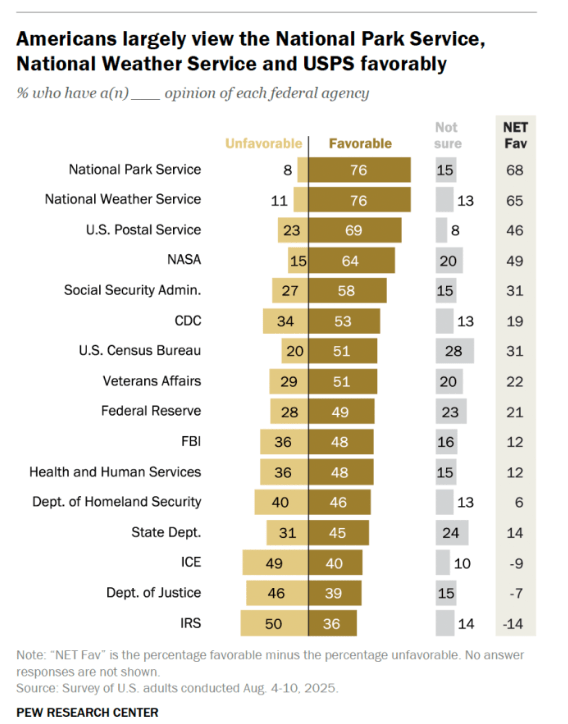
A recent Pew Research Center report titled Republicans’ Views of Justice Department, FBI Rebound as Democrats’ Views Shift More Negative found that NASA was among the fourth most favorably viewed federal agency from among 16 agencies. Not surprisingly, the IRS placed last. However, it was joined at the bottom by ICE and the Department of Justice.

As shown in the graphic above, 64 percent of the American interviewed had a positive view of NASA, 15 percent did not, and 20 percent were not sure about what they thought about NASA. In another graphic, we learn that the 64 percent figure comes from 61 percent of Republicans and 71 percent of Democrats.

This comes at a time of planned deep cuts at the space agency. So what troubles the Republicans most about NASA?

According to Acting NASA Administrator Sean Duffy, one of the problems at NASA is the climate science focus. Mr. Duffy recently stated:

All the climate science and all of the other priorities that the last administration had at NASA we’re going to move aside, and all of the science that we do is going to be directed towards exploration, which is the mission of NASA.

Is that consistent with what the public says it wants in terms of priorities? Not at all. In fact, the public has the opposite view according to another Pew Research Center report from 2023, Americans’ Views of Space: U.S. Role, NASA Priorities and Impact of Private Companies, where monitoring the Earth’s climate was a much higher priority to Americans than sending astronauts to the Moon or Mars (see graphic below).

So the current White House is cutting a favored program and shifting the remaining resources in a direction that is inconsistent with the pubic’s stated preferences. This does not sound like a winning strategy for the White House or, more importantly, the American public paying the bills.

Space Quote: Happy Labor Day, NASA

Credit: Image by Mohamed Hassan from Pixabay.

“The agencies and agency subdivisions set forth in section 2 of this order are hereby determined to have as a primary function intelligence, counterintelligence, investigative, or national security work. It is also hereby determined that Chapter 71 of title 5, United States Code, cannot be applied to these agencies and agency subdivisions in a manner consistent with national security requirements and considerations.”

-Wording in an executive order, signed on Thursday, that eliminates the workers’ union at NASA. While NASA was set up as a civilian agency completely separate from the U.S. Air Force and U.S. Space Command, which have national security functions, that was not enough to protect it from expansive White House interpretations targeting federal workers. Other federal agencies had their unions removed earlier this year, and other joined NASA in this latest executive order, such as the National Weather Service. One might wonder why these civilian agencies are being decimated by the same White House given that they are so critical to national security, but logic has little to do with government operations these days.

The Few, The Proud, The Moon Watchers

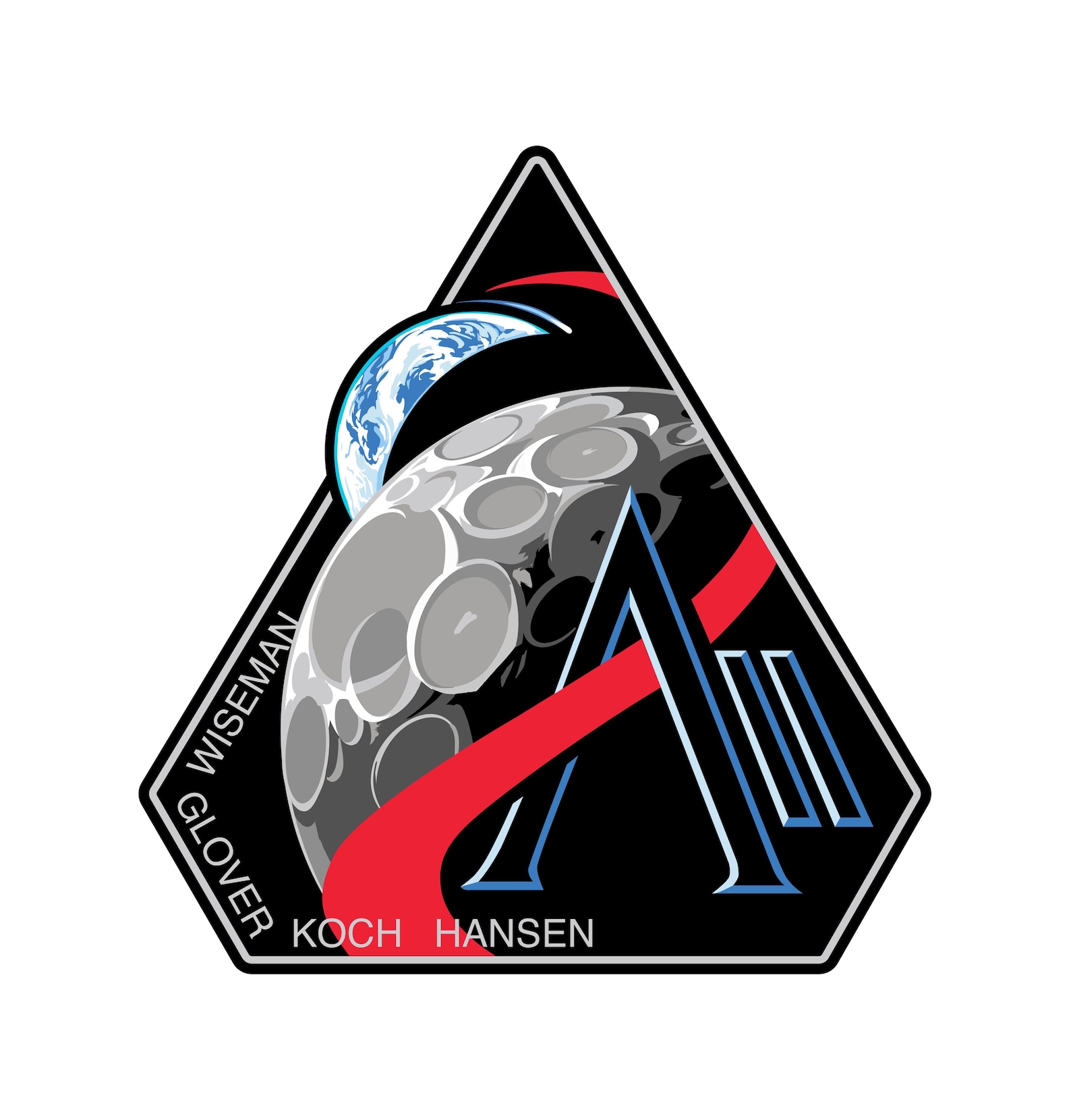
Image (Credit): Artemis II mission crew patch. (NASA)

NASA is looking for volunteers to assist next year’s Artemis II mission, which is expected to take place in April 2026. The volunteers will help track of the Artemis II Orion crewed spacecraft as it travels around the Moon.

The volunteers will monitor Orion’s signal using their respective ground antennas to help track and measure changes in the radio waves transmitted by the spacecraft. Volunteers similarly assisted with uncrewed Orion tracking during Artemis I.

This is a unique opportunity for international space agencies, academic institutions, commercial companies, nonprofit entities, and even private citizens to be part of the Artemis II mission.

Give it some thought and, if you are interested, read through NASA’s Artemis II Orion One-Way Doppler Measurements Tracking solicitation. You have until October 27th to apply.

Note: Below is a list of the 18 volunteers that assisted with the Artemis I mission:

Government Space Agencies

  • Canadian Space Agency, Canada
  • Centre National d’Etudes Spatiales (CNES), France
  • German Aerospace Center (Deutsches Zentrum für Luft- und Raumfahrt), Germany
  • Korea Aerospace Research Institute (KARI), Republic of Korea
  • National Space Centre, Elfordstown Earthstation, Ireland

Commercial Companies

  • Clearbox Systems Pty Ltd., Australia
  • Goonhilly Earth Station Ltd., United Kingdom
  • Intuitive Machines, USA
  • Kongsberg Satellite Services (U.S. office), USA
  • Leaf Space LLC, USA
  • Swedish Space Corporation (U.S. office), USA
  • Telespazio, Italy
  • Vambrace Inc., USA
  • Viasat, USA

Non-profit

  • CAMRAS, Netherlands

Academic Institutions

  • Space Systems Design Laboratory, Georgia Tech Research Institute, USA

Private Citizens

  • Scott Chapman, USA
  • Scott Tilley, Canada