Do We Need to Worry About Boeing as a Space Partner?

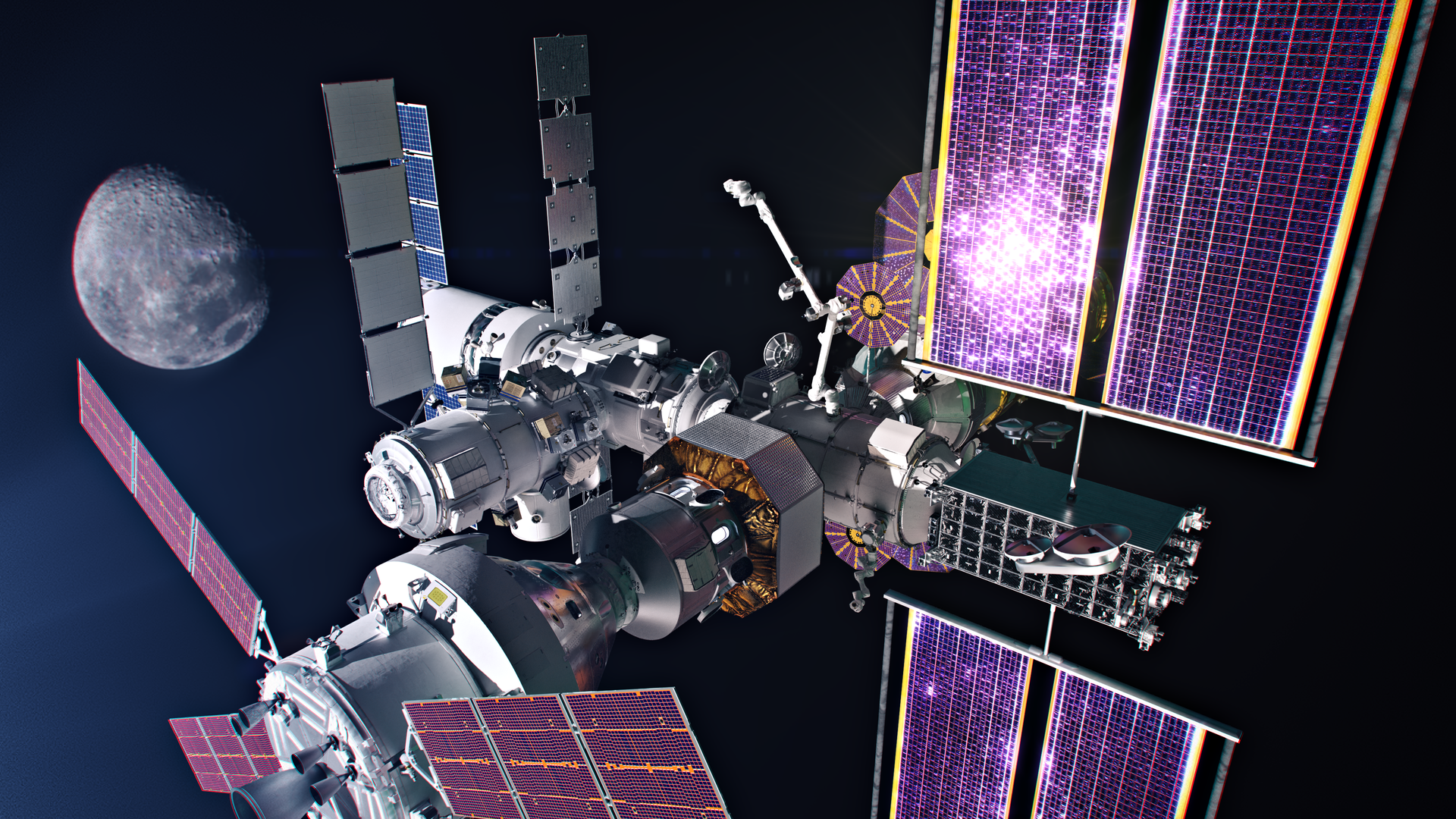
Image (Credit): International partners empowering NASA’s mission on Mars. (US Embassy & Consulates in Italy)

While spreading out the manned missions to the International Space Station (ISS) among various private sector partners sounded like a great idea, it has proven less than perfect. First we had to worry about the emotional stability of SpaceX’s CEO, and now we need to worry about the financial viability of Boeing, the only other company on a path to bring astronauts to the ISS.

At least that is the argument of Sophia Pappalardo in a Reason magazine article titled “America’s Reliance on Boeing Is a National Security Liability.” She cites a Congressional Research Service report on Boeing that states that since 2018 the company has:

…faced challenges including labor actions, production delays, quality control problems, and financial losses on government contracts. Given Boeing’s importance to the defense industrial base, Congress may assess whether or not these developments have implications for U.S. national security…Some analysts have speculated that Boeing could declare bankruptcy or seek to sell elements of its space or defense business.

One of the author’s suggestions is for the US government to expand its contracting efforts with “trusted international companies.” While the article is focused on the defense realm, it sounds like a good idea for the space realm as well.

The major US space goals already include our trusted international partners, such as the ISS, Artemis and Mars programs, so none of this much of a stretch. Maybe it just needs to be more of the focus as the current US firms show their vulnerabilities when poorly managed. I would add to this list the need to offer greater support to other, newer US-based space companies to further diversity the workload.

This may not be a time to call for greater international coordination led by NASA when the agency is also showing its vulnerabilities when poorly managed, yet we need to plan for future days when the craziness dies down. In the meantime, as Europe prepares for NASA cuts to joint programs, we have a lot of convincing to do if we want a deeper international space industry.

A new administrator for NASA may help, as well as a Congress that does its job and protects the future of our space programs.

I don’t care if you call it “Make the Moon the Goal Again.” Just get started.

Space Quote: Threatened Cuts at Wallops Flight Facility

Image (Credit): Presentation to students at the Wallops Flight Facility Visitor Center. (Wallops Flight Facility Visitor Center).

“This is an unacceptable and drastic step that will have a significant impact on local employees, residents, and visitors…My staff and I are in contact with NASA to better understand the reasoning behind this reported decision as it is contradictory to the proposed House budget. Wallops has long been a vital part of our community, and we will do everything we can to support the work that’s done there and the people who work there.”

-Statement by Congresswoman Jen Kiggans (R-VA), as quoted in The Virginian-Pilot, after NASA announced plans to close the visitor center at the Wallops Flight Facility on the Virginia coast. The visitor center has a NASA museum visited by students on field trips as well as the general public. It also acts as a viewing location for rocket launches from the site, which includes unmanned cargo missions to the International Space Station. Surprisingly, the White House did not bother keeping even the Republican congressional members in the loop on these cuts. Cutting back on public outreach is a sure way to undermine support for US space missions.

Credit: Wallops Flight Facility Visitor Center.

Space Stories: Gas Giant Exoplanet Found Orbiting Alpha Centauri A, New Jesuit Heads Vatican Observatory, and Crew-10 Mission Astronauts Return from ISS

Image (Credit): Alpha Centauri. (NASA)

Here are some recent space-related stories of interest.

Astronomy.com: Webb Telescope Discovers Potential New World in Neighboring Star System

A team of astronomers has found evidence of a candidate gas giant planet orbiting Alpha Centauri A, a Sun-like star in the closest stellar system to our own. Initial observations hinting at the planet’s existence were made in August 2024 using data from the James Webb Space Telescope (JWST). The Alpha Centauri system is located just 4 light-years from Earth. The findings, detailed in two papers accepted for publication in The Astrophysical Journal Letters, could represent a major milestone. As Charles Beichman of NASA’s Jet Propulsion Laboratory noted in a JWST news release, “With this system being so close to us, any exoplanets found would offer our best opportunity to collect data on planetary systems other than our own.”

News Nation: Pope Leo Appoints New Head Astronomer to Run the Vatican Observatory

Pope Leo XIV has appointed a new head astronomer to run the Vatican Observatory, one of the oldest scientific observatories in the world. Rev. Richard D’Souza, 47, will succeed Guy Consolmagno, an American physicist who was known as the “pope’s astronomer” for ten years. Both men are members of the Jesuit Order.

ISS National Laboratory: NASA’s SpaceX Crew-10 Returns Safely After Completing Dozens of ISS National Lab-Sponsored Investigations

After nearly six months onboard the International Space Station (ISS), the four astronauts of NASA’s SpaceX Crew-10 mission have safely returned to Earth. This weekend’s splashdown off the coast of California concludes a long-duration science expedition that supported dozens of investigations sponsored by the ISS National Laboratory. NASA astronauts Anne McClain and Nichole Ayers, Japan Aerospace Exploration Agency (JAXA) astronaut Takuya Onishi, and Roscosmos cosmonaut Kirill Peskov played a vital role in advancing science in space, contributing to biomedical research, physical and materials sciences, technology demonstrations, and student-led experiments. Their work helped push the boundaries of discovery in low Earth orbit (LEO) The orbit around the Earth that extends up to an altitude of 2,000 km (1,200 miles) from Earth’s surface. The ISS’s orbit is in LEO, at an altitude of approximately 250 miles. to benefit life on Earth and support a sustainable and robust space economy.

RIP: Jim Lovell, Apollo Astronaut

Image (Credit): NASA astronaut Jim Lovell. (NASA)

Last Thursday, former NASA astronaut Jim Lovell passed away at the age of 97. Mr. Lovell was one of the first astronauts to orbit the Moon in Apollo 8, and he also commanded the Apollo 13 mission around the Moon under great stress after the onboard explosion of an oxygen canister. While the crew was unable to complete its mission by landing on the Moon, he was able to safely bring his crew back to Earth.

In commenting on the Apollo 13 mission, Mr. Lovell later said ““It was plagued by bad omens and bad luck from the very beginning.” Even so, he was part of a long tradition of trial and error as the U.S. stretched itself and eventually ferried men and supplies to the lunar surface. The deaths of three astronauts in the Apollo 1 capsule had shown the world that a mission to the Moon was a dangerous gamble.

Mr. Lovell took his chances and we are all the better for it. He also stated:

There are people who make things happen, there are people who watch things happen, and there are people who wonder what happened. To be successful, you need to be a person who makes things happen.

He made things happen.

You can read more on Mr. Lovell’s life and career at these sites:

NASA
BBC
The New York Times

Rest in peace.

Television: The New Series Alien: Earth is Coming

Credit: FX Productions.

Given that Hollywood has apparently given up on summer blockbusters about space aliens and similar science fiction, we need to look to television. The summer has already been a lot of fun given the new series Murderbot, as well as the new seasons of Foundation and Star Trek: Strange New Worlds.

But wait, there’s more.

Ridley Scott’s Alien franchise is coming to a television near you. That’s right, some things cannot be contained to the screen.

The new series Alien: Earth will premiere on FX, Hulu, and Disney+ on August 12th. The latest trailer will show you that the screaming and running has just started. But instead of a two hour movie, you now have eight hours of terror spread over eight episodes.

So what is the spin this time? It’s in the title. Hell has come to our planet.

It is basically a tale of childlike super soldiers taking on the Xenomorph, or Alien creature. This future Earth is more advanced and nothing like ours, but it does not seem advanced enough to understand what just crash-landed onto the planet.

Here is the plot summary from FX:

When the mysterious deep space research vessel USCSS Maginot crash-lands on Earth, “Wendy” (Sydney Chandler) and a ragtag group of tactical soldiers make a fateful discovery that puts them face-to-face with the planet’s greatest threat in FX’s Alien: Earth.

In the year 2120, the Earth is governed by five corporations: Prodigy, Weyland-Yutani, Lynch, Dynamic and Threshold. In this Corporate Era, cyborgs (humans with both biological and artificial parts) and synthetics (humanoid robots with artificial intelligence) exist alongside humans. But the game is changed when the wunderkind Founder and CEO of Prodigy Corporation unlocks a new technological advancement: hybrids (humanoid robots infused with human consciousness). The first hybrid prototype named “Wendy” marks a new dawn in the race for immortality. After Weyland-Yutani’s spaceship collides into Prodigy City, “Wendy” and the other hybrids encounter mysterious life forms more terrifying than anyone could have ever imagined.

The Alien story was always about the hubris of humanity, corporate greed, and scary technological “improvements”. It is all here again in this television series.

We seem to be slow learners, even with our technology.