The Few, The Proud, The Moon Watchers

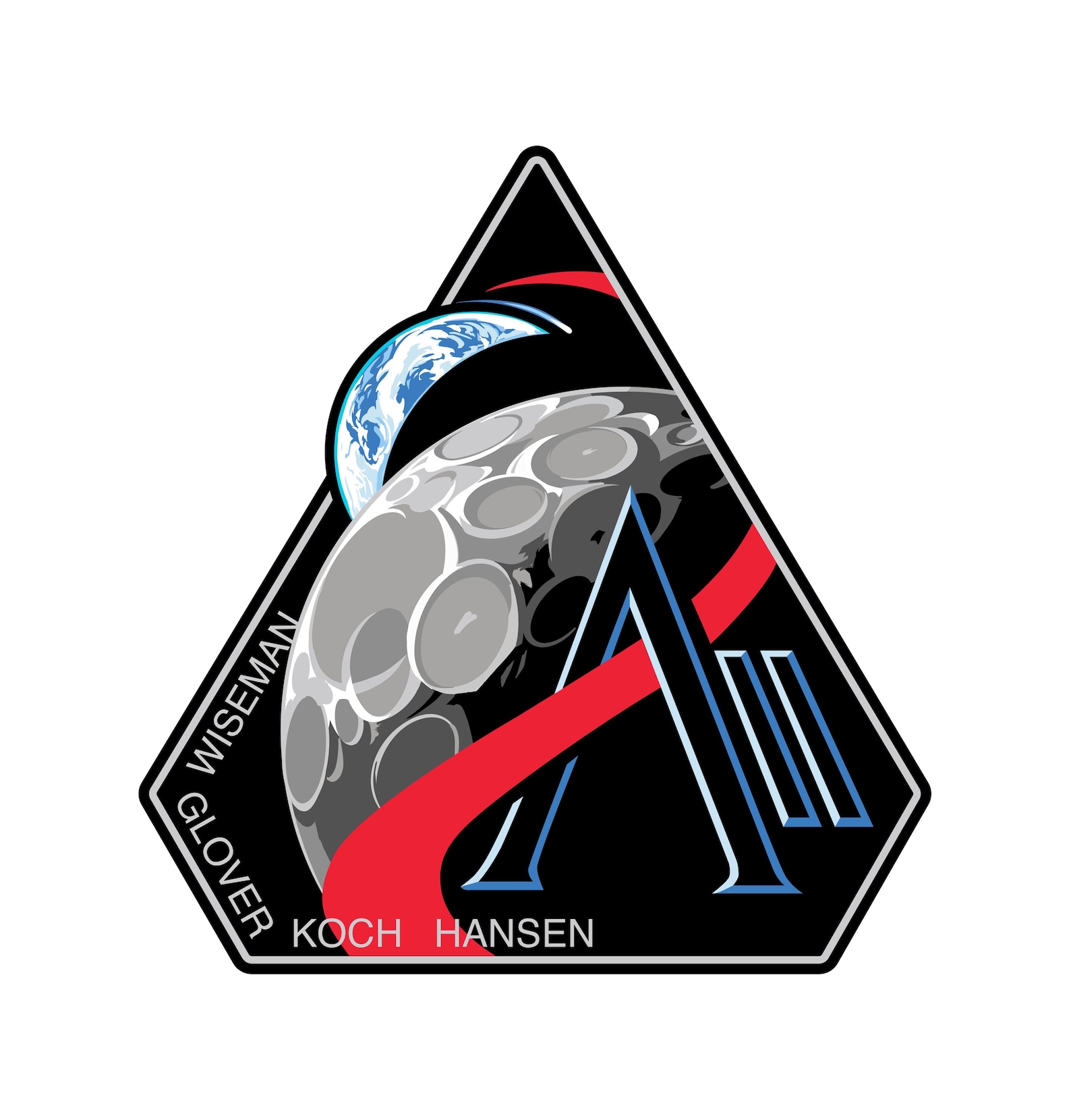
Image (Credit): Artemis II mission crew patch. (NASA)

NASA is looking for volunteers to assist next year’s Artemis II mission, which is expected to take place in April 2026. The volunteers will help track of the Artemis II Orion crewed spacecraft as it travels around the Moon.

The volunteers will monitor Orion’s signal using their respective ground antennas to help track and measure changes in the radio waves transmitted by the spacecraft. Volunteers similarly assisted with uncrewed Orion tracking during Artemis I.

This is a unique opportunity for international space agencies, academic institutions, commercial companies, nonprofit entities, and even private citizens to be part of the Artemis II mission.

Give it some thought and, if you are interested, read through NASA’s Artemis II Orion One-Way Doppler Measurements Tracking solicitation. You have until October 27th to apply.

Note: Below is a list of the 18 volunteers that assisted with the Artemis I mission:

Government Space Agencies

  • Canadian Space Agency, Canada
  • Centre National d’Etudes Spatiales (CNES), France
  • German Aerospace Center (Deutsches Zentrum für Luft- und Raumfahrt), Germany
  • Korea Aerospace Research Institute (KARI), Republic of Korea
  • National Space Centre, Elfordstown Earthstation, Ireland

Commercial Companies

  • Clearbox Systems Pty Ltd., Australia
  • Goonhilly Earth Station Ltd., United Kingdom
  • Intuitive Machines, USA
  • Kongsberg Satellite Services (U.S. office), USA
  • Leaf Space LLC, USA
  • Swedish Space Corporation (U.S. office), USA
  • Telespazio, Italy
  • Vambrace Inc., USA
  • Viasat, USA

Non-profit

  • CAMRAS, Netherlands

Academic Institutions

  • Space Systems Design Laboratory, Georgia Tech Research Institute, USA

Private Citizens

  • Scott Chapman, USA
  • Scott Tilley, Canada

Pic of the Week: “Blood Moon Rising Behind the City Skyscrapers”

Image (Credit): Shortlisted image “Blood Moon Rising Behind the City Skyscrapers.” (Tianyao Yang)

ZWO’s annual Astronomy Photographer of the Year Contest recently highlighted its 2025 shortlisted images, such as the image above from photographer Tianyao Yang titled “Blood Moon Rising Behind the City Skyscrapers.”

Here is the photographer’s description of the photo:

This photograph captures a red Full Moon rising beside Shanghai’s tallest skyscrapers in Lujiazui. Taken from a distance of 26.5 km (16.5 miles) from the skyscrapers in a single exposure, this image’s alignment took five years of planning. The Full Moon appears perfectly positioned next to the illuminated skyline, creating a striking contrast. 

Check out many other images at the contest site. The winning images will be announced at a ceremony on September 11, 2025.

Starship: The 10th Try Was a Success

Image (Credit): Artist’s rendering of a Starship human lander to the Moon’s surface. (SpaceX)

On Tuesday, Starlink finally launched its 10th test flight after a rough patch of three bad launches. Regarding this tenth test, SpaceX stated:

Every major objective was met, providing critical data to inform designs of the next generation Starship and Super Heavy.

Everything from the booster splash landing in the Gulf of Mexico shortly after ascending from Starbase, Texas, to the rocket itself splash landing in the Indian Ocean was a positive sign that things are back on track for the company and its rocket.

Now maybe talk can begin again about NASA’s Artemis program and the role of the Starship to bring humans back to the Moon. It is not clear how many tests will be required before the rocket is ready, but the Artemis program is already suffering from delays.

Hopefully, this successful test is a sign that things are getting back on track.

Space Stories: Dragon Docks with ISS, a Braille Astronomy Book, and an Exoplanet with No Atmosphere

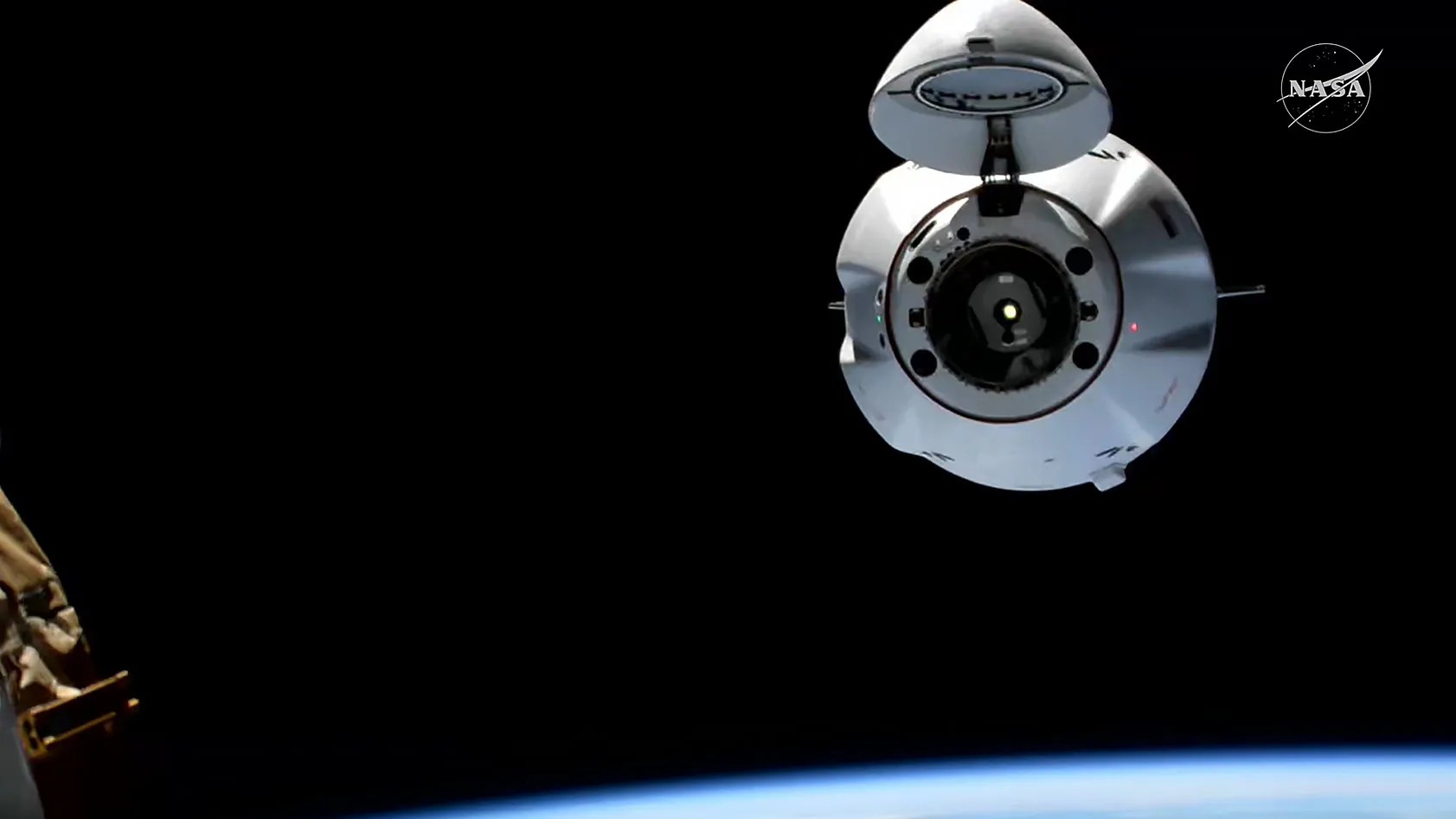
Image (Credit): The Dragon cargo capsule approaching the ISS. (NASA)

Here are some recent space-related stories of interest.

NASA: SpaceX Dragon Docks to Station Delivering New Science, Supplies

At 7:05 a.m. EDT, the SpaceX Dragon spacecraft docked to the forward port of the International Space Station’s Harmony module.  The spacecraft carried over 5,000 pounds of scientific investigations and cargo to the orbiting laboratory on SpaceX’s 33rd commercial resupply services mission for NASA. The mission launched at 2:45 a.m. on Aug. 24 atop a SpaceX Falcon 9 rocket from Space Launch Complex 40 at Cape Canaveral Space Force Station in Florida. 

Cincinnati Enquirer: New Braille Book from Cincinnati Astronomer Lets You See Constellations Without Your Eyes

Longtime readers will recognize the name Dean Regas, astronomy contributor to The Enquirer and former cohost of the PBS series “Star Gazers,” but they may not know that Regas is also the author of seven books about astronomy. His latest foray into the world of writing, “All About Orion,” is a children’s book focused on its namesake, Orion, with a twist: the book features braille writing and textile constellations as well as large print for blind and visually impaired children.

Universe Today: “Another Earth-like Exoplanet Crossed Off the List: JWST Shows that GJ 3929b Has No Atmosphere

The JWST’s latest exoplanet atmosphere target is GJ 3929 b. Astronomers discovered it in TESS data in 2022. “Our analysis confirms the planetary nature of the transiting planet GJ 3929 b,” the authors of the 2022 paper wrote. “Its mass and radius (~ 0.43 Earth masses and ~1.15 Earth radii) put it into the regime of small Earth-sized planets.” Earth-like planets attract attention for obvious reasons. Now the JWST’s results are in, and the once-promising planet appears to be barren.

SpaceX is Eager to Launch the Next Starship

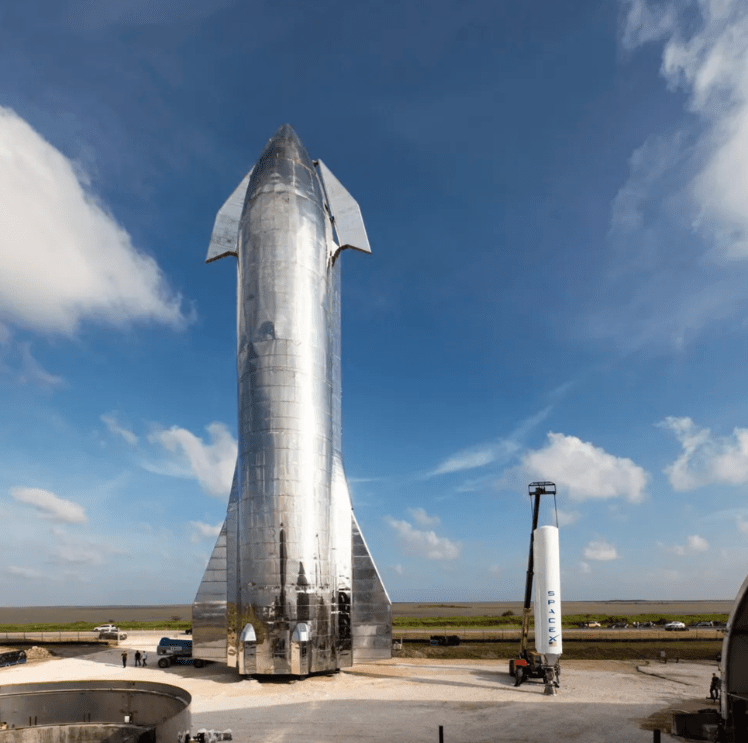
Image (Credit): Image from 2019 showing the SpaceX’s Starship prototype (left) next to a Falcon 1 rocket. (SpaceX)

Elon Musk is eager to get his Starship launches back on track, but the 10th launch scheduled for yesterday had to be scrubbed due to “ground system” issues. The launched was pushed by a day or two.

The most recent reminder of the difficulties getting this rocket into orbit came in June, when a pre-flight engine test ended in an explosion.

Even with all of the acrimony between Musk and President Trump, NASA and the White House are depending on the Starship rocket to make the Artemis program a reality.

Like him or not, the US space program’s success is locked in with Musk’s company at the moment.

We can only hope for a successful test.

Update: The launch was scheduled for late Monday, August 25th, but cancelled again, this time due to the weather.