RIP: Jim Lovell, Apollo Astronaut

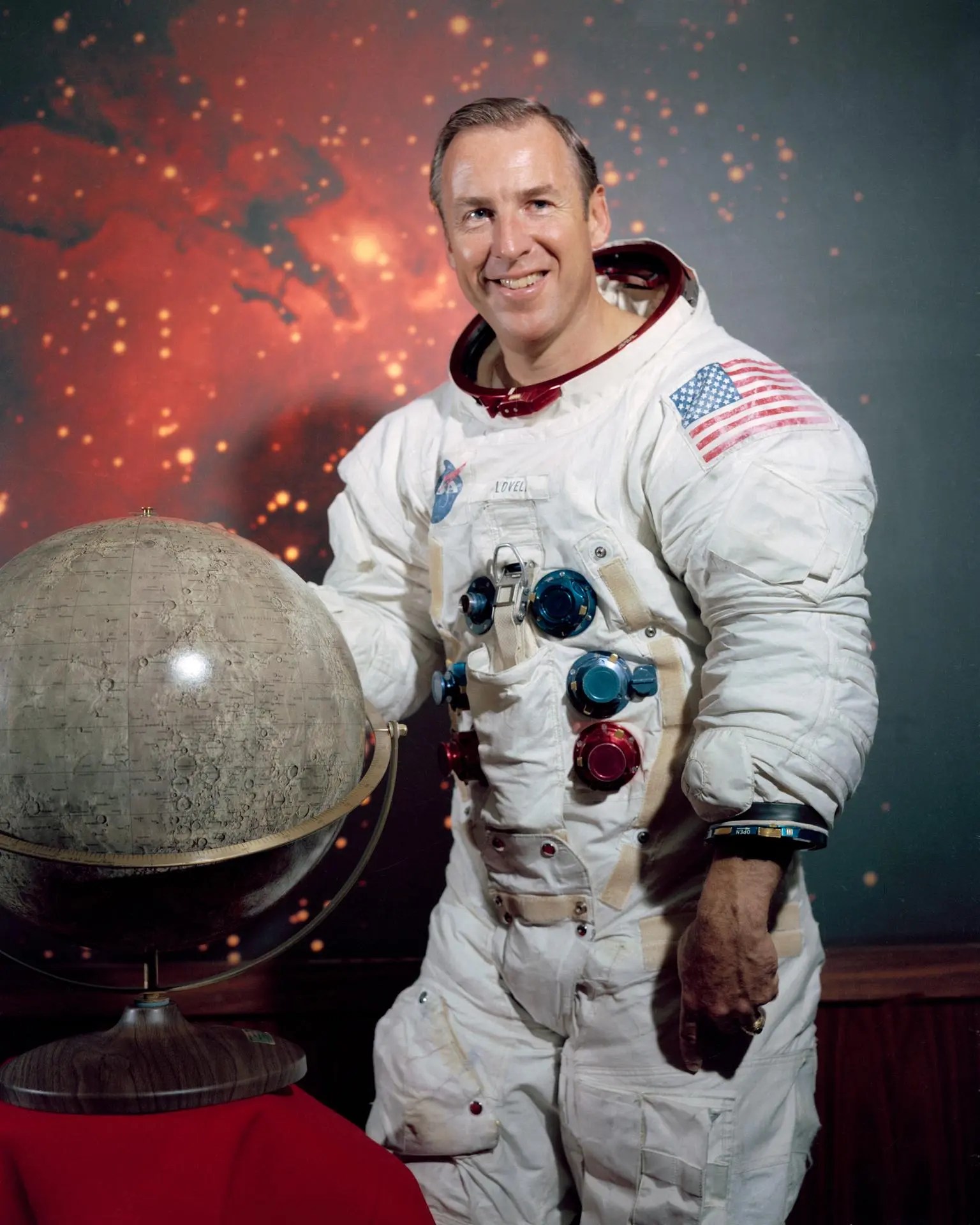
Image (Credit): NASA astronaut Jim Lovell. (NASA)

Last Thursday, former NASA astronaut Jim Lovell passed away at the age of 97. Mr. Lovell was one of the first astronauts to orbit the Moon in Apollo 8, and he also commanded the Apollo 13 mission around the Moon under great stress after the onboard explosion of an oxygen canister. While the crew was unable to complete its mission by landing on the Moon, he was able to safely bring his crew back to Earth.

In commenting on the Apollo 13 mission, Mr. Lovell later said ““It was plagued by bad omens and bad luck from the very beginning.” Even so, he was part of a long tradition of trial and error as the U.S. stretched itself and eventually ferried men and supplies to the lunar surface. The deaths of three astronauts in the Apollo 1 capsule had shown the world that a mission to the Moon was a dangerous gamble.

Mr. Lovell took his chances and we are all the better for it. He also stated:

There are people who make things happen, there are people who watch things happen, and there are people who wonder what happened. To be successful, you need to be a person who makes things happen.

He made things happen.

You can read more on Mr. Lovell’s life and career at these sites:

NASA
BBC
The New York Times

Rest in peace.

Television: The New Series Alien: Earth is Coming

Credit: FX Productions.

Given that Hollywood has apparently given up on summer blockbusters about space aliens and similar science fiction, we need to look to television. The summer has already been a lot of fun given the new series Murderbot, as well as the new seasons of Foundation and Star Trek: Strange New Worlds.

But wait, there’s more.

Ridley Scott’s Alien franchise is coming to a television near you. That’s right, some things cannot be contained to the screen.

The new series Alien: Earth will premiere on FX, Hulu, and Disney+ on August 12th. The latest trailer will show you that the screaming and running has just started. But instead of a two hour movie, you now have eight hours of terror spread over eight episodes.

So what is the spin this time? It’s in the title. Hell has come to our planet.

It is basically a tale of childlike super soldiers taking on the Xenomorph, or Alien creature. This future Earth is more advanced and nothing like ours, but it does not seem advanced enough to understand what just crash-landed onto the planet.

Here is the plot summary from FX:

When the mysterious deep space research vessel USCSS Maginot crash-lands on Earth, “Wendy” (Sydney Chandler) and a ragtag group of tactical soldiers make a fateful discovery that puts them face-to-face with the planet’s greatest threat in FX’s Alien: Earth.

In the year 2120, the Earth is governed by five corporations: Prodigy, Weyland-Yutani, Lynch, Dynamic and Threshold. In this Corporate Era, cyborgs (humans with both biological and artificial parts) and synthetics (humanoid robots with artificial intelligence) exist alongside humans. But the game is changed when the wunderkind Founder and CEO of Prodigy Corporation unlocks a new technological advancement: hybrids (humanoid robots infused with human consciousness). The first hybrid prototype named “Wendy” marks a new dawn in the race for immortality. After Weyland-Yutani’s spaceship collides into Prodigy City, “Wendy” and the other hybrids encounter mysterious life forms more terrifying than anyone could have ever imagined.

The Alien story was always about the hubris of humanity, corporate greed, and scary technological “improvements”. It is all here again in this television series.

We seem to be slow learners, even with our technology.

IPO Shows Moon Missions Stir Stock Investors

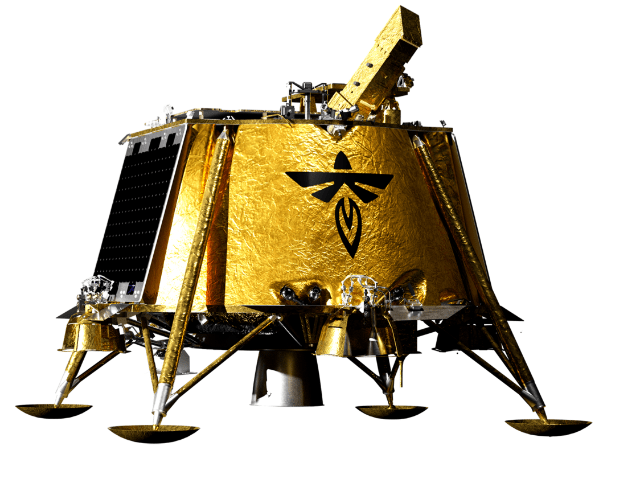
Image (Credit): The Blue Ghost lunar lander. (Firefly Aerospace)

Firefly Aerospace, the Texas-based company that successfully put a lander on the Moon earlier this year, is now having success with the stock market as well. It’s initial public offering (IPO) earlier this week led to a valuation of about $6 billion for the company. The sale provided Firefly with about $868 million in new funds to supports its ongoing efforts.

Firefly Aerospace has seen contracts roll in after its recent lunar success. For example, just last month NASA awarded the company a $177 million Commercial Lunar Payload Services contract. The contract calls for Firefly to deliver NASA-sponsored payloads to the lunar South Pole in 2029.

After the award last month, CEO Jason Kim stated:

Firefly is honored to support another NASA CLPS task order as a proven, reliable partner for robotic missions to the Moon…Following our first Blue Ghost mission that made history just a few months ago, this bold Firefly team proved we have the right mix of grit, innovation, and dedication to not only stick the landing, but also complete all scientific objectives for our payload partners. We’ve set the bar high, and we aim to continue setting new records in our missions to come with our active production line of Blue Ghost landers.

This is good news for other companies striving for a piece of the space industry. Now we just need to ensure NASA remains a reliable partner for Firefly Aerospace and others who have proven they can get the job done.

Pic of the Week: The Third Interstellar Visitor

Image (Credit): Interstellar comet 3I/Atlas captured by the Hubble Space Telescope. (NASA, ESA, D. Jewitt (UCLA), J. DePasquale (STScI))

This week’s image is from the NASA/European Space Agency’s (ESA) Hubble Space Telescope. It shows an image of interstellar comet 3I/Atlas from July 21, 2025. The comet was about 365 million kilometers from Earth. First identified by a telescope in Chile last month, this is the third such object to be observed by astronomers.

Here is a little more from the ESA about this unusual object:

Hubble also captured a dust plume ejected from the Sun-warmed side of the comet, and the hint of a dust tail streaming away from the nucleus. Hubble’s data yields a dust-loss rate consistent with comets that are first detected around 480 million kilometres from the Sun. This behaviour is much like the signature of previously seen Sun-bound comets originating within our Solar System. The big difference is that this interstellar visitor originated in some other Solar System elsewhere in our Milky Way galaxy. 3I/ATLAS is traveling through our Solar System at roughly 210,000 kilometres per hour, the highest velocity ever recorded for a Solar System visitor. This breathtaking sprint is evidence that the comet has been drifting through interstellar space for many billions of years. The gravitational slingshot effect from innumerable stars and nebulae the comet passed added momentum, ratcheting up its speed. The longer 3I/ATLAS was out in space, the higher its speed grew.

Is Ukraine Suggesting an End to US-Russian Cooperation in Space?

In a recent Washington Post editorial titled “How to Shut Down Putin’s War Machine,” Andriy Yermak, who is the head of the presidential office of Ukraine, states that Roscosmos should not be considered as a “neutral civilian institution.” He notes that the space agency helps to guide Russian missile strikes, so it is just another part of the military-industrial complex.

Mr. Yermak goes on to state that Roscosmos “…must be sanctioned in full and banned from cooperating with Western scientific and academic institutions.”

So how would this apply to the International Space Station (ISS), which is clearly a scientific endeavor?

Russia has already threatened to leave the ISS many times, so its departure is something that has been contemplated by the US and Russia. But here we are talking about about pushing them off the station. Will they take their components and head home? Is a partial station solely dependent on the whims of Elon Musk better than a fully-functional station with the Russians?

Of course, a hot war with Russia is something else. Recent threats by both Russia and the US regarding nuclear weapons has not been helpful, but little has really changed on the ground since the initial Russian invasion (much to President Putin’s chagrin).

It is not only Ukraine questioning the Russian presence on the station. Retired NASA astronaut Terry Virts, who served as a commander on the ISS, recently said this to Radio Free Europe:

Cooperating with the Russians on the ISS is like going on an Antarctic expedition with Nazis in 1943…It’s just morally reprehensible.

So far both nations have decided that the current arrangement is working, but that may not last forever if the current spat between the former Russian president and the current American president continue. That would be unfortunate with Russia’s program limping along and the US space program looking at drastic cuts.

The last thing we need is an empty space station orbiting the Earth as a memorial to our foolishness here on the ground.