Pic of the Week: The Eagle Nebula

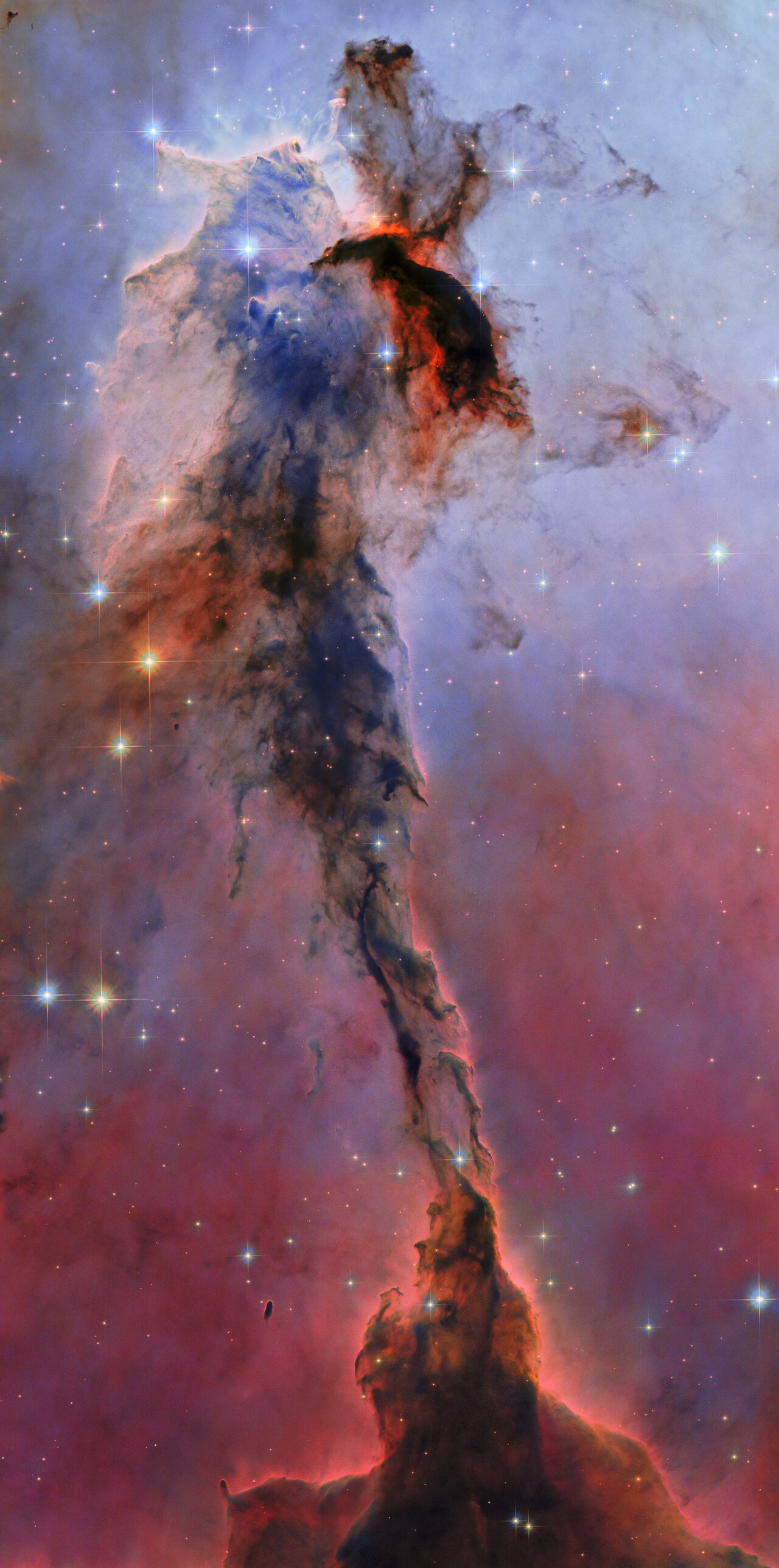
Image (Credit): Messier 16, or the Eagle Nebula. (ESA/Hubble & NASA, K. Noll)

This week’s updated image is from the Hubble Space Telescope. It shows the Eagle Nebula in all its glory, located not too far from the Pillars of Creation.

For more on this spectacular image, we turn to the European Space Agency’s (ESA) Hubble page:

Unfurling along the length of the image is a pillar of cold gas and dust that is 9.5 light-years tall. As enormous as this dusty pillar is, it’s just one small piece of the greater Eagle Nebula, which is also called Messier 16. The name Messier 16 comes from the French astronomer Charles Messier, a comet hunter who compiled a catalogue of deep-sky objects that could be mistaken for comets.

The name Eagle Nebula was inspired by the nebula’s appearance. The edge of this shining nebula is shaped by dark clouds like this one, giving it the appearance of an eagle spreading its wings.

Not too far from the region pictured here are the famous Pillars of Creation, which Hubble has photographed multiple times, with images released in 1995 and 2015.

The heart of the nebula, which is located beyond the edge of this image, is home to a cluster of young stars. These stars have excavated an immense cavity in the centre of the nebula, shaping otherworldly pillars and globules of dusty gas. This particular feature extends like a pointing finger toward the centre of the nebula and the rich young star cluster embedded there.

The Eagle Nebula is one of many nebulae in the Milky Way that are known for their sculpted, dusty clouds. Nebulae take on these fantastic shapes when exposed to powerful radiation and winds from infant stars. Regions with denser gas are more able to withstand the onslaught of radiation and stellar winds from young stars, and these dense areas remain as dusty sculptures like the starry pillar shown here.

Space Stories: SPHEREx Starts Mapping, Studying an Exoplanet’s Atmosphere, and Explosive Diamonds

Image (Credit): The Spectro-Photometer for the History of the Universe, Epoch of Reionization and Ices Explorer (SPHEREx) observatory. (NASA)

Here are some recent stories of interest.

Engadget: NASA’s SPHEREx Space Telescope Has Begun its Mission to Map the Entire Sky in 3D

A space observatory designed to map the entire sky over a period of two years to further our understanding of the early universe has started snapping images. SPHEREx, which launched in early March, got started with its observations this past week after over a month of setup procedures and system checks, according to NASA. The space telescope will complete about 14.5 orbits of Earth per day, capturing roughly 3,600 images daily and observing the sky in an unprecedented 102 wavelengths of infrared light. Its observations will eventually be combined to create four “all-sky” maps.

Sci.News: Webb Determines Atmospheric Makeup of Sub-Neptune TOI-421b

Sub-Neptunes are high-occurrence exoplanets that have no solar system analog. Much smaller than gas giants and typically cooler than hot-Jupiter exoplanets, these worlds were extremely challenging to observe before the launch of the NASA/ESA/CSA James Webb Space Telescope. Many of sub-Neptunes appear to be very highly obscured by clouds and hazes, which have made it impossible to determine their atmospheric makeup. Now, astronomers using Webb have captured the transmission spectrum of the sub-Neptune TOI-421b and uncovered the chemical fingerprints of its atmosphere.

Study Finds: A Star 30,000 Light-Years Away May Have Forged The Gold In Your Jewelry

The gold in your wedding ring may have come from a star’s explosive death. For decades, scientists have hunted for the factories that produce the universe’s heaviest elements, and now they’ve found an unexpected one: magnetar giant flares, cosmic explosions that release more energy in a millisecond than our Sun does in 100,000 years. Researchers have confirmed that these titanic blasts create the elements that make up our jewelry, electronics, and even our bodies.

Happenings with the Chinese Space Station

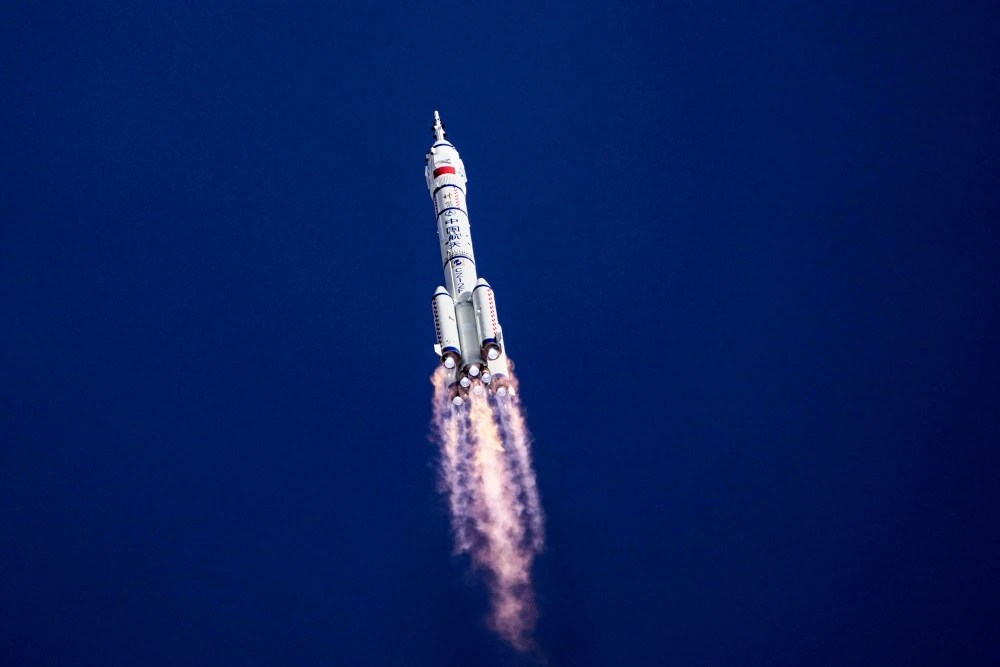
Image (Credit): The successful launch of three astronauts to the Tiangong space station via China’s Long March 2F rocket on April 24. 2025. (Andy Wong/AP)

The Chinese space program continues to operate and advance as NASA faces daunting cuts and general disorientation under the Department of Government Efficiency (a misnomer if there ever was one).

On April 24, China sent three new astronauts (the Shenzhou-20 crew) to its Tiangong space station, while three astronauts (the Shenzhou-19 crew) safely returned from the space station last week after six months in space.

It is important to remember that the rest of the world wants to advance in space even if the US chooses to chase its tail and destroy its own asset and reputation. None of this is necessary, but that is where we are.

One might even say the US is undergoing a ridiculous DEI purge at NASA and throughout the government in the same way China went through its ill-fated Cultural Revolution in the 1960s and 1970s.

Paul Krugman had a good piece on this, stating:

Once you’ve seen the parallel between what MAGA is trying to do and China’s Cultural Revolution, the similarities are everywhere. Maoists sent schoolteachers to do farm labor; Trumpists are talking about putting civil servants to work in factories.

We need to focus on the future again, and soon.