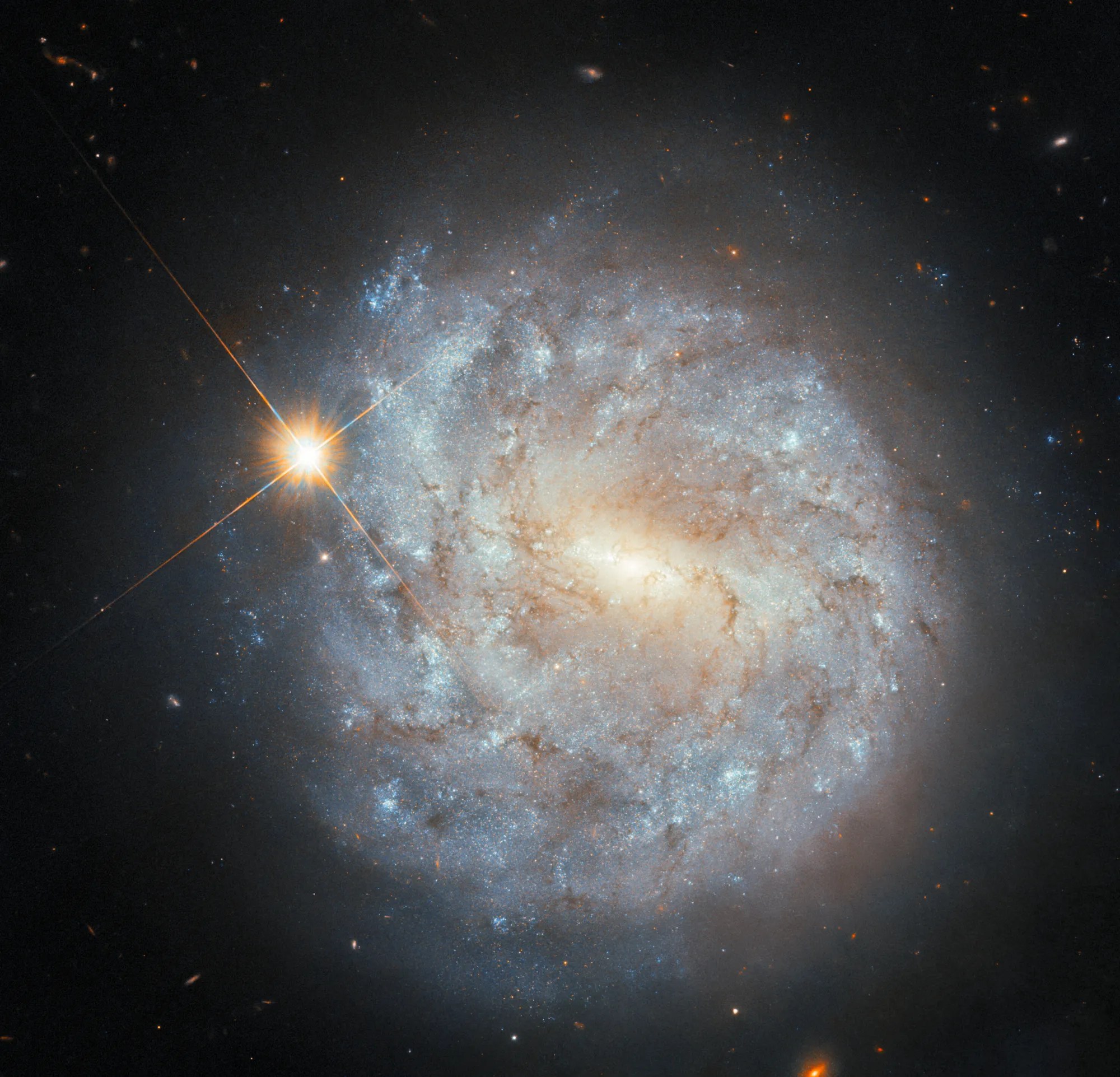
Image (Credit): Hubble Space Telescope image of a sparkling spiral galaxy paired with a prominent star, both in the constellation Virgo. (ESA/Hubble & NASA, S. J. Smartt, C. Kilpatrick)
This week’s image is from the NASA/ESA Hubble Space Telescope. It shows what appears to be two close neighbors – a star and a galaxy – but looks can be deceiving.
This NASA/ESA Hubble Space Telescope image features a sparkling spiral galaxy paired with a prominent star, both in the constellation Virgo. While the galaxy and the star appear to be close to one another, even overlapping, they’re actually a great distance apart. The star, marked with four long diffraction spikes, is in our own galaxy. It’s just 7,109 light-years away from Earth. The galaxy, named NGC 4900, lies about 45 million light-years from Earth.
This image combines data from two of Hubble’s instruments: the Advanced Camera for Surveys, installed in 2002 and still in operation today, and the older Wide Field and Planetary Camera 2, which was in use from 1993 to 2009. The data used here were taken more than 20 years apart for two different observing programs — a real testament to Hubble’s long scientific lifetime.
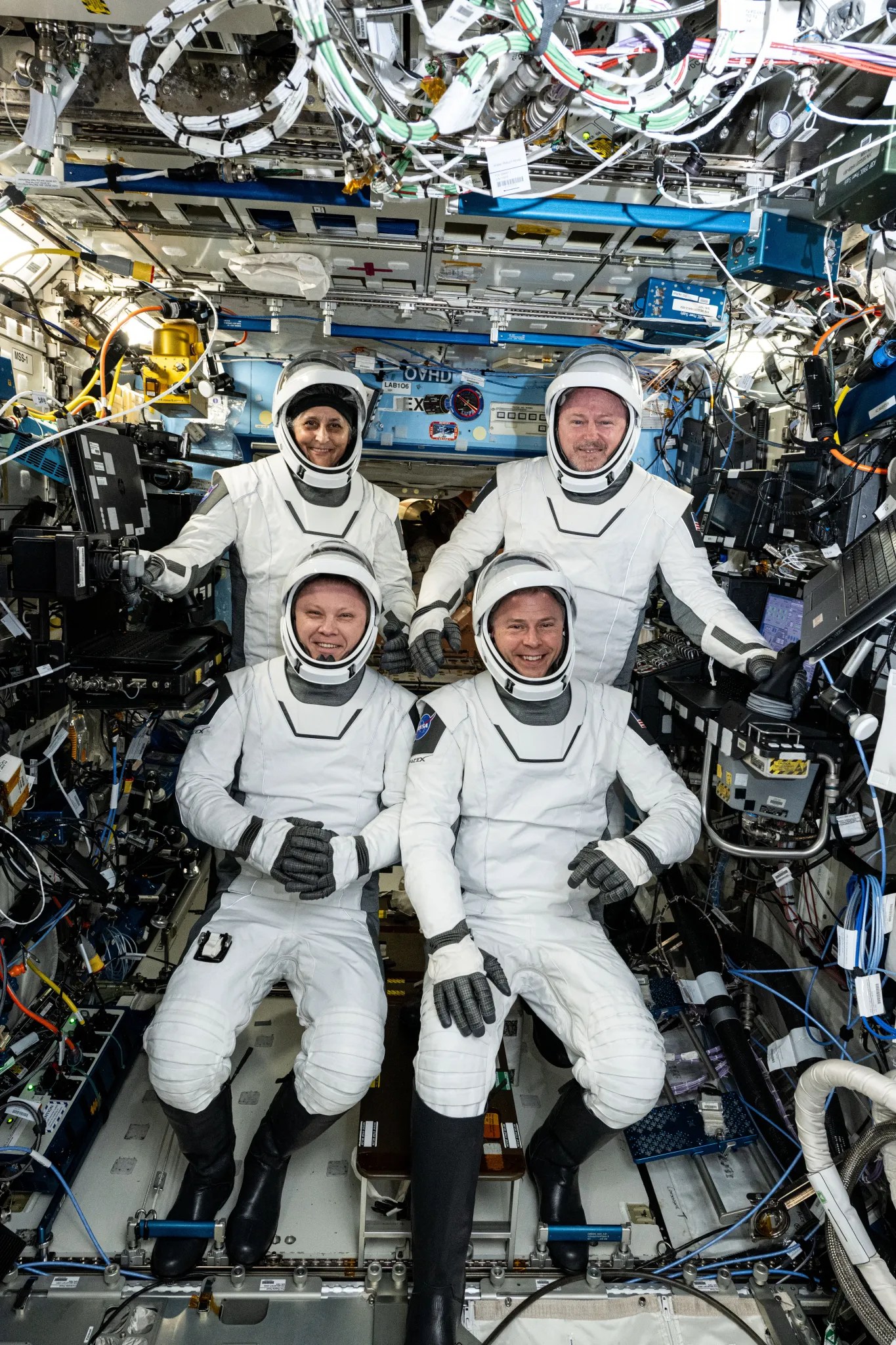
Image (Credit): NASA’s Crew-9 prior to departing the ISS earlier this week. Top left, NASA astronauts Suni Williams and Butch Wilmore, followed by bottom left, Roscosmos cosmonaut Aleksandr Gorbunov and NASA astronaut Nick Hague. (NASA)
With the first Boeing Starliner crew now back on Earth after an extended stay on the International Space Station (ISS), it is time to ask whether there will be a third Starliner attempt.
According to Reuters, NASA is currently considering a third uncrewed attempt. Steve Stich, chief of NASA’s Commercial Crew Program, stated the following yesterday:
We’re … looking at some options for Starliner, should we need to, of flying it uncrewed…When we look forward, what we’d like to do is that one flight, and then get into a crew rotation flight.
That sounds like a safe bet to convince everyone that the Starliner is ready, even though it did return to Earth safely while the crew remained on the ISS.
Boeing has both the ISS and future space missions to consider. Walking away now would abandon the field to SpaceX just as private sector space stations are the hot topic.
Regardless of all the chaos on Earth right now regarding the future of NASA, it is still a safe bet that the U.S. will continue to build a space industry in need of reliable partners to bring cargo and crew into Low Earth Orbit and beyond.
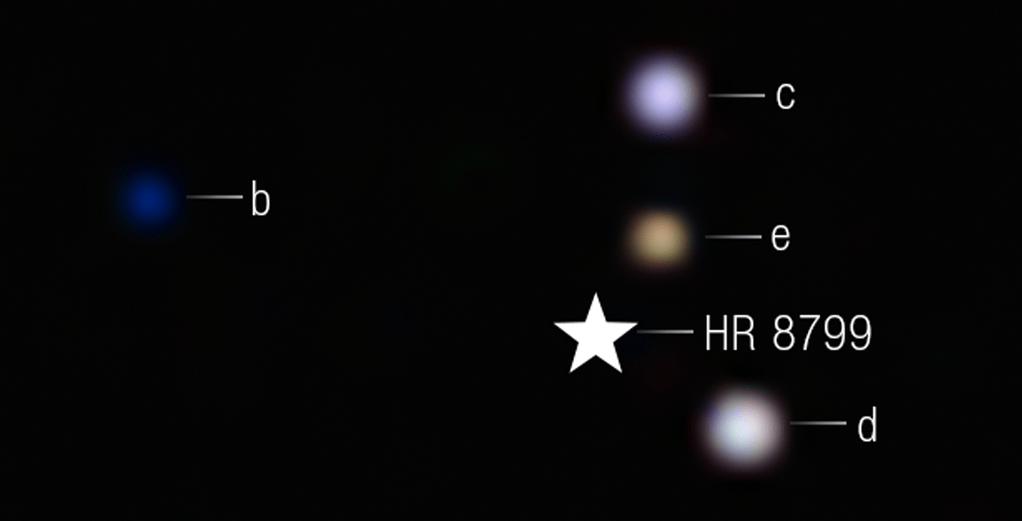
Image (Credit): Infrared view of the multi-planet system HR 8799. Colors are applied to filters from Webb’s NIRCam (Near-Infrared Camera). A star symbol marks the location of the host star HR 8799, whose light has been blocked by the coronagraph. (NASA, ESA, CSA, STScI, W. Balmer (JHU), L. Pueyo (STScI), M. Perrin (STScI))
Here are some recent stories of interest related to exoplanets.
The first planet outside our solar system was discovered in the 1990’s, but it wasn’t until more than a decade later astronomers actually obtained a direct image of one. It’s extremely difficult to image an exoplanet, as stars in other planetary systems can be thousands of times brighter and bigger than their planets. NASA’s James Webb Space Telescope is equipped with a highly sensitive coronagraph, a tiny mask that blocks the light of the star, allowing Webb to image exoplanets. Webb’s new images of two iconic systems, HR 8799 and 51 Eridani, and their planets have stunned researchers, and provided additional information into the chemical make-up of the young gas giants.
Astronomers have confirmed the existence of four planets orbiting a star less than 6 light-years away with help from some of the world’s most powerful telescopes. Research published in October 2024 revealed that one planet was rotating around Barnard’s Star, the second-closest single star system to Earth. But a combination of telescopes all over the world confirmed the presence of four small exoplanets, according to a study published last week in The Astrophysical Journal Letters.
The search for life has become one of the holy grails of science. With the increasing number of exoplanet discoveries, astronomers are hunting for a chemical that can only be present in the atmosphere of a planet with life! A new paper suggests that methyl halides, which contain one carbon and three hydrogen atoms, may just do the trick. Here on Earth they are produced by bacteria, algae, fungi and some plants but not by any abiotic, non biological processes. There is a hitch, detecting these chemicals is beyond the reach of current telescopes.
Image (Credit): Blue Ghost’s shadow on the lunar surface with the Earth on the horizon.(Firefly Aerospace)
NASA and Firefly Aerospace plan to have a news conference tomorrow at 2pm to discuss the end of the Blue Ghost mission on the Moon. The lunar lander set down on March 2. It began its mission immediately, knowing the disappearance of the Sun on March 16 would mark the end its work.
Those speaking at tomorrow’s news conference are:
Joel Kearns, deputy associate administrator for exploration, Science Mission Directorate, NASA Headquarters in Washington;
Jason Kim, CEO, Firefly Aerospace;
Ray Allensworth, spacecraft program director, Firefly; and
Adam Schlesinger, Commercial Lunar Payload Services project manager, NASA Johnson.
Firefly Aerospace…today announced it met 100 percent of its mission objectives for Blue Ghost Mission 1 after performing the first fully successful commercial Moon landing on March 2, completing more than 14 days of surface operations (346 hours of daylight), and operating just over 5 hours into the lunar night with the final data received around 6:15 pm CDT on March 16. This achievement marks the longest commercial operations on the Moon to date.
After a number of issues with the first commercial missions, this is very good news.
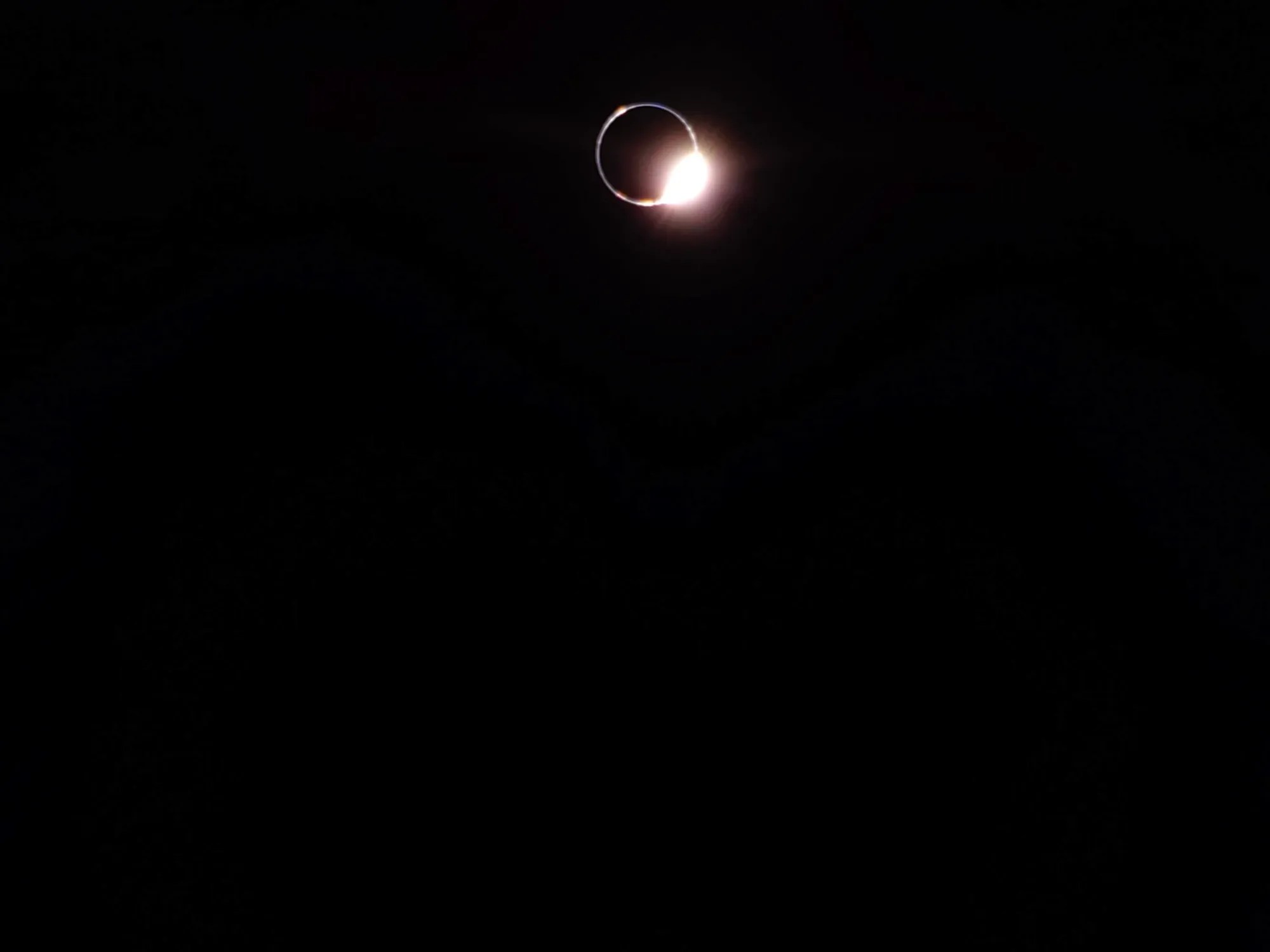
Image (Credit): The March 14, 2025 total lunar eclipse as seen from the Moon’s surface thanks to Firefly’s Blue Ghost Mission 1 lunar lander. (Firefly Aerospace)
If you were lucky enough to capture the total lunar eclipse last Friday, you are lucky. However, the image above shows a very different view of the event from an even luckier little craft on the Moon’s surface. That’s right, Firefly’s Blue Ghost lunar lander took a moment away from its work to snap this amazing image of a solar eclipse caused by the Earth blocking to Sun’s light.
The future should bring more craft and even humans to the lunar surface, which will provide many more amazing images of our floating blue marble.


 Our Awesome Universe