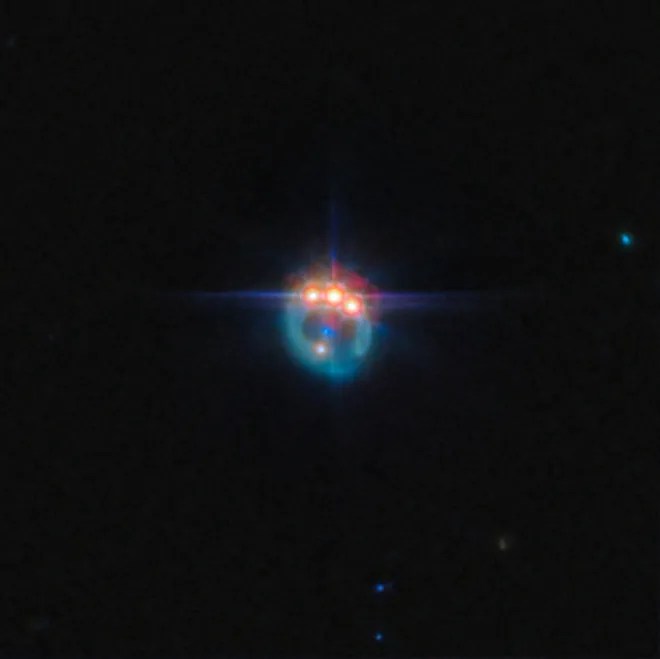
Image (Credit): Quasar known as RX J1131-1231, which is located roughly 6 billion light-years from Earth in the constellation Crater. (ESA/Webb, NASA & CSA, A. Nierenberg)
This week’s image is from the James Webb Space Telescope. It was highlighted inUSATodayas one of the best images from 2024. It shows the gravitational lensing of RX J1131-1231, which is a quasar about 6 billion light-years from Earth.
Here is more about the image:
It is considered one of the best lensed quasars discovered to date, as the foreground galaxy smears the image of the background quasar into a bright arc and creates four images of the object. Gravitational lensing, first predicted by Einstein, offers a rare opportunity to study regions close to the black hole in distant quasars, by acting as a natural telescope and magnifying the light from these sources. All matter in the Universe warps the space around itself, with larger masses producing a more pronounced effect. Around very massive objects, such as galaxies, light that passes close by follows this warped space, appearing to bend away from its original path by a clearly visible amount. One of the consequential effects of gravitational lensing is that it can magnify distant astronomical objects, letting astronomers study objects that would otherwise be too faint or far away.
Firefly Aerospace, Inc., the leader in end-to-end responsive space services, was awarded an approximately $179.6 million NASA contract to deliver and operate six NASA instruments in the Gruithuisen Domes on the Moon’s near side in 2028. As part of NASA’s Commercial Lunar Payload (CLPS) initiative, the mission will utilize Firefly’s Blue Ghost lunar lander, Elytra Dark orbital vehicle, and a rover from an industry provider to investigate the unique composition of the Gruithuisen Domes – a part of the Moon that has never been explored.
A NASA-funded commercial space station, Starlab, recently completed four key developmental milestones, marking substantial progress in the station’s design and operational readiness. The four milestones are part of a NASA Space Act Agreement awarded in 2021 and focused on reviews of the habitat structural test article preliminary design, systems integration, integrated operations, and a habitat structural test plan. “These milestone achievements are great indicators to reflect Starlab’s commitment to the continued efforts and advancements of their commercial destination,” said Angela Hart, program manager for NASA’s Commercial Low Earth Orbit Development Program. “As we look forward to the future of low Earth orbit, every successful milestone is one step closer to creating a dynamic and robust commercialized low Earth orbit.”
NASA’s two stuck astronauts just got their space mission extended again. That means they won’t be back on Earth until spring, 10 months after rocketing into orbit on Boeing’s Starliner capsule. NASA announced the latest delay in Butch Wilmore and Suni Williams’ homecoming on Tuesday. The two test pilots planned on being away just a week or so when they blasted off June 5 on Boeing’s first astronaut flight to the International Space Station. Their mission grew from eight days to eight months after NASA decided to send the company’s problem-plagued Starliner capsule back empty in September.
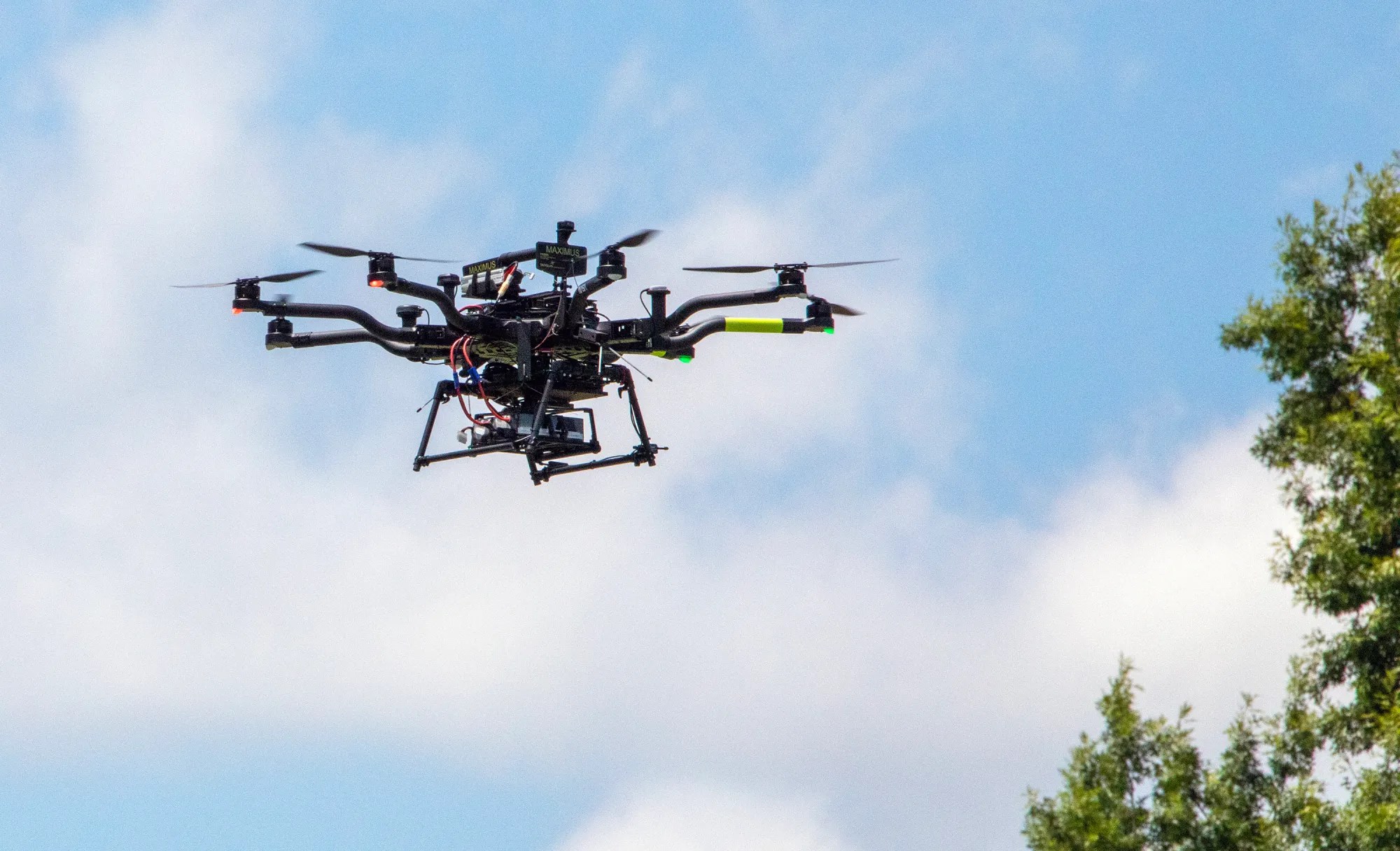
Image (Credit): NASA’s Alta-8 small Unmanned Aircraft System testbed vehicle. (NASA/Bowman)
“…there have been a limited number of visual sightings of drones over military facilities in New Jersey and elsewhere, including within restricted air space. Such sightings near or over Department of Defense installations are not new. The Department of Defense takes unauthorized access over its airspace seriously and coordinates closely with federal, state, and local law enforcement authorities, as appropriate.”
-Joint statement by the FBI, Federal Aviation Authority, and Departments of Homeland Security and Defense regarding the recent sighting of UFOs long the East Coast. It is an interesting admission by the government that this is more common than thought. It reminds one of the Chinese balloon shot down by the U.S. Air Force in 2023. At that time, we learned that Chinese air balloons had been flying over the United States for years.
Note: The same press release played down the drone issue in general, stating:
Having closely examined the technical data and tips from concerned citizens, we assess that the sightings to date include a combination of lawful commercial drones, hobbyist drones, and law enforcement drones, as well as manned fixed-wing aircraft, helicopters, and stars mistakenly reported as drones. We have not identified anything anomalous and do not assess the activity to date to present a national security or public safety risk over the civilian airspace in New Jersey or other states in the northeast.
On this day in 1928, American science fiction writer Philip Kindred Dick was born in Chicago, IL. He would go on to write some of the best known books on science fiction, including:
The Man in the High Castle (1963), which won the Hugo Award;
Do Androids Dream of Electric Sheep? (1968), later made into the film Blade Runner; and
Flow My Tears, the Policeman Said (1974), which won the John W. Campbell Memorial Award for Best Science Fiction Novel and was nominated for both a Hugo Award and a Nebula Award.
Mr. Dick had a troubled life with multiple wives, yet he created some of the most memorable characters and fiction. You may recall some of his other books and stories that became films in recent years, including Total Recall with Arnold Schwarzenegger, Minority Report with Tom Cruise, and A Scanner Darkly with Keanu Reeves.
Many writers had left the field. We could not make a living. I had gone to work making jewelry with my wife. I wasn’t happy. I didn’t enjoy making jewelry. I had no talent whatsoever. She had the talent. She is still a jeweler and a very fine one, making gorgeous stuff which she sells to places like Neiman-Marcus. It’s great art. But I couldn’t do anything except polish what she made.
Fortunately, he returned to writing, thereby provided all of us with amazing stories that live on today.
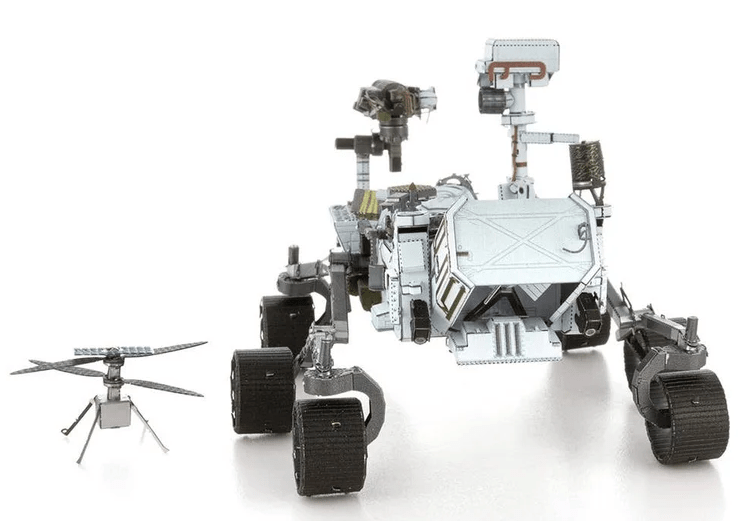
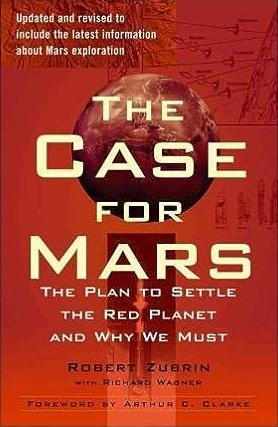
For example, you may want a model of the Mars Perseverance rover and its accompanying Ingenuity helicopter (shown above) or may a signed copy of Robert Zubrin’s book The Case for Mars: The Plan to Settle the Red Planet and Why We Must (shown below).



 Our Awesome Universe