A Day in Astronomy: The End of Pluto as a Planet

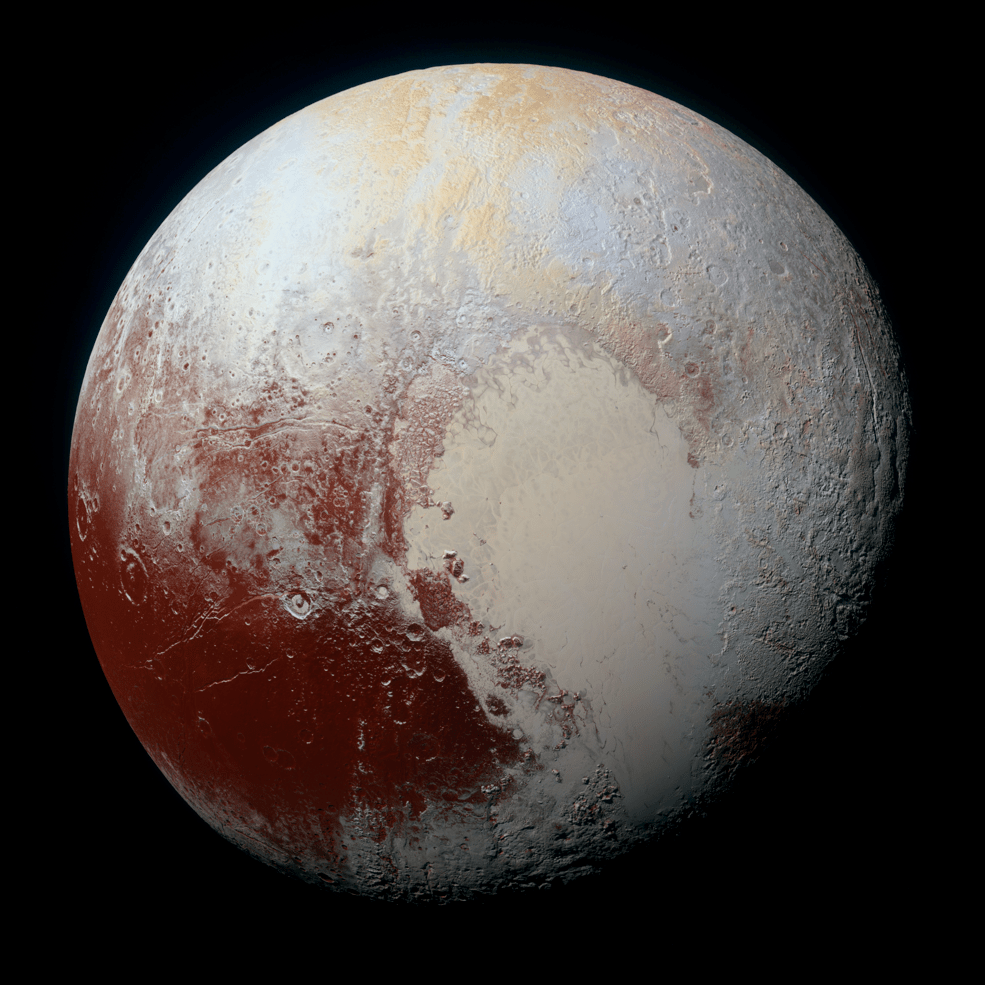
Image (Credit): Pluto as captured by NASA’s New Horizons spacecraft. (NASA/JHUAPL/SwRI)

On this day in 2006, the International Astronomical Union (IAU) approved a new definition of “planet” that excluded Pluto. The vote at the IAU approved the following definition of a planet:

  • is in orbit around the Sun,
  • has sufficient mass for its self-gravity to overcome rigid body forces so that it assumes a hydrostatic equilibrium (nearly round) shape, and
  • has cleared the neighborhood around its orbit.

Pluto fails this last test. In fact, many other objects, including at least one that may be larger (Eris), lie in the same orbit as Pluto around the Sun. However, Pluto does meet the definition of a “dwarf” planet:

  • is in orbit around the Sun,
  • has sufficient mass for its self-gravity to overcome rigid body forces so that it assumes a hydrostatic equilibrium (nearly round) shape,
  • has not cleared the neighborhood around its orbit, and
  • is not a satellite.

Hence, Pluto meets this definition whereas Europa, which is larger than Pluto, does not because it fails the last two tests – it has not cleared the neighborhood and it is a satellite.

The IAU vote was not popular. As one editorial argued, the third criteria about clearing the neighborhood makes little sense:

That last criterion states that a planet must be the gravitationally dominant object in the area of space in which it orbits. This rule makes sense for somewhere like, say, Earth, which is far more massive that the Moon and anything else along its orbital path. But out in the Kuiper Belt, where neighbouring bodies are far, far more distant than in the inner Solar System, Earth would not necessarily be able to clear its neighbourhood.

He continues:

This argument predates the flyby of Pluto in July 2015 of NASA’s New Horizons spacecraft, but the images returned by that spacecraft really help make the case: Pluto is an enigmatic world with towering ice mountains, vast glaciers of nitrogen ice, a tenuous atmosphere, a thick, outer icy carapace and a probably liquid water ocean below, all atop a huge rocky interior. By any geological measure – including the fact that there are surface processes acting on Pluto today – Pluto is a planet.

This will get more interesting once we throw in the exoplanets. Stay tuned.

Image (Credit): Some of the known dwarf planets. (Socratic.org)

A Day in Astronomy: Curiosity Rover Arrives on Mars

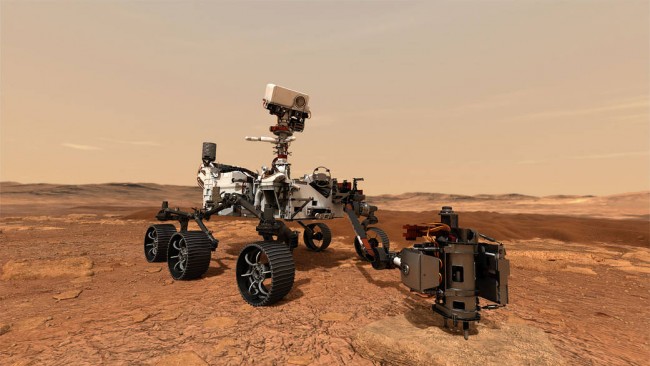
Image (Credit): Artist’s illustration of the Curiosity rover using its drill to core a rock sample on Mars. (NASA/JPL-Caltech)

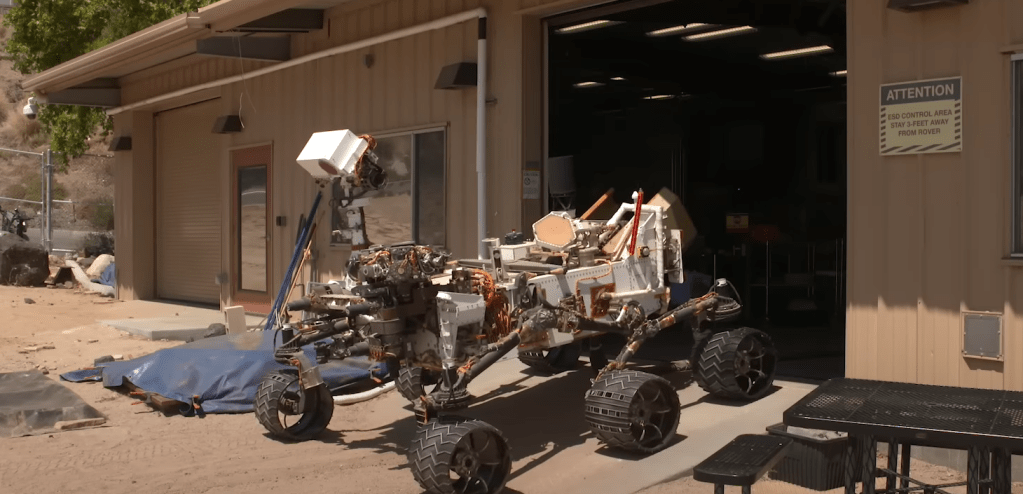
On this day in 2012, the Mars rover Curiosity landed on Mars (using Eastern Time). The rover was sent to the Red Planet to to explore the Gale crater and look for evidence that Mars had the conditions needed to support microscopic life in its past. A video from NASA walks you through the rover’s exploration to date and also highlights Maggie, Curiosity’s duplicate here on Earth.

An anniversary posting from NASA explains more about the mission, including issues with the rover’s drilling arm, wheels, and power supply. Life on Mars can be tough.

That said, the rover has already learned a lot after 10 years and it is expected to continue exploring in the years to come. NASA noted:

…most important, Curiosity has determined that liquid water as well as the chemical building blocks and nutrients needed for supporting life were present for at least tens of millions of years in Gale Crater. The crater once held a lake, the size of which waxed and waned over time. Each layer higher up on Mount Sharp serves as a record of a more recent era of Mars’ environment.

You can track the progress of the Curiosity rover using this website.

Image (Credit): NASA’s duplicate Mars rover called Maggie. (NASA/JPL-Caltech/ASU/MSSS/JHU-APL)

A Day in Astronomy: First Men on the Moon

Image (Credit): Neil Armstrong outside the Eagle lunar module on the surface of the Moon. (NASA)

On this day in 1969, two Apollo 11 crew members – commander Neil Armstrong and pilot Buzz Aldrin – became the first men to walk on the Moon. The two landed in NASA’s Eagle lunar module in the Sea of Tranquility and remained on the Moon’s surface for about 21 hours and 36 minutes collecting samples, placing scientific equipment, and photographing/filming the terrain.  The astronauts also spoke with President Nixon while on the Moon.

You can rewatch the ABC News video feed here showing Neil Armstrong as he steps on the surface of the Moon and famously states, “That’s one small step for man, one giant leap for mankind.”

You can read more about the Apollo 11 mission here.

A Day in Astronomy: Cassini Orbits Saturn

Image (Credit): On July 29, 2011, Cassini captured five of Saturn’s moons in a single frame with its narrow-angle camera. This is a full-color look at a view that was originally published in September 2011. Moons visible in this view: Janus is on the far left; Pandora orbits just beyond the thin F ring near the center of the image; brightly reflective Enceladus appears above center; Saturn’s second largest moon, Rhea, is bisected by the right edge of the image; and the smaller moon Mimas is seen just to the left of Rhea.. (NASA/JPL-Caltech/Space Science Institute)

On this day 2004, the Cassini spacecraft entered the orbit of Saturn. A collaboration of NASA, the European Space Agency (ESA), and the Italian Space Agency, the mission containing NASA’s Cassini space probe and ESA’s Huygens probe was launched in October 15, 1997. Cassini remained in orbit around Saturn from 2004 to 2007. The Cassini spacecraft spent 20 years in space – 13 of them exploring Saturn and its moons.

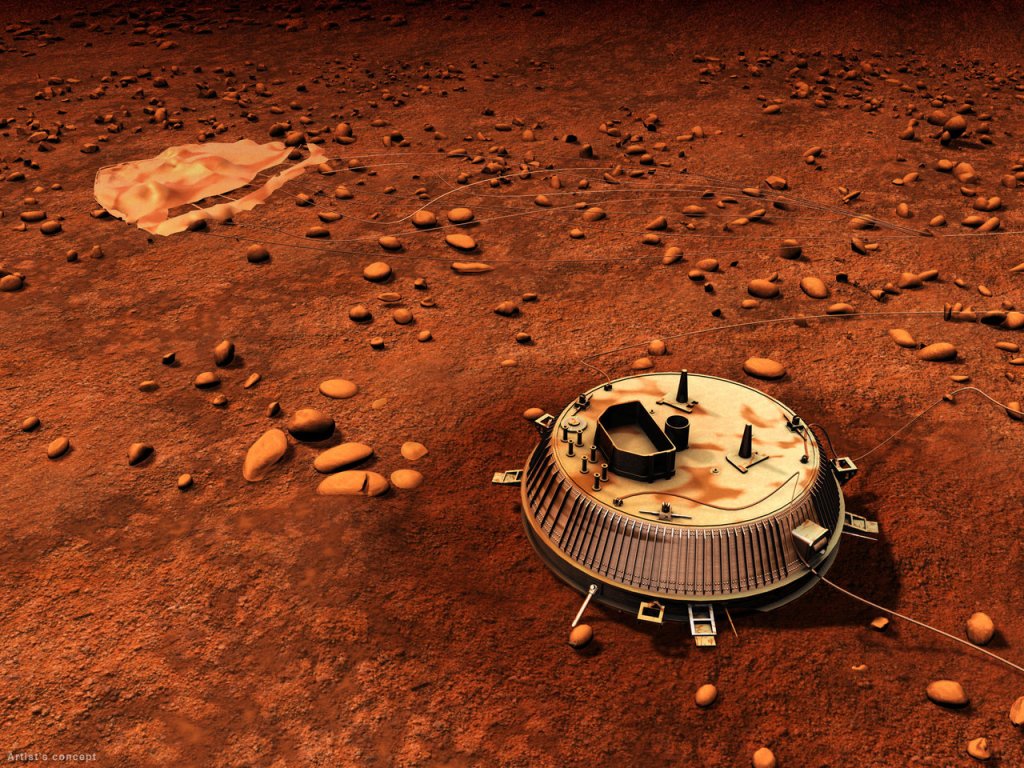
The ESA’s Huygen’s probe entered the atmosphere of Saturn’s largest moon Titan on January 14, 2005 to study the moon’s smog-like atmosphere and take pictures from the surface. The probe was not designed to survive past landing, though it was able to take photos for about three hours before it died. You can watch the probe enter Titan’s atmosphere in this video from ESA.

Image (Credit): An artist’s concept of the Huygens probe on Titan. (NASA)

A Day in Astronomy: Viking 1 Begins Obit of Mars

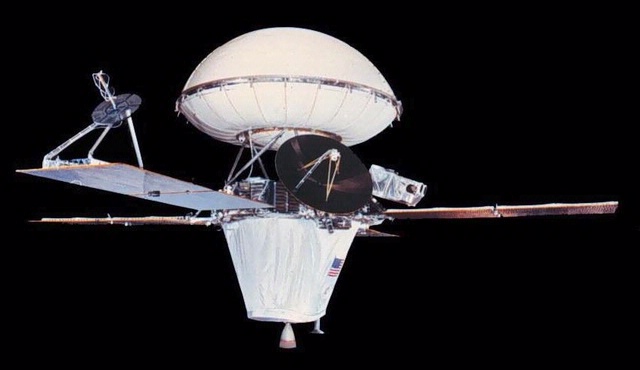
Image (Credit): Viking orbiter spacecraft. (NASA/National Space Science Data Center)

On this day in 1976, NASA’s Viking 1 spacecraft began its orbit of Mars. Launched in August 20, 1975, it took the Viking 1 spacecraft 11 months to travel to Mars. Viking 1 was a combination of orbiter and landing craft. The attached lander did not land on the Martian surface until July 20th, setting down on the western slope of Chryse Planitia (the Plains of Gold).

The Viking 1 orbiter operated successfully for four years, circling Mars 1,489 times. In addition to orbiting Mars, the orbiter also approached the Martian “moon” Phobos to learn more about the captured asteroid.

As with other missions at the time, there was a Viking 1 and a Viking 2. Viking 2 also had an orbiter and lander, both of which operated successfully.

The Viking missions greatly expanded our knowledge of Mars and its “moons.” In NASA’s fact sheet we learn that the two orbiters sent back 52,000 photographs (and mapped 97 percent of the Martian surface) and the landers sent back 4,500 photographs. Some of the discoveries include:

  • The permanent north cap is water ice; the southern cap probably retains some carbon dioxide ice through the summer.
  • Water vapor is relatively abundant only in the far north during the summer, but subsurface water(permafrost) covers much if not all of the planet.
  • Northern and southern hemispheres are drastically different climatically, because of the global dust storms that originate in the south in summer.

NASA has been back to the Martian surface many times since this first set of missions, but nothing can surpass the initial excitement of Viking missions.