Space Stories: The Search for Super Civilization, Students Sought for Lunar Mission, and Kilonova Seekers

Image (Credit): Murchison Widefield Array radio telescope in Western Australia. (Curtin University)

Here are some recent stories of interest.

SETI InstituteSETI Institute Starts First Low Frequency Search for Alien Technology in Distant Galaxies

The SETI Institute, the Berkeley SETI Research Center and the International Centre for Radio Astronomy Research announced a groundbreaking study using the Murchison Widefield Array (MWA) in Western Australia. Led by Dr. Chenoa Tremblay of the SETI Institute and Prof. Steven Tingay of Curtin University, this research is the first to search for signs of alien technology in galaxies beyond our own, focusing on low radio frequencies (100 MHz).

This innovative study used the MWA’s large field of view (FOV), allowing the team to cover about 2,800 galaxies in one observation, of which 1300 we know the distance to. Usually, the search for extraterrestrial intelligence (SETI) has focused on signals within our galaxy. This new approach goes further, looking at distant galaxies. This new approach looks at distant galaxies, making it one of the most detailed searches for super civilizations—those more advanced than ours. To send a signal from another galaxy, a civilization would need technology powerful enough to use the energy of their sun or several stars in their galaxy.

KXANCollege Students Sought to Help NASA Return to Moon

NASA needs some help with frozen liquid. As part of the space agency’s planned trip to the moon as part of the Artemis mission, NASA is looking for a way to store “super-chilled” propellants for months on end. They’re asking college students for help. Announced earlier this month, NASA’s 2025 Human Lander Challenge (HuLC) is open for submissions. The competition, now in its second year, is asking for students to develop innovative methods for “in-space cryogenic liquid storage.”

University of PortsmouthCitizen Science Project Identifies 20 New Astronomical Discoveries

A citizen science project, which invites members of the public to take part in identifying cosmic explosions, has already identified 20 new astronomical discoveries. Over 2,000 volunteers across 105 different countries have worked on 600,000 classifications over a six-month period. The project ‘Kilonova Seekers’ aims to find kilonovae – the cosmic explosions of neutron stars and black holes colliding in distant galaxies. Volunteers are asked to play ‘spot the difference’ using data from the two Gravitational-wave Optical Transient Observer (GOTO) telescopes, which are located on opposite sides of the planet – on La Palma, in Spain’s Canary Islands, and Australia’s Siding Spring Observatory.

A Day in Astronomy: The Birth of Ray Bradbury

On this day in 1920, Ray Douglas Bradbury was born in Waukegan, Illinois. Mr. Bradybury would grow up to be a famous American author and screenwriter.

One of his science fiction works,The Martian Chronicles stories, tells the story of mankind’s colonization of Mars and the ultimate effect on the colonizers.

He wrote numerous other famous books and short story collections, including Fahrenheit 541, Something Wicked This Way Comes, The Illustrated Man, and Dandelion Wine.

Speaking on science fiction, Mr. Bradbury once stated:

Science fiction is any idea that occurs in the head and doesn’t exist yet, but soon will, and will change everything for everybody, and nothing will ever be the same again. As soon as you have an idea that changes some small part of the world you are writing science fiction. It is always the art of the possible, never the impossible.

Asked in a 2004 interview what he thought about the US space program, he stated:

It’s too late, isn’t it? We’ve let 30 years go by. It’s stupid. It’s stupid. We should have stayed on the moon. We should have made moon the base, instead of building space stations, which are fragile and which fly apart. The moon is a good, solid base to build a space travel organization in the community. Then we take off from the moon and we go to Mars. But it’s terribly late. We’ve let too much time go by. We’ve been busy with war instead of being busy with peace. And that’s what space travel is all about. It’s all about peace and exploration and wonder and beauty.

Fortunately, it is not too late to visit the Moon or Mars, as demonstrated by NASA’s Artemis program. It’s the art (and science) of the possible.

Space Stories: More Quality Control Issues at Boeing, Blue Origin’s Planned Lunar Landing, and Citizen Scientists Assisting with Exoplanet Research

Image (Credit): Artist’s rendering of the SLS in flight. (NASA)

Here are some recent stories of interest.

NBC NewsNASA Inspector General Gives Damning Assessment of Boeing’s Quality Control in New Report

The report, released Thursday by NASA’s Office of Inspector General, calls into question Boeing’s standards and quality control for its part in NASA’s efforts to return astronauts to the moon. In NASA’s development of its next-generation megarocket, known as the Space Launch System, it gave Boeing the contract to build the rocket system’s powerful upper stage. But according to the report, Boeing’s quality control systems fall short of NASA’s requirements, and some known deficiencies have gone unaddressed. What’s more, the workers on the project are not, as a whole, sufficiently experienced or well trained, according to the inspector general.

Space NewsNASA Payload to Fly on First Blue Origin Lunar Lander Mission

A NASA payload will hitch a ride to the moon on Blue Origin’s first lunar lander mission, scheduled to launch as soon as next March. In an Aug. 6 procurement filing, NASA revealed it selected Blue Origin to fly a camera system to study how engine plumes interact with regolith at south polar regions of the moon, collecting data to support future crewed landing missions. The payload, called Stereo Cameras for Lunar Plume Surface Studies (SCALPSS), will fly through NASA’s Commercial Lunar Payload Services (CLPS) program.

NASAHow NASA Citizen Science Fuels Future Exoplanet Research

NASA’s upcoming flagship astrophysics missions, the Nancy Grace Roman Space Telescope and the Habitable Worlds Observatory, will study planets outside our solar system, known as exoplanets. Over 5,000 exoplanets have been confirmed to date — and given that scientists estimate at least one exoplanet exists for every star in the sky, the hunt has just begun. Exoplanet discoveries from Roman and the Habitable Worlds Observatory may not be made only by professional researchers, but also by interested members of the public, known as citizen scientists.

Audit Report: Concerns about the Gateway Space Station

Credit: NASA

In a recent audit report, Artemis Programs: NASA Should Document and Communicate Plans to Address Gateway’s Mass Risk, the Government Accountability Office (GAO) expressed some concerns about NASA’s Gateway space station, which will orbit the moon as part of Artemis IV . Specifically, the concerns relate to the first components of the space station to be launched in December 2027 —the Power and Propulsion Element (PPE) and the Habitation and Logistics Outpost (HALO).

In the report, GAO states:

The Gateway program’s projects—including PPE and HALO—made varying degrees of progress over the last year. However, the PPE and HALO projects face several significant challenges. For example, their combined mass is greater than their mass target. Mass is one of many factors that the program considers in its overall design. If they cannot meet their mass target, it may affect their ability to reach the correct lunar orbit.

The report goes on to state:

For example, program officials estimate that the mass of the lunar lander Starship is approximately 18 times greater than the value NASA used to develop the PPE’s controllability parameters.

NASA agrees with the single GAO recommendation in this report, which recommends that a mass management be ready for an upcoming review in September 2024.

There is a lot to read in the 52 page report, but the real question is whether NASA will be ready for the 2027 Gateway launch. This is a ongoing concern given that we are already seeing delays in other parts of the Artemis program.

Space Stories: Redefining Planets, Second Thoughts About Crashing the ISS, and NASA Preparing for Artemis II

Credit: AdisResic at Pixabay

Here are some recent stories of interest.

Space.com: What Exactly is a Planet?’ Astronomers Want to Amend the Definition

Three astronomers last week proposed expanding the official definition of a planet to encompass worlds orbiting stars other than our own, a nuance not currently included in the formal definition of the term established in 2006 by the International Astronomical Union, or IAU. If the trio’s new definition pans out, thousands of celestial bodies across the universe could be confirmed as formal planets.

Forbes: U.S. Plan To Crash Space Station Is Condemned By Space Agency Leaders

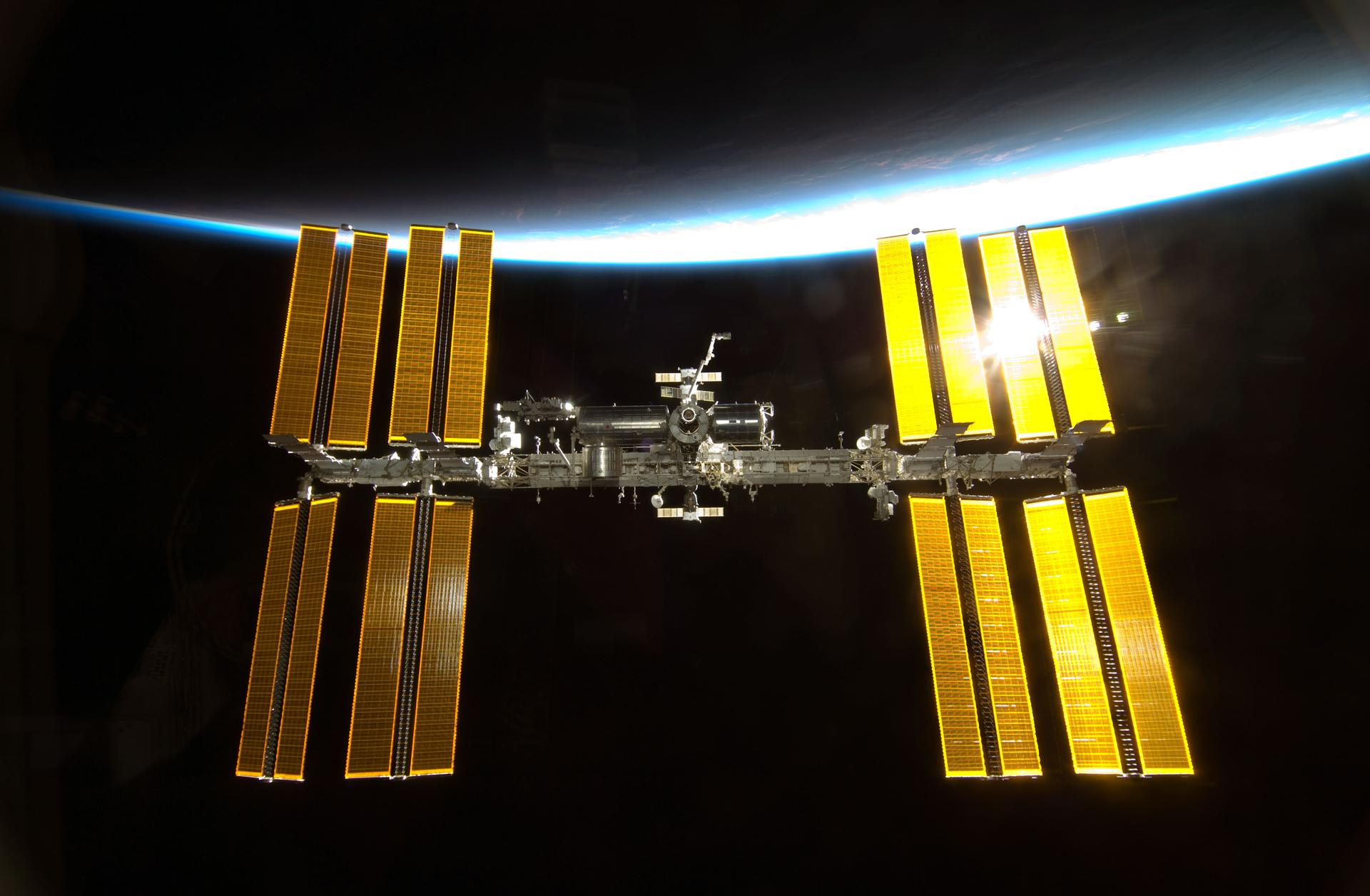
An American plan to destroy the International Space Station by propelling it to burn through the atmosphere, and then crashing it into the Pacific Ocean, would rob citizens of the future of one of civilization’s greatest technological masterworks, and should be halted, say one-time leaders of NASA and of the European Space Agency. NASA’s draft blueprints to send the ISS on a peacetime kamikaze mission, to explode on impact with Antarctic waters, would obliterate a pole star of human ingenuity, says Jean-Jacques Dordain, Director General of the European Space Agency when the ISS was being built and expanded.

NASA: NASA Barge Preparations Underway for Artemis II Rocket Stage Delivery

Team members are installing pedestals aboard NASA’s Pegasus barge to hold and secure the massive core stage of NASA’s SLS (Space Launch System) rocket, indicating NASA barge crews are nearly ready for its first delivery to support the Artemis II test flight around the Moon. The barge will ferry the core stage on a 900-mile journey from the agency’s Michoud Assembly Facility in New Orleans to its Kennedy Space Center in Florida…Measuring 212 feet in length and 27.6 feet in diameter, the core stage is the largest rocket stage NASA has ever built and the longest item ever shipped by a NASA barge.