ULA is Up for Sale

Image (Credit): ULA’s new Vulcan Centaur rocket. (ULA)

United Launch Alliance (ULA), a space rocket partnership between Boeing and Lockheed Martin, is now being offered for sale. Both Blue Origin and Cerberus are showing interest, which could upset the space business as Blue Origin takes a big step forward or Cerberus gets into the space business.

ULA, formed in 2006, has both a wealth of experience as well as the confidence of the US military, even though SpaceX has been eating into that business. ULA also has ready commercial customers, including a partnership with Amazon to launch 47 rockets to bring the Kuiper broadband constellation into orbit.

The ties to Mr. Bezos, owner of Amazon, go even deeper than that. The ULA’s new rocket, the Vulcan Centaur, will use engines built by Blue Origin, another one of Mr. Bezos’ companies. This may make a Blue Origin a natural new owner to ULA.

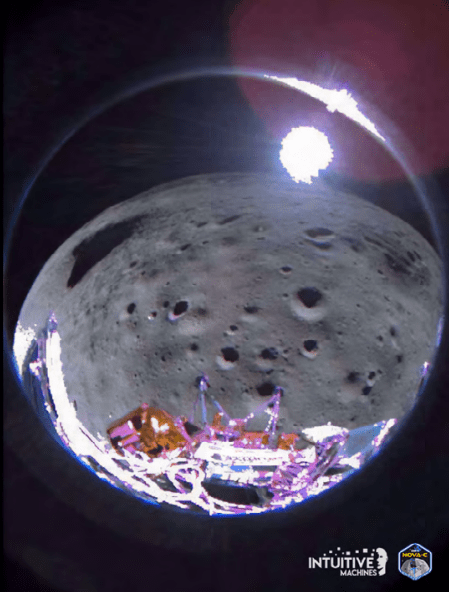
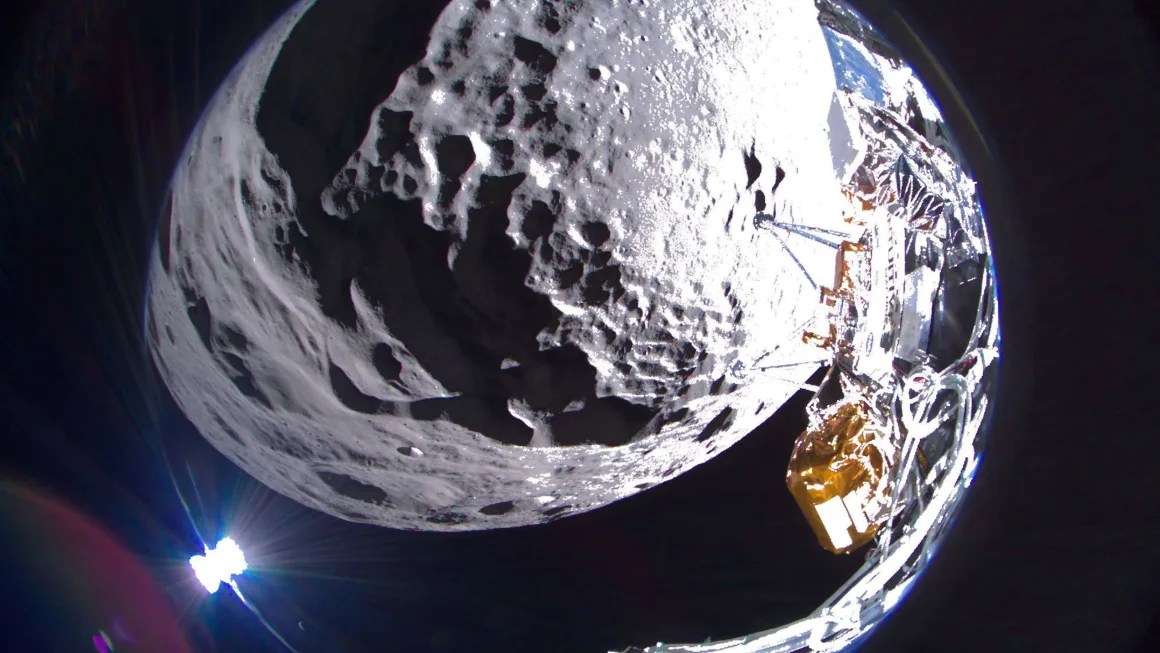
The potential buyers may want to wait until the test launch of the Vulcan on January 8th. At that time, the Vulcan rocket will be used to launch the Astrobotic Peregrine commercial lunar lander, the first of NASA’s Commercial Lunar Payload Services initiative designed to deliver science and technology experiments to the lunar surface.

None of this means Boeing or Lockheed Martin are moving away from space altogether. Boeing is still working on its Starliner to bring individuals and cargo to low-Earth orbit as well as its Space Launch System, which serves as the backbone of the Artemis program. Lockheed Martin will be busy as well with its Orion capsule and human landing system (with Blue Origin and Boeing as well), additional key components of the Artemis program.

Any reshuffling is okay as long as it adds to the array of commercial options for NASA. A new player like Cerberus might be welcome, but I also see some value to pushing an experienced and involved Blue Origin to the top of its game a little quicker so it can go head-to-head with SpaceX.

This should be interesting. Stay tuned.

NASA Had a Busy Year

Image (Credit): The introduction of the Artemis II crew, just one of many items highlighted in NASA’s new video summarizing 2023. (NASA)

This is the time of year for lists, so I wanted to highlight one of the more important lists, at least in the opinion of this writer. That’s right, we need to remember the important space milestones from this year.

Fortunately, NASA recently summed up its successes in 2023 with a new video titled NASA 2023: Nothing is Beyond Our Reach. The video highlights many of the Agency’s accomplishments this year, including the launch of the Psyche mission, the announcement of a crew for the Artemis II mission, and the OSIRIS-REx capsule retrieval.

It is quite a list. Luckily, NASA provided a list of links so you can read more about the various efforts:

Time to read up on 2023 before we dive into more activities in 2024.

Note: You can read a more detailed list of accomplishments at this NASA site.

Space Stories: An International Astronaut for Artemis, Martian Eruptions, and Surprisingly Young Stars in Our Galaxy

Here are some recent stories of interest.

Politico: “NASA’s Moon Landing Mission will Include a Non-American, Harris Says

NASA is hoping to send a group of astronauts to the moon before the end of the decade, and at least one of them won’t be American. During a National Space Council meeting Wednesday afternoon, Vice President Kamala Harris announced that an astronaut from another country will join the U.S. team…It’s a major diplomatic move for Washington as it attempts to build an international coalition in space to counter a similar initiative being pursued by China, which the U.S. believes is gearing up for future battles in orbit. Harris didn’t specify which nation will provide the astronaut.

University of Arizona: “Recent Volcanism on Mars Reveals a Planet More Active Than Previously Thought

A vast, flat, “featureless” plain on Mars surprised researchers by revealing a much more tumultuous geologic past than expected, according to a study led by researchers at the University of Arizona. Enormous amounts of lava have erupted from numerous fissures as recently as one million years ago, blanketing an area almost as large as Alaska and interacting with water in and under the surface, resulting in large flood events that carved out deep channels...Mars has long been thought to be a geologically “dead” planet where not much is happening. Recent discoveries have researchers questioning this notion,

ScienceNews: “A Bar of Stars at the Center of the Milky Way Looks Surprisingly Young

The biography of our home galaxy may be due for some revisions. That’s because a bar-shaped collection of stars at the center of the Milky Way appears to be much younger than expected. The bar is a prominent feature of our galaxy. It spans thousands of light-years and links the galaxy’s spiraling arms of stars, making them resemble streams of water coming from a spinning lawn sprinkler.

Starship Launch: A Few Legal Issues on the Ground

Image (Credit): The Starship rocket at the SpaceX facility located at Boca Chica, Texas. (SpaceX)

SpaceX and NASA are trying to get ready for the third launch of the Starship, a key component of the Artemis program. Yet some parties here are Earth are still steamed about the April 2023 Starship launch that spread debris at the Texas rocket site.

A group of organizations – the Center for Biological Diversity, American Bird Conservancy, Surfrider Foundation, Save RGV and the Carrizo/Comecrudo Nation of Texas, Inc. – have filed additional legal claims against the Federal Aviation Administration and U.S. Fish and Wildlife Service.

The group’s main concerns, outlined in a press release from the Center for Biological Diversity, are:

  • the agencies’ failure to fully analyze and mitigate environmental harms from the April 20 explosion of the SpaceX Starship/Super Heavy rocket and launchpad at Boca Chica in south Texas;
  • the Fish and Wildlife Service failed to address the harm from the April 20 explosion and efforts to recover thousands of chunks of concrete and metal from sensitive tidal flat habitat; and
  • the Service further failed to address excessive noise and vibrations from the first launch, including reports that noise levels greatly exceeded what was expected.

Mary Angela Branch, board member at Save RGV, stated;

Approving a massive rocket test launch facility only steps from our state park and national wildlife refuge is unconscionable…This failed launch shows the extent of damage, not just to our wildlife and sensitive eco-system, but to our residential, recreational and tourist communities. The noise, debris, vibrations and explosion proved far too extreme to not be given full environmental assessment by the FAA and Fish and Wildlife Service. Failure to do so is pure negligence and exhibits a blatant disregard for our community life.

This may further slow down efforts to get the Starship testing back on track.

Many have already noted how dumb the first launch was with no provisions for the rocket exhaust. It set a bad precedent that will hang over the Starship launches as long as they continue in Texas.

Space Stories: Mad Rush for the Moon, An Unusual Exoplanet, and Flinging the Earth

Image (Credit): Crescent Moon as seen from the International Space Station. (NASA)

Here are some recent stories of interest.

Science.org: “Moon’s Scientifically Important Sites could be ‘Lost Forever’ in Mining Rush

Science and commerce may be headed for a clash on remote terrain: the Moon. For the first time in half a century, NASA is sending a craft to the lunar surface, with the launch at the end of this year of Peregrine Mission 1, a lander built by the private company Astrobotic Technology. Dozens of other craft will soon follow, many as part of NASA’s Artemis program to return astronauts to the Moon. Most researchers are looking forward to a new golden age of exploration and science. But some are worried. They foresee that the advent of private landers will lead to a “Moon rush,” as companies race to grab valuable minerals and resources while trampling over scientifically important lunar sites. With space law offering little or no protection to these areas, researchers are starting to lobby governments and international agencies to do something before it’s too late.

SciTechDaily: “Unusually Massive” – Astronomers Discover a Planet That Shouldn’t Exist

Researchers at Penn State have discovered an unusually massive planet, LHS 3154b, orbiting an ultracool dwarf star. This finding, contradicting current theories, prompts a reassessment of star and planet formation processes. The discovery of a planet that is far too massive for its sun is calling into question what was previously understood about the formation of planets and their solar systems, according to Penn State researchers. In a paper published on November 30 in the journal Science, researchers report the discovery of a planet more than 13 times as massive as Earth orbiting the “ultracool” star LHS 3154, which itself is nine times less massive than the sun. The mass ratio of the newly found planet with its host star is more than 100 times higher than that of Earth and the sun.

New Scientist: “Passing Star Could Fling Earth Out Past Pluto into the Oort Cloud

If a passing star came near the solar system, Earth would probably be fine – but there is a small chance our entire world could get thrown to the outer reaches of the solar system, crash into another planet or even get stolen by the wandering star. The other planets in the solar system could suffer similar fates, and Mercury in particular would be at risk of falling into the sun.