KSC: 60 Years and Going Strong

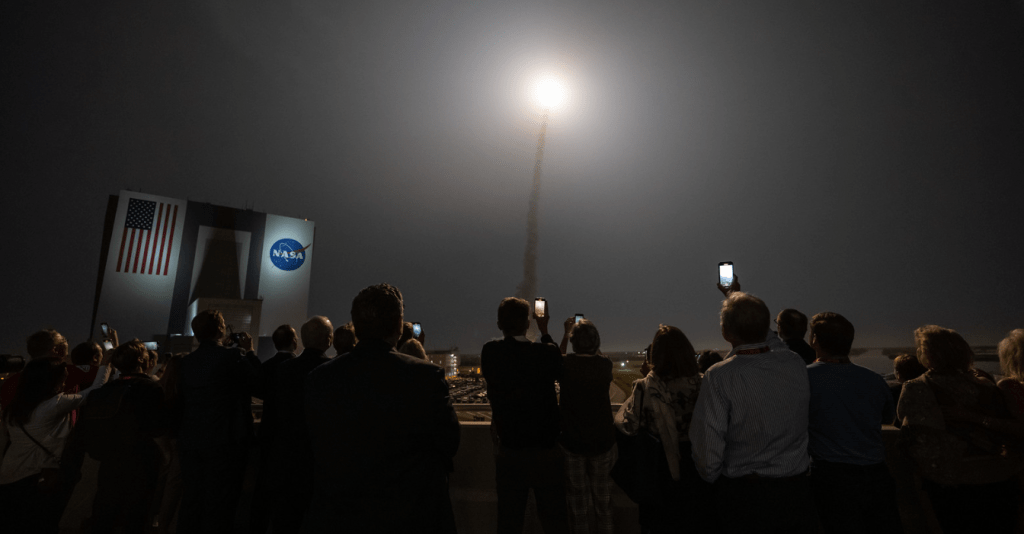
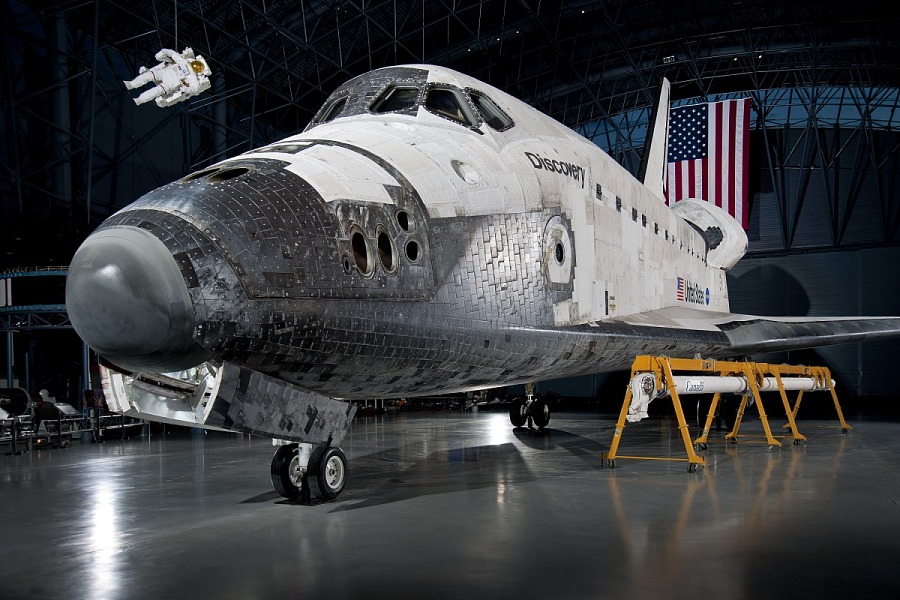
With the Artemis I mission ready to go on Monday, it is worth taking a moment to remember the Kennedy Space Center’s (KSC) 60th anniversary. As shown in the NASA graphic below, the KSC has been very busy over the years and has much more to do. This NASA site has more information and memories. This video also highlights some key moments in space history as well as some dreams about the future.

Credit: NASA

Pic of the Week: Artemis I Heads for the Launchpad

Image (Credit): NASA’s Space Launch System moving from the Vehicle Assembly Building to the launch pad at Cape Canaveral, Florida, on August 16, 2022. (NASA)

This week’s image highlights NASA’s actions to launch the first phase of the Artemis Mission. The image shows the Space Launch System and Orion capsule moving towards launch pad 39B at the Kennedy Space Center. The launch of the six-week unmanned mission around the Moon is planned for August 29th. The full mission for this first phase, or Artemis I, is shown below.

Image (Credit): Artemis I mission map. (NASA)

Podcast: Elon Musk on the Moon and More

Credit: New York Times.

On this week’s podcast program Sway, you can re-listen to a September 2020 interview between host Kara Swisher and Elon Musk. This was long before all the Twitter nonsense, when Mr. Musk was still focused on cars and space (mostly). The discussion covers plenty of topics, including the need to settle Mars (Mr. Musk disagress with Jeff Bezos who he said believes a space station will be enough to save humanity from an existential crisis), neural implants, and a return to the Moon.

You can tell the program is dated because Mr. Musk complains that NASA cannot find a way to return to the Moon, whereas today we have the Artemis lunar program that includes SpaceX as one of its contractors. Nonetheless, it is good to hear from the old Musk when he was a little more focused.

Then again, the neural implants still seem odd. Neuralink, a company he co-founded, is focusing on those with disabilities at the moment, but the application is expected to be more widespread:

Neuralink is currently focused on making medical devices. These devices have the potential to help people with a wide range of injuries and neurological disorders, and we hope to develop treatments for many of these conditions in the coming years. We expect that as our devices continue scale, and as we learn to communicate with more areas of the brain, we will discover new, non-medical applications for our [brain-machine interface] BMIs. Neuralink’s long-term vision is to create BCIs that are sufficiently safe and powerful that the general population would want to have them.

In a Fortune magazine article, “Elon Musk Claims Neuralink’s Brain Implants will ‘Save’ Memories Like Photos and Help Paraplegics Walk Again. Here’s a Reality Check,” the authors take him to task on his neural implant idea, stating:

Helping paraplegics walk and curing brain disorders are certainly noble goals. And, hey, ordering a pizza just by thinking about it sounds cool. But many experts are concerned that Musk is seriously overhyping what Neuralink’s implants will be able to accomplish.

Elon Musk overhyping an idea? Never!

Check it out. You can download the podcast at the New York Times, the Apple Store, and elsewhere.

One of the Artemis Rocket Launches

Image (Credit): June 28th launch of CAPSTONE aboard Rocket Lab’s Electron rocket from the Rocket Lab Launch Complex 1 on the Mahia Peninsula of New Zealand. (Rocket Lab)

While we are awaiting the launch of the uncrewed Artemis phase-one rocket later this summer to test the waters for a crewed mission, other related missions are ongoing. NASA’s Cislunar Autonomous Positioning System Technology Operations and Navigation Experiment (CAPSTONE) was launched earlier in the week from New Zealand and will take about four months before it orbits the Moon for another six months. The miniaturized satellite, or CubeSat, is designed to test the future lunar orbit of Gateway, a lunar space station being planned by NASA and its commercial and international partners to support NASA’s Artemis program, including astronaut missions.

Here are CAPSTONE’s mission objectives:

  • Verify the characteristics of a cis-lunar near rectilinear halo orbit for future spacecraft;
  • Demonstrate entering and maintaining this unique orbit that provides a highly-efficient path to the Moon’s surface and back;
  • Demonstrate spacecraft-to-spacecraft navigation services that allow future spacecraft to determine their location relative to the Moon without relying exclusively on tracking from Earth;
  • Lay a foundation for commercial support of future lunar operations; and
  • Gain experience with small dedicated launches of CubeSats beyond low-Earth orbit, to the Moon, and beyond.

In a press release, Elwood Agasid, project manager for CAPSTONE at NASA’s Ames Research Center in California’s Silicon Valley, stated:

CAPSTONE is a pathfinder in many ways, and it will demonstrate several technology capabilities during its mission timeframe while navigating a never-before-flown orbit around the Moon…CAPSTONE is laying a foundation for Artemis, Gateway, and commercial support for future lunar operations.

We forget about all of the smaller missions (literally, in this case) that make the full mission possible. CAPSTONE is a key mission to test some ideas and reduce risk for future astronauts.

Image (Credit): Artist’s impression of CAPSTONE in orbit near the Moon. (Illustration by NASA/Daniel Rutter)

Artemis Rocket Launch Planned for August

Image (Credit): NASA’s Space Launch System rocket. (NASA)

NASA said it is ready for a real test of the Space Launch System (SLS) and Orion capsule after multiple dry-runs. Of course, the tests were not perfect, but NASA said it is ready for the next phase. The latest test was on June 20th. Following that, Tom Whitmeyer, deputy associate administrator for common exploration systems at NASA Headquarters, stated:

During the wet dress rehearsal activities, we have incrementally added to our knowledge about how the rocket and the ground systems work together, and our teams have become proficient in launch procedures across multiple sites. We have completed the rehearsal phase, and everything we’ve learned will help improve our ability to lift off during the target launch window…The team is now ready to take the next step and prepare for launch.

The uncrewed launch itself could be as early as late August. Under this phase of the project, called Artemis 1, the rocket, capsule, and ground control will get a rigorous test. As NASA explains:

During this flight, the spacecraft will launch on the most powerful rocket in the world and fly farther than any spacecraft built for humans has ever flown. It will travel 280,000 miles from Earth, thousands of miles beyond the Moon over the course of about a four to six-week mission. Orion will stay in space longer than any ship for astronauts has done without docking to a space station and return home faster and hotter than ever before.

NASA has come a long way to get this this step. The various problems along the way is why you have such tests. And now the first phase is about ready. Fingers crossed…

Image (Credit): Artemis 1 mission map. (NASA)