“If SpaceX is behind, but Blue Origin can do it before them, good on Blue Origin…But … we’re not going to wait for one company. We’re going to push this forward and win the second space race against the Chinese.”
–Statement by acting NASA Administrator Sean Duffy regarding ongoing delays with SpaceX’s Starship, which was given a $2.9 billion contract in 2021 for a lunar landing vehicle as part of Artemis III. As a result, NASA may reopen to lunar lander contract. Blue Origin is working on its own lunar lander called Blue Moon. As noted in yesterday’s post, Mr. Musk has been distracted this year, so it may make sense to have a solid back up.
Update: Mr. Musk was not pleased with the news. In reference to acting NASA Administrator Duffy, Mr. Musk commented, “The person responsible for America’s space program can’t have a 2 digit IQ.” The man certainly knows how to make friends.
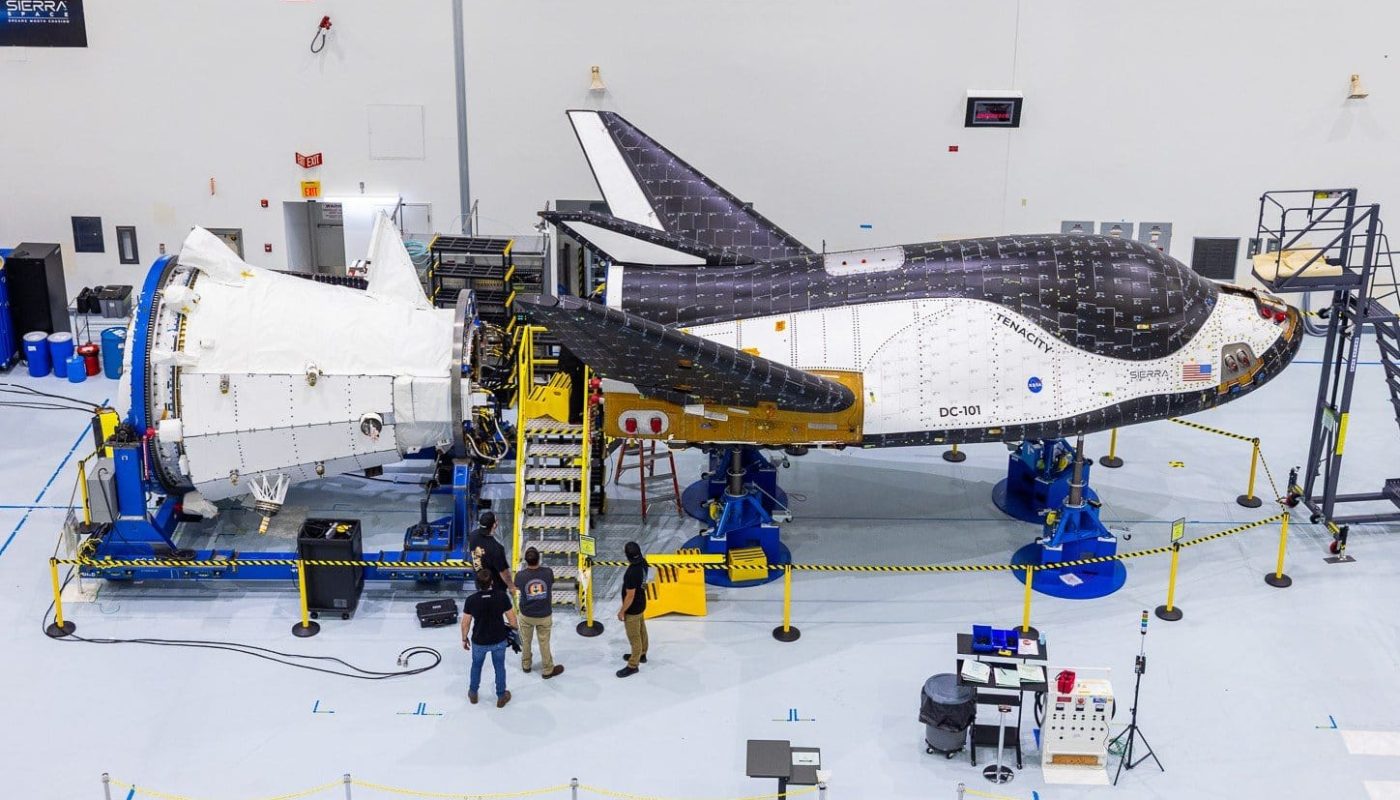
Image (Credit): The Dream Chaser and Shooting Star Cargo Module. (Sierra Space)
Back in 2016 NASA was looking for more commercial cargo haulers for its International Space Station (ISS), and Sierra Space’s reusable Dream Chaser spaceplane was one of those options. NASA contracted for multiple resupply missions to the ISS. However, all of that is now over.
NASA has announced that the contract has been modified so that Sierra Space is only to provide a “free flight demonstration” in 2026. What that means is that NASA will give the company a chance to prove its technology, but it will stop financing these efforts. And NASA will not commit to any future resupply missions, but may choose to do so at a later point.
It sounds like quite a gut-punch to another commercial option for the ISS at the same time that Boeing’s Starliner is still limping along. That leaves SpaceX and Northrop Grumman as the only players on the field as the station heads towards it decommissioning in 2030.
Sierra Space can certainly pursue other commercial space opportunities, which is expected to include commercial space stations at some point in the future. Even so, it appears NASA has lost confidence in the company’s ability to deliver on earlier promises related to the ISS.
In a recent press release, the company has put the most positive spin it can on this new arrangement:
Sierra Space is prioritizing first-flight readiness with Dream Chaser, targeting a launch in late 2026 to align with expected launch vehicle availability. Sierra Space and NASA worked together to reach this mutually beneficial agreement that provides greater mission flexibility for Dream Chaser’s first flight. This flight aims to demonstrate critical capabilities for NASA’s ISS resupply and future Commercial LEO Destinations (CLD) missions and position Dream Chaser as a national asset available for future national security and defense demonstrations.
Sierra Space has many other ongoing projects under a variety of government and private sector contracts, including NASA. For instance, it signed a contract with NASA earlier this year to study the use of the company’s expandable space station technology on the Moon.
So the company will be staying busy even after this latest setback. That said, getting the Dream Chaser into orbit on schedule has to remain a key priority for a company that want’s to be a big player in the space race ahead.
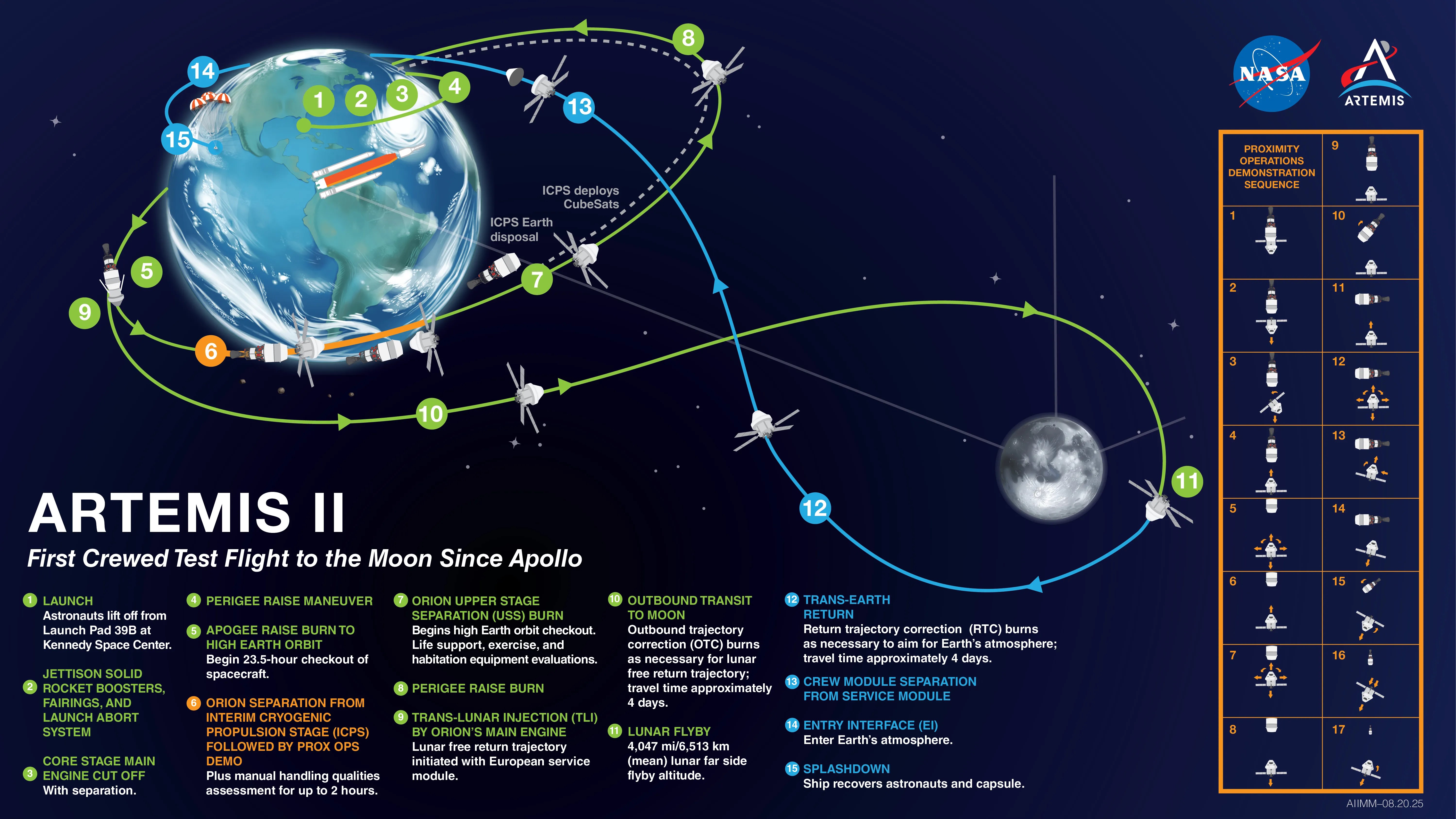
Nasa has said it hopes to send astronauts on a ten-day trip around the Moon as soon as February. The US space agency had previously committed to launching no later than the end of April but said it aims to bring the mission forward…Artemis Launch Director, Charlie Blackwell-Thompson explained that the powerful rocket system built to take the astronauts to the Moon, the Space Launch System (SLS) was “pretty much stacked and ready to go”. All that remained was to complete the crew capsule, called Orion, connected to SLS and to complete ground tests.
NASA on Monday introduced the 10 people — selected from a pool of 8,000 applicants — who will join the agency’s astronaut corps as it races to return to the moon before attempting an unprecedented crewed mission to Mars. The group includes six women and four men, whom acting NASA Administrator Sean Duffy called “America’s best and brightest.”…This astronaut class marks the first in which there are more women than men, according to NASA.
A large asteroid strike on the Moon could have negative consequences for the artificial satellites we now depend on. That being the case, a NASA-led team has looked into the options for preventing Asteroid 2024 YR4 from making such an impact in 2032. Contrary to the usual conclusions that asteroids should be diverted, not destroyed, they think this is a time for a Hollywood-approved demolition event.
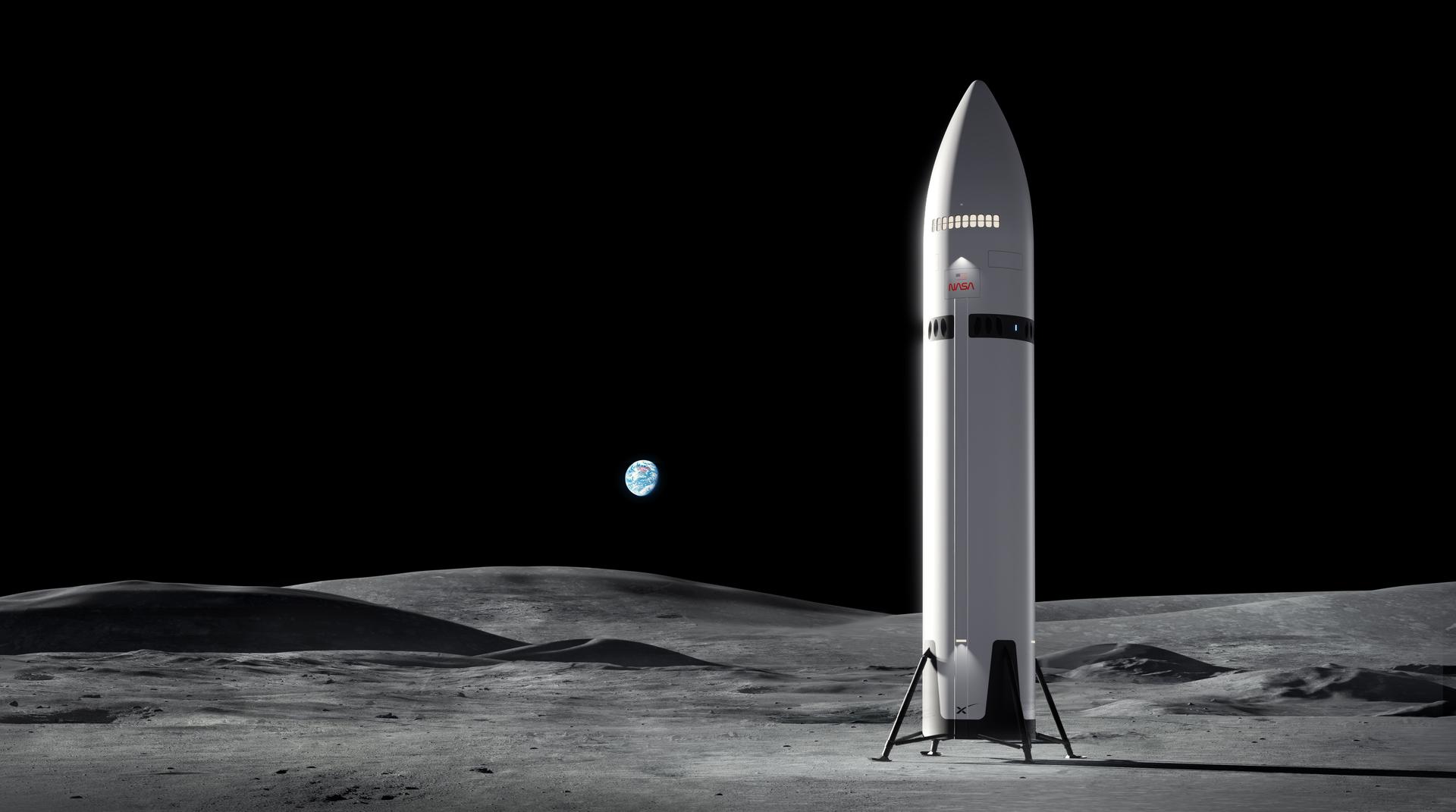
Image (Credit): Artist’s rendering of SpaceX’s Starship HLS on the Moon. (SpaceX)
“The HLS schedule is significantly challenged and, in our estimation, could be years late for a 2027 Artemis 3 moon landing.”
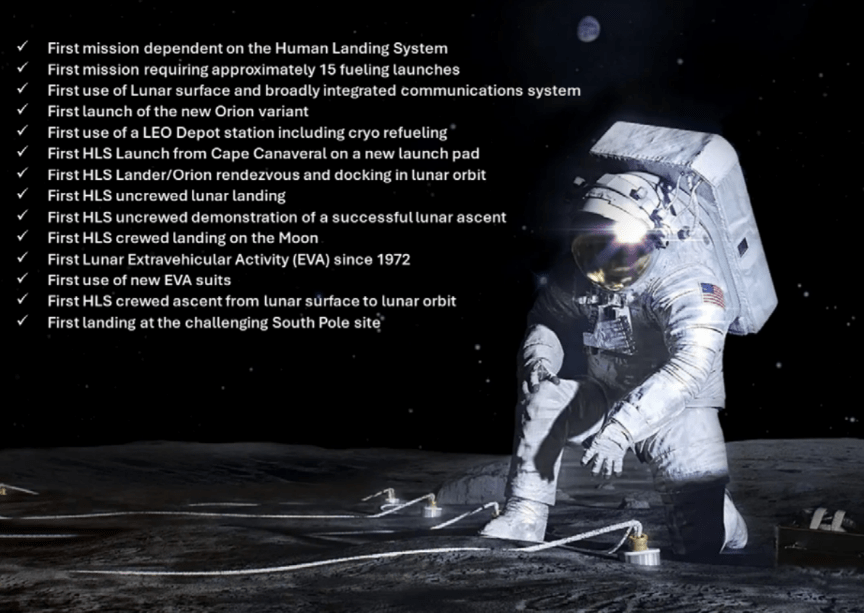
-Statement by Aerospace Safety Advisory Panel (ASAP) member Paul Sean Hill, as quoted by Space News. NASA contracted with SpaceX to develop the Human Landing System (HLS) for the astronauts landing on the Moon as part of Artemis III and later missions. While Blue Origin has also been tapped by NASA to assist with later missions, SpaceX was expected to provide the initial HLS. Maybe NASA should have picked two companies to provide the initial HLS, with the second in place still assisting with later landings. The ASAP’s 2024 Annual Report highlighted the many risks related to Artemis III, including several related to the HLS (shown below). Everyone knew this was going to be difficult, and no one wants to be asked to answer “Who Lost the Moon?” Also, it is good we still have a few advisory panels left after the recent purge.
Image (Credit): Figure 1, “First-time milestones for the Artemis III mission,” contained in the ASAP’s 2024 Annual Report. (ASAP)
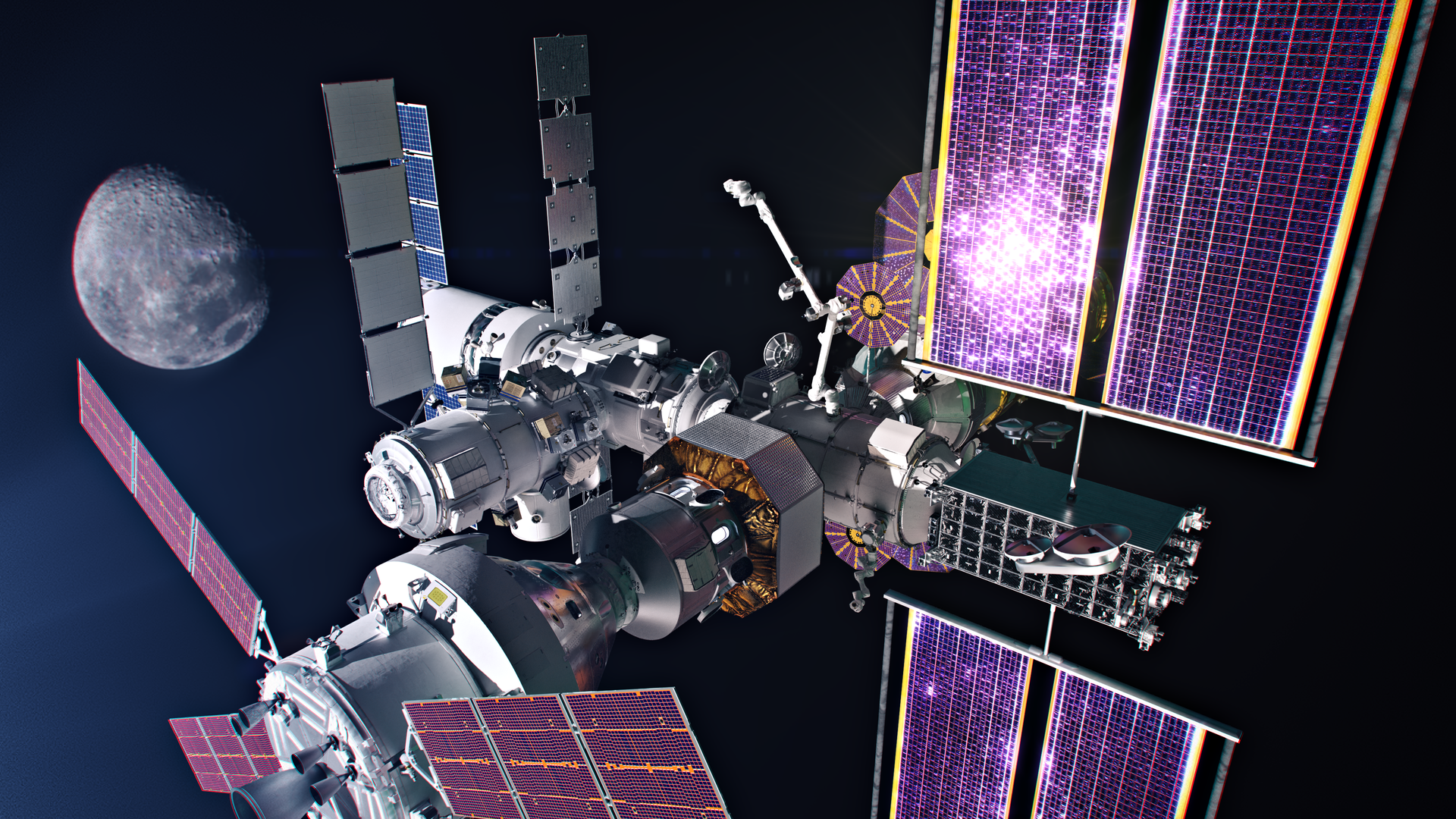
Image (Credit): Artist’s rendering of the Artemis Gateway. (NASA)
The hearing earlier this week held by the Senate Committee on Commerce, Science, and Transportation contained some clear warnings about the future of the US space program. In addition to comments by the Chairman and Ranking Member, we heard plenty from the witnesses about the importance of Artemis program in terms of political and economic outcomes, concerns about how the program is currently structured, and frustration with the continuing uncertainty about long term funding.
For instance, James Bridenstine, a Former Administrator for NASA, stated these concerns about NASA’s ability to land on the Moon under the Artemis program:
While the United States should celebrate orbiting the Moon in 2026, the United States does not have a lander. Unless something changes, it is highly unlikely the United States will beat China’s projected timeline to the Moon’s surface. Our complicated architecture requires a dozen or more launches in a short time frame, relies on very challenging technologies that have yet to be developed like cryogenic in-space refueling, and still needs to be human rated. While the capability could be transformational over time if payload capacity increases (so far it has decreased), the complexity of the architecture precludes alacrity.
Michael Gold, President of Civil and International Space for Redwire, emphasized the need for NASA to continue to resist White House cuts, such as the planned elimination of the Gateway piece in the initial budget proposal, in order to keep the program on track. He stated:
NASA’s waffling on Gateway has left our international partners confused, frustrated, and exploring alternatives to American partnerships. If we fail to continue with Gateway, we will force our partners to consider shifting support from Artemis and America, to China and its International Lunar Research Station (ILRS) program. Unlike the U.S., China has maintained strong and consistent continuity for its lunar beyond [low Earth orbit] spaceflight program, making a collaboration with China potentially far less risky than gambling on what, prior to Artemis, has been a mercurial American beyond LEO space strategy. If our international partners make such a shift to China, it will not only impact the space field but will have substantial diplomatic, geopolitical, and economic consequences on Earth.
And not to be outdone, Lieutenant General John Shaw, Former Deputy Commander of the U.S. Space Command, wanted to ensure the Artemis program was part of a “grand strategy” that could match the Chinese grand strategy integrating the exploration, economic opportunities, and security needs. In his testimony, he stated:
During my military career, I watched and studied – as any good soldier would of a potential adversary – as China slowly but surely developed and deployed its own civilian and military space capabilities and set its own agenda for space achievements. It is clear to me that the Chinese Communist Party is already employing its own integrated grand strategy for the earthmoon system, with only superficial distinction between civil, commercial, and national security activities, and all focused on a common purpose. I believe if we do not unify and synchronize our efforts, we will find ourselves, rather than the space leaders we are today, instead in a position of increasing disadvantage in space as we progress further into this century.
It was clear from what was said throughout the hearing that everyone in the room saw the benefits of a thriving Artemis mission that continued far beyond Artemis II. In fact, Artemis IX was mentioned as well. The real question was whether the US was willing to commit to a Moon and Mars mission for the long term and fund it appropriately so that our country, our commercial partners, and our country partners can realize the benefits for years to come.
That is the question that no one can answer here. However, the Chinese have already answered it for themselves. We can either watch them succeed, or fully commit to the Artemis program and win this latest space race.


 Our Awesome Universe