Audit Report: Concerns about the Gateway Space Station

Credit: NASA

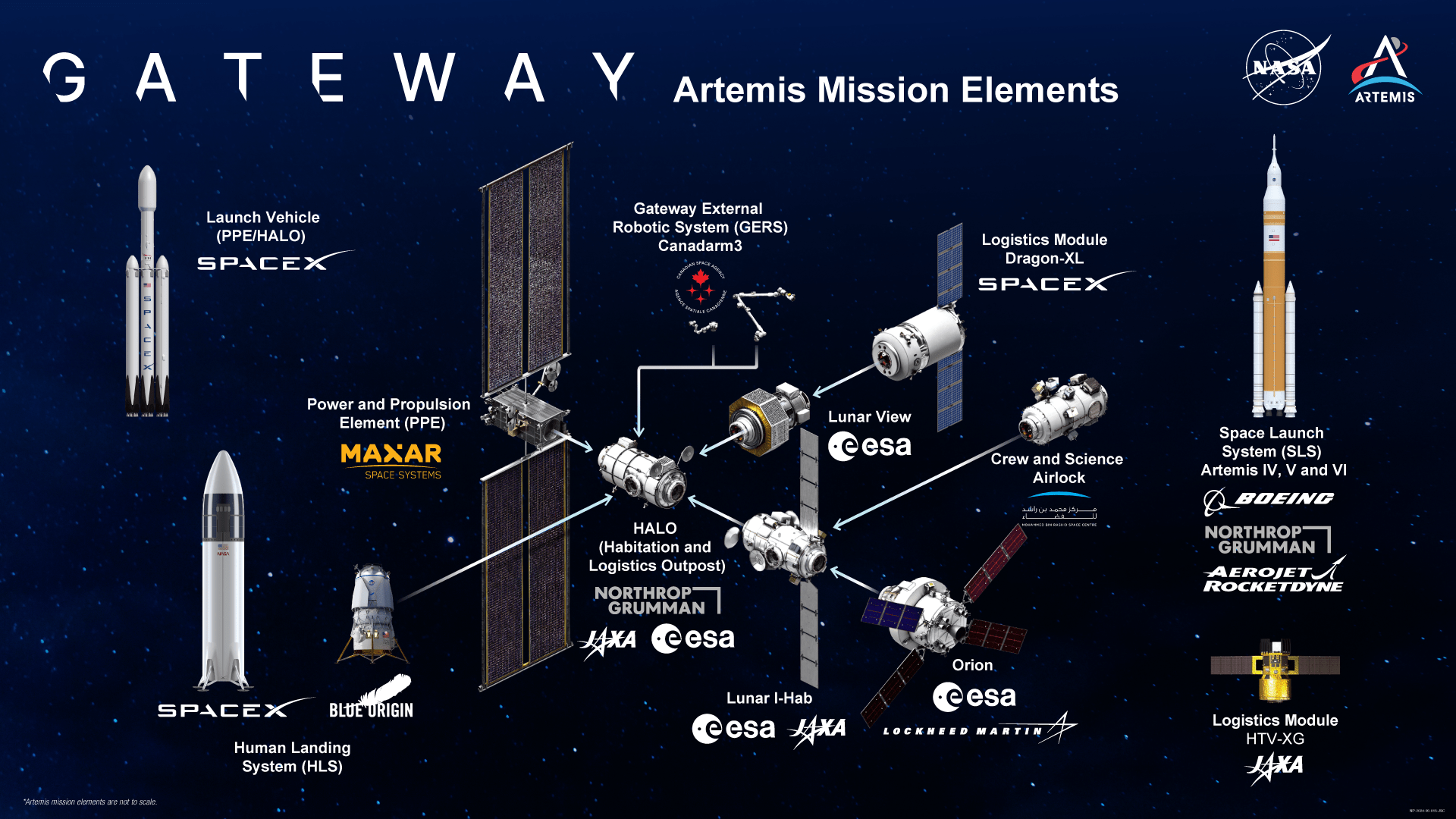
In a recent audit report, Artemis Programs: NASA Should Document and Communicate Plans to Address Gateway’s Mass Risk, the Government Accountability Office (GAO) expressed some concerns about NASA’s Gateway space station, which will orbit the moon as part of Artemis IV . Specifically, the concerns relate to the first components of the space station to be launched in December 2027 —the Power and Propulsion Element (PPE) and the Habitation and Logistics Outpost (HALO).

In the report, GAO states:

The Gateway program’s projects—including PPE and HALO—made varying degrees of progress over the last year. However, the PPE and HALO projects face several significant challenges. For example, their combined mass is greater than their mass target. Mass is one of many factors that the program considers in its overall design. If they cannot meet their mass target, it may affect their ability to reach the correct lunar orbit.

The report goes on to state:

For example, program officials estimate that the mass of the lunar lander Starship is approximately 18 times greater than the value NASA used to develop the PPE’s controllability parameters.

NASA agrees with the single GAO recommendation in this report, which recommends that a mass management be ready for an upcoming review in September 2024.

There is a lot to read in the 52 page report, but the real question is whether NASA will be ready for the 2027 Gateway launch. This is a ongoing concern given that we are already seeing delays in other parts of the Artemis program.

Audit Report: Is NASA Ready for Artemis II?

The NASA Office of Inspector General (OIG) issued an audit report earlier this week, NASA’s Readiness for the Artemis II Crewed Mission to Lunar Orbit, that expressed concerns about problems with the Artemis I test flight mission in late 2022. For example, the report noted:

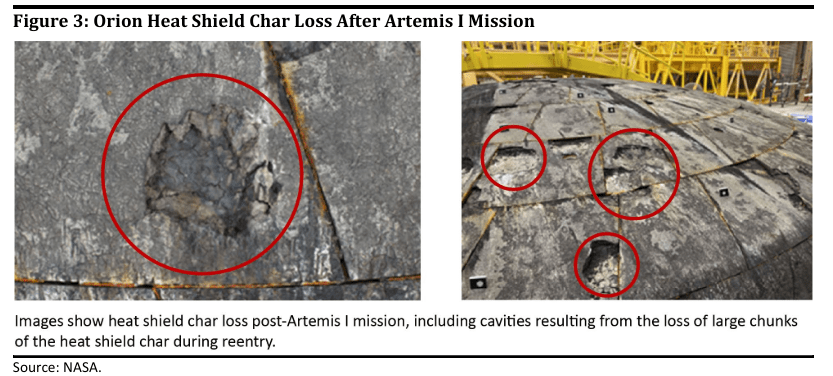
…the Artemis I test flight revealed critical issues that need to be addressed before placing crew on the Artemis II mission. In particular, the test flight revealed anomalies with the Orion heat shield, separation bolts, and power distribution that pose significant risks to the safety of the crew…Specifically, NASA identified more than 100 locations where ablative thermal protective material from Orion’s heat shield wore away differently than expected during reentry into Earth’s atmosphere…Beyond the Orion anomalies, the Artemis I launch-induced environment caused greater than expected damage to ML-1 elevators, electrical equipment, enclosure panel doors, and pneumatic tubing, requiring extensive repairs that will cost more than $26 million, roughly 5 times more than the $5 million the EGS Program had originally set aside for postArtemis I launch repairs.

While NASA is already working on repairs and improvements in each of these areas, it still puts a bit of a damper on NASA’s earlier video about all of the successes of Artemis I. NASA has already lost too many astronauts to heat shield issues in the past, so this is a serious matter that needs to be resolved before putting humans in the Orion capsule.

The OIG auditors made six recommendations to NASA management. NASA concurred with these recommendations, but noted that the audit was conducted at a difficult time, stating:

Being audited in the middle of a development process presents several challenges including disruptions to ongoing workflow and priorities due to the reallocation of resources and the coordination challenges associated with audit activities.

Of course, auditors are never really welcome at any point in the process. If they come too late, they are accused of shooting the dead.

NASA conducted the test flight to learn about such issues, so in that sense it was a success. Hopefully, the space agency can make the necessary improvements while keeping the Artemis II mission on track given that it has already been delayed.

Space Quote: The End of NASA’s OSAM-1 Project

Image (Credit): Artist’s rendering of the OSAM-1 project in action. (NASA)

“Following an in-depth, independent project review, NASA has decided to discontinue the On-orbit Servicing, Assembly, and Manufacturing 1 (OSAM-1) project due to continued technical, cost, and schedule challenges, and a broader community evolution away from refueling unprepared spacecraft, which has led to a lack of a committed partner. Following Congressional notification processes, project management plans to complete an orderly shutdown, including the disposition of sensitive hardware, pursuing potential partnerships or alternative hardware uses, and licensing of applicable technological developments. NASA leadership also is reviewing how to mitigate the impact of the cancellation on the workforce at NASA’s Goddard Space Flight Center in Greenbelt, Maryland.”

-Statement by NASA in recent communications. The project has been in development since 2015. About 450 NASA employees and contractors working on the OSAM-1 project. In an earlier report by the Government Accountability Office, the auditors noted, “OSAM-1 cost growth and schedule delays are exacerbated by poor contractor performance and continued technical challenges.”

Moon Malaise This Week – Two Missions Impacted

Image (Credit): Apollo 11 Lunar Module captured by NASA’s Lunar Reconnaissance Orbiter. (NASA)

NASA said we would have weeks like this one.

First we have the compromised Peregrine Lunar Lander floating in space. Astrobotic posted this update earlier today:

Given the propellant leak, there is, unfortunately, no chance of a soft landing on the Moon. However, we do still have enough propellant to continue to operate the vehicle as a spacecraft. The team has updated its estimates, and we currently expect to run out of propellant in about 40 hours from now — an improvement from last night’s estimate. The team continues to work to find ways to extend Peregrine’s operational life. We are in a stable operating mode and are working payload and spacecraft tests and checkouts. We continue receiving valuable data and proving spaceflight operations for components and software relating to our next lunar lander mission, Griffin.

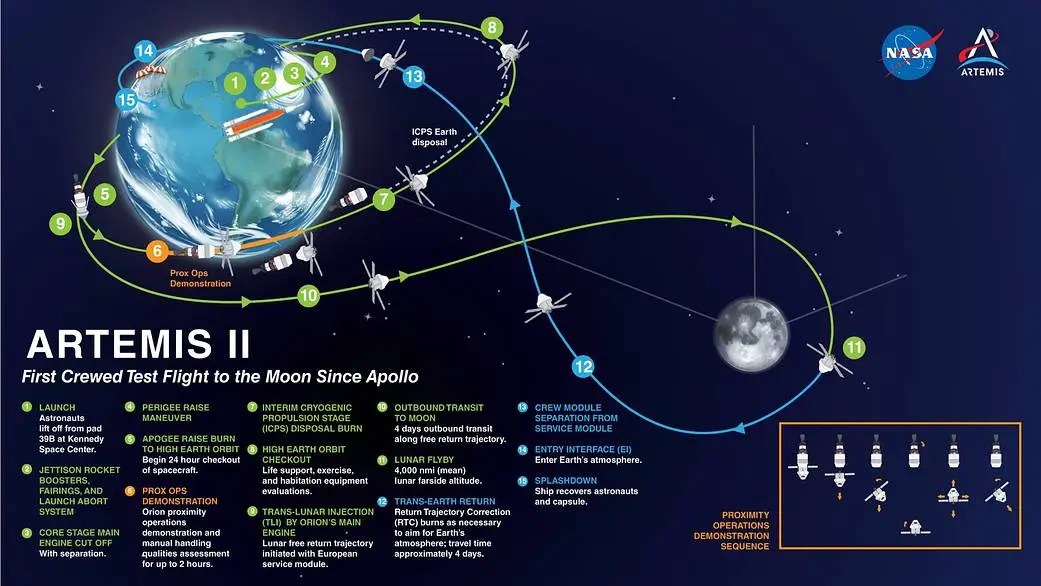
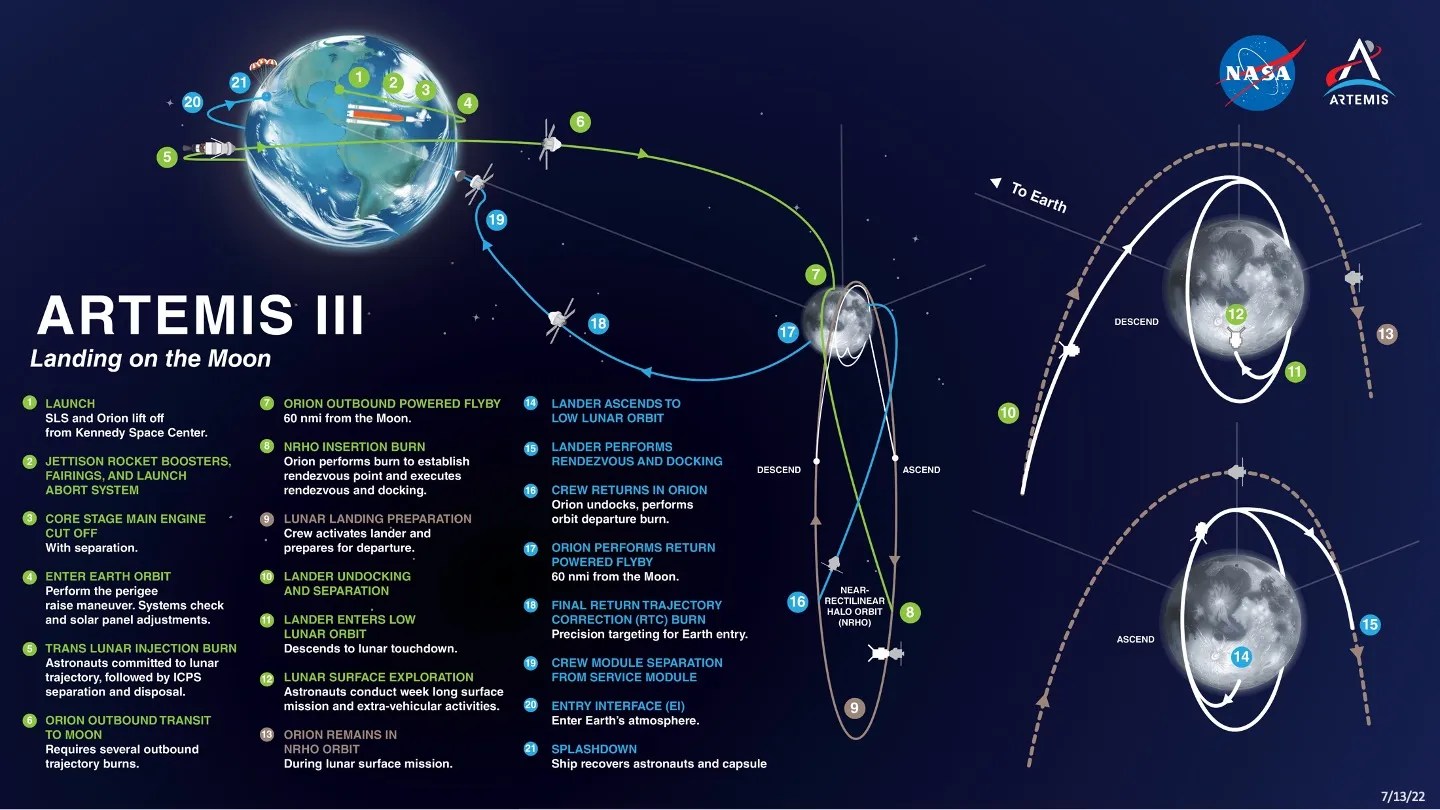
Second, we now have an official delay of the Artemis II and III missions, which is the crewed trips around the Moon and then to the surface of the Moon. NASA made the following statement:

NASA will now target September 2025 for Artemis II, the first crewed Artemis mission around the Moon, and September 2026 for Artemis III, which is planned to land the first astronauts near the lunar South Pole. Artemis IV, the first mission to the Gateway lunar space station, remains on track for 2028.

Rumors about a delay in the Artemis missions has been floating around for some time based on earlier audit reports, so this is not a big surprise. It is possible that NASA decided to dump the Artemis news this week to get everything on the table with this latest Peregrine problem rather than have two bad weeks.

We will just need a little more patience.

Image (Credit): Artemis II map. (NASA)
Image (Credit): Artemis III map. (NASA)

Space Quote: $5 Million for A Probe of Drug Use at SpaceX

Image (Credit): Mr. Musk smoking during an appearance on the Joe Rogan Experience show in September 2018. (Joe Rogan Experience/YouTube)

“It is essential for the integrity of the United States space program to ensure that the development and production of the space systems that will transport astronauts is conducted in a manner that prioritizes safety…The Safety and Health provision in the contract requires SpaceX to comply with standard industry practices, applicable laws, and other relevant provisions of the contract, such as the requirement to maintain a drug-free workplace.”

-Statement by NASA’s Associate Administrator William Gerstenmaier in a letter to SpaceX back in September 2018, as noted in a recent article in Business Insider. The reporter was not able the results of this expensive audit, but noted that Mr. Gerstenmaier later left NASA and joined SpaceX. Nothing to see here, folks.