Video: Brian Cox on Multiverses and More

Image (Credit): Dr. Brian Cox in an interview discussing multiverses. (LADbible TV)

About a month ago, English physicist Brian Cox was discussing a variety of topics in an interview on LADbible TV titled Brian Cox On The Multiverse And Life On Other Planets. You can hear Dr. Cox respond to a number of questions about the infinite universe, multiverses, finding intelligent life off planet, black holes, the end of the Earth, and even the recent DART mission. It is worth spending 23 minutes of your time listening to his answers.

For instance, he notes that it is his reasonable guess that there are no other worlds in the galaxy like ours in terms of harboring intelligent life. He points out that it took anywhere from 3.5 to 4 billion years for intelligent life to form on the Earth, which is about 1/3 the age of the universe. If we do find other life in the galaxy, he expects it to be slime and not much more. Later on, he states that not even the intelligent life on this planet would have been possible without a planet-killer asteroid taking out the dinosaurs, so it was a fluke that made way for intelligent life.

All in all, he said it is a “big ask” to expect to find other planets with intelligent life in this violent universe with a 4 billion-year chain of life uncut by events, making our civilization quite unique. Of course, earlier in the interview he also points out that there are about 2 trillion galaxies in our “small patch” of the universe, so even one intelligent planet per galaxy can amount to a lot of civilizations. Yet ever seeing or even knowing about these civilizations is something else. Add in the idea of multiverses created by endless big bangs, and the odds of intelligent life increase again within these other unknowable universes.

It’s a lot to get your heard around, though Dr. Cox has a way of making it all sound so reasonable. For that reason, I again ask you to spend 23 minutes with Dr. Cox to clear your head and make room for some new ideas.

Pic of the Week: Hickson Compact Group 40

Image (Credit): The NASA/ESA Hubble Space Telescope view of five galaxies, called the Hickson Compact Group 40. (NASA/ESA Hubble)

This week’s image is from the NASA/ESA Hubble Space Telescope. It shows an amazing collection of five galaxies in close proximity to one another in what is known as the Hickson Compact Group 40. In about one billion years they are expected to coalesce into one large galaxy.

Here is the summary from the Hubble site:

This menagerie includes three spiral-shaped galaxies, an elliptical galaxy and a lenticular (lens-like) galaxy. Somehow, these different galaxies have crossed paths to create an exceptionally crowded and eclectic galaxy sampler.

Caught in a leisurely gravitational dance, the whole group is so crowded that it could fit within a region of space that is less than twice the diameter of our Milky Way’s stellar disc.

Though such galaxy groupings can be found in the heart of huge galaxy clusters, these galaxies are notably isolated in their own small patch of the Universe, in the direction of the constellation Hydra.

One possibility is that there’s a lot of dark matter (a poorly understood and invisible form of matter) associated with these galaxies. If they come close together the dark matter can form a big cloud within which the galaxies orbit. As the galaxies plough through the dark matter they feel a frictional force that results from its gravitational effects. This slows their motion and makes the galaxies lose energy, so they fall together. Therefore, this snapshot catches the galaxies at a very special moment in their lifetimes. In about 1 billion years they will eventually collide and merge to form a single giant elliptical galaxy.

Astronomers have studied this compact galaxy group not only in visible light, but in radio, infrared, and at X-ray wavelengths. Almost every one of the galaxies has a compact radio source at its core, which could be evidence for the presence of a supermassive black hole. X-ray observations show that the galaxies have been gravitationally interacting as witnessed by the presence of a lot of hot gas amongst them. Infrared observations reveal clues to the rate of formation of new stars.

Though over 100 such compact galaxy groups have been catalogued in sky surveys going back several decades, Hickson Compact Group 40 is one of the most densely packed. Observations suggest that such tight groups may have been more abundant in the early Universe and provided fuel for powering black holes, known as quasars, whose light from superheated inflating material blazed across space. Studying the details of galaxies in nearby groups like this helps astronomers sort out when and where galaxies assembled themselves, and what they are assembled from.

Space Stories: JWST, a Galaxy Catalog, and a Stellar Graveyard

Image (Credit): JWST image of the Tarantula Nebula, which is about 160,000 light-years away. (NASA, ESA, CSA, STScI)

Here are some recent stories of interest.

Nature.com: “‘Bit of Panic’: Astronomers Forced to Rethink Early Webb Telescope Findings

Astronomers have been so keen to use the new James Webb Space Telescope (JWST) that some have got a little ahead of themselves. Many started analysing Webb data right after the first batch was released, on 14 July, and quickly posted their results on preprint servers — but are now having to revise them. The telescope’s detectors had not been calibrated thoroughly when the first data were made available, and that fact slipped past some astronomers in their excitement.

DailyScience.com: “‘Astronomers Map Distances to 56,000 Galaxies, Largest-ever Catalog

How old is our universe, and what is its size? A team of researchers led by University of Hawaii at Manoa astronomers Brent Tully and Ehsan Kourkchi from the Institute for Astronomy have assembled the largest-ever compilation of high-precision galaxy distances, called Cosmicflows-4. Using eight different methods, they measured the distances to a whopping 56,000 galaxies. The study has been published in the Astrophysical Journal.

University of Sydney: “Milky Way’s Graveyard of Dead Stars Found

The first map of the ‘galactic underworld’ – a chart of the corpses of once massive suns that have since collapsed into black holes and neutron stars – has revealed a graveyard that stretches three times the height of the Milky Way, and that almost a third of the objects have been flung out from the galaxy altogether.

Astronomy Ideas on Borrowed Time?

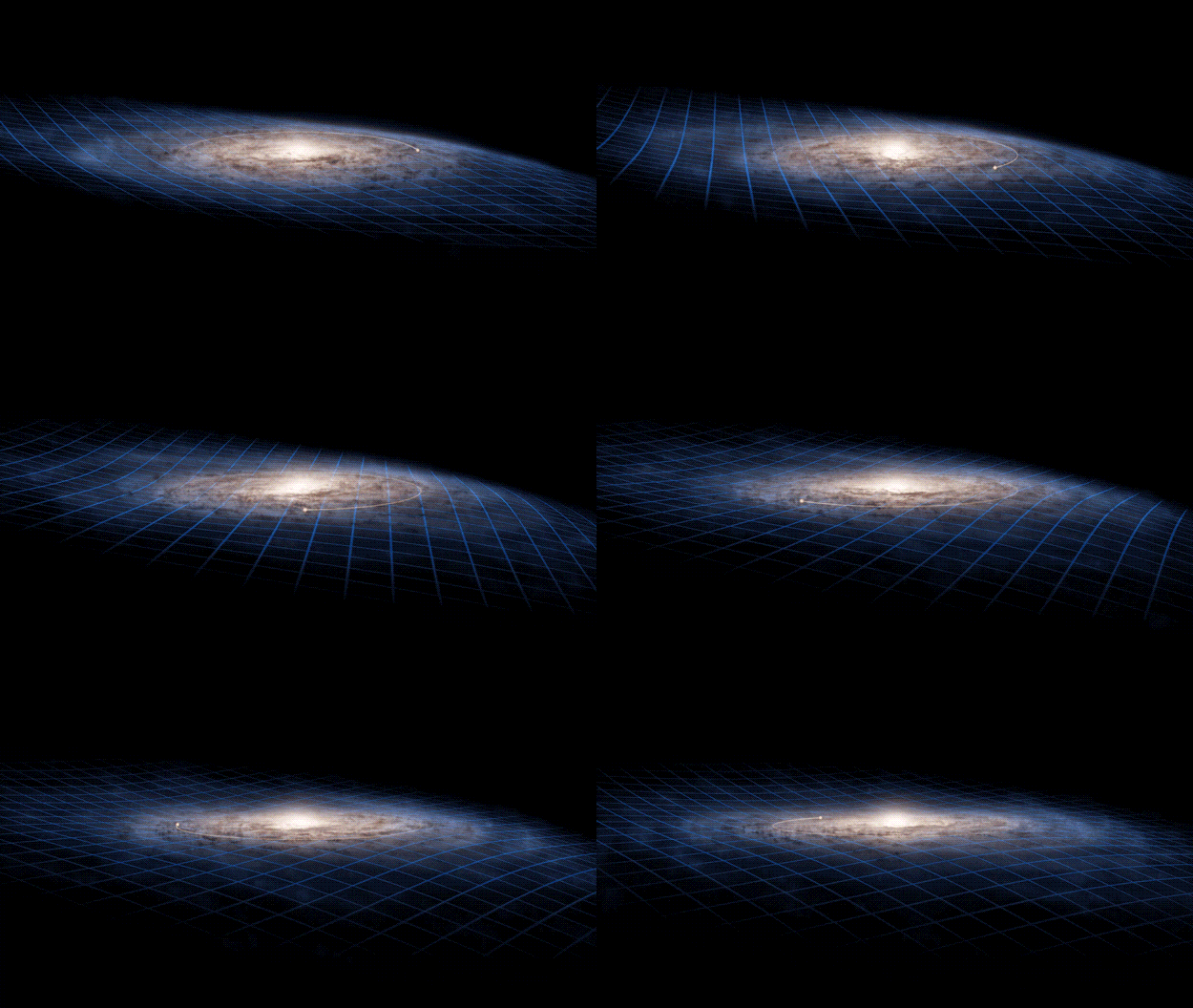
Image (Credit): The position of our Sun as it orbits the Milky Way’s center. (Stefan Payne-Wardenaar)

A recent Big Think story, “5 Consensus Ideas in Astronomy That Might Soon be Overturned,” comes as a good time as we reach further into space and back into time using the James Webb Space Telescope (JWST) and contemplate other telescopes that should come online shortly.

The story highlights these five ideas:

  • Dark energy is a cosmological constant;
  • Stars predate black holes;
  • Jovian planets protect terrestrial ones;
  • Most of the galaxy is uninhabitable; and
  • Globular clusters are planet-free.

For instance, regarding the uninhabitable areas of the galaxy, the Big Think story states:

Among its many discoveries, the ESA’s Gaia mission has found that the Milky Way galaxy not only has a warp to its galactic disk, but that the warp in the disk precesses and wobbles, completing a full rotation for roughly every three revolutions of the Sun [shown in yellow above] around the galactic center. Most astronomers assume that regions with too many stellar cataclysms in them, like the centers of galaxies, may be completely uninhabitable. But this picture is far from certain.

It is worth reading through the list and keeping these ideas in mind, and then following the JWST stories as they unfold. I bet you will be able to make a much longer list as old consensus ideas come apart and new ideas quickly follow.

More on Black Holes

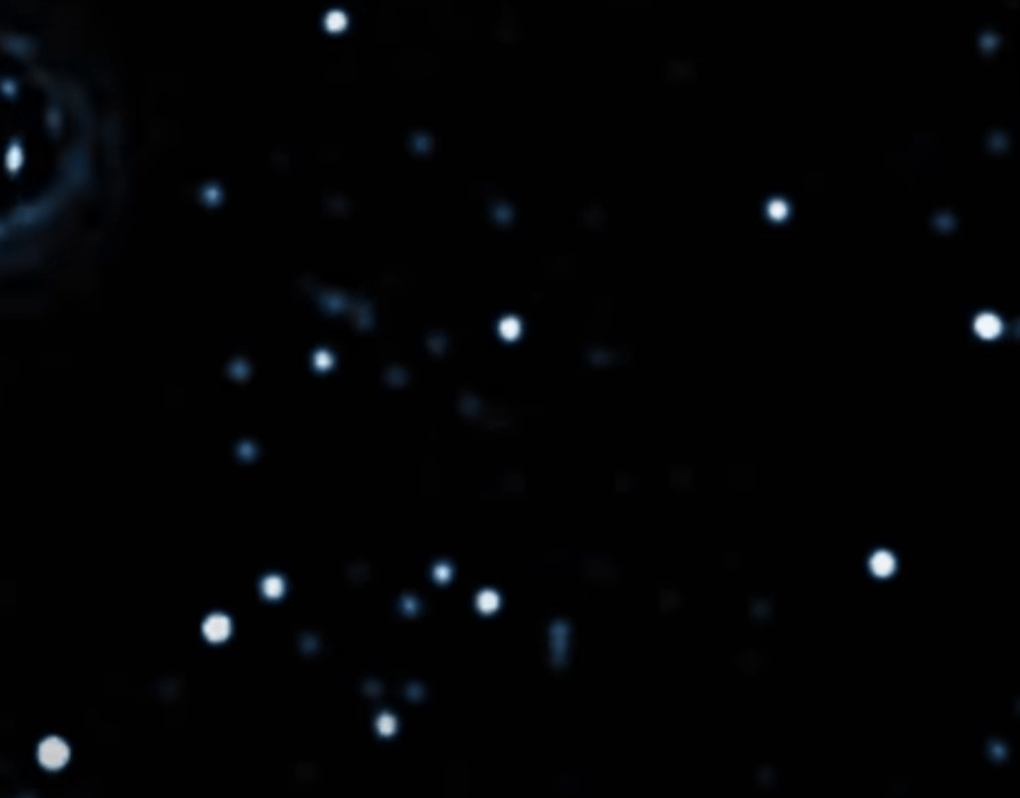
Image (Credit): Image from the Very Large Telescope in Chile showing stars orbiting the supermassive black hole that lies at the heart of the Milky Way. (ESO/MPE)

The earlier article on a black hole binary system was pretty amazing, yet the video accompanying the story was created to demonstrate the phenomena. I found an even more amazing real video of stars orbiting the supermassive black hole at the center or the Milky Way galaxy. You can see the 20-year time-lapse video here from the NaCo instrument on the European Space Telescope’s Very Large Telescope in Chile. This black hole, Sagittarius A*, is about 27 000 light-years away from Earth.