The VIPER Lives!

Image (Credit): The VIPER outside a testing chamber in the fall of 2024. (NASA/JSC David DeHoyos)

It was only last year that NASA gave up on its $450 million Volatiles Investigating Polar Exploration Rover (VIPER) project, but things have changed for the better.

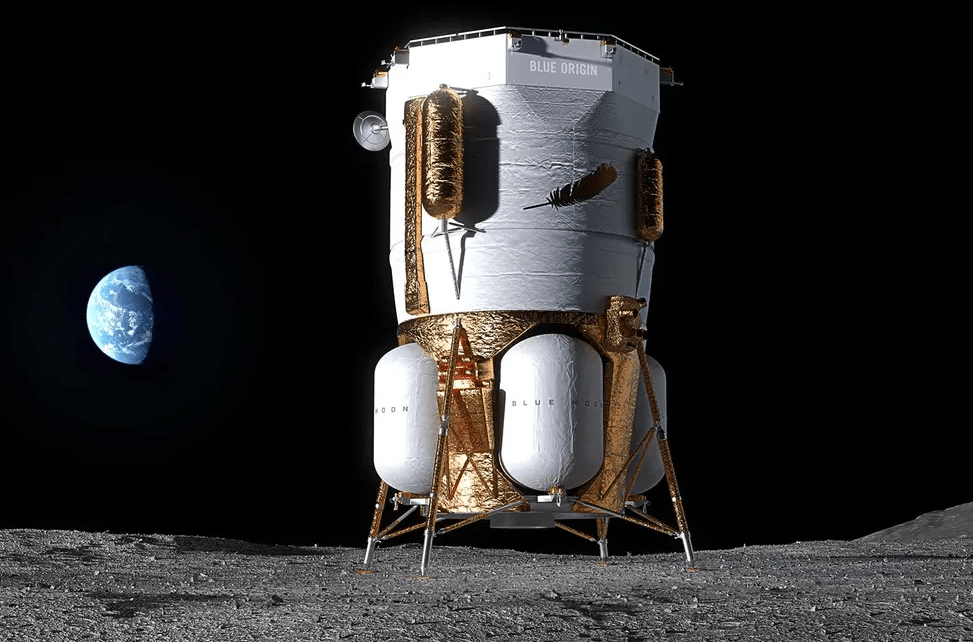
Blue Origin has been selected by NASA to bring the rover to the Moon as part of a $190 million task order under the agency’s Commercial Lunar Payload Services program. Blue Origin’s Blue Moon Mark 1 robotic lander, which is scheduled to land on the Moon later this year, will include the VIPER was part of its future cargo in 2027.

As NASA has noted on its VIPER mission page, the rover was part of the Artemis program:

NASA’s Artemis lunar rover, the Volatiles Investigating Polar Exploration Rover, or VIPER, was designed to explore the relatively nearby but extreme environment of the Moon in search of ice and other potential resources. This mobile robot was slated to land at the South Pole of the Moon on a 100-day mission, in order to teach us about the origin and distribution of water on the Moon and help determine how we can harvest the Moon’s resources for future human space exploration.

While the VIPER mission was cancelled last summer, NASA continued to look for a partner to bring it to the Moon. Fortunately, Blue Origin was already going that way.

This is good news for scientists everywhere. It made no sense to turn a half billion dollar piece of equipment into a museum piece. We need more boots and tires on the lunar surface, and VIPER is fortunately part of those plans again.

Space Stories: Even More Space Tourists, Upcoming Asteroid Encounter, and Copernicus Had Help

Image (Credit): New Shepard’s NS-31 Mission crew. (Blue Origin)

Here are some recent stories of interest.

ABC News: Blue Origin Mission with All-female Crew, Including Katy Perry, Completes Space Trip

Blue Origin’s all-female crew, which included pop star Katy Perry, completed their trip into space Monday morning. The flight lasted around 11 minutes and traveled more than 60 miles above Earth, according to Blue Origin, passing the Kármán line, which at 62 miles above sea level is considered to be the boundary between Earth’s atmosphere and outer space. Along with Perry, the crew included Blue Origin owner Jeff Bezos’ journalist fiancée, Lauren Sanchez, who is also a helicopter pilot.

NASA: NASA’s Lucy Spacecraft Prepares Second Asteroid Encounter

NASA’s Lucy spacecraft is 6 days and less than 50 million miles (80 million km) away from its second close encounter with an asteroid; this time, the small main belt asteroid Donaldjohanson. This upcoming event represents a comprehensive “dress rehearsal” for Lucy’s main mission over the next decade: the exploration of multiple Trojan asteroids that share Jupiter’s orbit around the Sun.

University of Sharjah: Copernicus May Have Leaned on Ancient Muslim Astronomer in Developing his Cosmological System

New research has revealed that the cosmological model developed by Nicolaus Copernicus, the renowned European Renaissance polymath, bears striking resemblance to the one designed by an Arab Muslim astronomer nearly two centuries earlier. The research conducted at the University of Sharjah is a comparative and analytical study which examines in parallel the writings of Copernicus in correlation with the works of the 14th century Muslim astronomer Ibn al-Shatir.

The Internet Satellite Race Continues, Almost

Amazon hopes to challenge SpaceX’s Starlink system, but not just yet.

The launch planned for earlier this week place 27 internet satellites into orbit as part of Amazon’s Project Kuiper was scrubbed at the last minute. The United Launch Alliance (ULA) launch, scheduled for last Wednesday, was delayed due to bad weather.

If all goes according to plan, Project Kuiper will have about 1,600 satellites in orbit by the middle of next year. That would mean about 80 launches over that period, which seems somewhat unlikely given ongoing delays. In addition to ULA launches, Amazon is booking launches with Arianespace, Blue Origin, and SpaceX. When the project is complete, about 3,200 Kuiper internet satellites will be in orbit.

The Kuiper satellites will compete head-to-head with SpaceX’s Starlink (with its goal of 42,000 satellites) and China’s SpaceSail (with its goal of 15,000 satellites).

A new launch date for the first launch of the Kuiper internet satellites has not been announced yet.

Update: I forgot to mention another competitor – Eutelsat’s Oneweb in the European Union, which already has about 650 Internet satellites in Low Earth Orbit.

Second Update: This story, “Telecommunications Satellites and Space Exploration,” has a nice summary about how we arrived at the current moment with our satellite technology as well as what the future may hold.

Pic of the Week: Successful Launch of the New Glenn Rocket

Image (Credit): Blue Origin’s New Glenn rocket lifting off on January 16, 2025. (Blue Origin)

Earlier today, Blue Origin’s New Glenn rocket safely made its way into the Earth’s orbit from its launch pad at the Cape Canaveral Space Force Station in Florida. The only piece of the mission that fell short was the loss of the booster that should have landed on a barge in the Atlantic Ocean.

After the successful launch, Blue Origin’s CEO Dave Limp stated:

I’m incredibly proud New Glenn achieved orbit on its first attempt…We knew landing our booster, So You’re Telling Me There’s a Chance, on the first try was an ambitious goal. We’ll learn a lot from today and try again at our next launch this spring. Thank you to all of Team Blue for this incredible milestone.

Even with the lost booster, the rocket launch has proven that the US space industry may soon have another reliable competitor to challenge SpaceX, which is good new for everyone.

Ice Delays New Glenn Rocket Launch and Firefly Heads to the Moon

Credit: Blue Origin

Blue Origin’s New Glenn rocket launch was pushed off again earlier today when ice was found building up on one of the lines related to the hydraulic systems.

At 3:09 a.m. EST, Blue Origin stated:

We’re standing down on today’s launch attempt to troubleshoot a vehicle subsystem issue that will take us beyond our launch window. We’re reviewing opportunities for our next launch attempt.

As a result, the new launch date is set for Thursday, January 16.

In the meantime, watch for the launch on Wednesday of Firefly Aerospace’s Blue Ghost Mission One as part of NASA’s Commercial Lunar Payload Services (CLPS) program. This mission will deliver 10 science and technology payloads to the Moon, including

  • testing regolith sample collection,
  • Global Navigation Satellite System abilities,
  • radiation tolerant computing, and
  • lunar dust mitigation. 

Firefly Aerospace notes:

Blue Ghost will spend approximately 45 days in transit to the Moon, allowing ample time to conduct health checks on each subsystem and begin payload science. Blue Ghost will then land in Mare Crisium and operate payloads for a complete lunar day (about 14 Earth days). Following payload operations, Blue Ghost will capture imagery of the lunar sunset and provide critical data on how lunar regolith reacts to solar influences during lunar dusk conditions. The lander will then operate for several hours into the lunar night.

Image (Credit): Blue Ghost Mission One schedule. (Firefly Aerospace)