Space Stories: More Quality Control Issues at Boeing, Blue Origin’s Planned Lunar Landing, and Citizen Scientists Assisting with Exoplanet Research

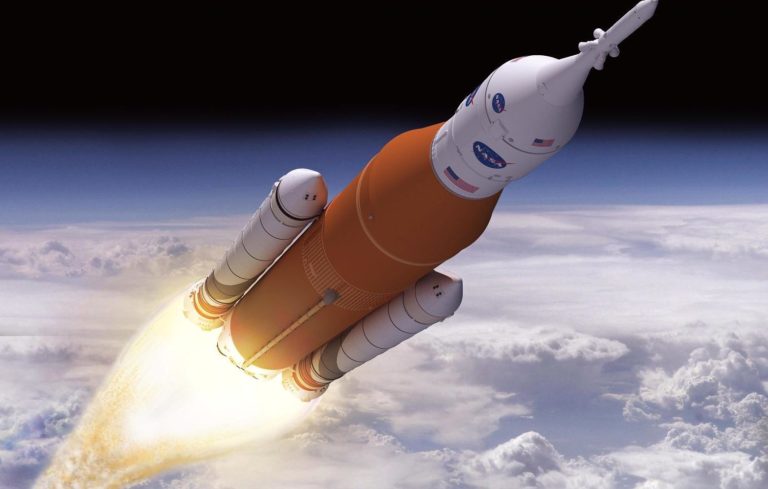
Image (Credit): Artist’s rendering of the SLS in flight. (NASA)

Here are some recent stories of interest.

NBC NewsNASA Inspector General Gives Damning Assessment of Boeing’s Quality Control in New Report

The report, released Thursday by NASA’s Office of Inspector General, calls into question Boeing’s standards and quality control for its part in NASA’s efforts to return astronauts to the moon. In NASA’s development of its next-generation megarocket, known as the Space Launch System, it gave Boeing the contract to build the rocket system’s powerful upper stage. But according to the report, Boeing’s quality control systems fall short of NASA’s requirements, and some known deficiencies have gone unaddressed. What’s more, the workers on the project are not, as a whole, sufficiently experienced or well trained, according to the inspector general.

Space NewsNASA Payload to Fly on First Blue Origin Lunar Lander Mission

A NASA payload will hitch a ride to the moon on Blue Origin’s first lunar lander mission, scheduled to launch as soon as next March. In an Aug. 6 procurement filing, NASA revealed it selected Blue Origin to fly a camera system to study how engine plumes interact with regolith at south polar regions of the moon, collecting data to support future crewed landing missions. The payload, called Stereo Cameras for Lunar Plume Surface Studies (SCALPSS), will fly through NASA’s Commercial Lunar Payload Services (CLPS) program.

NASAHow NASA Citizen Science Fuels Future Exoplanet Research

NASA’s upcoming flagship astrophysics missions, the Nancy Grace Roman Space Telescope and the Habitable Worlds Observatory, will study planets outside our solar system, known as exoplanets. Over 5,000 exoplanets have been confirmed to date — and given that scientists estimate at least one exoplanet exists for every star in the sky, the hunt has just begun. Exoplanet discoveries from Roman and the Habitable Worlds Observatory may not be made only by professional researchers, but also by interested members of the public, known as citizen scientists.

Podcast: A Mixed Week for Musk

Image (Credit): Scene from a Tesla crash. (fox2detroit.com)

While things appear to be going Elon Musk’s way with his ridiculous Tesla pay package, The Wall Street Journal had another story this week that discussed his self-serving management style that should not merit reward. The article, “Elon Musk’s Boundary-Blurring Relationships With Women at SpaceX,” highlights some pretty horrible behavior for a man that then and now believes he is above the law (and all codes of decency).

If you cannot read the Journal article, you can find summaries of the story elsewhere or listen to the Wall Street Journal podcast called The Journal. The podcast is titled “Elon Musk’s Unusual Relationships With Women at SpaceX.”

It is scary that the US space program is so dependent on the behavior of this man, who has already been part of prior Wall Street Journal articles about his drug use.

We need to build greater depth in our space program, be it Blue Origin, Boeing, Northrop Grumman, Rocket Lab, or others. The dream of a stronger space program could die if we tie too much to one man.

Blue Origin is Open for Tourism Again

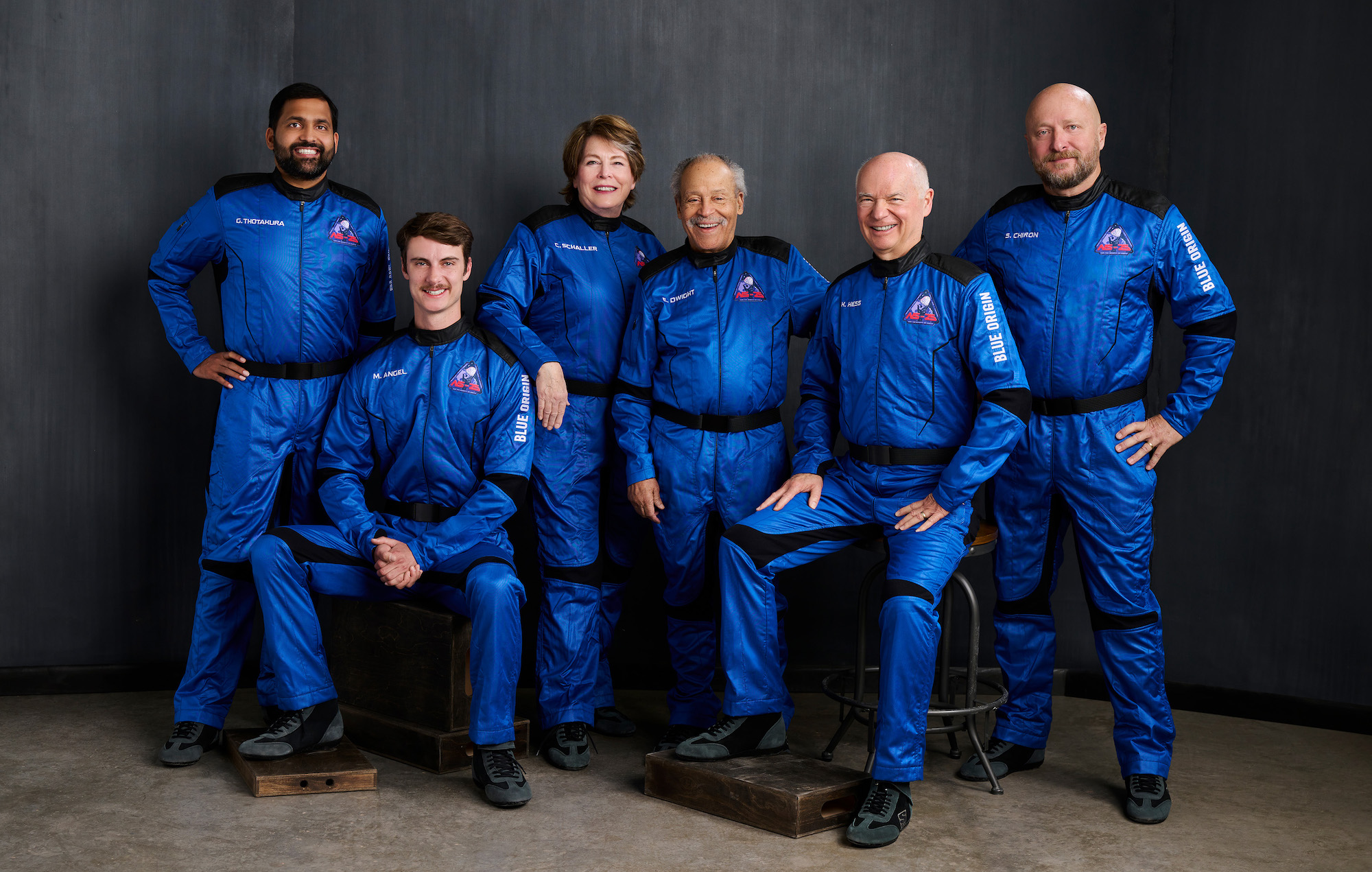
Image (Credit): The crew from Sunday’s NS-25 flight (from left to right): Gopi Thotakura (pilot), Mason Angel, Carol Schaller, Ed Dwight, Ken Hess, and Sylvain Chiron. (Blue Origin)

It has been some time, but Blue Origin is once again bringing tourists into space. Yesterday’s launch from Texas included five passengers and the pilot.

One of the passengers on the New Shepard rocket was former Air Force Captain Ed Dwight. Mr. Dwight was one of the nation’s first Black astronaut candidate, though he never had the opportunity to fly until yesterday. He was also the oldest person to go into space, beating Star Trek’s William Shatner’s age by a few months. After the flight, Mr. Dwight stated, “I thought I really didn’t need this in my life, but now I need it in my life.”

If you are interested in taking such a flight, just visit this Blue Origin link for more information. The site points out that you only need two days to prepare for a flight:

Our on-site astronaut training program is meticulously designed to teach everything you’ll need to know for a safe spaceflight. Over two days, you’ll learn about New Shepard’s mission profile, safety systems, zero-g protocols, and execute mission simulations.

While I am sure plenty of people are happy that this part of the commercial space industry is operational again, I am looking forward to more commercial success with the resupply of the International Space Station, particularly the upcoming launch of the Boeing Starliner.

Space Stories: Robot Trains on the Moon, Commercial Space Stations, and Russian Lunar Reactors

Image (Credit): Artist’s rendering of the Flexible Levitation on a Track system on the lunar surface with planet Earth on the horizon. (NASA/Ethan Schaler)

Here are some recent stories of interest.

NDTV: NASA Announces Plans To Build First Railway System On Moon

As the National Aeronautics and Space Administration (NASA) readies to return astronauts to the moon, it has announced its plans to build a levitating robot train on the lunar surface. In a blog post, the American space agency provided details about the project called “Flexible Levitation on a Track (FLOAT)”, which aims to provide a “robotic transport system” to support future lunar activities of astronauts visiting the moon. The transport system will be critical to the daily operation of a sustainable lunar base in the 2030s, NASA said in a statement. 

IEEE Spectrum: Commercial Space Stations Approach Launch Phase

A changing of the guard in space stations is on the horizon as private companies work toward providing new opportunities for science, commerce, and tourism in outer space. Blue Origin is one of a number of private-sector actors aiming to harbor commercial activities in low Earth orbit (LEO) as the creaking and leaking International Space Station (ISS) approaches its drawdown. Partners in Blue Origin’s Orbital Reef program, including firms Redwire, Sierra Space, and Boeing, are each reporting progress in their respective components of the program. The collaboration itself may not be on such strong ground. Such endeavors may also end up slowed and controlled by regulation so far absent from many new, commercial areas of space.

Newsweek: Russia Reveals New China Nuclear Moon Base Details

Details about joint plans between Moscow and Beijing to put a lunar nuclear reactor within the next decade have been revealed by the head of Russia’s space agency. In March, Roscosmos announced plans to work with China to build an automated nuclear reactor to power a proposed lunar base that the two countries would operate together within the next decade. To construct the site, Roscosmos director general Yury Borisov said two months ago it was looking at using nuclear-powered rockets to transfer cargo to the moon, but had not yet figured out how to build these spacecraft safely. In an article published Wednesday by state news outlet RIA Novosti, Borisov said that development of the plant was underway and the countries were working on creating experimental and research facilities as part of the project.

Space Quote: Space Jobs are in Demand, and Demanding

“You’re doing this cool thing…You’re also going to be like really worked to death.”

-Comment by Griffin Rahn, who is earning his aerospace master’s degree at Georgia Tech, in a Fortune article titled “NASA is Struggling to Compete with Bezos, Musk and Their 6-figure Salaries for Starting Aerospace Engineers at Blue Origin and SpaceX.” The title of the article is self-explanatory. See any earlier posting for more on NASA’s troubles maintaining a work-life balance.