Bad News for Latest US Moon Mission

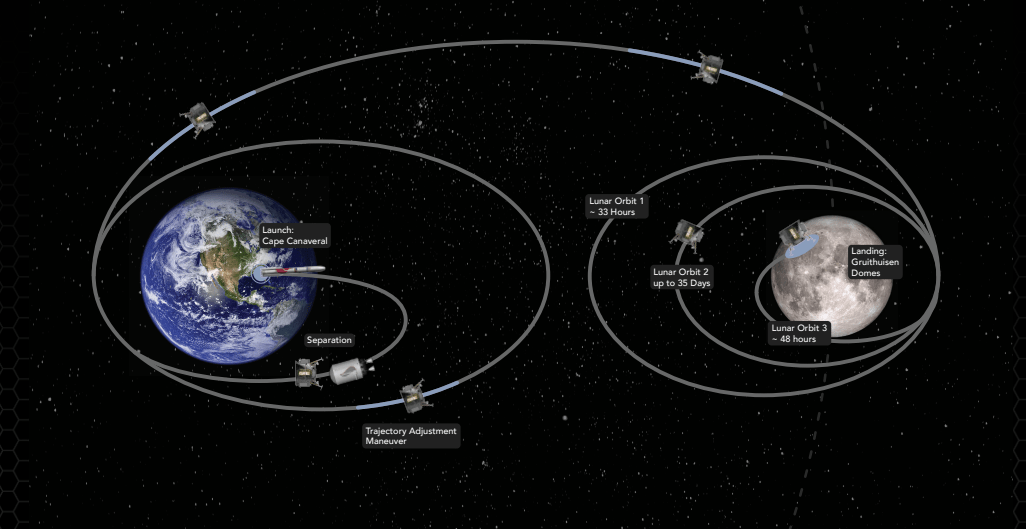
Image (Credit): Planned flight of the Peregrine lunar lander. (Astrobotic)

We started with high hopes, yet a problem has already threatened the success of Astrobotic’s mission to the Moon. Shortly after a successful lift off earlier this morning, the Peregrine lunar lander started reporting issues with its propulsion system, which impacted its ability to charge its batteries. Fortunately, the charging issue was resolved, yet the propulsion issue is still outstanding.

Astrobotic is already talking about a modified mission. Noting the loss of propellant, the company stated:

The team is working to try and stabilize this loss, but given the situation, we have prioritized maximizing the science and data we can capture. We are currently assessing what alternative mission profiles may be feasible at this time.

That sounds pretty ominous at this point when the final goal is the Moon. The US mission is starting to look like two other lunar missions that failed last year – one Japanese and one Russian – yet those happened on the Moon’s surface. If the Peregrine can stay in the Moon’s orbit then maybe it can get a few things accomplished.

If there is any good news, it is that the United Launch Alliance (ULA) Vulcan rocket appeared to operate as expected. That means the folks at ULA and Blue Origin can sleep a little better tonight.

I do not expect the Astrobotic people will have a good night’s sleep for some time.

The US Aims to be Back on the Moon Next Month

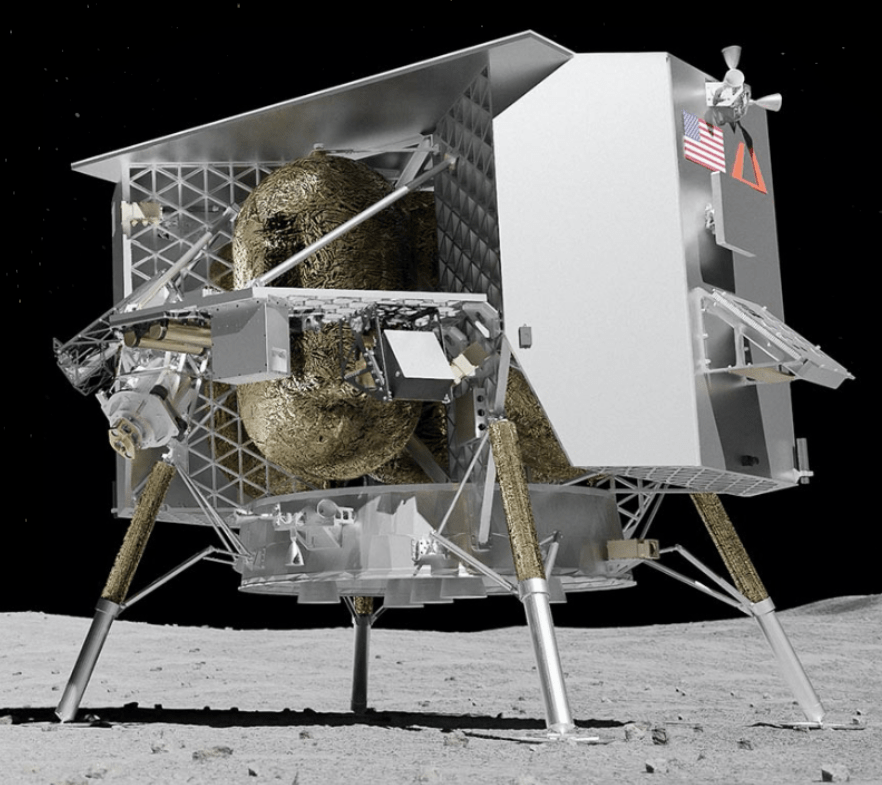
Image (Credit): Astrobotic’s Peregrine lunar lander. (Astrobotic)

After ending launches to the Moon’s surface more than 50 years, NASA is funding a lunar mission that launches tomorrow morning. United Launch Alliance (ULA) will be using its new Vulcan rocket to launch the Astrobotic mission towards the Moon. ULA, as noted earlier, has a lot riding on this new rocket as it seeks a buyer. Blue Origin will also be watching events closely as the manufacturer of the Vulcan rocket engines.

This is a milestone for the U.S. as well as Astrobotic, which will be the first private company to reach the Moon’s surface if everything goes without a hitch. The Pittsburgh-based company plans to place its Peregrine lunar lander on the Moon’s surface at Sinus Viscositatis (Bay of Stickiness). The company notes that the Peregrine Mission One (PM1) “…is carrying 20 payloads (cargo) from governments, companies, universities, and NASA’s Commercial Lunar Payload Services (CLPS) initiative.” The NASA payloads are shown below.

The Peregrine lunar lander is not expected to land on the Moon’s surface until February 23rd. The delay will allow sufficient sunlight to be present at the landing site.

Fingers crossed that all goes well tomorrow morning.

ULA is Up for Sale

Image (Credit): ULA’s new Vulcan Centaur rocket. (ULA)

United Launch Alliance (ULA), a space rocket partnership between Boeing and Lockheed Martin, is now being offered for sale. Both Blue Origin and Cerberus are showing interest, which could upset the space business as Blue Origin takes a big step forward or Cerberus gets into the space business.

ULA, formed in 2006, has both a wealth of experience as well as the confidence of the US military, even though SpaceX has been eating into that business. ULA also has ready commercial customers, including a partnership with Amazon to launch 47 rockets to bring the Kuiper broadband constellation into orbit.

The ties to Mr. Bezos, owner of Amazon, go even deeper than that. The ULA’s new rocket, the Vulcan Centaur, will use engines built by Blue Origin, another one of Mr. Bezos’ companies. This may make a Blue Origin a natural new owner to ULA.

The potential buyers may want to wait until the test launch of the Vulcan on January 8th. At that time, the Vulcan rocket will be used to launch the Astrobotic Peregrine commercial lunar lander, the first of NASA’s Commercial Lunar Payload Services initiative designed to deliver science and technology experiments to the lunar surface.

None of this means Boeing or Lockheed Martin are moving away from space altogether. Boeing is still working on its Starliner to bring individuals and cargo to low-Earth orbit as well as its Space Launch System, which serves as the backbone of the Artemis program. Lockheed Martin will be busy as well with its Orion capsule and human landing system (with Blue Origin and Boeing as well), additional key components of the Artemis program.

Any reshuffling is okay as long as it adds to the array of commercial options for NASA. A new player like Cerberus might be welcome, but I also see some value to pushing an experienced and involved Blue Origin to the top of its game a little quicker so it can go head-to-head with SpaceX.

This should be interesting. Stay tuned.

Blue Origin is Going to Mars, Hopefully

Image (Credit): Surface of Mars. (NASA)

Okay, the plan is for Blue Origin to launch NASA satellites towards Mars, so don’t worry about Jeff Bezos and Elon Musk fighting it out on the Martian surface.

NASA has tapped Blue Origin to take two satellites worth about $79 into space, which will be the first use of the company’s New Glenn rocket. The launch is planned for next year, giving Blue Origin time to test the rocket and prepare for the mission.

The NASA mission, called the Escape and Plasma Acceleration and Dynamics Explorers (EscaPADE), involves two identical probes that were originally scheduled to fly with the Psyche mission.

The goals of the EscaPADE mission are to:

  • understand the processes controlling the structure of Mars’ hybrid magnetosphere and how it guides ion flows;
  • understand how energy and momentum are transported from the solar wind through Mars’ magnetosphere; and
  • understand the processes controlling the flow of energy and matter into and out of the collisional atmosphere.

Can Blue Origin be ready by next year when the window to Mars opens up? That is the big question given the continued delays with the New Glenn rocket.

It is good to see NASA spreading its launches into more hands. Now we just need the industry to meet the challenge.

Not Again: Boeing Still Isn’t Ready for a Crew-Carrying Starliner

Image (Credit): Northrop Grumman’s Cygnus supply ship delivering cargo to the ISS. (NASA)

If you were eager to see the first flight of Boeing’s Starliner with a human crew, you will just need to wait a little longer. The original plan was to send two astronauts to the International Space Station (ISS) on July 15, after many earlier delays. But now Boeing said it still needs time to fix a few issues, including “adhesive tape that’s flammable and defects with the spacecraft’s parachute system,” according to NPR.

Boeing made this statement on June 1:

Boeing’s priority for Starliner’s Crew Flight Test is the safe launch, docking and return of Butch Wilmore and Suni Williams. For that reason, we have recommended to NASA that we reevaluate our launch window to allow for closing out the remaining technical and certification items.

Starliner is already about six year behind schedule at this point. That does not mean safety takes a back seat, but it does make you wonder about Boeing’s ongoing role in the ISS transport business.

We need at least two strong companies to support the ISS and future missions, but maybe Boeing is not up to the task and NASA should be looking for another partner, such as Northrop Grumman, which has already been busy shipping cargo to the ISS, or even Blue Origin, which is now part of the Artemis Moon mission.