Two Space Stations, Two Stories

Image (Credit): The three Chinese astronauts who left for the Tiangong space station this week. (VCG/VCG via Getty Images)

This week astronauts aboard the International Space Station (ISS) said goodbye to the second set of private astronauts who are part of the Axiom Space mission, while China sent its first non-military astronaut to its Tiangong space station. It is not surprising that China started out with military astronauts. NASA also recruited from the US military for its early astronauts, and still does today. Yet it is encouraging that China is already shifting to scientists.

So while China is following the expected trajectory towards more scientists, the ISS (and more particularly its US partners) is shifting towards greater tourism since Axiom missions are for quick flybys rather than deep research. For instance, the “astronauts” on the second Axiom mission were on the ISS for about a week. At least the second mission included a few scientists, whereas the first Axiom mission consisted of wealthy investors.

With commercial space stations in development, we can expect to see tourism as a key piece of the space industry, as we already see with SpaceX, Blue Origin, and Virgin Galactic. China is not far behind, indicating that it wants to find ways to be part of the space tourism industry as well.

Maintaining the right balance between the militarization of space, real science, and tourism will not be an easy balance, as we watch it all in play this week. I would rather see more tourists than military crews in space, but I am hoping we can find a way to keep the scientists fully engaged and the main players for now. Space mining and related industries will probably beat all of these other uses, but we are not at that stage just yet.

Blue Origin is Now Part of the Artemis Mission

Image (Credit): Artist’s rending of the Blue Origin lander on the Moon’s surface. (Blue Origin).

While SpaceX is building the lunar lander for the Artemis III mission, Blue Origin is back in the game building the next lunar lander for a follow-up human landing at the Moon’s southern polar region as part of Artemis V. The NASA contract with Blue Origin for this second mission is $3.4 billion.

Blue Origin’s partners in this venture include Lockheed Martin, Draper, Boeing, Astrobotic, and Honeybee Robotics.  All of this is good news for the space program in that its expands the knowledge and risk related to a lunar landing among even more companies. Such redundancy will increase resilience.

NASA Administrator Bill Nelson welcomed Blue Origin to the team with this statement:

Today we are excited to announce Blue Origin will build a human landing system as NASA’s second provider to deliver Artemis astronauts to the lunar surface…We are in a golden age of human spaceflight, which is made possible by NASA’s commercial and international partnerships. Together, we are making an investment in the infrastructure that will pave the way to land the first astronauts on Mars.

Note: I am glad to hear that Mr. Bezos is still plugging away with his space company Blue Origin and not spending all of his money on play things, such as his $500 million yacht. The commercial space industry is party one run by billionaire playboys, which may not be the most stable foundation. Yet all the same, if part of their money is going to public projects, that is a good thing. Just as Andrew Carnegie invested in public libraries and Bill Gates fighting disease and poverty in Africa, we can all benefit from the money going into the space arena. Mind you, it is not charity, but it is starter funds for critical projects to keep the US in the space race.

Another Rocket Setback, This Time in Alaska

Credit: ABL Space Systems

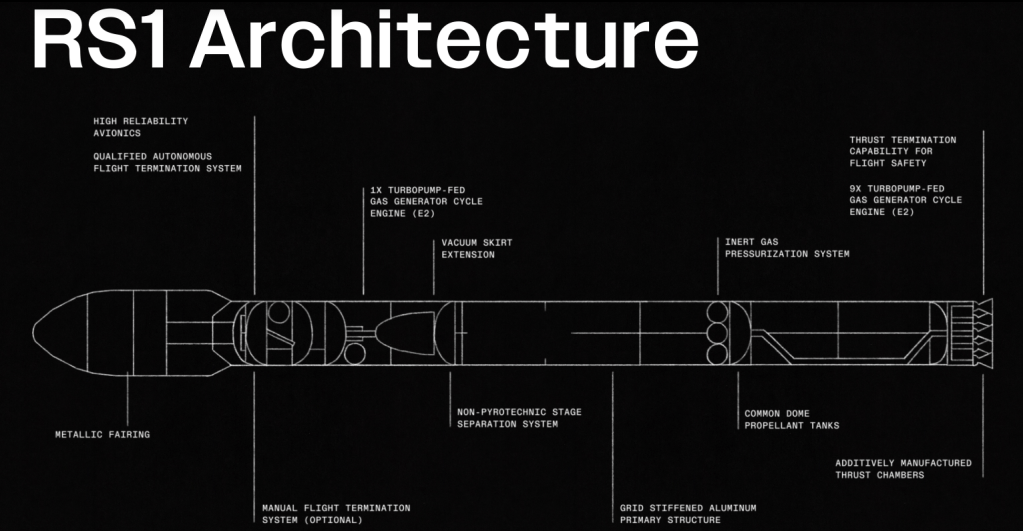
Virgin orbit is not the only rocket company having a bad week. CNN reports that on Tuesday U.S. rocket company ABL Space Systems ran problems off the Alaska coast when its RS1 rocket shut down prematurely during its maiden launch. The rocket and the two satellites it was carrying were lost.

It was a bad week, but the space industry is growing and persistence will pay off. It is also important to have deep pockets to cover early failures. SpaceX and Blue Origin benefited from billionaire backers, and ABL is lucky to have Lockheed Martin in its corner. With an initial order of 58 rocket launches, Lockheed Martin has every reason to encourage continued progress.

Update: As of earlier today, ABL Space Systems has not issued a press release on the Alaska incident, but in a Tweet the company stated:

As expected in this scenario, there is damage to the launch facility. All personnel are safe, and fires have subsided. We’ll plan our return to flight after investigations are complete. Thanks to our stakeholders and the space community for the expressions of support.

The Pacific Spaceport Complex – Alaska, earlier called the Kodiak Launch Complex, is a dual-use (commercial/government) facility owned and operated by the Alaska Aerospace Corporation, which is a public corporation of the State of Alaska. Opened in 1998, the spaceport complex is located on Kodiak Island in Alaska.

Space Stories: Bezos on the Moon, Strange Oort Objects, and Europe Visits Venus

Image (Credit): Artist’s rending of the Blue Origin lunar cargo lander. (Blue Origin)

Here are some recent stories of interest.

Reuters: “Bezos’ Space Company Teams with Lockheed, Boeing for NASA Moon Lander Pitch

Jeff Bezos’ space company Blue Origin is partnering with Boeing Co and Lockheed Martin Corp to pitch a lunar lander to NASA as the agency seeks to send humans to the moon again, the companies announced on Tuesday. The joint moon lander proposal, led by Blue Origin, marks the companies’ second attempt to win a coveted moon lander contract as NASA seeks more options for getting astronauts to the lunar surface under its multibillion dollar Artemis program.

Western University: “‘Unexpected’ Space Traveller Defies Theories About Origin of Solar System

Researchers from Western have shown that a fireball that originated at the edge of the Solar System was likely made of rock, not ice, challenging long-held beliefs about how the Solar System was formed. Just at the edge of our Solar System and halfway to the nearest stars is a collection of icy objects sailing through space, known as the Oort Cloud. Passing stars sometimes nudge these icy travellers towards the Sun, and we see them as comets with long tails. Scientists have yet to observe any objects in the Oort Cloud directly, but everything detected so far coming from its direction has been made of ice. Theoretically, the very basis of understanding our Solar System’s beginnings is built upon the foundation that only icy objects exist in these outer reaches and certainly, nothing made of rock.

Universe Today: “ESA’s Upcoming Mission Will Tell us if Venus is Still Volcanically Active

The EnVision mission is ESA’s fifth medium-class mission to Venus. It’s being planned in a partnership between NASA and ESA, and NASA will be providing the synthetic aperture radar instrument, which will map the surface (much as Magellan did). In addition to the two radars, the orbiter will carry spectrometers to study the atmosphere and surface. They will monitor trace gases in the atmosphere and analyze surface composition. The idea is to look for surface changes that might be linked to signs of active volcanism. Along with the VERITAS and DAVINCI missions, EnVision should reveal all we need to know about volcanic activity on Venus.

Space Quote: Captain Kirk, The Singer

Image (Credit): The Knight performs on season eight of The Masked Singer. (Fox)

The Masked Singer is the most extraordinary experience I’ve ever had. Well, I mean, the wardrobe was impossible. You can’t see, you can’t breathe, you can’t hear, you can’t think. There was no oxygen in there. I had a panic thinking, “Wait a minute, I can’t breathe. And I’m supposed to sing.” You know how you sing? You take a breath and air comes out. That’s how you sing, and I couldn’t get a breath. It was incredible.”

-William Shatner’s response to a question from Entertainment Weekly Entertainment, “Speaking of your busy schedule, in the last year, you went to space and appeared on The Masked Singer. Be honest, which experience was wilder for you?” Jeff Bezos may not be too happy to hear this after he flew Mr. Shatner to the edge of space last year on one of his Blue Origin rockets. Maybe he should have added a Karaoke machine to the flight.