More on AI & Astronomy: This Time Google’s Bard

This past Sunday, 60 Minutes had a segment on Google and artificial intelligence (AI) called Exploring the human-like side of artificial intelligence at Google. Part of the discussion covered Google’s new AI chat bot Bard. And while the creative output of Bard was impressive, it was a little too creative when asked asked about economics. Bard recommended five books, but all five were nonexistent books. This is called “hallucination” in the AI realm.

I decided to try this myself, but ask for the five best books on black holes. This is what came back from Bard:

1. Black Holes: The BBC Guide by Andrew Hamilton. This book is a comprehensive introduction to black holes, covering their history, physics, and astrophysics. It is written in a clear and accessible style, and is perfect for anyone who wants to learn more about these fascinating objects. (link provided: https://www.goodreads.com/book/show/29537175-black-holes-the-reith-lectures)

2. The Black Hole War: My Battle with Stephen Hawking to Make the Universe Safe for Quantum Mechanics by Leonard Susskind. This book tells the story of the scientific debate between Susskind and Hawking about the nature of black holes. It is a fascinating read, and provides a great introduction to some of the most complex physics of our time. (link provided: https://www.thriftbooks.com/w/the-black-hole-war-my-battle-with-stephen-hawking-to-make-the-world-safe-for-quantum-mechanics_leonard-susskind/296413/#edition=4644854&idiq=11329467)

3. A Brief History of Time by Stephen Hawking. This classic book is a must-read for anyone interested in black holes or cosmology. Hawking explains complex concepts in a clear and engaging way, and his book is full of insights into the nature of the universe. (link provided: https://www.amazon.com/Brief-History-Time-Stephen-Hawking/dp/0553380168)

4. Black Holes & Time Warps: Einstein’s Outrageous Legacy by Kip Thorne. This book is a more advanced treatment of black holes, but it is still written in a clear and accessible style. Thorne is one of the world’s leading experts on black holes, and his book provides a wealth of information about these fascinating objects. (link provided: https://www.amazon.com/Black-Holes-Time-Warps-Commonwealth/dp/0393312763)

5. The Little Book of Black Holes by Janna Levin. This book is a great introduction to black holes for people who are new to the subject. Levin writes in a clear and engaging style, and she uses humor and analogy to make the physics more accessible. (link provided: https://www.amazon.com/Little-Black-Holes-Science-Essentials/dp/0691163723)

Bard was even helpful enough to provide links to the books being cited.

After looking up these books, related authors, and links, here is what I found:

  • I could not find the first book by Andrew Hamilton, though he is a professor in the Department of Astrophysical and Planetary Sciences at Cornell University. Also, the link was to a different book.
  • The second, third, and fourth book references were accurate, as were the associated links.
  • The fifth book exists, but the authors are Steven S. Gubser and Frans Pretorius, not Janna Levin, who wrote other books on black holes.

So that gives you a 40 percent error rate on the 5 books listed. It does not inspire confidence. I am afraid to ask for the top 10 if only because it would take more time to correct this supposedly amazing chat bot.

And I do not really know if these are the top books in the field. Chat GPT gave me three of the five books listed, and also named the first book linked in Bard’s response, but attributed the lecture to Roger Penrose (the name of the lecture series) rather than Stephen Hawking.

Caution is highly recommended with these chat bots.

Podcast: Should We Be Talking to the Stars (or Exoplanets, to be More Precise)?

I recommend you tune into another episode from The Planetary Society’s podcast Planetary Radio. In the episode, Space Policy Edition: The Policy Implications of Active SETI, we hear a discussion about the advantages and disadvantages of an active SETI program, and whether we can even cease outreach to the neighboring systems given what has already been transmitted and the nature of our world today.

The guest on the episode is Jacob Haqq Misra, Senior Research Investigator at the Blue Marble Space Institute of Science. He is the author of a new book, Sovereign Mars: Transforming Our Values Through Space Settlement, though his main points related to our SETI program.

For instance, whether or not people support an active or passive SETI program often depends on whether we believe in benevolent or destructive aliens. Of course, the matter is unknowable until it happens, yet fraught with fears based on what we know about ourselves and our own exploration.

The discussion also discussed the presentation of SETI in films, such as Contact, as well as the definition of intelligence itself, be it whales (remember Star Trek IV: The Voyage Home?) or even ChatGPT. And we are already past the point of turning off our “active outreach” given that interested aliens are probably looking for both bio-signatures and techno-signatures, which we are creating without any thought. Astronomers are currently searching for such signatures among the exoplanets, so it would make sense the same type of search is being focused on our solar system.

Plenty of food for thought. Enjoy the show.

Credit: University Press of Kansas

Podcast/Book Review: Jesuits Find an Exoplanet to Explore

If you are looking for a new podcast as well as a new book, the two come together via the podcast Alienating the Audience. Comedian Andrew Heaton and his buddies have plenty of fun poking various science fiction topics, including Star Wars and Star Trek.

One of the recent episodes discussed a new book, The Sparrow, by author Mary Doria Russell. The story is about a group of Jesuits exploring a new planet with all of the mayhem that follows.

Here is a quick summary from the book itself:

A visionary work that combines speculative fiction with deep philosophical inquiry, The Sparrow tells the story of a charismatic Jesuit priest and linguist, Emilio Sandoz, who leads a scientific mission entrusted with a profound task: to make first contact with intelligent extraterrestrial life. The mission begins in faith, hope, and beauty, but a series of small misunderstandings brings it to a catastrophic end.

You can listen for yourself to this episode here at Jesuits in Space. But be careful, because there are a number of spoilers. You can always start with the book first, which is part of a series.

Credit: Ballantine Books

Space Stories: Sagan as Scripture, Chinese Lunar Plans, and Outer Space in NYC

Credit: Ballantine Books

Here are some recent stories of interest.

Gizmodo.com: “New NASA Official Took Her Oath of Office on Carl Sagan’s ‘Pale Blue Dot’”

When Dr. Makenzie Lystrup was sworn in as the new director of NASA’s Goddard Space Flight Center last week, she didn’t take her oath of office on the Bible or the U.S. Constitution, but rather on a tome revered by space enthusiasts everywhere: Carl Sagan’s Pale Blue Dot. The book, published in 1994, is named after an iconic image of Earth, snapped by the Voyager I probe, that depicts the planet as a small speck smothered by the emptiness of space. That photo inspired astronomer Carl Sagan to write: “Look again at that dot. That’s here. That’s home. That’s us.” For many, the book serves as a reminder of humanity’s place in the universe and the need to preserve our home planet, which makes it similar to holy scripture for a newly appointed NASA director.

Time: “In Five Years, China Will Start Building a Lunar Base With Bricks Made From Moon Soil

China plans to start building a lunar base in about five years, kicking off with bricks made of moon soil, according to scientists with ties to the project, the South China Morning Post reported. Ding Lieyun, a top scientist at Huazhong University of Science and Technology, told local media that the first brick would be made from moon soil during the Chang’e 8 mission around 2028.

AFAR: “NASA Teams With NYC Museum on New Immersive Outer Space Exhibit

With its blazing city lights, New York is one of the worst places to go stargazing. But space aficionados will want to visit lower Manhattan this spring—dark skies or not—thanks to a new digital art exhibit created with participation from NASA and CNES (the French space agency) that opened April 7 at Hall des Lumières, the city’s first permanent immersive art center. An earlier iteration of this show premiered at Hall des Lumières’ sister museum in Paris, Atelier des Lumières, in 2021. Destination Cosmos: The Immersive Space Experiencewill run for eight weeks through June 4, 2023, at Hall des Lumières, which opened in 2022 in the former Emigrant Savings Bank across from City Hall.

Podcast: Capturing Life Off Planet and Here on Earth

Image (Credit): Venus as captured by NASA’s Mariner 10 spacecraft in February 1974. (NASA)

I recommend checking out Alan Alda’s interview with astronomer Sara Seager in a recent Clear + Vivid podcast episode. MIT Professor Seager has focused her work on exoplanet atmospheres as well as another planet nearby – Venus. In the interview, she discusses her early work as well as her theories about the existence of life in the atmosphere of Venus. She also discusses her involvement with MIT’s Transiting Exoplanet Survey Telescope (TESS). 

And while I do not remember it coming up during the interview, Professor Seager is also known for the Seager equation (shown below), which is less demanding than the Drake equation and focuses on any form of life on another planet (without reference to technology).

  • N = the number of planets with detectable signs of life
  • N* = the number of stars observed
  • FQ = the fraction of stars that are quiet
  • FHZ = the fraction of stars with rocky planets in the habitable zone
  • FO = the fraction of stars with observable planets
  • FL = the fraction of planets that have life
  • FS = the fraction of life forms that produce planetary atmospheres with one or more detectable signature gases

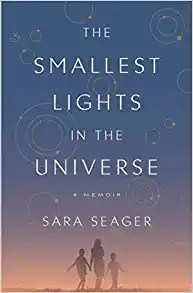
But in addition to the science, it was a fascinating discussion about Professor Seager’s life covering the early death of her husband from cancer, her attempts to get her life back on track, and her discovery later in life that she has autism. Most science stories focus on the work, but Mr. Alda has a unique way of drawing out the person in these interviews. It is a great episode, and you can read more about Professor Seager’s life and work in her book The Smallest Lights in the Universe.

Credit: Crown Publishing