Book Review: Starry Messenger Starring Neil deGrasse Tyson

Credit: Henry Holt and Co.

Neil deGrasse Tyson has put out quite a few popular astronomy books over the years, including:

  • One Universe: At Home in the Cosmos (2000);
  • The Sky Is Not the Limit: Adventures of an Urban Astrophysicist (2004);
  • Death by Black Hole: And Other Cosmic Quandaries (2007);
  • The Pluto Files: The Rise and Fall of America’s Favorite Planet (2009); and
  • Astrophysics for People in a Hurry (2017). 

And while he often runs into the thick of current politics in his interviews, his books tended to stick to science. His latest book, Starry Messenger: Cosmic Perspectives on Civilization, is one of the exceptions and at least one reviewer is taking him to the woodshed.

Mr. Tyson says this in the book’s preface:

Starry Messenger is a wake-up call to civilization. People no longer know who or what to trust. We sow hatred of others fueled by what we think is true, or what we want to be true, without regard to what is true. Cultural and political factions battle for the souls of communities and of nations. We’ve lost all sight of what distinguishes facts from opinions. We’re quick with acts of aggression and slow with acts of kindness.

To The Washington Post’s Mark Whitaker, in his review titled “Neil deGrasse Tyson Tries Punditry, with Less-than-stellar Results,” Mr. Tyson may be going a little too boldly into the political realm. Mr. Whitaker writes:

When Tyson sticks to his orbit of expertise, he remains as engaging as ever, like the professor of a popular college survey course that students might take to satisfy their science requirement… Yet while Tyson extols the virtue of a skeptical mind-set in scientific inquiry, he often comes off as none-too-skeptical in his discussion of how that mind-set can be applied to human and political affairs.

Just as Mr. Tyson followed and updated Carl Sagan’s work, such as the remake of the television series Cosmos, he may be trying to update Dr. Sagan’s 1995 book The Demon-Haunted World: Science as a Candle in the Dark. Dr. Sagan was concerned about the future of mankind and its silly prejudices, which he also illustrated in his fictional book Contact. In The Demon-Haunted World, Dr. Sagan wrote:

I have a foreboding of an America in my children’s or grandchildren’s time – when the United States is a service and information economy; when nearly all the key manufacturing industries have slipped away to other countries when awesome technological powers are in the hands of a very few, and no one representing the public interest can even grasp the issues; when the people have lost the ability to set their own agendas or knowledgeably question those in authority when, clutching our crystals and nervously consulting our horoscopes, our critical faculties in decline, unable to distinguish between what feels good and what’s true, we slide, almost without noticing, back into superstition and darkness.

He wrote that almost 27 years ago and we are now living in the time of his children and grandchildren. His predictions seem true enough in a time of Facebook and “fake news,” as well as various denials throughout the world, from elections to climate change.

Maybe Mr. Tyson’s book is far from perfect, but if he can really continue Dr. Sagan’s work of chipping away at opinions masquerading as facts, then he is pursuing the same noble path even if it he hits a few bumps along the way. We may not be able to save what we have if we continue with our games for another 27 years.
RIP: Astronomer Frank Drake

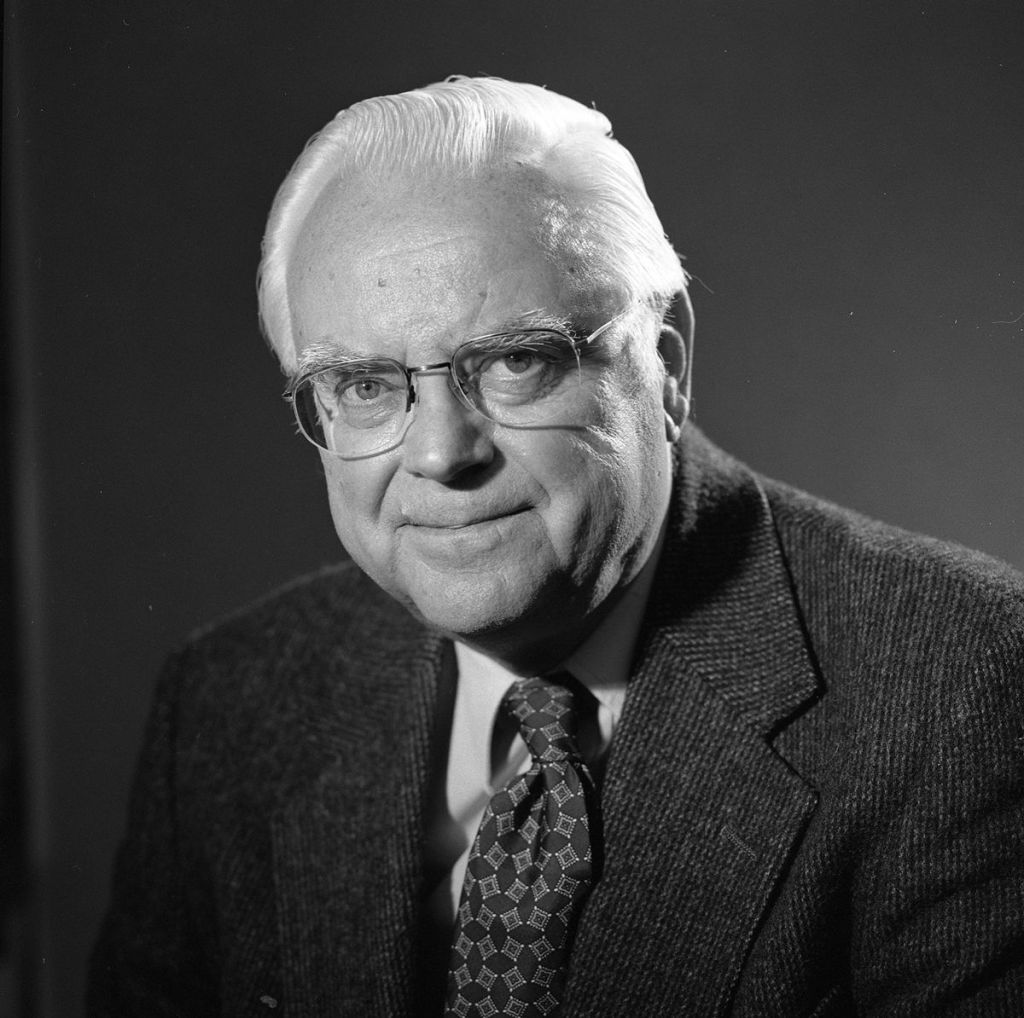
Image (Credit): Photo of Frank Donald Drake. (SETI Institute)

We lost a grand mind last Friday with the death of astronomer Frank Drake at the age of 92 (1930 – 2022).

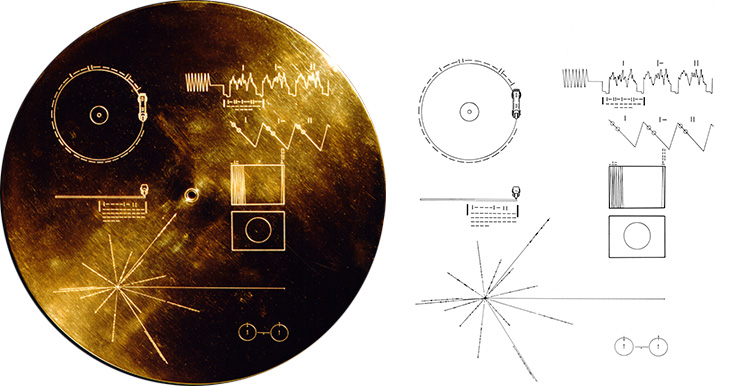
In addition to giving us the famous Drake Equation pertaining to the potential existence of extraterrestrial intelligence in our galaxy, he spent his life looking for signs that we are not alone and served as the president of the SETI Institute as well as director of the SETI Institute’s Carl Sagan Center for the Study of Life in the Universe. Among many other things, he also worked with Carl Sagan on the “Golden Record” placed in the Voyager spacecraft.

One thing that comes across from interviews is that he was a very hopeful man who did not tire easily. In an earlier interview with Space.com, he shared this unique view of our space neighbors:

That reminds me of something else. We have learned, in fact, that gravitational lensing works. If they [aliens] use their star as a gravitational lens, they get this free, gigantic, super-Arecibo free of charge. They are not only picking up our radio signals, but they have been seeing the bonfires of the ancient Egyptians. They can probably tell us more about ourselves than we know … they’ve been watching all these years.

You can watch Mr. Drake discuss gravitational lens and more in this earlier lecture on YouTube. You can also learn much more about Mr. Drake’s career and activities at FamousScientists.org.

Image (Credit): The Voyager Golden Record cover shown with its extraterrestrial instructions. (NASA/JPL)

A Fitting Tribute to Nichelle Nichols

Credit: Celestis

United Launch Alliance has announced that it will be sending the remains of Nichelle Nichols, also known as Star Trek’s Lt. Uhura, into space on a Vulcan Centaur rocket later this year in conjunction with the Celestis memorial program. About 150 memorial capsules in all with be part of what is named the “Enterprise Flight” (see the mission logo above). Others joining Ms. Nichols’ capsule include capsules for Star Trek creator Gene Roddenberry and his wife, as well as James Doohan, who played Scotty on the original Star Trek series.

The Enterprise Flight will launch from Cape Canaveral in Florida, with the capsules going more that 250 million miles into space. The Celestis website notes that more missions are being planned and memorial prices start at $2,495. However, if you want to be on the same flight as Lt. Uhura, prices start at $12,500 and you need to make your reservation by September 15th.

Mr. Roddenberry and others have been similarly honored as part of NASA’s space program. For instance, back in 1992 the remains of Gene Roddenberry were carried into space on Space Shuttle Columbia and later returned to Earth. It is not clear whether these same remains are now part of the Celestis mission. And let’s not forget the Carl Sagan Memorial Station on Mars, named back in 1997 (see below).

Image (Credit): NASA Mars Pathfinder mission site on Mars named the Carl Sagan Memorial Station. (NASA)

Similar Sentiments About Our Place in the Universe

Image (Credit): Book cover of Olaf Staledon’s Star Maker. (Wesleyan University Press)

I was reading the 1937 science fiction classic Star Maker by British writer Olaf Stapledon when I came across this statement:

I perceived that I was on a little round grain or rock and metal, filmed with water and with air, whirling in sunlight and darkness. And on the skin of that little grain all the swarms of men, generation by generation, had lived in labor and blindness, with intermittent joy and intermittent lucidity of spirit. And all their history, with its folk-wanderings, its empires, its philosophies, its proud sciences, its social revolutions, its increasing hunger for community, was but a flicker in one day of the lives of stars.

It reminded me of Carl Sagan’s famous statement from his book Pale Blue Dot:

From this distant vantage point, the Earth might not seem of any particular interest. But for us, it’s different. Consider again that dot. That’s here. That’s home. That’s us. On it everyone you love, everyone you know, everyone you ever heard of, every human being who ever was, lived out their lives. The aggregate of our joy and suffering, thousands of confident religions, ideologies, and economic doctrines, every hunter and forager, every hero and coward, every creator and destroyer of civilization, every king and peasant, every young couple in love, every mother and father, hopeful child, inventor and explorer, every teacher of morals, every corrupt politician, every “superstar,” every “supreme leader,” every saint and sinner in the history of our species lived there–on a mote of dust suspended in a sunbeam.

Mr. Stapledon had only his imagination at hand when he pondered the role of humans. His book has been praised by numerous science fiction writers, including H. G. Wells, Stanisław Lem, and Arthur C. Clarke.

Mr. Sagan was fortunate to have an image from Voyager I that clearly made this same point. We need the combined powers of dreamers and scientists as we face this awesome universe.

Image (Credit): This narrow-angle color image of the Earth, dubbed ‘Pale Blue Dot’, is a part of the first ever ‘portrait’ of the solar system taken by Voyager 1. (NASA JP)

Extra: For more background on the image above, visit NASA’s site 10 Things You Might Not Know About Voyager’s Famous ‘Pale Blue Dot’ Photo.

What is the Galileo Project?

After mentioning this organization in a previous post, I thought I would look a little further at its work. The Galileo Project was set up for one purpose:

…to bring the search for extraterrestrial technological signatures of Extraterrestrial Technological Civilizations (ETCs) from accidental or anecdotal observations and legends to the mainstream of transparent, validated and systematic scientific research. This project is complementary to traditional SETI, in that it searches for physical objects, and not electromagnetic signals, associated with extraterrestrial technological equipment.

I do not see the acronym ETC very often, but maybe like SETI it will become commonly known someday. It certainly sounds more sophisticated than terms such as UFO or Unidentified Aerial Phenomena (UAP) as it looks for “technological equipment,” aka spacecraft. The ‘Oumuamua interstellar object is the first potential ETC that helped to stimulate this group.

The Project’s three areas of activity are:

  1. Obtain High-resolution, Multi-detector UAP Images, Discover their Nature;
  2. Search for and In-Depth Research on ‘Oumuamua-like Interstellar Objects; and
  3.  Search for Potential ETC Satellites.

For instance, the third area of activity discusses using telescopes to discover “…potential 1 meter-scale or smaller satellites that may be exploring Earth, e.g., in polar orbits a few hundred km above Earth…”

We are no longer talking about listening for signals from another planet or monitoring distant objects rolling through our solar system, but instead searching for Earth-focused intelligence gathering by a distant civilization. Where is the Jodie Foster movie for this one?