AI Shown to be Useful for a Mars Mission

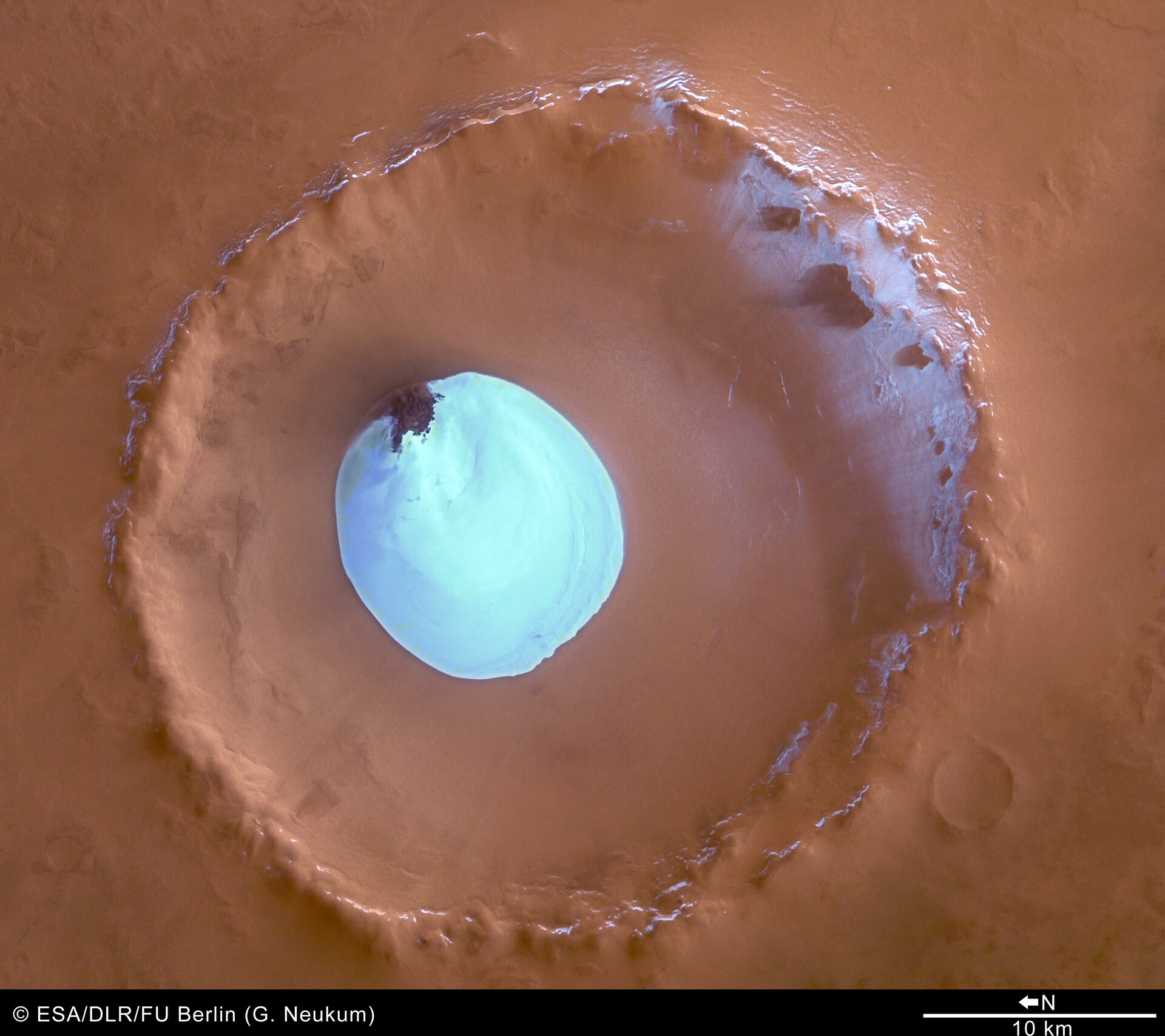
Image (Credit): Martian impact crater located on Vastitas Borealis with residual water ice. (ESA/DLR/FU Berlin (G. Neukum))

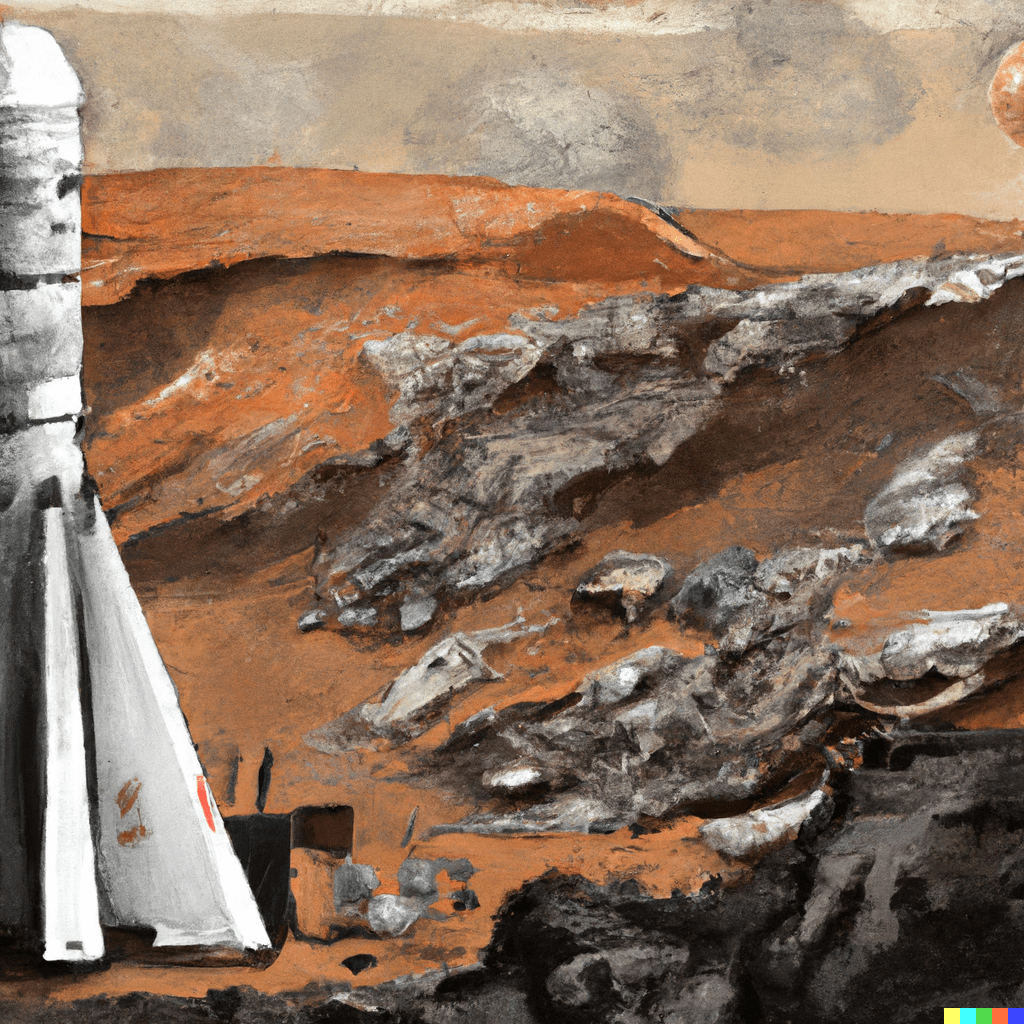
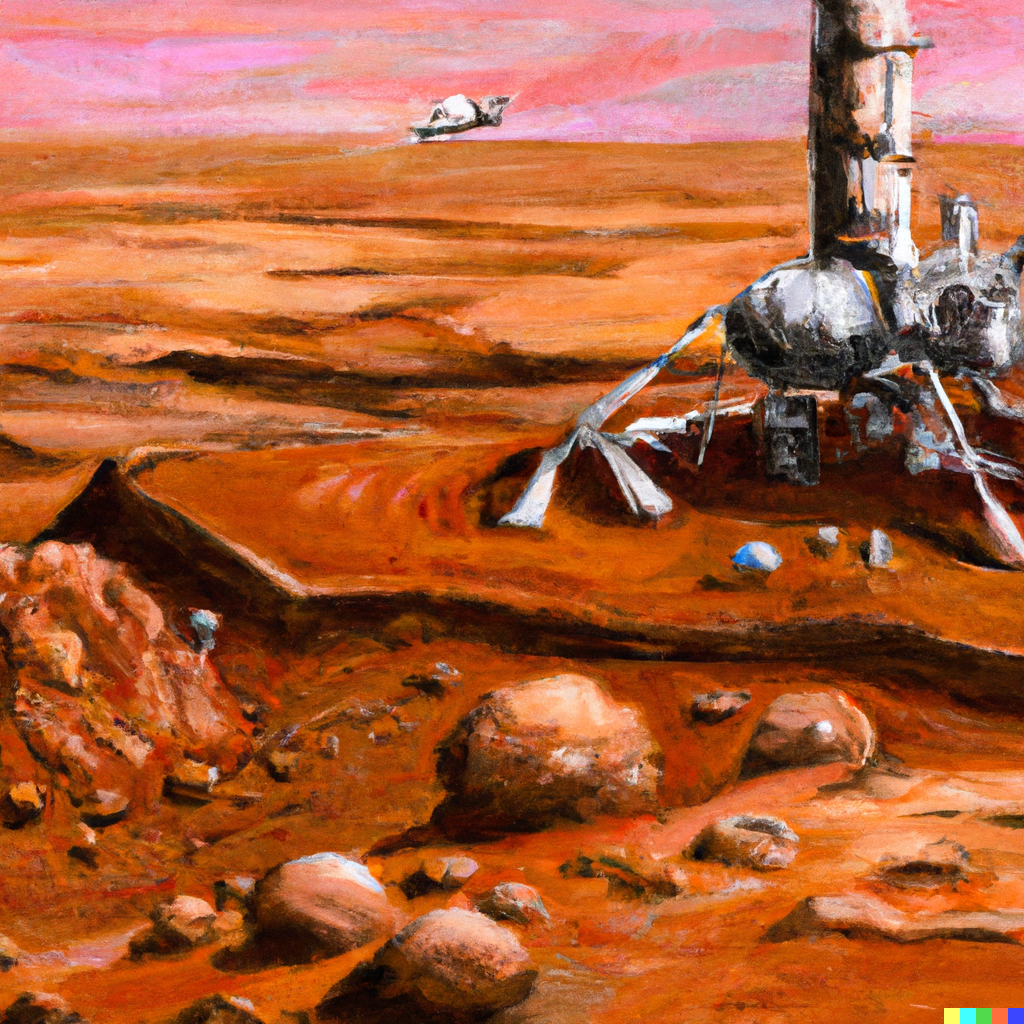
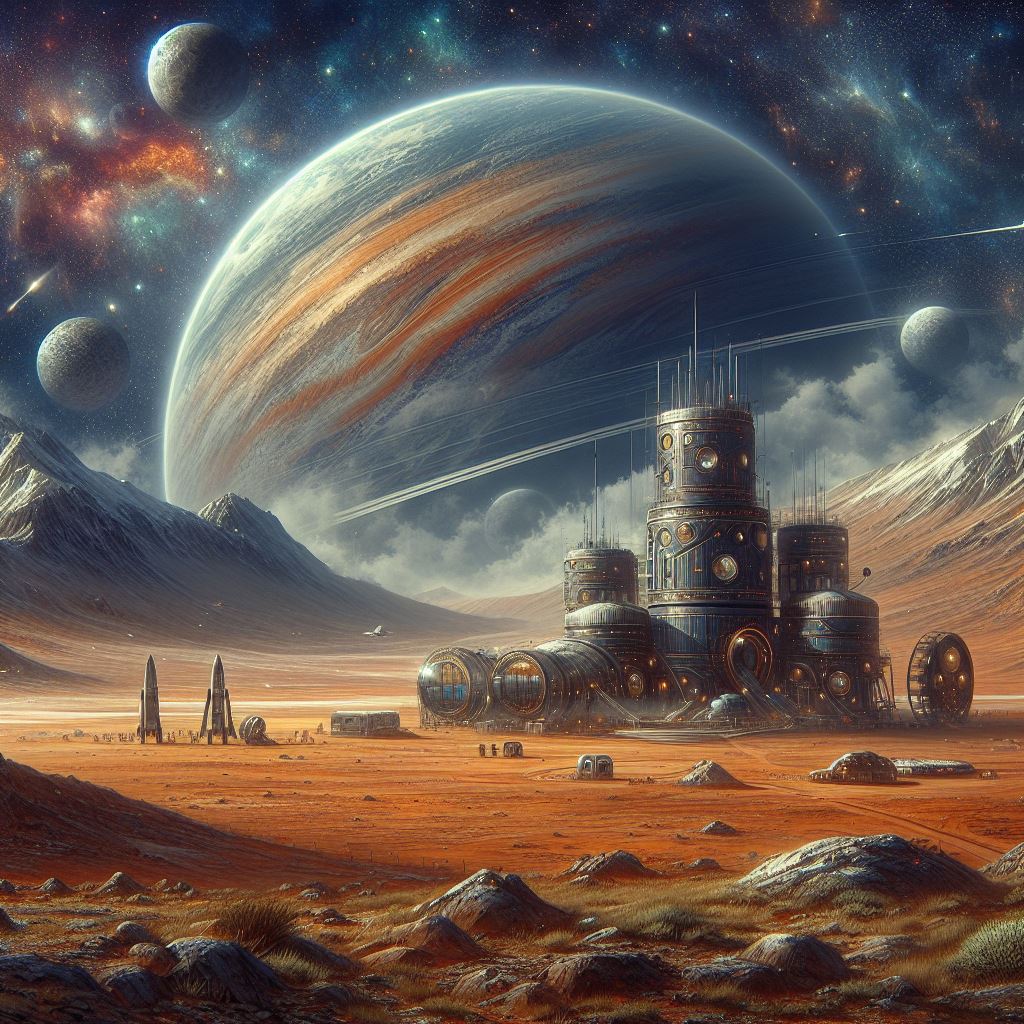
While the media is continually writing about artificial intelligence (AI) doing a kid’s homework and then destroying the world, maybe AI does have some utility in preparing us for a second world.

A study published in Nature Synthesis found that AI may be useful in finding ways to extract oxygen from water on Mars. Scientists from China used AI to analyze about 3.7 million formulae to identify a chemical that could break down water. A single researcher would have needed about 2,000 years to perform similar analysis.

While other programs are also looking at ways to extract oxygen from the Martian surface or atmosphere (such as NASA’s MOXIE), this study demonstrates the power of AI and its ability to potentially produce other needed material for survival on Mars.

Mr. Musk may not like AI, but he may want to have it on hand if he ever finds himself on Mars.

Space Stories: Remembering the Solar System Delivery System, Many More Milky Ways, and AI Investigates Alien Life

Credit: USPS

Here are some recent stories of interest.

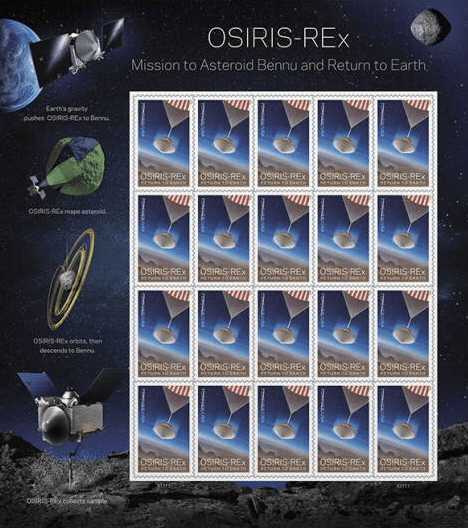
NASA:New US Postage Stamp Commemorates NASA’s Asteroid Sample Delivery

On Sept. 24, NASA’s OSIRIS-REx (Origins, Spectral Interpretation, Resource Identification and Security – Regolith Explorer) spacecraft will speed past Earth and – at precisely the right moment – jettison its sample capsule containing material from asteroid Bennu…To help celebrate this engineering and scientific achievement, the U.S. Postal Service issued a commemorative stamp featuring an artist’s impression of the sample capsule as it parachutes to Earth over its landing site on the Department of Defense’s Utah Test and Training Range…Although OSIRIS-REx has already had many scientific accomplishments, at its heart, the mission’s research goals circle around the sample delivery from Bennu. That influenced the Postal Service’s decision to select the capsule’s descent as the subject of the new stamp.

LiveScience.com:James Webb Telescope Spots Thousands of Milky Way Lookalikes That ‘Shouldn’t Exist’ Swarming Across the Early Universe

The James Webb Space Telescope (JWST) has found more than 1,000 galaxies mysteriously resembling our own Milky Way hiding out in the early universe. Shaped like warped vinyls and sporting delicate spiral arms, the Milky Way doppelgangers were found by JWST more than 10 billion years into the universe’s past — during a period when violent galactic mergers were thought to have made an abundance of such fragile galaxies impossible. Yet the disk galaxies are 10 times more common in the early universe than astronomers previously thought, new research reveals.

Astronomy.com:Can AI Find Life in the Universe?

Scientists could soon use common lab technology along with sophisticated algorithms to answer one of the biggest questions in all of astronomy — are we alone in the universe? In new research published today in Proceedings of the National Academy of Sciences (PNAS), a team of scientists announced a novel technique that can take a sample of a material, feed it through a machine-learning algorithm, and find out if the material did — or didn’t — come from a living organism with 90 percent accuracy.

More on AI & Astronomy: This Time Google’s Bard

This past Sunday, 60 Minutes had a segment on Google and artificial intelligence (AI) called Exploring the human-like side of artificial intelligence at Google. Part of the discussion covered Google’s new AI chat bot Bard. And while the creative output of Bard was impressive, it was a little too creative when asked asked about economics. Bard recommended five books, but all five were nonexistent books. This is called “hallucination” in the AI realm.

I decided to try this myself, but ask for the five best books on black holes. This is what came back from Bard:

1. Black Holes: The BBC Guide by Andrew Hamilton. This book is a comprehensive introduction to black holes, covering their history, physics, and astrophysics. It is written in a clear and accessible style, and is perfect for anyone who wants to learn more about these fascinating objects. (link provided: https://www.goodreads.com/book/show/29537175-black-holes-the-reith-lectures)

2. The Black Hole War: My Battle with Stephen Hawking to Make the Universe Safe for Quantum Mechanics by Leonard Susskind. This book tells the story of the scientific debate between Susskind and Hawking about the nature of black holes. It is a fascinating read, and provides a great introduction to some of the most complex physics of our time. (link provided: https://www.thriftbooks.com/w/the-black-hole-war-my-battle-with-stephen-hawking-to-make-the-world-safe-for-quantum-mechanics_leonard-susskind/296413/#edition=4644854&idiq=11329467)

3. A Brief History of Time by Stephen Hawking. This classic book is a must-read for anyone interested in black holes or cosmology. Hawking explains complex concepts in a clear and engaging way, and his book is full of insights into the nature of the universe. (link provided: https://www.amazon.com/Brief-History-Time-Stephen-Hawking/dp/0553380168)

4. Black Holes & Time Warps: Einstein’s Outrageous Legacy by Kip Thorne. This book is a more advanced treatment of black holes, but it is still written in a clear and accessible style. Thorne is one of the world’s leading experts on black holes, and his book provides a wealth of information about these fascinating objects. (link provided: https://www.amazon.com/Black-Holes-Time-Warps-Commonwealth/dp/0393312763)

5. The Little Book of Black Holes by Janna Levin. This book is a great introduction to black holes for people who are new to the subject. Levin writes in a clear and engaging style, and she uses humor and analogy to make the physics more accessible. (link provided: https://www.amazon.com/Little-Black-Holes-Science-Essentials/dp/0691163723)

Bard was even helpful enough to provide links to the books being cited.

After looking up these books, related authors, and links, here is what I found:

  • I could not find the first book by Andrew Hamilton, though he is a professor in the Department of Astrophysical and Planetary Sciences at Cornell University. Also, the link was to a different book.
  • The second, third, and fourth book references were accurate, as were the associated links.
  • The fifth book exists, but the authors are Steven S. Gubser and Frans Pretorius, not Janna Levin, who wrote other books on black holes.

So that gives you a 40 percent error rate on the 5 books listed. It does not inspire confidence. I am afraid to ask for the top 10 if only because it would take more time to correct this supposedly amazing chat bot.

And I do not really know if these are the top books in the field. Chat GPT gave me three of the five books listed, and also named the first book linked in Bard’s response, but attributed the lecture to Roger Penrose (the name of the lecture series) rather than Stephen Hawking.

Caution is highly recommended with these chat bots.

Podcast: Should We Be Talking to the Stars (or Exoplanets, to be More Precise)?

I recommend you tune into another episode from The Planetary Society’s podcast Planetary Radio. In the episode, Space Policy Edition: The Policy Implications of Active SETI, we hear a discussion about the advantages and disadvantages of an active SETI program, and whether we can even cease outreach to the neighboring systems given what has already been transmitted and the nature of our world today.

The guest on the episode is Jacob Haqq Misra, Senior Research Investigator at the Blue Marble Space Institute of Science. He is the author of a new book, Sovereign Mars: Transforming Our Values Through Space Settlement, though his main points related to our SETI program.

For instance, whether or not people support an active or passive SETI program often depends on whether we believe in benevolent or destructive aliens. Of course, the matter is unknowable until it happens, yet fraught with fears based on what we know about ourselves and our own exploration.

The discussion also discussed the presentation of SETI in films, such as Contact, as well as the definition of intelligence itself, be it whales (remember Star Trek IV: The Voyage Home?) or even ChatGPT. And we are already past the point of turning off our “active outreach” given that interested aliens are probably looking for both bio-signatures and techno-signatures, which we are creating without any thought. Astronomers are currently searching for such signatures among the exoplanets, so it would make sense the same type of search is being focused on our solar system.

Plenty of food for thought. Enjoy the show.

Credit: University Press of Kansas

Space Quote: The Great Filter at Work?

“Mitigating the risk of extinction from AI should be a global priority alongside other societal-scale risks such as pandemics and nuclear war.”

-Statement by artificial intelligence (AI) experts and public figures in a “Statement on AI Risk” from the Center for AI Safety. This followed an earlier open letter back in March from other AI leaders that called “on all AI labs to immediately pause for at least 6 months the training of AI systems more powerful than GPT-4.” This could indicate we may be witnessing the “Great Filter” at work, which was one answer to Fermi’s paradox highlighting the lack detectable extraterrestrial life.