Space Quote: China, the Moon, and the Military

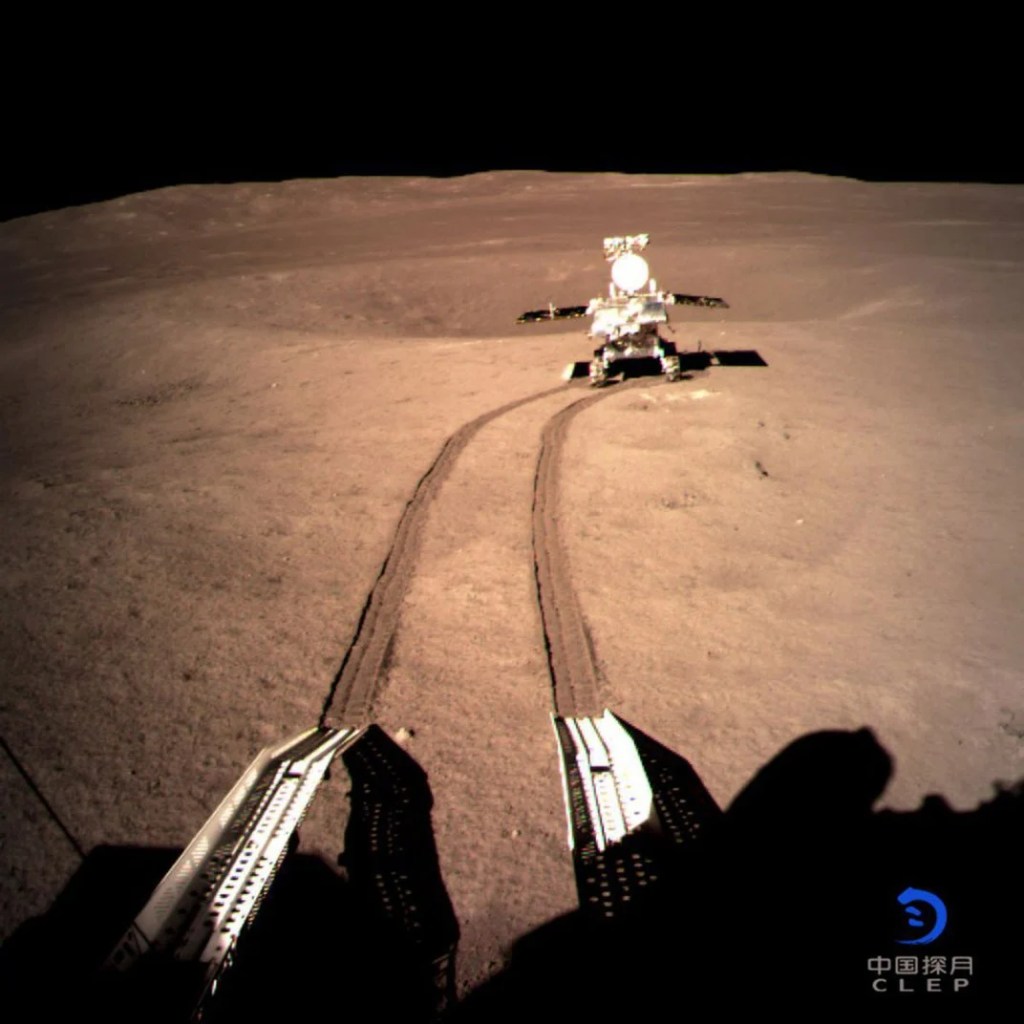
Image (Credit): China’s Chang’e-4 Lander on the Moon’s surface, as captured by the Yutu-2 rover in early 2019. (CNSA)

“Politically, China’s lunar program has demonstrated an ability to undertake cutting edge scientific programs, as demonstrated in the innovative Chang’e-4 and Chang’e-6 probes. In terms of direct military benefits, its value is more limited. China is not in a direct space race with any other state, nor is it racing to establish settlements or “space colonies.” While there are theories of how one might employ a lunar base to undertake surveillance or even kinetic operations against terrestrial targets, the costs associated with such ambitions would be enormous. Surveillance platforms on the Moon, for example, would be almost 240,000 miles from Earth. To obtain high resolution images would be enormously costly. It is not at all clear that such efforts would win a cost-benefit analysis against systems in standard earth orbits (LEO, MEO, GEO), or even air-breathing systems. Instead, the most likely military benefits are in terms of improvements in Chinese space support capabilities, thus expanding the volume of space employed for military purposes.”

-Statement by Dean Cheng, Senior Fellow at the Potomac Institute for Policy Studies, from a hearing before the House Science, Space, and Technology Committee, Space and Aeronautics Subcommittee titled “Strategic Trajectories Assessing China’s Space Rise and the Risks to U.S. Leadership.” Mr. Cheng was one of four witnesses at the hearing.
Space Quote: Lunar Sample Sharing

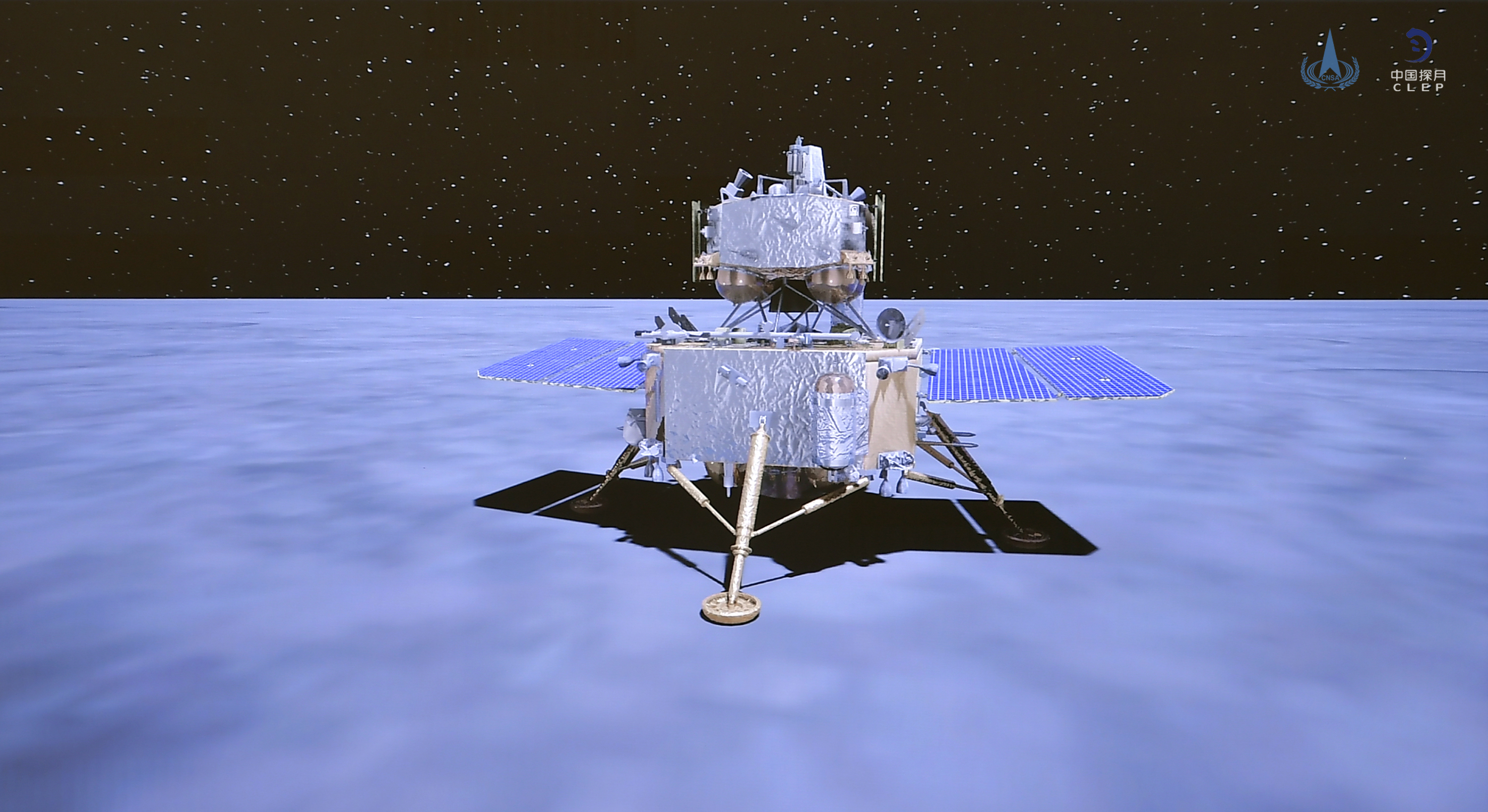
Image (Credit): China’s Chang’e-5 lunar lander. (China National Space Administration)

“I wish that every country would follow in the footsteps of the U.S. and now China.”

Statement by Frédéric Moynier, a cosmochemist at the Paris Institute of Planetary Physics, regarding China’s sharing of lunar samples from its 2020 Chang’e-5 mission. Seven institutions in six countries now have access to these samples, including two institutions in the United States. Unfortunately, the sample sharing goes only one way because the US Congress bans the sharing of space samples and technology with China.

Space Stories: Chinese Lunar Nuclear Station, Helium Exoplanets, and the UAE Lunar Rover

Image (Credit): Artist’s rendering of a lunar exploration base. (NASA/Dennis Davidson)

Here are some recent stories of interest.

Republic World: “China Plans Development Of New Nuclear System To Power Its Bases On Moon By 2028

China is developing a nuclear system that will be used to power its lunar station planned to be developed on the Moon’s South Pole. Wu Weiren, chief designer of the Chinese lunar exploration programme, told Chinese broadcaster CCTV that this new system will fulfill the ‘high-power energy demands’ of the station, the South China Morning Post (SCMP) reported. Notably, the station is being developed by the China National Space Administration (CNSA) and the Russian space agency Roscosmos and is expected to complete by 2028.

University of Chicago: “Many Planets Could Have Atmospheres Rich in Helium, Study Finds

For centuries, no one knew if we were alone in the universe—or if there were even other planets like ours. But thanks to new telescopes and methods in the past decades, we now know there are thousands and thousands of planets out there circling faraway stars, and they come in all sorts of shapes and sizes—large and small, rocky and gaseous, cloudy or icy or wet. A study by scientists with the University of Chicago, the University of Michigan and the University of Maryland suggests another for the list: planets with helium atmospheres. Moreover, the discovery may suggest a new step in our understanding of planet evolution. Their simulations found that it’s likely that helium would build up in the atmospheres of certain types of exoplanets over time. If confirmed, this would explain a decades-long puzzle about the sizes of these exoplanets.

Astronomy.com: “China and United Arab Emirates Plan Lunar Rover Mission

The United Arab Emirates’ fledgling space program took another step forward last month, securing an agreement to collaborate on China’s planned Chang’e 7 lunar mission, set to land near the Moon’s south pole in 2026. The Mohammed bin Rashid Space Center (MBRSC) in Dubai will build a small robotic rover, which will hitch a ride on the Chang’e 7 lander, according to the agreement signed Sept. 16 between MBRSC and the China National Space Administration (CNSA).

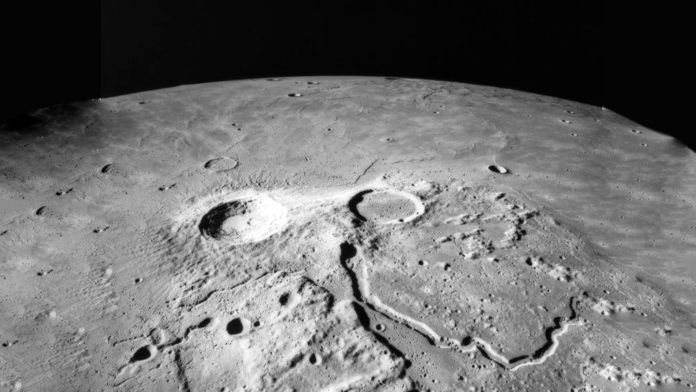
Study Findings: Fusible Mantle Cumulates Trigger Young Mare Volcanism on the Cooling Moon

Image (Credit): The Moon’s snakelike Schroeter’s Valley, believed to have been created by lava flowing over the surface. (NASA/Johnson)

Science Advances abstract:

[China’s] Chang’E-5 (CE5) mission has demonstrated that lunar volcanism was still active until two billion years ago, much younger than the previous isotopically dated lunar basalts. How the small Moon retained enough heat to drive such late volcanism is unknown, particularly as the CE5 mantle source was anhydrous and depleted in heat-producing elements. We conduct fractional crystallization and mantle melting simulations that show that mantle melting point depression by the presence of fusible, easily melted components could trigger young volcanism. Enriched in calcium oxide and titanium dioxide compared to older Apollo magmas, the young CE5 magma was, thus, sourced from the overturn of the late-stage fusible cumulates of the lunar magma ocean. Mantle melting point depression is the first mechanism to account for young volcanism on the Moon that is consistent with the newly returned CE5 basalts.

Citation: Su, B., Yuan, J., Chen, Y., et al. Fusible mantle cumulates trigger young mare volcanism on the cooling Moon. Science Advances (2022).
https://doi.org/10.1126/sciadv.abn2103

Study-related stories:

Space Quote: China is Not Seizing the Moon

Image (Credit): China’s Yutu 2 rover explores the far side of the moon shortly after its Jan. 2, 2019, touchdown. (China National Space Administration)

“As two scholars who study space security and China’s space program, we believe that neither China nor any other nation is likely to take over the Moon in the near future. It is not only illegal, it is also technologically daunting – the costs of such an endeavor would be extremely high, while the potential payoffs would be uncertain.”

-Statement by Svetla Ben-Itzhak, Assistant Professor of Space and International Relations, Air University and R. Lincoln Hines, Assistant Professor, West Space Seminar, Air University in the Astronomy magazine article “Why China is unlikely to claim the Moon anytime soon.” It follows an earlier statement by NASA Administrator Bill Nelson, who said, “We must be very concerned that China is landing on the Moon and saying: ‘It’s ours now and you stay out.‘”