The Internet Satellite Race Continues, Almost

Amazon hopes to challenge SpaceX’s Starlink system, but not just yet.

The launch planned for earlier this week place 27 internet satellites into orbit as part of Amazon’s Project Kuiper was scrubbed at the last minute. The United Launch Alliance (ULA) launch, scheduled for last Wednesday, was delayed due to bad weather.

If all goes according to plan, Project Kuiper will have about 1,600 satellites in orbit by the middle of next year. That would mean about 80 launches over that period, which seems somewhat unlikely given ongoing delays. In addition to ULA launches, Amazon is booking launches with Arianespace, Blue Origin, and SpaceX. When the project is complete, about 3,200 Kuiper internet satellites will be in orbit.

The Kuiper satellites will compete head-to-head with SpaceX’s Starlink (with its goal of 42,000 satellites) and China’s SpaceSail (with its goal of 15,000 satellites).

A new launch date for the first launch of the Kuiper internet satellites has not been announced yet.

Update: I forgot to mention another competitor – Eutelsat’s Oneweb in the European Union, which already has about 650 Internet satellites in Low Earth Orbit.

Second Update: This story, “Telecommunications Satellites and Space Exploration,” has a nice summary about how we arrived at the current moment with our satellite technology as well as what the future may hold.

Today’s NASA Nominee Hearing

It appears Mr. Isaacman will become the next NASA Administrator based on his careful answering of questions at his nomination hearing, but there was some weakness in his support for a Moon mission in both his prepared testimony as well as his answers to later questions.

In his prepared statement, Mr. Isaacman’s emphasis was Mars with reluctant support for something happening on the Moon:

As the President stated we will prioritize sending American astronauts to Mars. Along the way, we will inevitably have the capabilities to return to the Moon and determine the scientific, economic, and national security benefits of maintaining a presence on the lunar surface.

I read that as him saying a return to the Moon is an option.

Chairman Cruz was far more adamant about a Moon mission in his opening statement, saying:

The Artemis missions and the entire Moon-to-Mars program, which have enjoyed consistent bipartisan support, serve as the stepping stone to landing American astronauts on Mars. In fact, this stepping stone approach is the law as enacted by Congress. We must stay the course. An extreme shift in priorities at this stage would almost certainly mean a Red Moon—ceding ground to China for generations to come. I am hard pressed to think of a more catastrophic mistake we could make in space than saying to Communist China, ‘The moon is yours. America will not lead.’

In the question and answer period, Senator Cruz asked about the return to the Moon and received this weak response from Mr. Isaacman:

I don’t think we have to make any tough trades here, Senator. I think if we can concentrate our resources at the world’s greatest space agency, we don’t have to make a binary decision of moon versus Mars or moon has to come first versus Mars.

So Chairman Cruz continued:

If China beats us to the moon, what consequences might America face?

Mr. Isaacman replied:

We certainly cannot lose…If we do not lead the way and we’re following, we may be following forever, the consequence of which could be extraordinary.

That response sounds a little better, though it may upset Mr. Musk who has a preference for Mars, particularly a Mars mission that has federal funds going to his company.

It appears Mr. Isaacman has forgotten that the Moon is a stepping stone to Mars and not a speed bump. NASA is almost ready for a nearby Moon mission that can be accomplished in weeks, but a Mars mission that will take years is not even close to ready, no matter what Mr. Musk says.

Republicans and Democrats need to hold Mr. Isaacman’s feet to the fire to ensure the Artemis program is fully funded and continues before any designs are set for a Mars mission.

Space Quote: Great Teamwork Saved Starliner

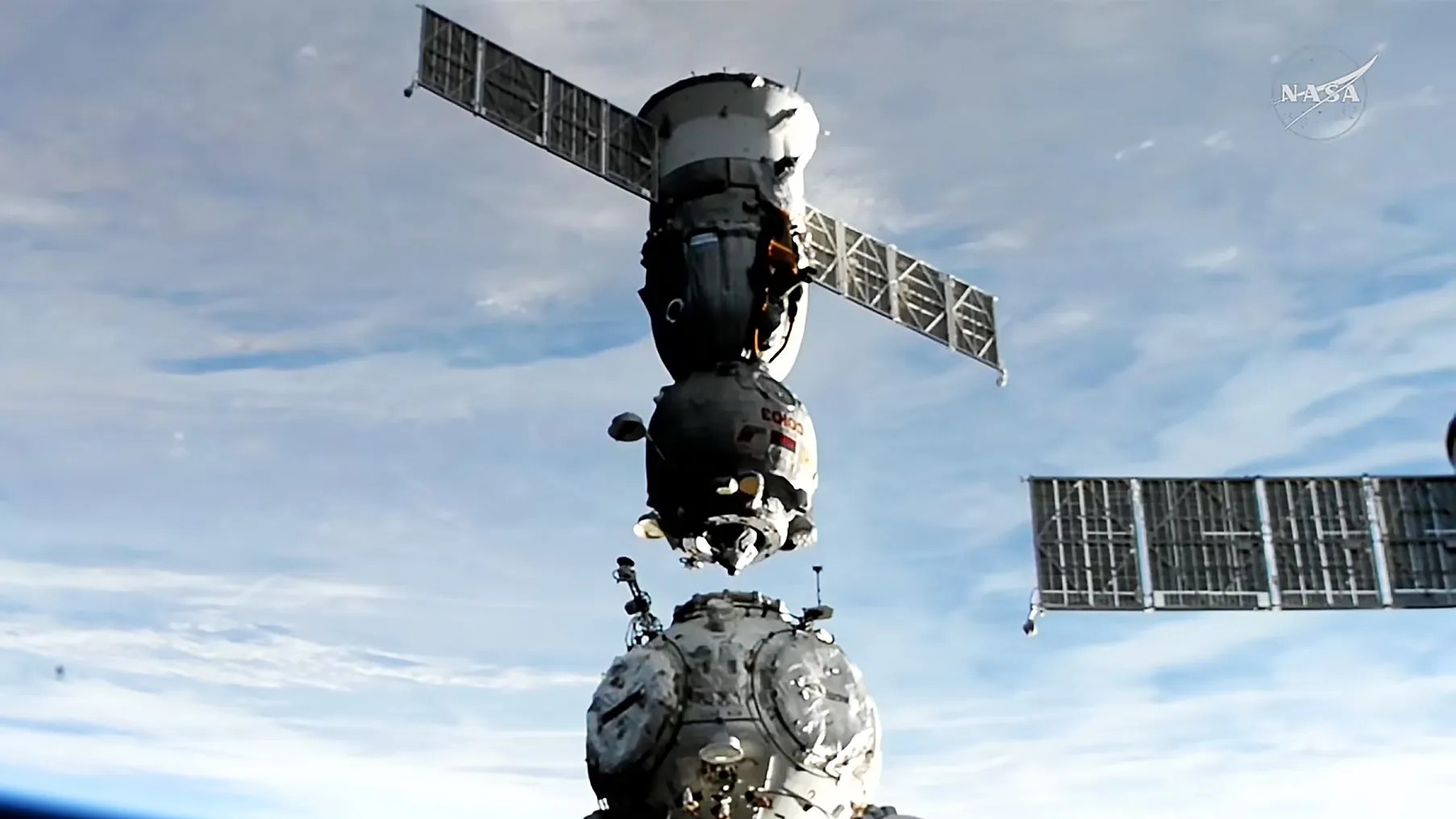
Image (Credit): Boeing’s Starliner spacecraft is docked to the Harmony module of the ISS on July 3, 2024. (NASA)

“”Thankfully, these folks are heroes. And please print this. What do heroes look like? Well, heroes put their tank on and they run into a fiery building and pull people out of it. That’s a hero. Heroes also sit in their cubicle for decades studying their systems, and knowing their systems front and back. And when there is no time to assess a situation and go and talk to people and ask, ‘What do you think?’ they know their system so well they come up with a plan on the fly. That is a hero. And there are several of them in Mission Control.”

-Statement by NASA astronaut Butch Wilmore in a recent interview with Ars Technica about his risky trip on the Boeing Starliner to the International Space Station (ISS). The Starliner experienced thruster problems that threatened the success of the mission. Butch Wilmore attributes much of his safe mission to the talents of the NASA team supporting him from Mission Control at Johnson Space Center in Houston.

Space Stories: More Space Tourists, Chinese Maglev Rocket Launches, and New Hubble Findings on Uranus

Image (Credit): Launch of the Fram2 mission earlier this week. (SpaceX)

Here are some recent stories of interest.

South China Morning Post: SpaceX Launches Fram2: 4 Astronauts Seek to Make Historic Flight Over Earth’s Poles

A SpaceX spacecraft carrying four international astronauts is on a pioneering journey circling Earth over its poles after launching Monday night from Florida…Fram2 follows in the footsteps of other commercial spaceflight ventures, including Inspiration4 and Polaris Dawn – two missions also bankrolled and led by billionaire Jared Isaacman. In fact, the Fram2 crew is now traveling on the same Dragon spacecraft that the Polaris Dawn crew rode to orbit in September for a five-day mission in which they completed a historic spacewalk.

South China Morning Post: China in Bid to Challenge SpaceX by Deploying Maglev Rocket Launch Pad by 2028

In a bid to disrupt the United States’ long-held dominance in space exploration, China is quietly advancing a radical new rocket launch system – powered not by roaring engines but by electromagnetic force – that could propel satellites into orbit with unprecedented speed and efficiency. At the heart of the ambitious project is Galactic Energy, a private aerospace company that plans to debut the world’s first electromagnetic rocket launch pad by 2028, a project that could redraw the competitive lines of the global space industry.

Space Telescope Science Institute: 20-Year Hubble Study of Uranus Yields New Atmospheric Insights

Halfway through its fourth decade, Hubble’s long life has proven invaluable for studying the atmosphere of the mysterious ice giant Uranus. By repeatedly training Hubble on the distant cyan planet over the course of 20 years, researchers chronicled a two-decade story of seasonal changes. These astronomers have gained new understanding of the atmospheric dynamics of Uranus, which can serve as a proxy for studying exoplanets of similar size and composition.

A Short Test Flight for a German Rocket in Norway

Image (Credit): The launch of the Spectrum rocket from Andøya, Norway where Isar Aerospace has its own launch pad. ( Isar Aerospace)

Elon Musk is not the only one losing rockets these days. Yesterday the German firm Isar Aerospace launched its Spectrum rocket from a spaceport in northern Norway, but the mission ended in less than a minute.

Pointing out that Isar Aerospace is the first European commercial space company to launch an orbital rocket from Continental Europe, a company press release also cited the company’s CEO and co-founder Daniel Metzler, who stated:

Our first test flight met all our expectations, achieving a great success. We had a clean liftoff, 30 seconds of flight and even got to validate our Flight Termination System. We demonstrated that we can not only design and build but also launch rockets. I could not be prouder of our entire team for working so hard over the past seven years to reach this important milestone. Today, we laid the foundation to cater to the rising global demand for flexible satellite launch services. Now it’s time to analyze all data, learn, iterate and be back on the launch pad as soon as possible.

Like the U.S., Europe has a number of rocket start-ups that should eventually offer alternatives for future European space missions and commercial businesses. In this vein, the same press release had a hopeful message:

As a company with European roots, we are proud to have shown that Europe has an enduring capacity for bold thinking and grand achievements. We have all resources to create globally competitive technology leaders. With our services, we will be able to serve customers from around the world to bring their satellites into space and to help Europe solve a major blind spot in its security architecture: access to space.

The company is already making more rockets, allowing it build upon what was learned from this test flight.