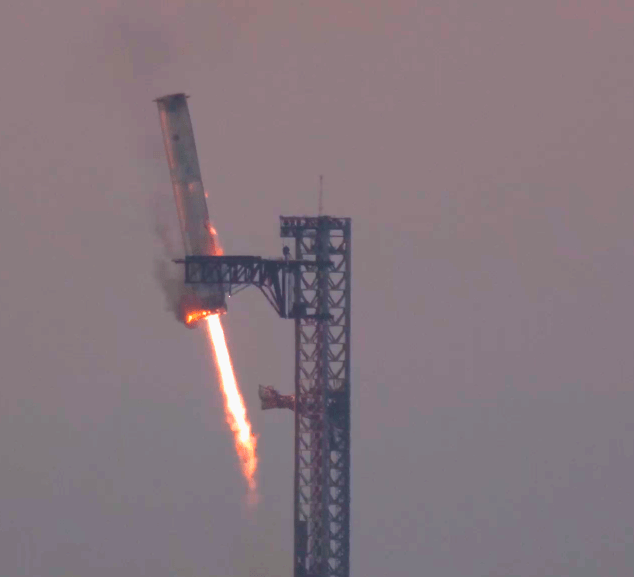
Image (Credit): An image showing SpaceX’s Super Heavy booster being grabbed midair after the fifth flight test from Boca Chica, Texas. (Taken from a SpaceX video)
Earlier today, SpaceX conducted its fifth Starship test earlier today. It appears it was an overall success, with a new twist. This time the rocket’s Super Heavy booster returned to the launch pad to be captured midair by two metal arms. It seemed like an unnecessary risk to the landing site, but the stunt was successful.
The rocket itself “landed” without incident off Australia’s coast before falling into the sea and exploding.
All in all it went according to plan, which is a good sign for NASA and its future plans for the rocket.
While all the attention today related to the booster bravado, I just want to see a Starship that is ready for the upcoming Artemis mission. After all, all the fancy tricks related to the Starship will look pretty useless should the Chinese be the first to return to the Moon.
NASA is moving forward with planned studies to address the Mars Sample Return. Earlier in the week, NASA awarded a contract to Rocketlab for this very purpose.
…the Company has been selected by NASA to complete a study for retrieving rock samples from the Martian surface and bringing them to Earth for the first time. The mission would fulfill some of the highest priority solar system exploration goals for the science community – to revolutionize humanity’s understanding of Mars, potentially answer whether life ever existed on the Martian surface, and help prepare for the first human explorers to the Red Planet.
NASA’s Rapid Mission Design Studies for Mars Sample Return solicits industry proposals to carry out rapid studies of mission designs and mission elements capable of delivering samples collected by the Mars Perseverance rover from the surface of Mars to Earth. The results of this study will inform a potential update to NASA’s Mars Sample Return Program and may result in future procurements with industry. Rocket Lab’s study will explore a simplified, end-to-end mission concept that would be delivered for a fraction of the current projected program cost and completed several years earlier than the current expected sample return date in 2040.
This is just one of many studies expected to be conducted to find the best method for interplanetary rock retrieval.
Good luck to Rocketlab and the other involved in this endeavor.
Image (Credit): The launch earlier today of a SpaceX Falcon 9 rocket carrying tNASA’s SpaceX Crew-9 mission to the ISS. (NASA/Keegan Barber)
Earlier today, NASA contractor SpaceX successfully launched the Crew-9 mission towards the International Space Station aboard a Falcon 9 rocket. The two crew members should be aboard the station tomorrow to join the rest of the Expedition 72 crew, who arrived at the station as part of two earlier launches.
While some are calling this a “rescue mission,” it is really a planned mission with a truncated crew roster to accommodate the two Boeing Starliner astronauts on the return back to Earth. Nothing to see here folks.
NASA Administrator Bill Nelson said it best:
This mission required a lot of operational and planning flexibility. I congratulate the entire team on a successful launch today, and godspeed to Nick and Aleksandr as they make their way to the space station…Our NASA wizards and our commercial and international partners have shown once again the success that comes from working together and adapting to changing circumstances without sacrificing the safe and professional operations of the International Space Station.
NASA has become quite flexible this year as it works with its commercial partners.
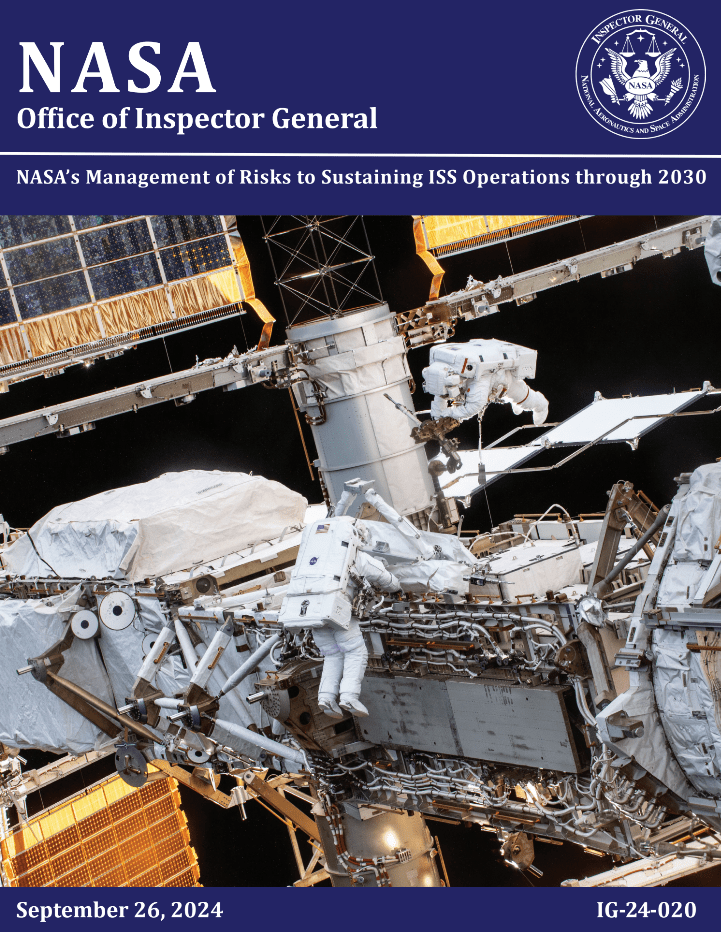
NASA’s Office of Inspect General (OIG) issued an audit report this week, NASA’s Management of Risks to Sustaining ISS Operations through 2030 (IG-24-020), that highlighted the ongoing issues NASA faces to keep the International Space Station (ISS) in orbit as well as plan its decommissioning.
The OIG auditors specifically noted concerns regarding (1) repairing and maintaining the integrity of the station, (2) too little redundancy in the commercial partners carrying crews and supplies to the station, (3) continued risk of micro meteoroids and debris damaging the station, (4) lack of ready-to-use capsules to escape the station in an emergency, and (5) lack of Russian commitment to de-orbiting the station at the end of its life.
That’s a long list of concerns, none of which are surprising given the complexity of the space station and the ongoing environmental issue, be it commercial partners, exterior space, or Russian commitment. It is amazing that the station has had so few major issues to date.
These issues need to be resolved for the current station and be considered as part of any new stations (government-run or commercial), whether they are orbiting the Earth, the Moon, or even Mars.
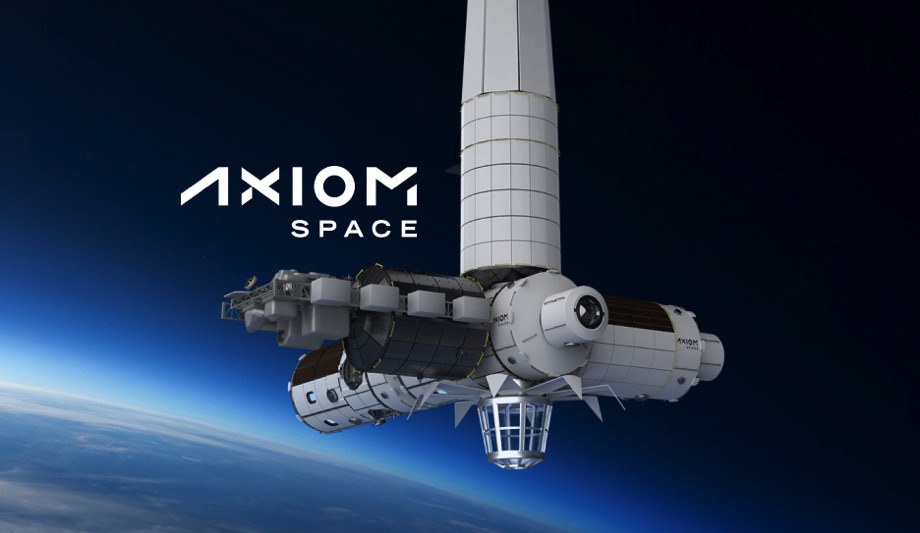
Axiom Space is facing significant financial headwinds as the company attempts to deliver on two key commercial programs for NASA—the development of a private space station in low-Earth orbit and spacesuits that could one day be worn by astronauts on the Moon. Forbes reports that Axiom Space, which was founded by billionaire Kam Ghaffarian and NASA executive Mike Suffredini in 2016, has been struggling to raise money to keep its doors open and has had difficulties meeting its payroll dating back to at least early 2023. In addition, the Houston-based company has fallen behind on payments to key suppliers, including Thales Alenia Space for its space station and SpaceX for crewed launches.
Intuitive Machines said on Tuesday it has bagged a navigation and communication services contract of up to $4.82 billion from NASA for missions in the near space region. As part of the contract, which has a base period of five years with an additional five-year option period, Intuitive will deploy lunar relay satellites and provide communication and navigation services to aid NASA’s Artemis campaign.
A new analysis of maps of the near and far sides of the Moon shows that there are multiple sources of water and hydroxyl in the sunlit rocks and soils, including water-rich rocks excavated by meteor impacts at all latitudes. “Future astronauts may be able to find water even near the equator by exploiting these water-rich areas. Previously, it was thought that only the polar region, and in particular, the deeply shadowed craters at the poles were where water could be found in abundance,” said Roger Clark, Senior Scientist at the Planetary Science Institute and lead author of “The Global Distribution of Water and Hydroxyl on the Moon as Seen by the Moon Mineralogy Mapper (M3)” that appears in the Planetary Science Journal. “


 Our Awesome Universe