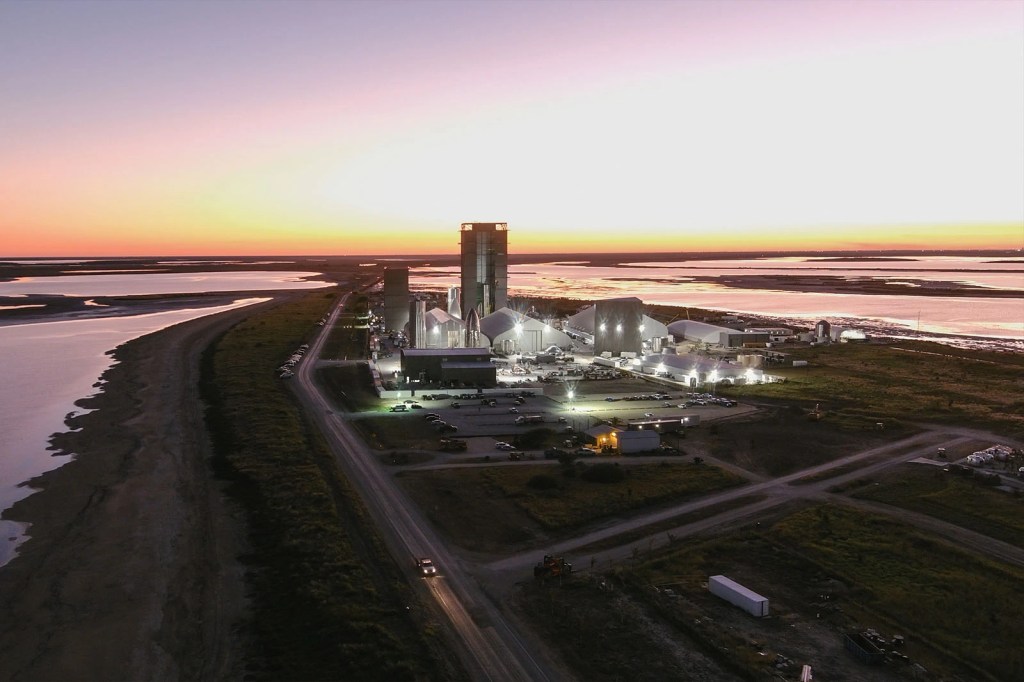
Image (Credit): The SpaceX Starship at the launch pad. (SpaceX)
Today was supposed to be the day SpaceX flight tested the Starship from its facility in Texas, but less than 10 minutes before the launch a problem with the Super Heavy booster put everything on hold.
The Starship is a key part of NASA’s Artemis III mission to place astronauts on the Moon, so the tests are crucial to move that project forward.
SpaceX will need to wait at least 48 hours before attempting another launch.
Space company Virgin Orbit, owned by Richard Branson, has filed for bankruptcy after failing to raise sufficient funds to stay afloat. All of this follows a failed rocket launch back in January that set the company back.
Dan Hart, CEO of Virgin Orbit, stated in a company press release:
The team at Virgin Orbit has developed and brought into operation a new and innovative method of launching satellites into orbit, introducing new technology and managing great challenges and great risks along the way as we proved the system and performed several successful space flights – including successfully launching 33 satellites into their precise orbit. While we have taken great efforts to address our financial position and secure additional financing, we ultimately must do what is best for the business. We believe that the cutting-edge launch technology that this team has created will have wide appeal to buyers as we continue in the process to sell the Company. At this stage, we believe that the Chapter 11 process represents the best path forward to identify and finalize an efficient and value-maximizing sale.
It’s the sad end of a company that hoped to launch a “space revolution.” That task will now need to be taken up by others.
Image (Credit): Artist’s rendering of Boeing’s Starliner capsule. (Boeing)
So what is the status of Boeing’s Starliner? Last May, an uncrewed Starliner capsule safely arrived at the International Space Station (ISS). So when will we see a crewed mission? The latest plan was for an April launch after some technical issues back in February.
However, in a tweet on Thursday, Kathy Lueders, who serves as NASA’s human spaceflight chief, stated:
Boeing We’re adjusting the @Space_Station schedule including the launch date for our Boeing Crew Flight Test as teams assess readiness and complete verification work. CFT now will launch following Axiom Mission 2 for optimized station operations…Target launch dates for Ax-2, still planned in early May, and Starliner will be shared soon. We’ll plan a media update after we have the space station schedule set. As always, we will fly when we are ready.
So first the private Ax-2 mission (also called space tourism) needs to occur, and then NASA can fit in another Starliner mission in May or later so that we have greater redundancy in our travel to the ISS, which was the purpose of NASA’s Commercial Crew Program. Given the issues with recent Russian Soyuz mission, this extra capacity cannot come soon enough. I just hope Starliner “technical issues” and not space tourism is responsible for this latest delay.
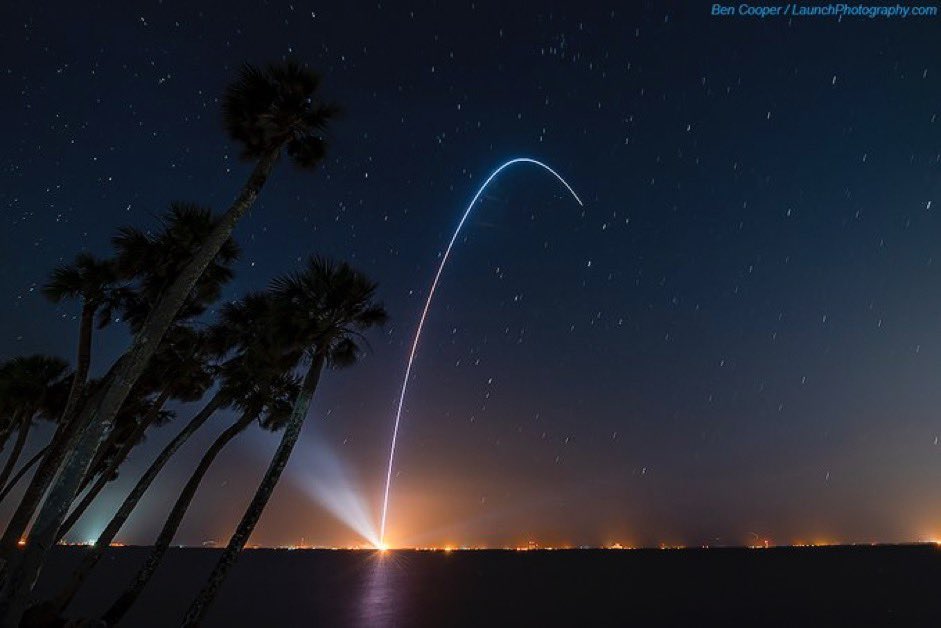
Image (Credit): Launch of the Terran-1 rocket launch from Cape Canaveral in Florida. (Relativity Space)
We have heard about the possibility of 3D printing on the Moon and even Mars someday to build habitats, but what about 3D rockets to get us there as well? That is also a possibility, but not just yet.
This past Wednesday, the US private company Relativity Space tested its 3D-printed rocket. However, the Terran-1 rocket lasted for only a few minutes before falling back to Earth. It appeared to be an issue with the second stage of the rocket. You can watch a video of the entire launch and flight here.
In a tweet, Relativity Space still called it a win:
Today’s launch proved Relativity’s 3D-printed rocket technologies that will enable our next vehicle, Terran R. We successfully made it through Max-Q, the highest stress state on our printed structures. This is the biggest proof point for our novel additive manufacturing approach. Today is a huge win, with many historic firsts. We also progressed through Main Engine Cutoff and Stage Separation. We will assess flight data and provide public updates over the coming days.
This was a test flight, so no real payloads were were lost due to the second stage issue. This was smart, unlike some earlier initial rocket flights that lost important payloads.
Kudos to Relativity Space for trying something new and demonstrating some initial successes. This is a good first step for the entire space industry.




 Our Awesome Universe