Space Stories: Damaged Space Antenna, Dark Matter as Weighty Matter, and a Stable Ocean on Enceladus

Credit: Image by Clker-Free-Vector-Images from Pixabay

Here are some recent space-related stories of interest.

SpaceNews.com: Key Antenna in NASA’s Deep Space Network Damaged

One of the largest antennas in NASA’s Deep Space Network was damaged in September and may be out of service for an extended period, further straining the system. NASA’s Jet Propulsion Laboratory confirmed Nov. 10 that the 70-meter antenna at the Deep Space Network (DSN) site in Goldstone, California, has been offline since Sept. 16, with no timetable for its return to service.

University of Geneva: Dark Matter Does Not Defy Gravity, Study Suggests

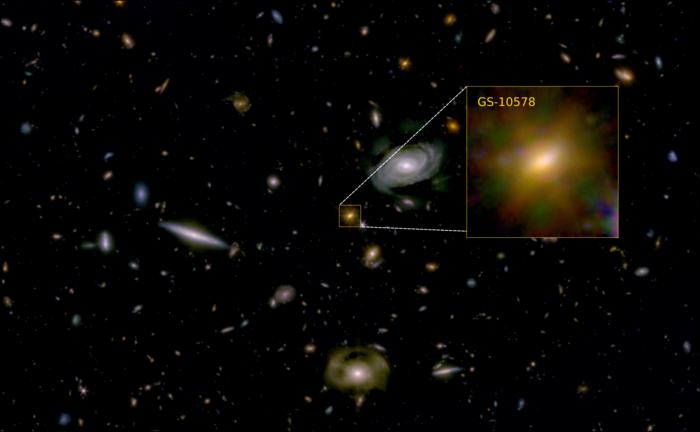
Does dark matter follow the same laws as ordinary matter? The mystery of this invisible and hypothetical component of our universe—which neither emits nor reflects light—remains unsolved. A team involving members from the University of Geneva (UNIGE) set out to determine whether, on a cosmological scale, this matter behaves like ordinary matter or whether other forces come into play. Their findings, published in Nature Communications, suggest a similar behavior, while leaving open the possibility of an as-yet-unknown interaction. This breakthrough sheds a little more light on the properties of this elusive matter, which is five times more abundant than ordinary matter.

University of Oxford: Saturn’s Icy Moon May Host a Stable Ocean Fit for Life, New Study Finds

A new study led by researchers from Oxford University and Southwest Research Institute and the Planetary Science Institute in Tucson, Arizona has provided the first evidence of significant heat flow at Enceladus’ north pole, overturning previous assumptions that heat loss was confined to its active south pole. This finding confirms that the icy moon is emitting far more heat than would be expected if it were simply a passive body, strengthening the case that it could support life.

Space Stories: Newly Discovered Volcano on Mars, Universe’s Missing Matter Found, and Congress Expects a NASA Nominee

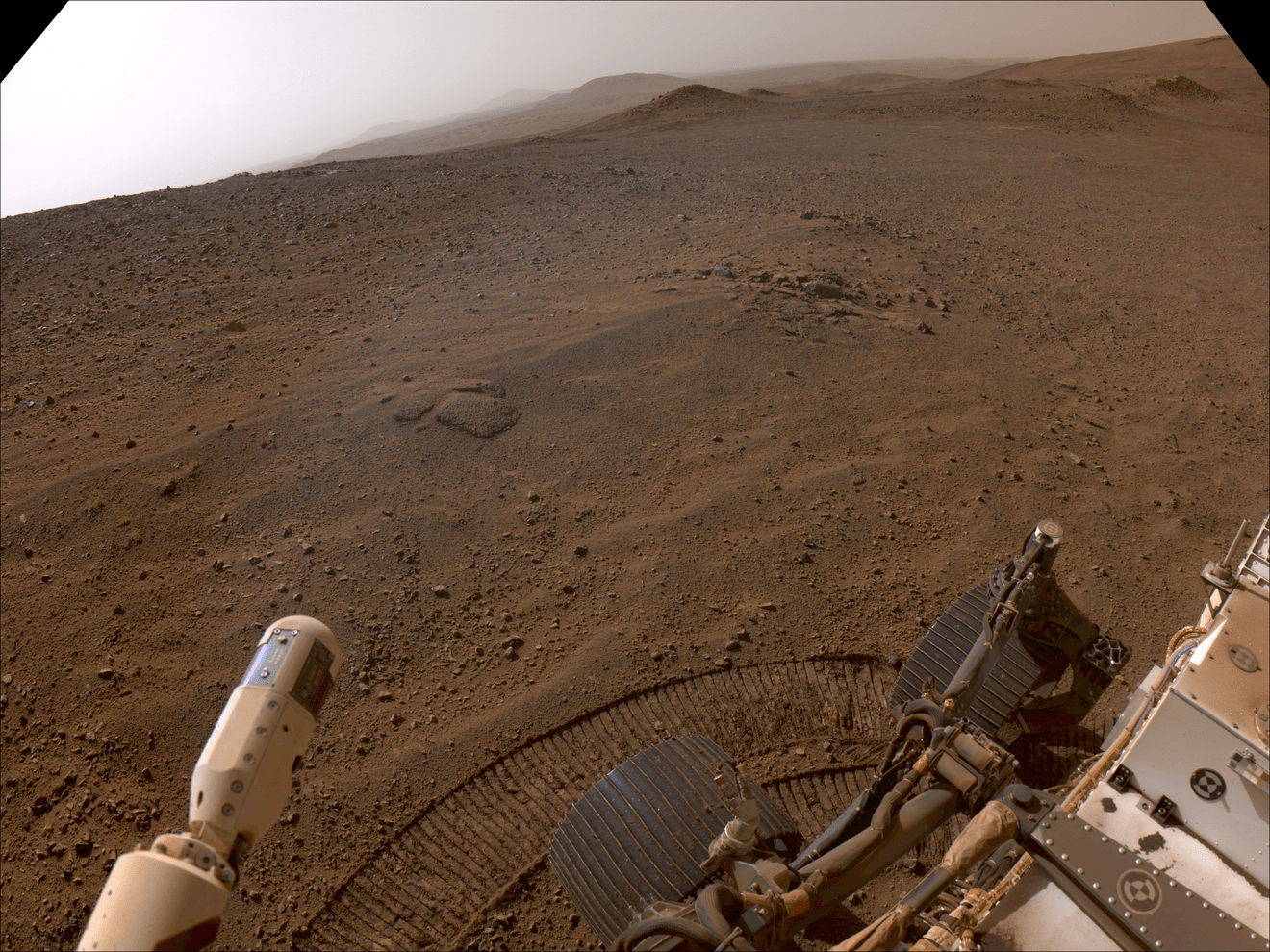
Image (Credit): View of the rim of Jezero Crater from NASA’s Perseverance Mars rover on December 10, 2024. (NASA/JPL-Caltech)

Here are some recent space-related stories of interest.

Georgia Tech: Volcano ‘Hidden in Plain Sight’ Could Help Date Mars — and its Habitability

Georgia Tech scientists have uncovered evidence that a mountain on the rim of Jezero Crater — where NASA’s Perseverance Rover is currently collecting samples for possible return to Earth — is likely a volcano. Called Jezero Mons, it is nearly half the size of the crater itself and could add critical clues to the habitability and volcanism of Mars, transforming how we understand Mars’ geologic history. The study, “Evidence for a composite volcano on the rim Jezero crater on Mars,” was published this May in the Nature-family journal Communications Earth & Environment, and underscores how much we have left to learn about one of the most well-studied regions of Mars.

Caltech: Missing Matter in Universe Found

Due to its diffuse nature, roughly half of ordinary matter in the universe went unaccounted for and had been considered “missing”—until now. In a new study in Nature Astronomy, a team of astronomers at Caltech and the Center for Astrophysics | Harvard & Smithsonian (CfA) has, for the first time, directly detected and accounted for all the missing matter. To do this, the team used brief, bright radio flashes in the distant cosmos, called fast radio bursts (FRBs), to illuminate the matter lying between the FRBs and us. “The FRBs shine through the fog of the intergalactic medium, and by precisely measuring how the light slows down, we can weigh that fog, even when it’s too faint to see,” says Liam Connor, assistant professor at Harvard and lead author of the study, who performed much of the work while a Caltech research assistant professor working with Vikram Ravi, assistant professor of astronomy at Caltech.

Space News: Members of Congress Want White House to Quickly Nominate New NASA Administrator

Members of the House and Senate called in the White House to promptly offer a new candidate for NASA administrator after the surprise withdrawal of Jared Isaacman’s nomination. In briefings organized by the Aerospace Industries Association June16, representatives of House and Senate delegations to the Paris Air Show said it was critical that the agency get permanent leadership as it deals with potential significant cuts to its budget in the coming fiscal year.

Space Stories: Launch of GOES-U Satellite, Jupiter’s Surprising Atmosphere, and the Role of Black Holes in Dark Matter

Image (Credit): June 25, 2024 launch of NASA’s GOES-U satellite. (SpaceX)

Here are some recent stories of interest.

America Space: Falcon Heavy Launches, GOES-U Heads for Geostationary Orbit

SpaceX successfully launched its first Falcon Heavy of the year on Wednesday evening, the triple-barreled booster lifting the 11,000-pound (5,000-kilogram) Geostationary Operational Environmental Satellite (GOES-U) almost to Geostationary Earth Orbit (GEO) on behalf of the National Oceanic and Atmospheric Administration (NOAA). The Heavy—flying for the first time since November 2022 with a brand-new center core and pair of side-mounted strap-on boosters—went airborne from historic Pad 39A at Florida’s Kennedy Space Center (KSC) at 5:26 p.m. EDT, ten minutes after the opening of a two-hour “launch window”.

European Space Agency: Jupiter’s Upper Atmosphere Surprises Astronomers

The Great Red Spot of Jupiter was observed by Webb’s Near-InfraRed Spectrograph (NIRSpec) in July 2022, using the instrument’s Integral Field Unit capabilities. The team’s Early Release Science observations sought to investigate if this region was in fact dull, and the region above the iconic Great Red Spot was targeted for Webb’s observations. The team was surprised to discover that the upper atmosphere hosts a variety of intricate structures, including dark arcs and bright spots, across the entire field of view. “We thought this region, perhaps naively, would be really boring,” shared team leader Henrik Melin of the University of Leicester in the United Kingdom. “It is in fact just as interesting as the northern lights, if not more so. Jupiter never ceases to surprise.”

University of Warsaw: Is Dark Matter Made of Black Holes?

Gravitational wave detectors, LIGO and Virgo, have detected a population of massive black holes whose origin is one of the biggest mysteries in modern astronomy. According to one hypothesis, these objects may have formed in the very early Universe and may compose dark matter, a mysterious substance filling the Universe. A team of scientists from the OGLE (Optical Gravitational Lensing Experiment) survey from the Astronomical Observatory of the University of Warsaw have announced the results of nearly 20-year-long observations indicating that such massive black holes may comprise at most a few percent of dark matter. Another explanation, therefore, is needed for gravitational wave sources. The results of the study were published in two articles, in Nature and the Astrophysical Journal Supplement Series.

Free E-book From NASA on Dark Matter & Dark Energy

NASA has released a free e-book titled Hubble Focus: The Dark Universe. You can download the book at the NASA site in one of two formats – PDF or EPUB. This is the fifth edition of this book.

You cannot argue with the price, while the content is an impressive story about how the Hubble Space Telescope has helped to study both dark matter and dark energy. In addition to the text and images, the book contains links to numerous videos that further illustrate the points in the book. It is a multimedia experience that can only enhance your understanding of the topic.

Hubble is just the beginning, as the James Webb Space Telescope and other instruments are coming online to assist with the research. The book notes:

Hubble continues to be a vital tool to address questions about the underlying workings of the universe . Scientists will pair its wide wavelength coverage with James Webb Space Telescope’s powerful vision, the upcoming Nancy Grace Roman Space Telescope’s panoramic view, and a fleet of additional space- and ground-based telescopes to explore the cosmos as never before . We have far more left to learn among the stars

Space Stories: Starliner Preparing for Flight, New Volcano on Mars, and Questions About Dark Matter

Image (Credit): Artist’s rendering of the Boeing Crew Space Transportation (CST)-100 Starliner spacecraft. (Boeing)

Here are some recent stories of interest.

Space.com: New NASA Astronauts ‘Thrilled’ to See 1st Boeing Starliner Crew Launch in May

A new spacecraft will at last launch its first crew in May, and a fresh group of NASA astronauts say they’re excited to support it. NASA’s newest astronaut group graduated from basic training on March 5, just in time for the first Boeing Starliner test launch with astronauts, which is now expected in May…When it’s up and running, Starliner will regularly carry astronauts to and from the ISS alongside SpaceX’s Crew Dragon vehicle, which began its own astronaut flights in 2020. The newest astronaut cohort can’t wait to climb on board the Boeing craft.

Sky & Telescope: Giant Ancient Volcano Discovered on Mars

It’s not every day that a giant volcano is discovered hiding in plain sight. By reviewing satellite imagery from many missions, scientists have spotted the remains of a colossal volcano on Mars. The volcano, provisionally named “Noctis Mons,” had been imaged repeatedly since the early 1970s, but extensive erosion had concealed it from view. Researchers have also spotted hints at an adjacent glacier buried underneath the volcanic slopes. Noctis Mons is located near the Martian equator, in the eastern part of the Tharsis volcanic province, sandwiched between the vast canyons of Valles Marineris and the fractured maze-like terrain of Noctis Labyrinthus.

University of Ottawa: New Research Suggests that Our Universe has No Dark Matter

The current theoretical model for the composition of the universe is that it’s made of ‘normal matter,’ ‘dark energy’ and ‘dark matter.’…A University of Ottawa study published today challenges the current model of the universe by showing that, in fact, it has no room for dark matter...This discovery challenges the prevailing understanding of the universe, which suggests that roughly 27% of it is composed of dark matter and less than 5% of ordinary matter, remaining being the dark energy.