Space Quote: The Pope Discusses the JWST

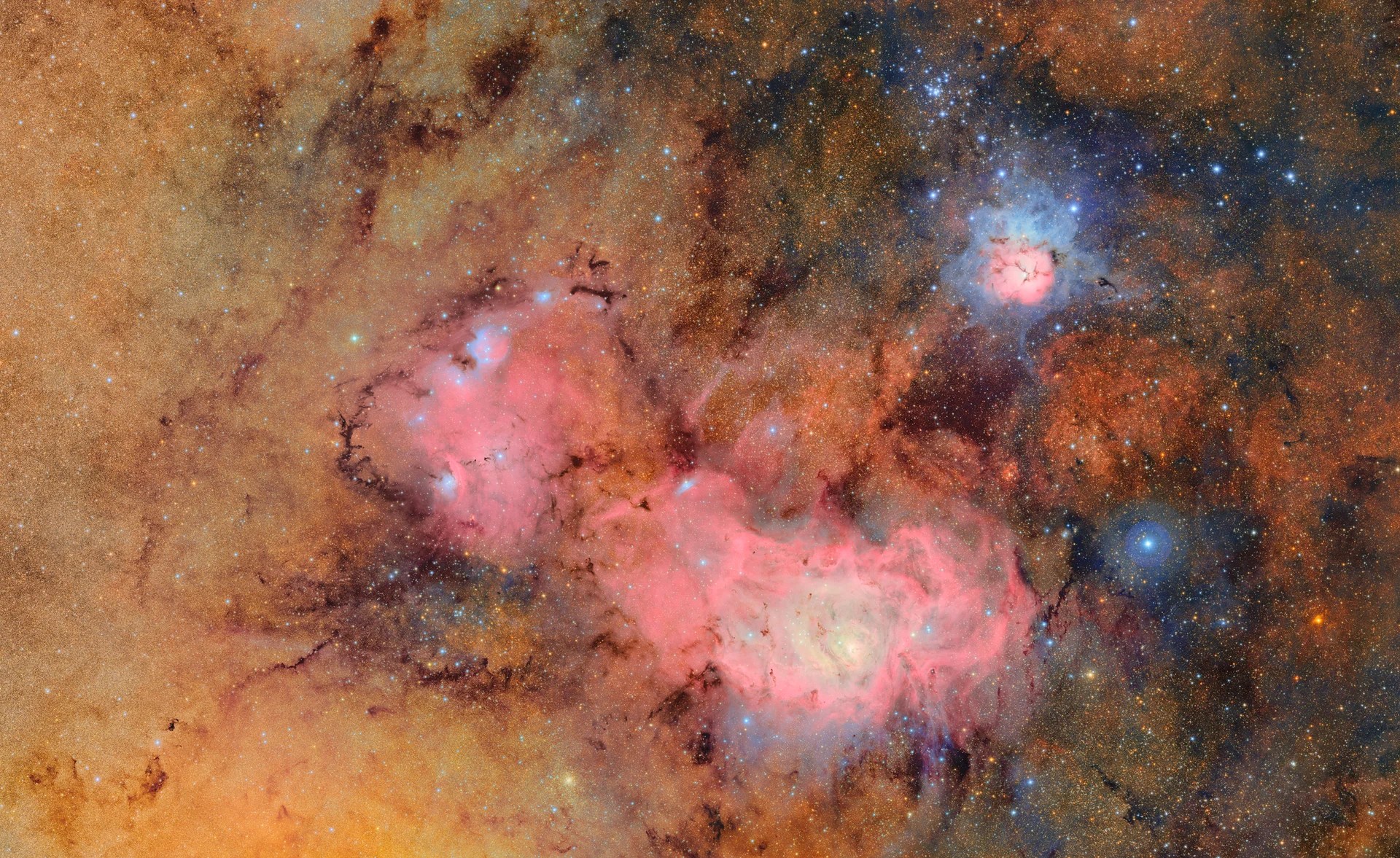
Credit: Image by Nimrod Oren from Pixabay.

“Do not the James Webb images also fill us with wonder, and indeed a mysterious joy, as we contemplate their sublime beauty?…The authors of sacred Scripture, writing so many centuries ago, did not have the benefit of this privilege, yet their poetic and religious imagination pondered what the moment of creation must have been like.”

Statement by Pope Leo XIV to astronomy students who are part of a summer program hosted by the Vatican Observatory. This year the students are studying data from the James Webb Space Telescope (JWST).

Space Stories: Spirals in the Oort Cloud, Killer Asteroid Heading Towards Moon, and Starlink Messes Up Astronomy

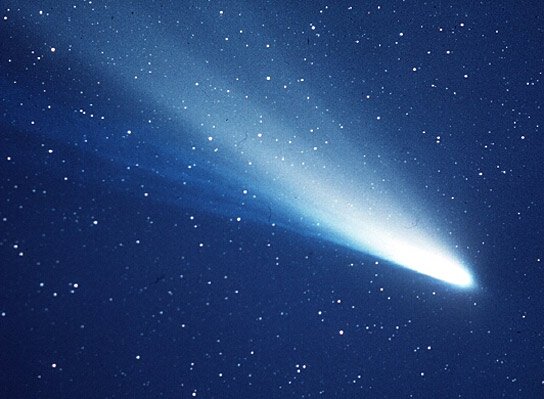
Image (Credit): Halley’s Comet. (NASA Jet Propulsion Laboratory, California Institute of Technology)

Here are some recent space-related stories of interest.

NDTV: Visual Glitch Leads To Accidental Discovery Of Spiral In Mysterious Oort Cloud

Scientists have long assumed the Oort Cloud, one of the most mysterious structures in our solar system, to be spherical. But during the pre-production of their new space show, “Encounters in the Milky Way,” they noticed a strange spiral pattern in the middle of the cloud. The show, which premiered on Monday at New York City’s Hayden Planetarium, featured a computer-generated visualisation of the Oort Cloud on the dome. The team was reviewing the animation when they noticed what appeared to be a spiral structure inside the typically spherical cloud shape.

Daily Mail: NASA Issues Urgent Update on ‘City Killer’ Asteroid Heading Towards the Moon in 2032

The ‘city killer’ asteroid 2024 YR4 may not be on a collision course with Earth anymore. But NASA has raised the odds of it hitting the moon in just seven years’ time. According to the space agency, there’s now a 4.3 per cent chance that 2024 YR4 will smash into the moon on December 22, 2032…The impact event would be the first time scientists could watch a known asteroid create a lunar crater in real-time.

New Scientist: Starlink Satellites are Leaking Radio Signals that May Ruin Astronomy

SpaceX’s Starlink satellites are leaking radio waves to such an extent that it could threaten our ability to study and understand the early universe, say astronomers. Interference from the thousands of Starlink satellites in orbit, where they provide a global internet service, has been a continuing concern for astronomers, who say that the radio emissions from the craft could affect sensitive telescopes that observe distant, and faint, radio sources. SpaceX has worked with astronomers to try to prevent this interference, by switching off their internet-transmitting beams when they fly over key telescopes, but it turns out that this isn’t enough.

Space Stories: Strange Flashing Object, New Dwarf Planet in Our Solar System, and a Short-Lived Galaxy

Image (Credit): CSIRO’s ASKAP radio telescope in Western Australia. (https://www.csiro.au/)

Here are some recent space-related stories of interest.

Australian Broadcasting Corporation: Strange Flashing Object Discovered in Deep Space Puzzles Astronomers

Astronomers have detected a mystery stellar object that emitted pulses of light for two minutes every 44 minutes. A handful of objects like this have been found before, but this is the first to emit both radio waves and X-rays…An international team, led by Curtin University astronomer Ziteng Andy Wang, first detected a radio signal in data captured by CSIRO’s ASKAP radio telescope in Western Australia...By chance, the signal was also spotted by NASA’s Chandra X-ray Observatory on Valentine’s Day last year.

Newsweek: Astronomers Think They’ve Discovered a New Dwarf Planet in Our Solar System

A team of astronomers believe they may have discovered a new dwarf planet—just like Pluto—on the edge of our solar system. The object—which orbits out beyond Neptune—has been named “2017 OF201” by the team, which was led by Sihao Cheng of the Institute for Advanced Study in Princeton, New Jersey. Cheng and colleagues estimate that the body has a diameter of more than 430 miles, which means that it may be large enough to qualify as a dwarf planet.

Brighter Side of News: Astronomers Discover That Galaxies Die Much Earlier Than Expected

In a Universe that was only 700 million years old, long before Earth even formed, something unexpected happened. A massive galaxy stopped forming stars and went silent. This type of galaxy, called quiescent, typically needs billions of years to grow and then shut down star formation. But thanks to the powerful James Webb Space Telescope (JWST), astronomers have now confirmed that one such galaxy had already died young. This ancient galaxy, called RUBIES-UDS-QG-z7, is now the most distant quiescent galaxy ever confirmed. It challenges current ideas about how quickly galaxies form and evolve in the early Universe. This discovery pushes the boundaries of what scientists thought was possible during cosmic dawn.

Pic of the Week: Here Comes the Sun

Image (Credit): Image of a sunspot on our Sun (with the United States in the corner for the purpose of comparison) captured by the Daniel K. Inouye Solar Telescope using its Visible Tunable Filter. (VTF/KIS/NSF/NSO/AURA)

This week’s image comes from the National Science Foundation’s (NSF) Daniel K. Inouye Solar Telescope. Using a newly developed Visible Tunable Filter, it is able to produce detailed images of the Sun’s surface.

Carrie Black, NSF program director for the NSF National Solar Observatory, stated:

When powerful solar storms hit Earth, they impact critical infrastructure across the globe and in space. High-resolution observations of the sun are necessary to improve predictions of such damaging storms…The NSF Inouye Solar Telescope puts the U.S. at the forefront of worldwide efforts to produce high-resolution solar observations and the Visible Tunable Filter will complete its initial arsenal of scientific instruments.

You can read much more about the telescope and its filter here.

Pic of the Week: 30 Doradus for Valentine’s Day

Image (Credit): Composite image of 30 Doradus. (X-ray: NASA/CXC/Penn State Univ./L. Townsley et al.; Infrared: NASA/JPL-CalTech/SST; Optical: NASA/STScI/HST; Radio: ESO/NAOJ/NRAO/ALMA; Image Processing: NASA/CXC/SAO/J. Schmidt, N. Wolk, K. Arcand)

Yes, NASA has an image ready for Valentine’s Day. This image comes from three sources – the Chandra X-ray Observatory, the Hubble Space Telescope, and the Atacama Large Millimeter/submillimeter Array.

Here is more from NASA (and even more can be found at the linked site):

Otherwise known as the Tarantula Nebula, 30 Dor is located about 160,000 light-years away in a small neighboring galaxy to the Milky Way known as the Large Magellanic Cloud (LMC). Because it one of the brightest and populated star-forming regions to Earth, 30 Dor is a frequent target for scientists trying to learn more about how stars are born.

With enough fuel to have powered the manufacturing of stars for at least 25 million years, 30 Dor is the most powerful stellar nursery in the local group of galaxies that includes the Milky Way, the LMC, and the Andromeda galaxy.

The massive young stars in 30 Dor send cosmically strong winds out into space. Along with the matter and energy ejected by stars that have previously exploded, these winds have carved out an eye-catching display of arcs, pillars, and bubbles.

A dense cluster in the center of 30 Dor contains the most massive stars astronomers have ever found, each only about one to two million years old. (Our Sun is over a thousand times older with an age of about 5 billion years.)