Aeon always has some great articles every month, and one of these is titled “The Snowball Effect.”
The article discusses two periods when glaciers covered the Earth from pole to equator. The last time was 645 million years ago, with the ice remaining for about 10 million years. Even so, life survived and diversified under these conditions on a super-continent called Rodinia.
It may offer some lessons to us when we are looking at our Solar System’s moons as well as distant exoplanets wondering about the presence of life beneath a frozen surface. If the Earth was a snowball for millions of years before life as we know it came to be, it makes sense it would be the case elsewhere.
I recommend you review this article as well as others on Aeon. It is worth your time.
Young exoplanets provide vital insights into the early dynamical and atmospheric evolution of planetary systems. Many multi-planet systems younger than 100 Myr exhibit mean-motion resonances, probably established through convergent disk migration. Over time, however, these resonant chains are often disrupted, mirroring the Nice model proposed for the Solar System. Here we present a detailed characterization of the ~200-Myr-old TOI-2076 system, which contains four sub-Neptune planets between 1.4 and 3.5 Earth radii. We demonstrate that its planets are near to but not locked in mean-motion resonances, making the system dynamically fragile. The four planets have comparable core masses but display a monotonic increase in hydrogen and helium (H/He) envelope mass fractions (from stripped to 1%, 5% and 5%) with decreasing stellar insolation. This trend is consistent with atmospheric mass loss due to photoevaporation, which predicts that the envelopes of irradiated planets either erode completely or stabilize at a residual level of ~1% by mass within the first few hundred million years, with more distant, less-irradiated planets retaining most of their primordial envelopes. Additionally, previous detections of metastable helium outflows rule out a pure water-world scenario for the TOI-2076 planets. Our finding provides direct observational evidence that the dynamical and atmospheric reshaping of compact planetary systems begins early and offers an empirical anchor for models of their long-term evolution.
Citation: Wang, MT., Dai, F., Liu, HG. et al. An adolescent and near-resonant planetary system near the end of photoevaporation, Nat Astron (2026).
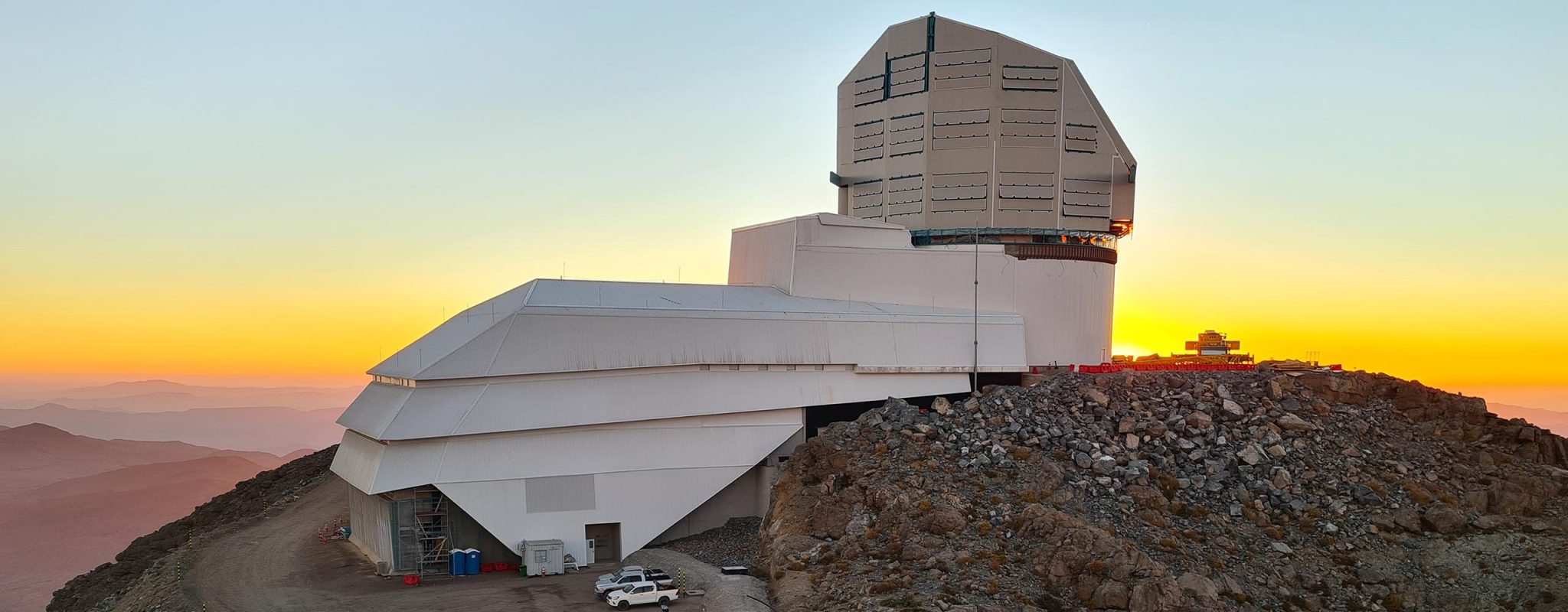
An astronomical alert system developed at the University of Washington started off with a bang this week, sending out 800,000 notifications about moving asteroids, exploding stars and other celestial changes detected by the Vera C. Rubin Observatory in Chile. Tuesday night’s surge was just the first wave of alerts. Eventually, the Alert Production Pipeline is expected to produce up to 7 million alerts per night. Astronomers around the globe will use the system to sift through the torrent of data, zeroing in on events ranging from newly detected asteroids to supernovas, variable stars and active galactic nuclei.
On Tuesday, March 3rd, the full Moon glides through the darkest portion of Earth’s shadow, called the umbra, to create a dramatic total lunar eclipse. In the Western Hemisphere, the event occurs in the hours before dawn, while across Asia it happens during the evening. During the eclipse, Earth’s shadow is seen gradually edging across the face of the full Moon until the entire lunar disk glows deep orange or red. Then the sequence of events unfolds in reverse order, until the shadow leaves the lunar disk completely and the Moon returns to full brilliance.
A renowned Caltech astronomer who studied distant exoplanets was shot and killed outside his home in a rural area near Los Angeles, the LA Times reported…Among his most notable contributions to the field was leading research published in 2007 that, for the first time, captured enough light from distant exoplanets to identify the molecules in their atmospheres…and soon made the “monumental” discovery of detecting signs of water on another planet.
Close-in transiting sub-Neptunes are abundant in our Galaxy. Planetary interior models based on their observed radius–mass relationship suggest that sub-Neptunes contain a discernible amount of either hydrogen (dry planets) or water (wet planets) blanketing a core composed of rocks and metal. Water-rich sub-Neptunes have been believed to form farther from the star and then migrate inwards to their present orbits. Here we report experimental evidence of reactions between warm, dense hydrogen fluid and silicate melt that release silicon from the magma to form alloys and hydrides at high pressures. We found that oxygen liberated from the silicate melt reacts with hydrogen, producing an appreciable amount of water up to a few tens of weight per cent, which is much greater than previously predicted based on low-pressure ideal gas extrapolation. Consequently, these reactions can generate a spectrum of water contents in hydrogen-rich planets, with the potential to reach water-rich compositions for some sub-Neptunes, implying an evolutionary relationship between hydrogen-rich and water-rich planets. Therefore, detection of a large amount of water in exoplanet atmospheres may not be the optimal evidence for planet migration in the protoplanetary disk, calling into question the assumed link between composition and planet formation location.
Citation: Horn, H.W., Vazan, A., Chariton, S. et al. Building wet planets through high-pressure magma–hydrogen reactions. Nature646, 1069–1074 (2025).
Credit: Image by AstroGraphix_Visuals from Pixabay
“The paradigm of planet formation is that we have rocky inner planets very close to the stars, like in our solar system…This is the first time in which we have a rocky planet so far away from its host star, and after these gas-rich planets.”
-Statement by Thomas Wilson, an assistant professor in the department of physics at the University of Warwick in England, as quoted by KLS.com. He was referring to the findings in his recent paper about a solar system 116 light-years away with four exoplanets orbiting a red dwarf star – an inner rocky exoplanet, two gaseous exoplanets second and third from the parent star, and a final rocky exoplanet. Of course, that’s what we had here until 2006 when some wise guy decided to make Pluto a dwarf planet. It’s all in the definition.


 Our Awesome Universe