The Goldilocks Zone Turned Awfully Cold for Earth

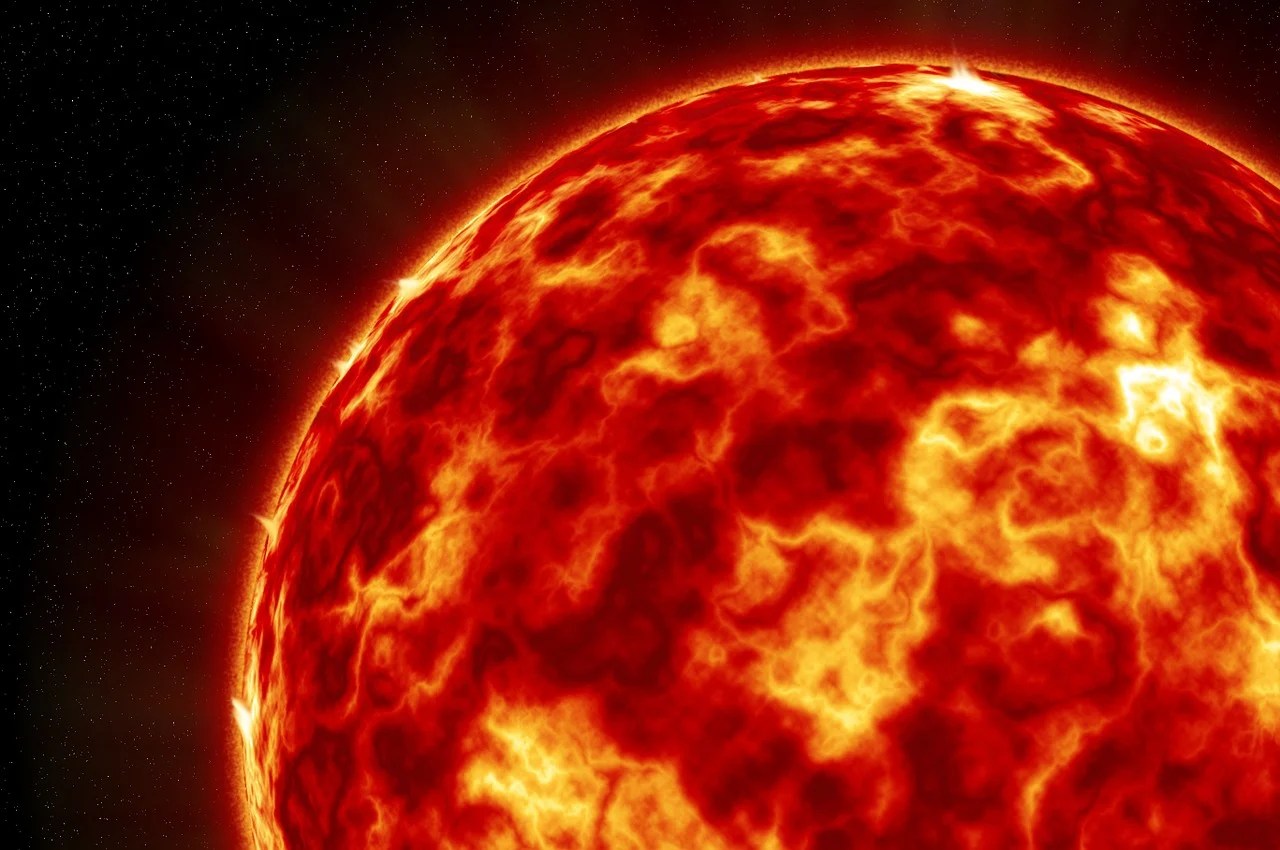
Image (Credit): Artist’s rendering of a “Snowball Earth.” (NASA)

We point of telescopes at distant solar systems searching for exoplanets in the “Goldilocks Zone,” it being defined as the habitable zone around a star where water can remain in liquid form. But that was not always the case for planet Earth, even if we are the model for this zone.

A recent New York Times article, “How Earth Might Have Turned Into a Snowball,” discusses how the Earth became a frozen ball about 717 million years ago. And it remained in this deep freeze for approximately 56 million years.

While the article goes on to discuss the reasons for this freeze, I am more interested in the idea of what this may mean for our own plans to someday travel to a distant star.

If a civilization on another planet was viewing our solar system from afar 750 million years ago, they too may have mistaken our Earth as a perfectly place planet to support life on its surface. However, they would have needed to wait another 23 million years for our planet to revert back to having a liquid surface.

It appears timing is everything, and the inner workings of a planet can be just as important as its placement in the solar system. I expect our telescopes will be able to tease our more information about each exoplanet in the future, though it also makes sense to send robotic probes before ever attempting to send a human that far.

In the meantime, we have a few moons here in our own solar system with frozen oceans. We can start to learn more about the potential for life in such places and our ability to survive in such climates. NASA’s Europa Clipper, set to launch later this year, is part of that learning process.

Space Quote: Hubble Detects Water on an Exoplanet

Image (Credit): Artist’s rendering of exoplanet exoplanet GJ 9827d. (NASA/ESA/Leah Hustak (STScI)/Ralf Crawford (STScI))

“This would be the first time that we can directly show through an atmospheric detection, that these planets with water-rich atmospheres can actually exist around other stars…This is an important step toward determining the prevalence and diversity of atmospheres on rocky planets.”

Statement by Björn Benneke of the Trottier Institute for Research on Exoplanets at Université de Montréal. He was referring to the Hubble space telescope’s detection of water vapor in the atmosphere of exoplanet GJ 9827d. The exoplanet is about twice the Earth’s diameter and approximately 97 light-years from Earth. You can read more about the Hubble discovery here.

Space Stories: Old Stars Harboring Exoplanets, a Hot “Earth” Located, and the Role of Exomoons

Image (Credit): Artist’s rendering of an Earth-like exomoon orbiting a gas giant planet in a star’s habitable zone. (NASA/JPL-Caltech)

Here are some recent stories of interest related to exoplanets.

Phys.org: “Old Stars May Be the Best Places to Search for Life

Once upon a cosmic time, scientists assumed that stars apply an eternal magnetic brake, causing an endless slowdown of their rotation. With new observations and sophisticated methods, they have now peeked into a star’s magnetic secrets and found that they are not what they expected. The cosmic hotspots for finding alien neighbors might be around stars hitting their midlife crisis and beyond. This groundbreaking study, shedding light on magnetic phenomena and habitable environments, has been published in The Astrophysical Journal Letters.

NASA: “Earth-sized Planet Has a ‘Lava Hemisphere’

In a system with two known planets, astronomers spotted something new: a small object transiting across the Sun-sized star. This turned out to be another planet: extra hot and Earth-sized…The newly-spotted planet, called HD 63433 d, is tidally locked, meaning there is a dayside which always faces its star and a side that is constantly in darkness. This exoplanet, or planet outside of our solar system, orbits around the star HD 63433 (TOI 1726) in the HD 63433 planetary system. This scorching world is the smallest confirmed exoplanet younger than 500 million years old. It’s also the closest discovered Earth-sized planet this young, at about 400 million years old.

UniverseToday: “Big Planets Don’t Necessarily Mean Big Moons’”

Does the size of an exomoon help determine if life could form on an exoplanet it’s orbiting? This is something a February 2022 study published in Nature Communications hopes to address as a team of researchers investigated the potential for large exomoons to form around large exoplanets (Earth-sized and larger) like how our Moon was formed around the Earth. Despite this study being published almost two years ago, its findings still hold strong regarding the search for exomoons, as astronomers have yet to confirm the existence of any exomoons anywhere in the cosmos. But why is it so important to better understand the potential for large exomoons orbiting large exoplanets?

Top Astronomy Stories in 2023

Image (Credit): Chart showing the planned travel of the JUICE spacecraft. (ESA, work performed by ATG under contract to ESA)

I wanted to start out the new year by first remembering all of the great missions from 2023. I also decided to group this work rather than focus on single missions.

Here is what I came up with:

NASA’s Moon Mission: We saw more progress towards the next steps in the Artemis program to put humans on the Moon, including NASA’s announcement of the four astronauts to lead the Artemis II mission, SpaceX’s tests of the Starship rocket, and the design of new spacesuits for the Artemis astronauts.

Other Attempts to Land on the Moon: We saw other nations also reaching for the Moon. While India had great success landing a rover on the lunar South Pole, both Russia and a commercial venture from Japan did not have similar luck. We also saw Japan trying it again late last year.

NASA Asteroid Missions: Asteroids were the big news this year, with Lucy encountering a surprise pair of asteroids, OSIRIS-REx bringing back a sample from the asteroid Bennu, and NASA launching the Psyche mission.

JWST Discoveries: This year we celebrated the anniversary of the James Webb Space Telescope (JWST), which has been better than ever imaged. It is helping to change our understanding of the origin of the universe while poking and prodding at exoplanets to review their secrets.

ESA Missions: The European Space Agency (ESA) has also been very busy in 2023. For instance, the launch of the Euclid mission to study dark matter and dark energy, as well as the JUICE mission to study Jupiter and its moons, will assist with our understanding of the big picture as well as our own neighborhood.

That’s an impressive record, and I look forward to even more great news in 2024.

Study Findings: Atmospheric Carbon Depletion as a Tracer of Water Oceans and Biomass on Temperate Terrestrial Exoplanets

Credit: NASA/JPL-Caltech

Nature Astronomy abstract of the study findings:

The conventional observables to identify a habitable or inhabited environment in exoplanets, such as an ocean glint or abundant atmospheric O2, will be challenging to detect with present or upcoming observatories. Here we suggest a new signature. A low carbon abundance in the atmosphere of a temperate rock`y planet, relative to other planets of the same system, traces the presence of a substantial amount of liquid water, plate tectonics and/or biomass. Here we show that JWST can already perform such a search in some selected systems such as TRAPPIST-1 via the CO2 band at 4.3 μm, which falls in a spectral sweet spot where the overall noise budget and the effect of cloud and/or hazes are optimal. We propose a three-step strategy for transiting exoplanets: detection of an atmosphere around temperate terrestrial planets in about 10 transits for the most favourable systems; assessment of atmospheric carbon depletion in about 40 transits; and measurements of O3 abundance to disentangle between a water- versus biomass-supported carbon depletion in about 100 transits. The concept of carbon depletion as a signature for habitability is also applicable for next-generation direct-imaging telescopes.

Citation: Triaud, A.H.M.J., de Wit, J., Klein, F. et al. Atmospheric carbon depletion as a tracer of water oceans and biomass on temperate terrestrial exoplanets. Nat Astron (2023).
https://doi.org/10.1038/s41550-023-02157-9

Study-related stories: