Space Stories: Truncated Artemis III Mission, Origins of a Local Galaxy, and Chandra X-ray Observatory Exoplanet Efforts

Image (Credit): The launch of a Starship. (SpaceX)

Here are some recent stories of interest.

Ars Technica: As NASA Watches Starship Closely, Here’s What the Agency Wants to See Next

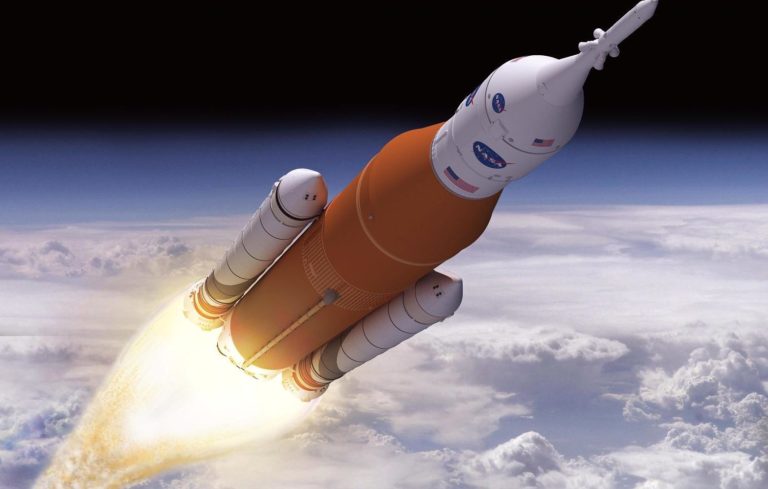
NASA and SpaceX are planning for the possibility of modifying the Artemis III mission. Instead of landing on the Moon, a crew would launch in the Orion spacecraft and rendezvous with Starship in low-Earth orbit. This would essentially be a repeat of the Apollo 9 mission, buying down risk and providing a meaningful stepping stone between Artemis missions. Officially, NASA maintains that the agency will fly a crewed lunar landing, the Artemis III mission, in September 2026. But almost no one in the space community regards that launch date as more than aspirational. Some of my best sources have put the most likely range of dates for such a mission from 2028 to 2032. A modified Artemis III mission, in low-Earth orbit, would therefore bridge a gap between Artemis II and an eventual landing.

Sci.News: Astrophysicists Offer Explanation for Origin of One of Milky Way’s Largest Satellites

The satellite galaxy Crater II (or Crater 2) of the Milky Way is located approximately 380,000 light-years away from Earth in the constellation of Crater. This galaxy is extremely cold and exceptionally diffuse, and has low surface brightness. According to new research, Crater II exists thanks to a self-interacting dark matter.

Harvard-Smithsonian Center for Astrophysics: Coming in Hot: NASA’s Chandra Checks Habitability of Exoplanets

Using NASA’s Chandra X-ray Observatory and ESA’s (European Space Agency’s) XMM-Newton, astronomers are exploring whether nearby stars could host habitable exoplanets, based on whether they emit radiation that could destroy potential conditions for life as we know it. This type of research will help guide observations with the next generation of telescopes aiming to make the first images of planets like Earth. A team of researchers examined stars that are close enough to Earth that future telescopes could take images of planets in their so-called habitable zones, defined as orbits where the planets could have liquid water on their surfaces. Any images of planets will be single points of light and will not directly show surface features like clouds, continents, and oceans. However, their spectra — the amount of light at different wavelengths — will reveal information about the planet’s surface composition and atmosphere.

Space Stories: OSIRIS-APEX Survives Sun Flyby, Nearby Exoplanet May Be Habitable, and More Rogue Planets Rolling About

Here are some recent stories of interest.

NASA: NASA’s OSIRIS-APEX Unscathed After Searing Pass of Sun

Mission engineers were confident NASA’s OSIRIS-APEX (Origins, Spectral Interpretation, Resource Identification – Apophis Explorer) spacecraft could weather its closest ever pass of the Sun on Jan. 2, 2024. Their models had predicted that, despite traveling 25 million miles closer to the heat of the Sun than it was originally designed to, OSIRIS-APEX and its components would remain safe. The mission team confirmed that the spacecraft indeed had come out of the experience unscathed after downloading stored telemetry data in mid-March. The team also tested OSIRIS-APEX’s instruments in early April, once the spacecraft was far enough from the Sun to return to normal operations. 

USA Today: NASA Discovers Potentially Habitable Exoplanet 40 Light Years from Earth

NASA announced the discovery of a planet 40 light years from Earth that orbits every 12.8 days and is possibly even habitable. Gliese 12 b is a “super Earth exoplanet” that is nearly the same size as Earth or slightly smaller, according to a NASA news release. Exoplanets are planets outside of our solar system, NASA’s website says. “We’ve found the nearest, transiting, temperate, Earth-size world located to date,” Masayuki Kuzuhara, a project assistant professor at the Astrobiology Center in Tokyo, said in a statement. “Although we don’t yet know whether it possesses an atmosphere, we’ve been thinking of it as an exo-Venus, with similar size and energy received from its star as our planetary neighbor in the solar system.”

Phys.org: Starless and Forever Alone: More ‘Rogue’ Planets Discovered

The Euclid space telescope has discovered seven more rogue planets, shining a light on the dark and lonely worlds floating freely through the universe untethered to any star. Without being bound to a star, as the Earth is to the sun, there are no days or years on these planets, which languish in perpetual night. Yet scientists believe there is a chance they could be able to host life—and estimate there may be trillions dotted throughout the Milky Way.

Video: Check Out Aeon Astronomy & Space Travel Videos

Aeon is a website of ideas run by Aeon Media. It’s mission is to explore and communicate knowledge that addresses our shared need to make sense of the world.

While it covers quite a few topics, I wanted to highlight some of its videos on astronomy and space travel. Below are just a few I recommend. You should explore the site on your own to learn more.

Check them out and many more. It is a well organized site that operates on donations, so don’t be afraid to contribute if you really enjoy the pieces.

Image (Credit): One of the videos available on the Aeon site. (Aeon)

TESS is Back Online

As of May 3, NASA’s Transiting Exoplanet Survey Satellite (TESS) was functioning again after flipping into safe mode back on April 23.

NASA shared this info regarding the shutdown:

The operations team determined this latest safe mode was triggered by a failure to properly unload momentum from the spacecraft’s reaction wheels, a routine activity needed to keep the satellite properly oriented when making observations. The propulsion system, which enables this momentum transfer, had not been successfully repressurized following a prior safe mode event April 8. The team has corrected this, allowing the mission to return to normal science operations. The cause of the April 8 safe mode event remains under investigation.

TESS is currently on an extended mission after accomplishing it primary two-year mission that located 66 confirmed exoplanets and 2,100 exoplanet candidates. Click here for a story about exoplanet HD 21749c, the first Earth-sized exoplanet discovered by TESS.

Based on NASA’s latest information, TESS has already located 440 confirmed exoplanets and 7,147 exoplanet candidates. And now that its back online, the search can continue.

Space Stories: Missing Water on Venus, More About Planet Nine, and Possible Life on an Exoplanet

Image (Credit): Venus from a composite of data from NASA’s Magellan spacecraft and Pioneer Venus Orbiter. (NASA/JPL-Caltech)

Here are some recent stories of interest.

University of Colorado at Boulder: Venus Has Almost No Water: A New Study May Reveal Why

Planetary scientists at the University of Colorado Boulder have discovered how Venus, Earth’s scalding and uninhabitable neighbor, became so dry. The new study fills in a big gap in what the researchers call “the water story on Venus.” Using computer simulations, the team found that hydrogen atoms in the planet’s atmosphere go whizzing into space through a process known as “dissociative recombination” — causing Venus to lose roughly twice as much water every day compared to previous estimates.

UniverseToday: New Evidence for Our Solar System’s Ghost: Planet Nine

Does another undetected planet languish in our Solar System’s distant reaches? Does it follow a distant orbit around the Sun in the murky realm of comets and other icy objects? For some researchers, the answer is “almost certainly.” The case for Planet Nine (P9) goes back at least as far as 2016. In that year, astronomers Mike Brown and Konstantin Batygin published evidence pointing to its existence. Along with colleagues, they’ve published other work supporting P9 since then. Now, they’ve published another paper along with colleagues Alessandro Morbidelli and David Nesvorny, presenting more evidence supporting P9. It’s titled “Generation of Low-Inclination, Neptune-Crossing TNOs by Planet Nine.” It’s published in The Astrophysical Journal Letters.

Astonomy.com: Possible Hints of Life Found on Exoplanet K2-18b – How Excited Should We Be?”

Data from the James Webb Space Telescope (JWST) has shown that an exoplanet around a star in the constellation Leo has some of the chemical markers that, on Earth, are associated with living organisms. But these are vague indications. So how likely is it that this exoplanet harbours alien life? …The planet in question is named K2-18b. It’s so named because it was the first planet found to orbit the red dwarf star K2-18.